Every new puppy owner faces the same tough choice: protect your pup from deadly diseases, or let them meet other dogs and people before their vaccines are complete? It’s not a simple ‘safe’ or ‘risky’ decision. It’s a balancing act-and getting it wrong can cost your puppy dearly.
Why Vaccines Matter
Puppies are born with some protection from their mom’s milk, but that fades fast. By 6 to 8 weeks old, their own immune system needs to kick in. That’s when vaccines start. Core vaccines like parvovirus, distemper, adenovirus, and rabies aren’t optional. They’re life-saving.
Parvovirus alone kills up to 90% of untreated puppies. Even with treatment, survival isn’t guaranteed. Vaccines cut that risk by over 95%. The first round usually happens at 6-8 weeks, then boosters every 3-4 weeks until 16 weeks. Rabies comes later, around 12-16 weeks, depending on local laws.
Skipping or delaying shots doesn’t make your puppy safer-it makes them a sitting duck. A single visit to a park, a neighbor’s yard, or even a pet store can expose them to viruses carried on shoes, paws, or air. You can’t see the virus. But it’s there.
The Socialization Window
There’s a narrow window-between 3 and 14 weeks-when a puppy’s brain is wired to learn what’s normal. That’s when they need to meet different people, sounds, surfaces, and other dogs. Missing this window isn’t just about being shy. It’s about fear.
Studies from the University of Pennsylvania show puppies that aren’t properly socialized by 14 weeks are 3x more likely to develop severe anxiety, aggression, or phobias later in life. That means barking at strangers, panicking at vacuum cleaners, or refusing to walk on sidewalks. These aren’t ‘bad behaviors.’ They’re trauma responses.
Think of it like this: a puppy that never hears a car horn, walks on grass, or meets a man with a hat might spend its whole life terrified of them. That’s not personality-it’s missed development.
The Conflict: Stay Home or Go Out?
For decades, vets told owners: ‘Wait until all shots are done.’ That meant keeping puppies inside until 16-20 weeks. But research now shows that’s too late. The socialization window closes before the last vaccine.
Here’s the truth: the risk of parvovirus in a controlled, clean environment is low. The risk of lifelong behavioral problems from isolation is high. So how do you walk the line?
You don’t have to take your puppy to a dog park full of unvaccinated strays. You don’t need to risk a pet store with unknown health histories. But you can still socialize safely.
Safe Socialization Strategies
- Host controlled meetups. Invite friends with healthy, vaccinated dogs. Ask them to wash hands and remove shoes before entering. Keep playtime short and supervised.
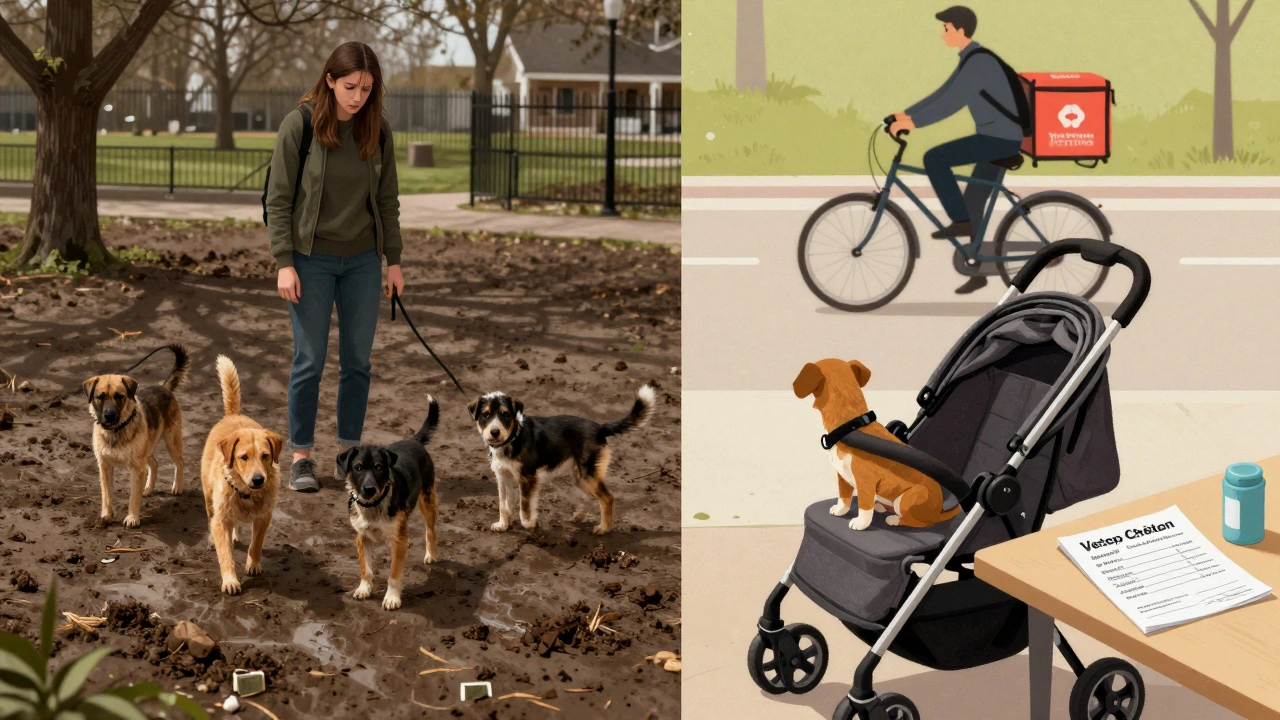
- Carry your puppy. Take walks in your arms or a stroller. Let them see cars, bikes, kids, and delivery people from a safe height. Talk to strangers-ask them to gently offer a treat.
- Visit clean, low-risk places. A vet clinic waiting room? No. A pet-friendly coffee shop with tiled floors and no other animals? Yes. Many now allow puppies under 16 weeks if they’re carried.
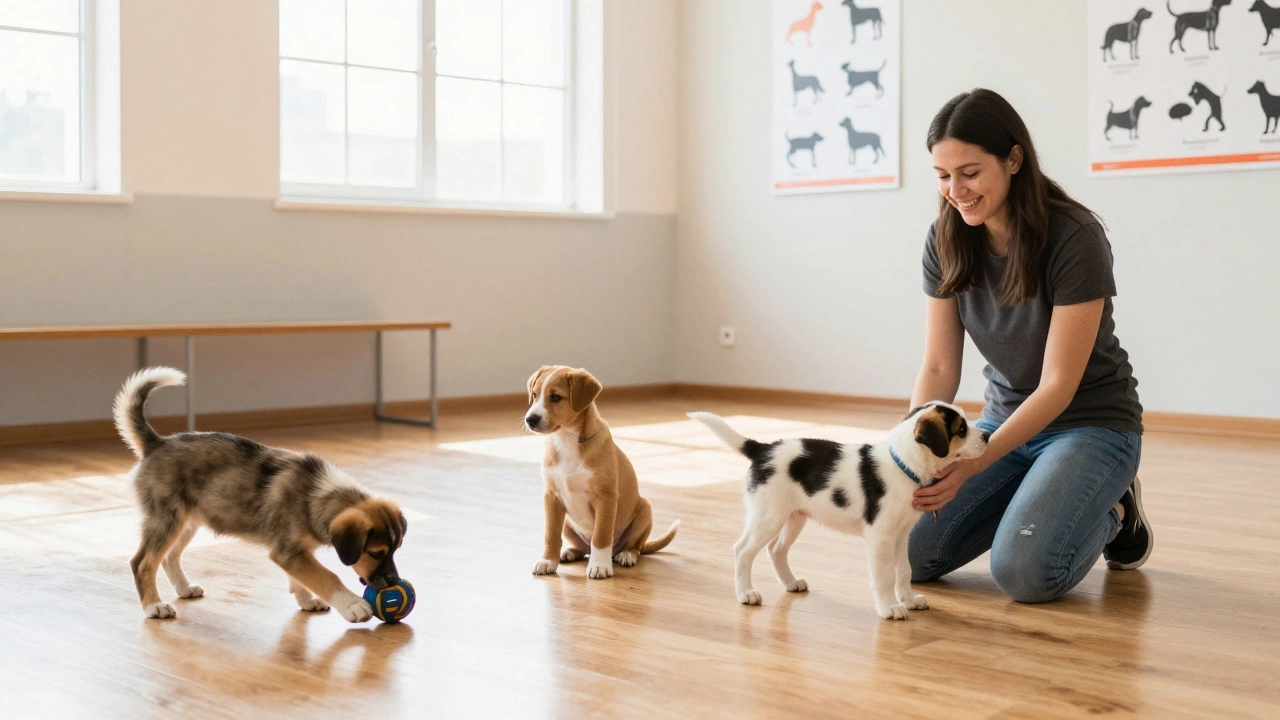
- Use puppy classes. Look for classes that require proof of first round of vaccines. These are held in sanitized spaces with screened dogs. The American Veterinary Society of Animal Behavior (AVSAB) says these are safe and essential.
- Expose them to sounds. Play recordings of thunder, fireworks, or doorbells at low volume. Reward calm behavior. Do this daily.
These aren’t ‘hacks.’ They’re science-backed methods used by top trainers and behaviorists. The goal isn’t to make your puppy the life of the party. It’s to make them confident, calm, and curious.
What About Rabies?
Rabies vaccine comes later-usually around 12-16 weeks. That’s fine. You don’t need to socialize with wild animals or stray dogs. The real risk isn’t from wildlife. It’s from unvaccinated pets. And if you’re only exposing your puppy to vaccinated, healthy animals in clean environments, rabies risk is near zero.
Even if your puppy hasn’t had the rabies shot, they can still safely meet people, walk on sidewalks, and ride in the car. Just avoid high-risk areas like dog parks, alleys, or places where stray animals roam.
Red Flags: When to Hold Off
Not all socialization is safe. Avoid:
- Unvaccinated dogs-no exceptions
- Public dog parks until after final vaccine
- Areas with visible feces or muddy ground
- Places where sick dogs have been recently
- Overwhelming crowds or loud events (festivals, parades)
If another dog is coughing, sneezing, or acting lethargic, leave. Even one sniff can spread parvo. Your puppy’s immune system isn’t ready yet.
What If My Puppy Gets Sick?
Parvovirus symptoms include vomiting, bloody diarrhea, lethargy, and loss of appetite. It hits fast. If you see any of these, get to a vet immediately. Time is everything.
But here’s the key: most puppies that get sick after early socialization didn’t get exposed at a clean puppy class. They got exposed at a park, a friend’s house with unvaccinated dogs, or a pet store. The risk isn’t from the socialization-it’s from poor choices.
Keep a log: where you went, who they met, how they acted. If something feels off, pause and reassess. Don’t panic. Just adjust.
Real-World Example: A Portland Puppy
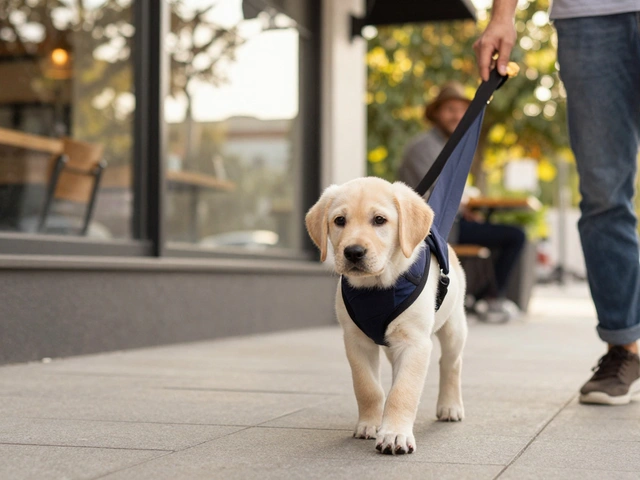
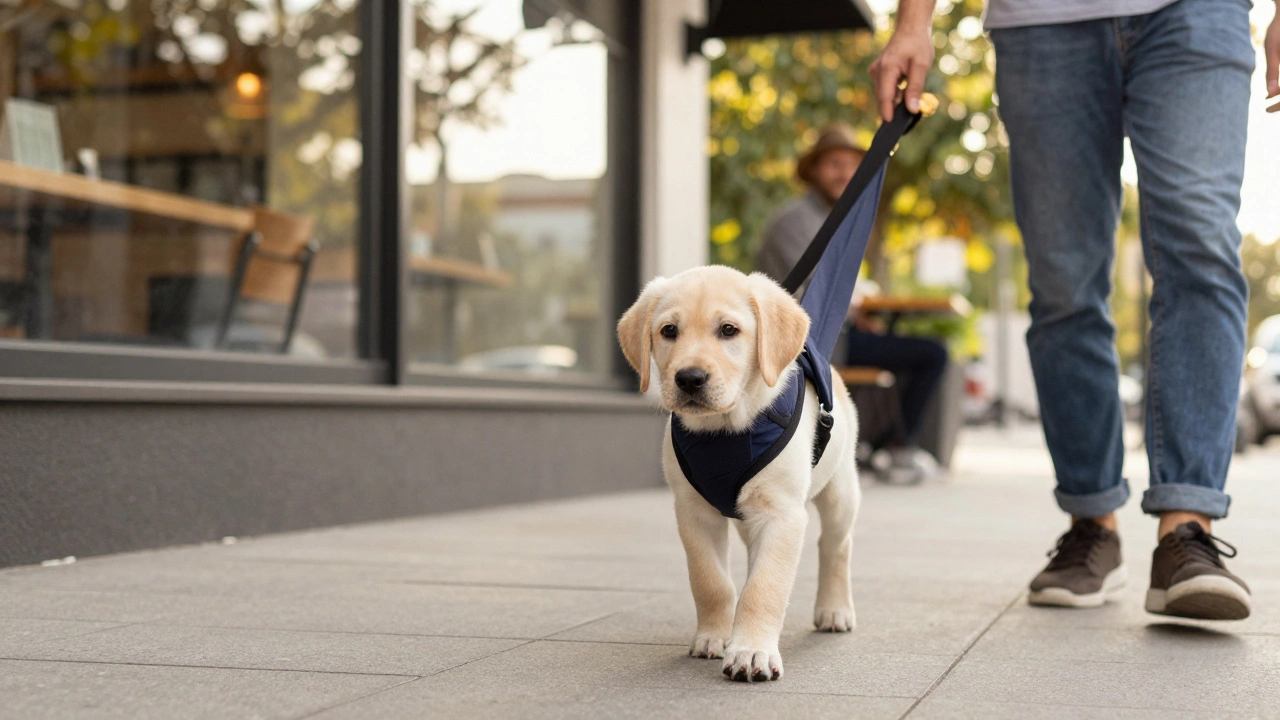
One owner in Portland started socializing her 8-week-old Labrador at 9 weeks-just after her first parvo shot. She carried him in a sling to quiet cafes, invited one vaccinated dog over weekly, and played sound recordings every night. By 16 weeks, he was calm around bikes, kids, and loud trucks. He’d never been to a dog park.
At 6 months, he was adopted by a family with two kids. No fear. No aggression. Just a happy, confident dog. His vet said: ‘He’s the best-socialized puppy I’ve seen in years.’
He didn’t get sick. He didn’t skip shots. He just got smart about exposure.
Final Rule: Vaccines First, Exposure Smart
Never skip a vaccine. Always follow your vet’s schedule. But don’t wait until 16 weeks to start socializing. Start at 8 weeks-with care.
Think of it like this: vaccines give your puppy armor. Socialization gives them a mind. You need both.
By 16 weeks, your puppy should be fully vaccinated. By then, they should also know what a doorbell sounds like, how to sit calmly for a stranger, and that not every dog is a threat. That’s not luck. That’s planning.
There’s no perfect formula. But here’s the rule of thumb: if you can control the environment, you can control the risk. Choose clean, quiet, vaccinated spaces. Avoid chaos. Stay alert. And never, ever let fear stop you from giving your puppy a normal life.
Can I take my puppy outside before all vaccines are done?
Yes-but carefully. You can take your puppy on short walks in your arms or a stroller, visit clean pet-friendly stores, or invite vaccinated dogs over to your yard. Avoid dog parks, muddy areas, and places with unknown dog traffic. The goal is exposure without risk.
What’s the earliest I can start socializing my puppy?
Start as early as 8 weeks, right after the first round of vaccines. The critical socialization window opens at 3 weeks and closes around 14 weeks. Waiting until 16 weeks means you’ve already missed the most important time for shaping behavior.
Are puppy classes safe before full vaccination?
Yes-if they require proof of at least one round of vaccines and maintain strict hygiene. Reputable classes use sanitized floors, screened dogs, and limited group sizes. The AVSAB supports these classes as essential for healthy development.
How do I know if a dog is safe to meet?
Ask if the dog is up to date on all vaccines, including parvo and distemper. Watch for signs of illness: coughing, sneezing, runny eyes, or lethargy. If in doubt, skip it. Even one unvaccinated dog can carry parvo without showing symptoms.
What if my puppy misses the socialization window?
It’s harder, but not impossible. Older dogs can still learn, but it takes more time, patience, and often professional help. Behavior modification with a certified trainer can help, but prevention is far easier than repair. That’s why starting early matters.