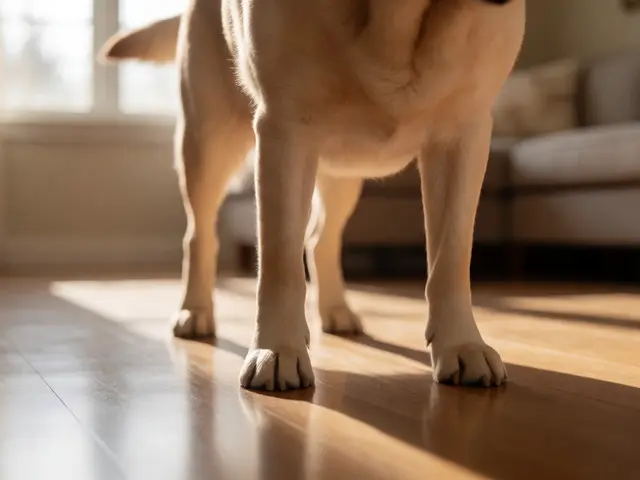
Watch your old friend struggle to jump into the car or climb onto the couch, and it breaks your heart. You know they still want to be close to you, but their joints are screaming in protest. For many senior dogs, the simple act of getting up is becoming a daily battle against pain and stiffness. The good news? You don't have to wait until they can’t move at all to make things easier. Small changes in your home environment can dramatically improve their quality of life.
Mobility issues in aging dogs are rarely just about being "old." They are usually symptoms of underlying conditions like osteoarthritis, hip dysplasia, or degenerative myelopathy. By introducing supportive bedding, ramps, and stairs, you aren't just making life convenient; you are actively managing pain and preventing further injury. Let’s look at how to build a senior-friendly home that keeps your dog comfortable, safe, and happy.
The Foundation: Choosing the Right Orthopedic Bed
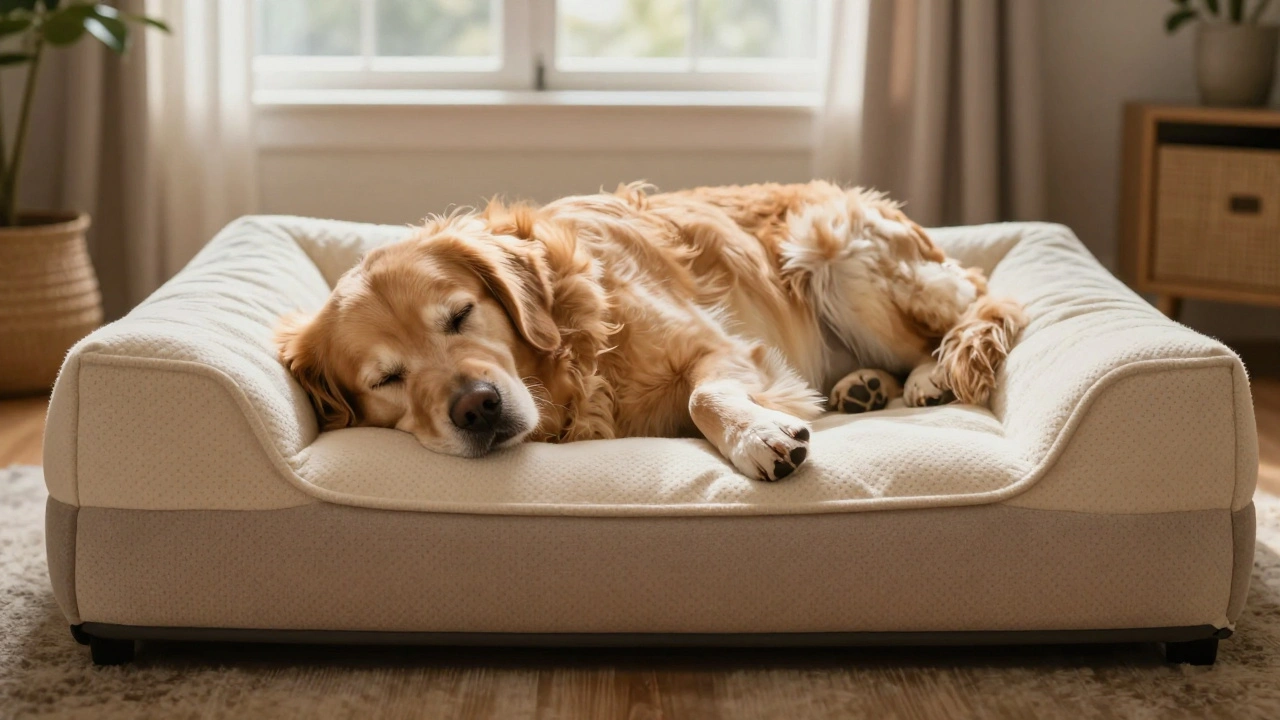
Before you buy a ramp, look at where your dog sleeps. A standard fluffy bed might look cozy, but for a senior with joint pain, it offers little support. When a dog sinks too deeply into soft foam, their spine curves unnaturally, putting pressure on discs and joints. This is why orthopedic dog beds are the first line of defense in senior care.
Memory foam beds conform to the body’s shape, distributing weight evenly across the hips, shoulders, and elbows. Unlike traditional polyfill, high-density memory foam does not bottom out. Look for beds labeled as "high-resilience" or "medical-grade" foam. These materials maintain their structure over time, ensuring consistent support night after night.
Consider your dog’s sleeping style. If they curl up tight, a bolstered bed provides security and head support. If they sprawl out, a flat, rectangular pad gives them room to stretch without twisting their spine. Don’t forget the cover material. Senior dogs often have thinner skin and may develop hot spots or pressure sores more easily. Choose removable covers made from breathable, hypoallergenic fabrics like microfiber or cotton blends that are easy to wash.
- Foam Density: Aim for at least 4-5 pounds per cubic foot (PCF) for true orthopedic support.
- Thickness: Minimum 4 inches of foam depth prevents bottoming out for large breeds.
- Non-Slip Base: Essential for preventing slips when the dog tries to get up from a slippery floor.
Ramps vs. Stairs: Which Is Better for Your Dog?
Jumping off furniture or into vehicles places immense stress on the hind legs and spine. Every time a dog lands from a height, the impact force travels up through the joints. Over time, this accelerates wear and tear. The solution is to eliminate the jump entirely. But should you choose a ramp or stairs?
| Feature | Dog Ramps | Dog Stairs |
|---|---|---|
| Slope Angle | Requires gradual incline (18-20 degrees ideal) | No slope, vertical steps |
| Space Requirement | Needs significant length for low angles | Compact footprint, fits in tight spaces |
| Cognitive Load | Simple: walk forward | Higher: requires understanding step sequence |
| Best For | Large breeds, dogs with cognitive decline | Small/medium breeds, agile seniors |
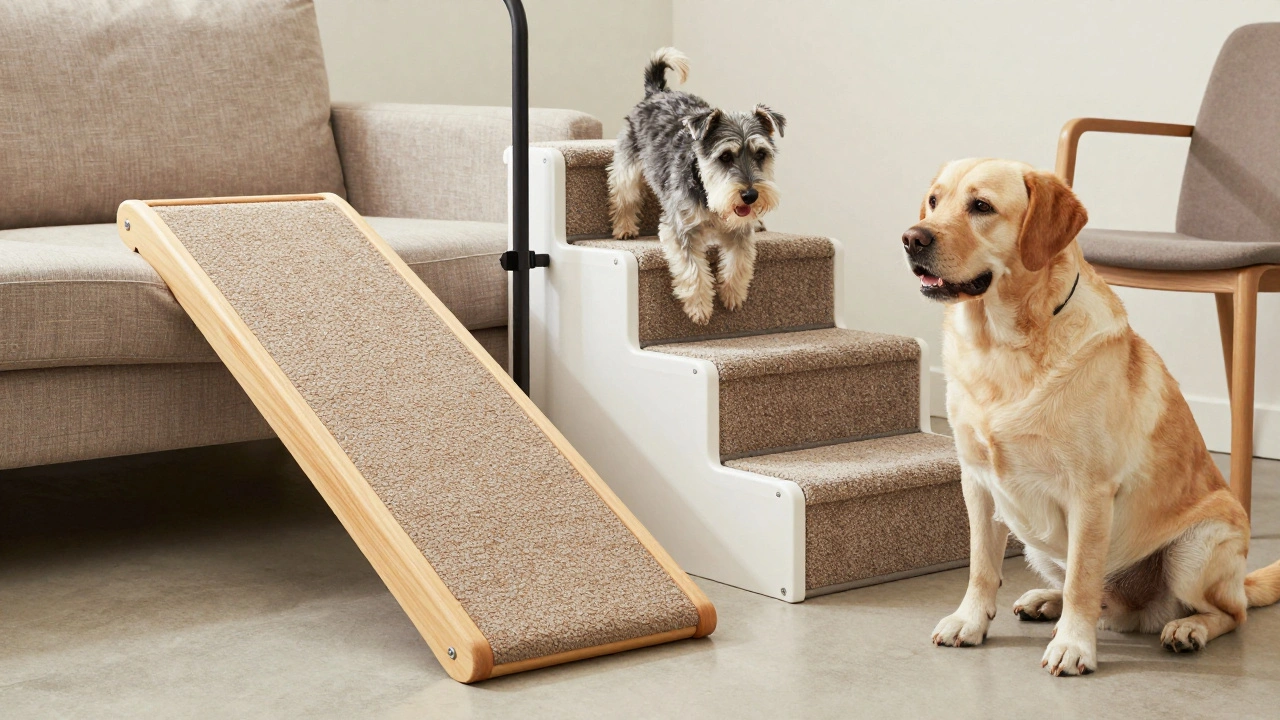
Dog ramps are generally preferred for larger breeds or dogs with cognitive issues like Canine Cognitive Dysfunction (CCD). Walking up a gentle slope is instinctual. However, ramps require length. A common mistake is buying a ramp that is too short, creating a steep incline that is harder on the joints than jumping. As a rule of thumb, for every inch of height, you need one foot of ramp length. So, for a 30-inch SUV, you need a 30-foot ramp if you want a perfect angle-but realistically, a 6-to-1 ratio is acceptable for most cars.
Dog stairs are better for smaller dogs or homes with limited space. They mimic natural climbing behavior. The key here is step depth and height. Steps should be deep enough for the dog’s entire paw to land securely, reducing the risk of slipping off the edge. Carpeted treads provide essential traction. If your dog has arthritis in the front legs, stairs might be less painful than a long ramp because they allow for shorter, controlled movements.
Traction and Safety: Preventing Slips
Pain isn't the only enemy; fear is. Many senior dogs refuse to use ramps or stairs not because they can’t, but because they’re afraid of slipping. Smooth hardwood floors, tile, or even slick carpet runners can cause anxiety. If a dog slips once, they may never try again.
Traction is non-negotiable. For ramps, ensure the surface has a textured, non-slip coating. Rubberized mats or carpet tape can add grip to existing structures. For stairs, each step must have a distinct, grippy surface. Check the edges of your rugs and runners regularly. Loose edges are trip hazards. In wet climates like Portland, Oregon, moisture exacerbates slipperiness. Keep entryways dry and consider using absorbent, non-slip mats near doors.
Lighting also plays a role. Senior dogs suffer from presbyopia (age-related vision loss). Ensure the path to the ramp, stairs, or bed is well-lit. Nightlights in hallways or bedrooms can help them navigate confidently after dark.
Supportive Accessories Beyond Beds and Ramps
Creating a comfortable environment goes beyond the big purchases. Small adjustments can make a huge difference.
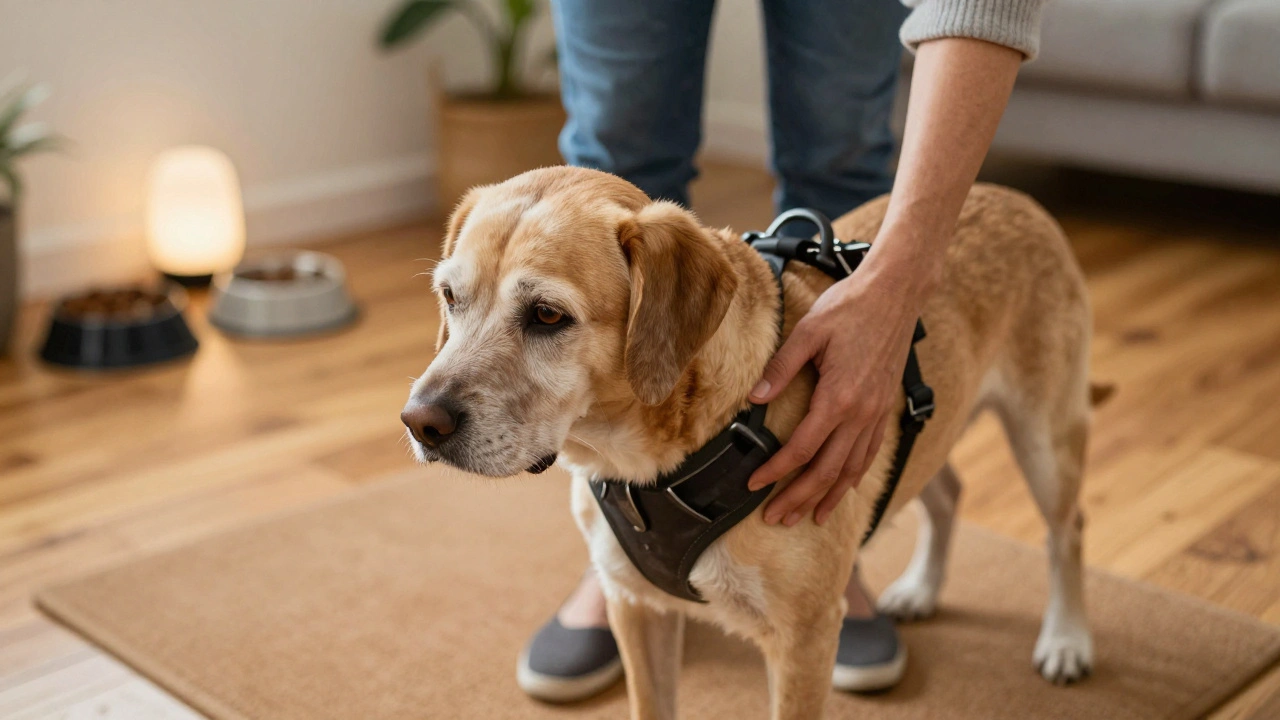
- Elevated Bowls: Bending down to eat or drink strains the neck and back. Raise food and water bowls to elbow height to promote better posture during meals.
- Harnesses with Handles: Leashes pull on the neck, which can be uncomfortable for dogs with spinal issues. A full-body harness with a handle allows you to gently lift or support their chest when they need help standing or walking.
- Joint Supplements: While not a physical aid, supplements like glucosamine, chondroitin, and omega-3 fatty acids support joint health from the inside. Consult your vet before starting any regimen.
- Non-Slip Socks: For dogs who slip on indoor flooring, rubber-soaked socks can provide temporary traction while they learn to use new aids.
Training Your Senior Dog to Use New Aids
Introducing a ramp or stairs requires patience. Don’t just place it there and expect your dog to figure it out. Start with positive reinforcement. Place treats at the base, then halfway up, and finally at the top. Move slowly. If your dog hesitates, go back a step. Never force them. Fear will set in faster than confidence.
For ramps, start with a very shallow angle. You can prop a board on a low box initially. Gradually increase the height as they gain confidence. For stairs, encourage them to step on the first tread for a treat. Then the second. Celebrate small victories. Consistency is key. Use the same cues every time, such as "up" and "down," to build muscle memory and mental association.
Remember, your goal is to reduce pain and preserve independence. By investing in the right tools and training methods, you extend the years of comfort for your beloved companion. It’s not just about convenience; it’s about dignity.
How do I know if my dog needs an orthopedic bed?
Signs include difficulty standing up after lying down, restlessness while sleeping, whining when moving, or favoring certain limbs. If your dog has been diagnosed with arthritis, hip dysplasia, or other joint conditions, an orthopedic bed is highly recommended to alleviate pressure points.
What is the ideal angle for a dog ramp?
The ideal angle is between 18 and 20 degrees. Steeper angles increase strain on the joints. To achieve this, use the 12:1 ratio rule: for every 1 inch of height, provide 12 inches of ramp length. For example, a 24-inch bed requires a 24-foot ramp for the perfect angle, though a 6:1 ratio (18 feet) is often practical for home use.
Can I use human mattresses for my dog?
While possible, human mattresses are often too soft and lack the targeted density needed for canine anatomy. Dogs distribute weight differently than humans. A dedicated orthopedic dog bed with high-density foam (4-5 PCF) provides better support for hips and elbows without causing overheating.
How do I clean an orthopedic dog bed?
Most orthopedic beds have removable, machine-washable covers. Wash on a gentle cycle with cold water and mild detergent. Air dry the cover to prevent shrinkage. The foam core should not be washed; spot clean with enzyme cleaners if necessary and allow to air dry completely to prevent mold.
Are dog stairs safe for puppies?
Yes, but caution is advised. Puppies have developing joints. Using stairs correctly can teach good habits early, preventing future jumping injuries. Ensure the steps are stable, non-slip, and appropriately sized for the puppy’s paws to avoid tripping.