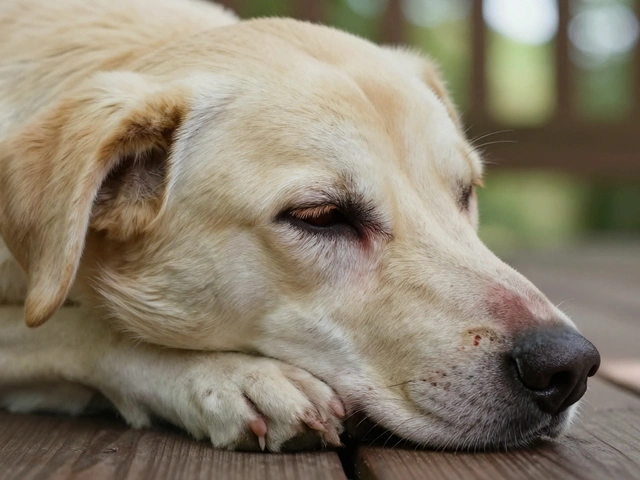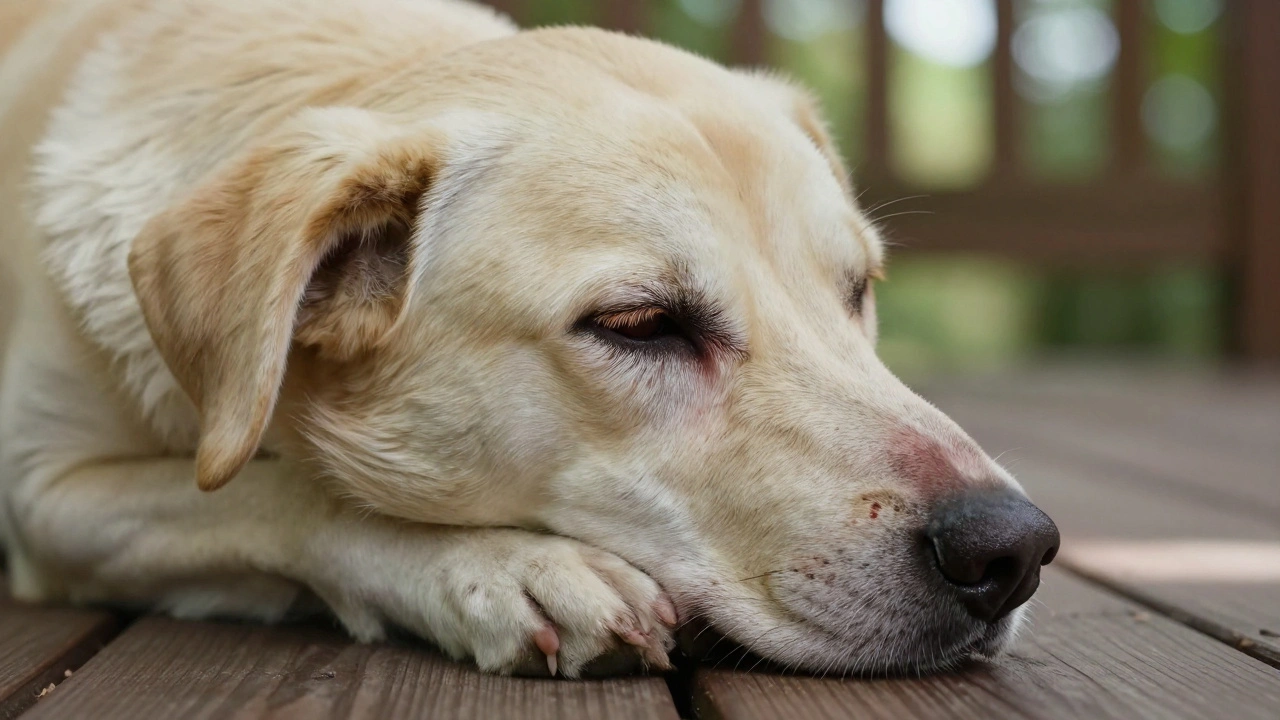
Your dog’s eyes are delicate, and even a small scratch or foreign object can turn into a serious problem fast. A splash of shampoo during bath time, a brush with a sharp branch on a walk, or a sudden paw scratch during play - these aren’t just minor annoyances. They can lead to corneal ulcers, infections, or even permanent vision loss if not handled right. Knowing what to do in the first few minutes could save your dog’s sight.
Recognizing an Eye Injury in Dogs
Dogs can’t tell you their eye hurts. But they’ll show you in other ways. If your dog is suddenly squinting, rubbing their face on the carpet, or keeping one eye tightly shut, pay attention. Other signs include redness, swelling, excessive tearing, or cloudy, milky-looking eyes. You might notice blood in the white part of the eye, or a visible object stuck on the surface. A dog with a serious eye injury may also avoid light or seem unusually clumsy.
Don’t wait for symptoms to get worse. If you see any of these signs, assume it’s an eye injury until proven otherwise. Even if the injury looks small, the eye is one of the most sensitive and vulnerable parts of a dog’s body.
What NOT to Do
When your dog has an eye injury, it’s tempting to try to fix it yourself - especially if you’re scared or in a rush. But some common actions can make things much worse.
- Don’t rub or touch the eye. Even a gentle touch can scratch the cornea further.
- Don’t use human eye drops. Many contain ingredients like decongestants or steroids that are toxic to dogs.
- Don’t try to remove something stuck in the eye with tweezers or your fingers. You could push it deeper or cause a tear.
- Don’t wait to see if it gets better. Eye injuries in dogs deteriorate quickly - often within hours.
These mistakes happen more often than you’d think. A study from the American Veterinary Medical Association found that nearly 40% of dogs with eye injuries seen at emergency clinics had worsened because of well-meaning but harmful home treatments.
Immediate First Aid Steps
If your dog has an eye injury, act fast - but stay calm. Here’s what to do right away:
- Stop the dog from rubbing. Put on an Elizabethan collar (e-collar) if you have one. If not, gently hold their head still or use a soft towel to wrap their neck, keeping their paws away from their face.
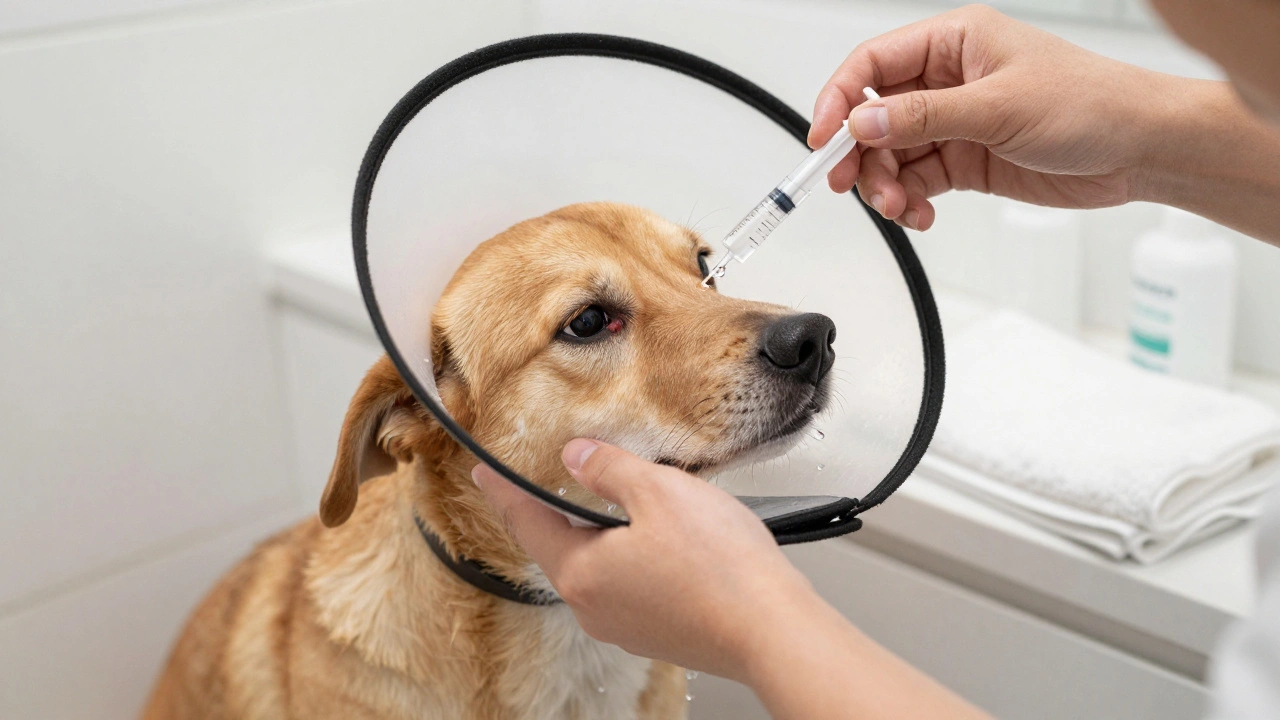
- Rinse the eye with sterile saline. Use plain, preservative-free saline solution - the kind sold for contact lenses or in pet first aid kits. Gently pour or squirt it over the eye from a clean bottle or syringe (without the needle). This flushes out dirt, sand, or chemicals. Do this for 1-2 minutes. Never use tap water. It can irritate the eye and introduce bacteria.
- Check for visible foreign objects. If you see something like a grass seed or eyelash on the surface, try to gently lift it off with a clean, damp cotton swab. Don’t press down. If it’s embedded, don’t touch it.
- Keep the eye moist. After rinsing, you can place a clean, damp cloth over the eye to keep it from drying out. Don’t wrap it tightly - just rest it gently.
- Get to the vet immediately. Even if the eye looks better after rinsing, internal damage may still be present.
These steps aren’t a cure - they’re damage control. The goal is to prevent further harm while you head to the vet.
When It’s an Emergency
Not all eye injuries are the same. Some require urgent care. Call your vet or an emergency clinic right away if you notice:
- A bulging or sunken eye
- Visible puncture or deep cut around the eye
- Green, yellow, or thick white discharge
- The eye is completely closed and the dog won’t open it
- Bleeding from inside the eye
- Your dog is in obvious pain - whining, hiding, or refusing food
These signs suggest a corneal ulcer, rupture, or infection that can destroy vision in less than 24 hours. A 2024 study from the University of California, Davis, found that dogs treated within 6 hours of a corneal injury had a 92% recovery rate. That number drops to 48% if treatment is delayed beyond 12 hours.
What the Vet Will Do
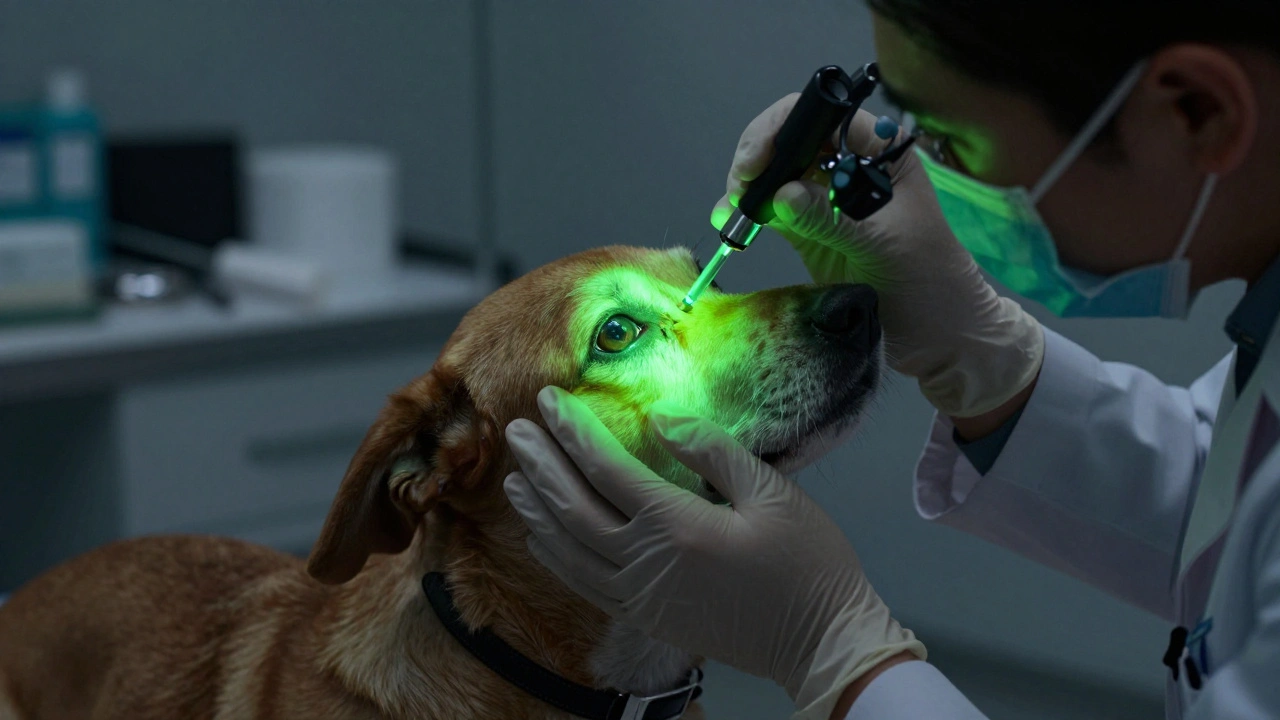
At the clinic, the vet will start with a thorough eye exam. They’ll use a special dye called fluorescein to highlight any scratches or ulcers on the cornea. They’ll check eye pressure to rule out glaucoma, and test tear production. If there’s a foreign object, they’ll remove it under sedation if needed.
Treatment depends on the injury:
- Minor scratches: Antibiotic eye drops or ointment, given 3-4 times daily for 7-10 days.
- Deep ulcers or perforations: Surgery may be needed to repair the cornea. Some dogs need a temporary third eyelid flap to protect the healing area.
- Infections: Oral antibiotics, anti-inflammatory meds, and special eye drops. Culture tests may be done to find the exact bacteria.
- Chemical burns: Aggressive flushing, pain control, and sometimes hospitalization.
Most dogs recover fully if treated early. But some injuries leave scarring that affects vision. That’s why speed matters.
Preventing Future Eye Injuries
Once your dog heals, you’ll want to avoid a repeat. Here’s how:
- Trim hair around the eyes. Long fur can irritate the eye or trap debris. Use blunt-tipped scissors.
- Use goggles for high-risk dogs. Breeds like Pugs, Shih Tzus, and Bulldogs are prone to eye issues. Doggy goggles (like Doggles) help during windy walks or car rides.
- Keep nails trimmed. Long nails mean accidental scratches during play or grooming.
- Avoid off-leash areas with tall grass or thorns. Especially in spring and summer when seeds and burrs are common.
- Never use human shampoo near the eyes. Always use dog-specific products.
Regular checkups help too. Your vet can spot early signs of dry eye or eyelid problems before they turn into emergencies.
What to Keep in Your Dog First Aid Kit
Preparation saves time - and sight. Here’s what every dog owner should have on hand:
- Sterile, preservative-free saline solution (at least 2 bottles)
- An Elizabethan collar (one size larger than your dog’s neck)
- Clean, lint-free cloths or gauze pads
- A pet-safe eye rinse (like Vetericyn Plus Ophthalmic Pet Eye Wash)
- A small flashlight (to check eye condition in low light)
Store these items in a waterproof bag in your car or near your front door. You never know when you’ll need them.
Final Thoughts
Eye injuries in dogs are scary - but they don’t have to be fatal. The difference between a full recovery and permanent damage often comes down to one thing: how fast you act. Don’t hesitate. Don’t guess. Rinse, protect, and get help. Your dog’s vision is worth every minute.
Can a dog’s eye injury heal on its own?
No. Even minor scratches can quickly turn into ulcers or infections. Dogs don’t show pain the way humans do, so what looks like a small issue could be worsening underneath. Always have a vet examine any eye injury - even if your dog seems fine after rinsing.
Is it safe to use human eye drops on my dog?
Never use human eye drops unless your vet specifically recommends them. Many contain preservatives like benzalkonium chloride, which is toxic to dogs. Others include decongestants or steroids that can increase pressure inside the eye or delay healing. Always use products made for pets.
What should I do if my dog gets chemicals in their eye?
Flush the eye immediately with sterile saline or clean water for at least 10 minutes. Keep flushing even if your dog resists. Then go to the vet - even if the eye looks better. Chemical burns can continue damaging tissue under the surface. Bring the product label with you so the vet knows what they’re dealing with.
How long does it take for a dog’s eye to heal?
Superficial scratches usually heal in 3-7 days with proper treatment. Deeper ulcers or surgical repairs can take 2-4 weeks. Healing time depends on the severity, the dog’s age, and whether they’re wearing an e-collar to prevent rubbing. Never stop medication early - even if the eye looks fine.
Which dog breeds are most at risk for eye injuries?
Breeds with protruding eyes - like Pugs, Shih Tzus, French Bulldogs, and Pekingese - are at higher risk. Dogs with long, floppy ears (like Basset Hounds) or excessive facial hair (like Maltese) are also more prone to irritation. Active dogs that run through brush or chase balls are at higher risk too, regardless of breed.