When you hear that a dog DNA test can reveal your pup’s breed mix, health risks, or even personality traits, it’s easy to get excited. But then you see the price tag - $60, $120, even $200 - and you start wondering: is this worth it? The answer isn’t simple. Some owners swear by their dog’s DNA results. Others feel tricked after getting vague reports and no real answers. So what’s the real cost of dog DNA testing? And what do you actually get for your money?
How Much Do Dog DNA Tests Cost?
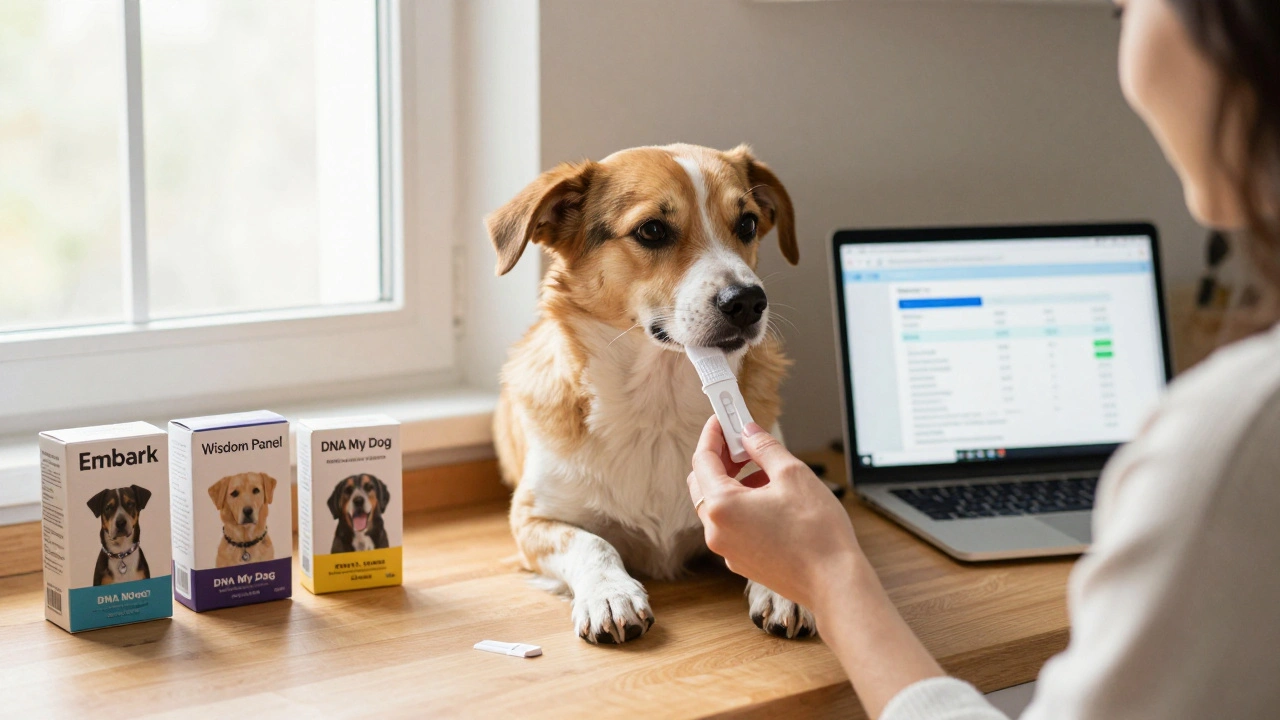
Dog DNA tests range from $60 to $200, depending on the brand and what’s included. The cheapest options, like Embark’s basic test or Wisdom Panel’s entry-level kit, start around $70. These give you breed identification and a few common genetic health markers. Mid-range tests, such as the Wisdom Panel Premium or DNA My Dog, cost between $90 and $120. They add more health screenings, ancestry depth, and sometimes trait reports like coat color or ear type. The most expensive kits, like Embark’s full health + breed + trait bundle, run $180-$200. They test for over 250 genetic diseases, drug sensitivities, and even physical traits like tail length or muscle type.
Some companies offer discounts if you test multiple dogs or sign up for annual health updates. But don’t be fooled by “free shipping” or “limited-time deals.” The core test cost doesn’t change much - you’re paying for the lab work, not the packaging.
What’s Actually in the Test?
Not all dog DNA tests are created equal. A basic test checks 100-200 genetic markers. A premium test checks over 200,000. That difference matters. Here’s what you’re likely to get:
- Breed identification: Most tests can identify 100+ breeds. But accuracy drops for mixed breeds with rare or undocumented ancestry. If your dog looks like a “mutt,” the report might say “mixed breed” with no specifics.
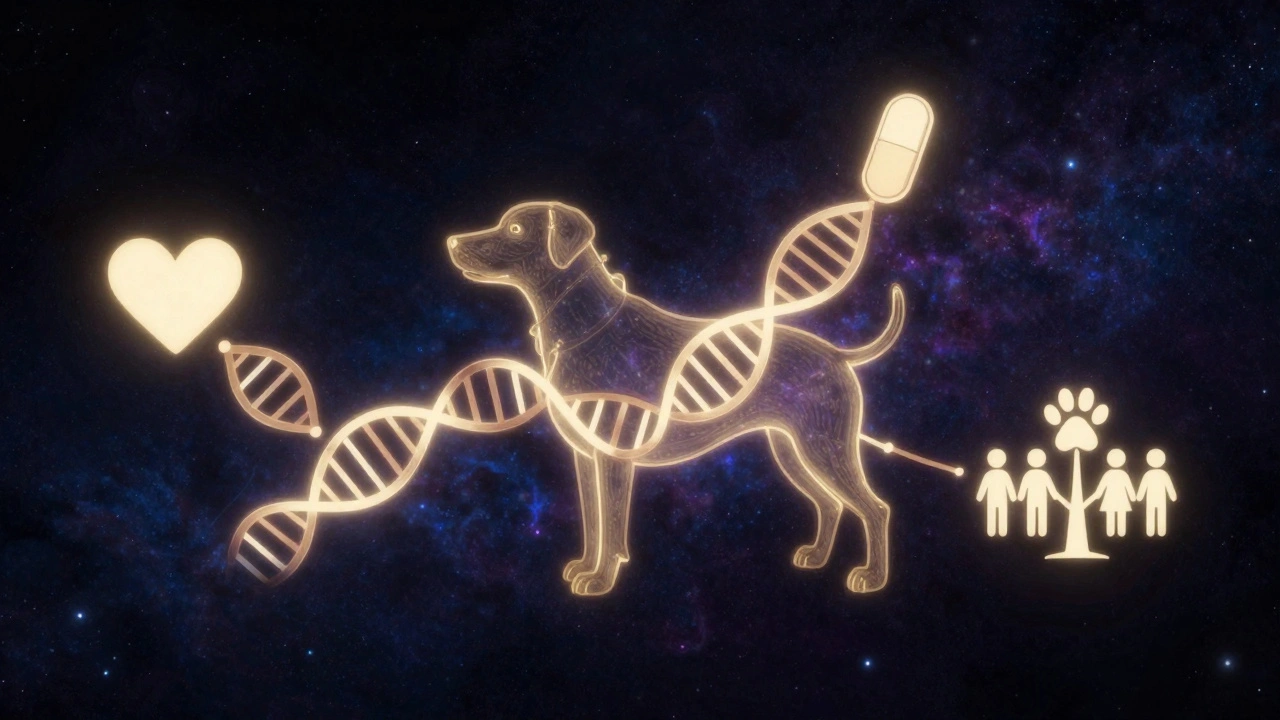
- Health risks: Tests scan for known genetic mutations linked to diseases like degenerative myelopathy, PRA (progressive retinal atrophy), or von Willebrand disease. But they only detect known mutations - not every possible health issue. A negative result doesn’t mean your dog is disease-free.
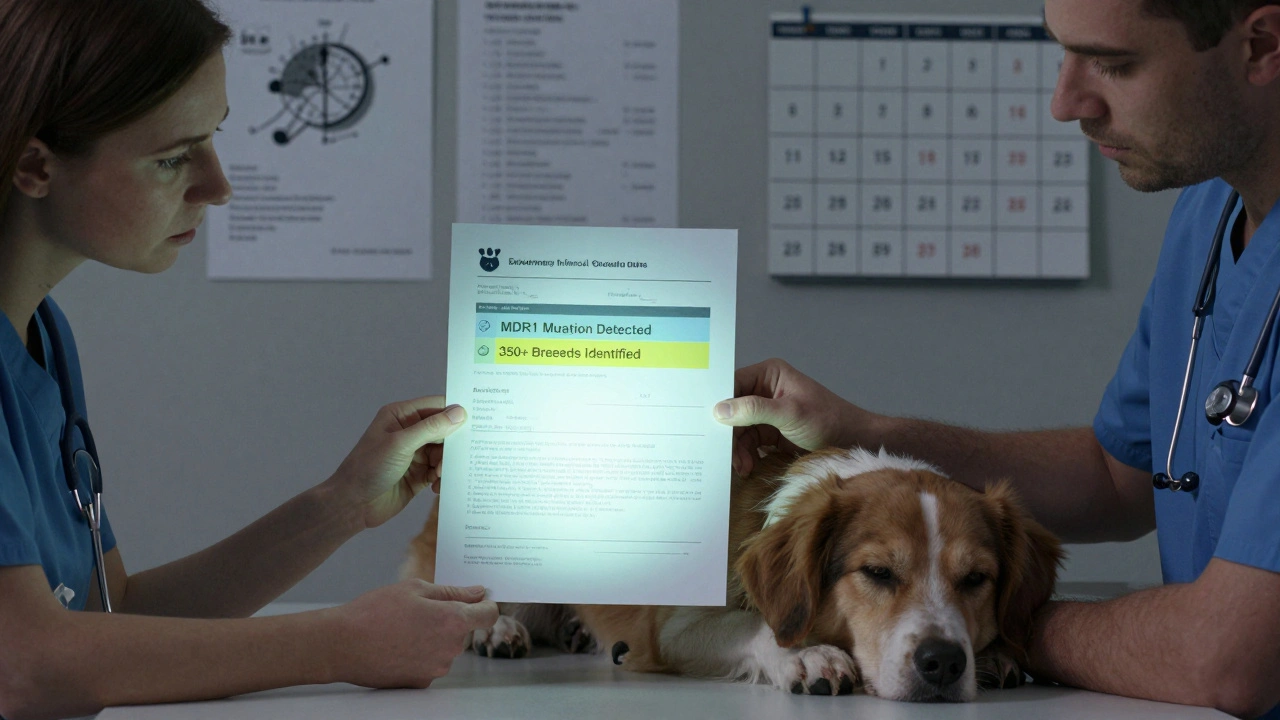
- Drug sensitivity: Some tests check for the MDR1 gene mutation. Dogs with this mutation can have dangerous reactions to common drugs like ivermectin. This info can literally save your dog’s life.
- Traits and physical features: Things like coat color, shedding level, or body size. These are fun to know but rarely impact care.
- Family tree: Some tests let you find relatives in their database. If another owner tested their dog and shared results, you might find a sibling or cousin. It’s rare but exciting when it happens.
Here’s what you won’t get: a guarantee of future health, a cure for genetic conditions, or a crystal ball for behavior. DNA doesn’t predict how your dog will act - environment, training, and socialization do that.
Is the Value Real?
Value isn’t about price. It’s about usefulness. For some owners, the value is clear:
- Rescue dog owners: If you adopted a dog with unknown history, a DNA test can reveal if they’re prone to hip dysplasia or heart conditions. That helps you prepare for vet visits and insurance.
- Owners of breeds with known risks: If your dog is part Border Collie, you might want to know if they carry the MDR1 mutation. That affects what meds your vet can safely prescribe.
- People planning to breed: Responsible breeders use DNA tests to avoid mating dogs that carry the same harmful genes. It’s not just curiosity - it’s ethics.
But for others? The value is thin. If you just want to know if your dog is “12% Chihuahua,” that’s entertainment, not insight. You’ll get a colorful chart, but no actionable health info. And if your dog is already healthy and you’re not planning to breed, the test might be a nice gift - not a necessity.
Hidden Costs You Might Not See
There’s more to the cost than the kit price. Here’s what else to budget for:
- Follow-up vet visits: If the test flags a genetic risk, your vet may recommend blood work, ultrasounds, or monitoring. That could cost $200-$500 extra.
- Genetic counseling: Some labs offer free phone consults. Others charge $50-$100 to explain results. Don’t assume you’ll understand the report alone.
- Repeat testing: If your dog’s results are unclear or if you get conflicting info from another test, you might need to retest. Labs don’t always agree on breed predictions.
- Subscription fees: Some companies charge $10-$20/year for updated health reports or new research findings. It’s optional but easy to miss.
One owner in Ohio spent $150 on a test, then $300 on a genetic consultation and $180 on a follow-up blood panel. She said it was worth it - her dog had a silent heart condition that was caught early. But that’s not typical. Most people don’t go beyond the report.
Which Test Gives You the Best Bang for Buck?
Based on 2025 consumer data and vet recommendations, here’s how the top three compare:
| Test | Price | Breed Detection | Health Screens | Drug Sensitivity | Trait Reports | Family Matching |
|---|---|---|---|---|---|---|
| Embark | $180 | 350+ breeds | 250+ genetic diseases | Yes (MDR1) | Yes (coat, size, ear type) | Yes |
| Wisdom Panel Premium | $120 | 350+ breeds | 200+ genetic diseases | Yes (MDR1) | Yes | Yes |
| DNA My Dog | $70 | 100+ breeds | 30+ common diseases | No | Minimal | No |
Embark leads in health depth and accuracy. Wisdom Panel is the best balance of price and coverage. DNA My Dog is fine if you just want breed curiosity. If your dog has a known breed background or you’re worried about inherited illness, go with Embark or Wisdom Panel. If you’re on a tight budget and your dog is healthy, skip it.
When Should You Skip the Test?
Not every dog needs a DNA test. Here are times to hold off:
- Your dog is healthy, young, and you’re not planning to breed.
- You’re only curious about breed mix - and won’t act on the results.
- You can’t afford follow-up vet care if something shows up.
- Your dog is over 10 years old - most genetic conditions would’ve shown symptoms by now.
- You’ve already had comprehensive health screenings done.
Some vets say DNA tests are overused. They’re not diagnostic tools. A blood test, physical exam, or ultrasound tells you more about your dog’s current health than a cheek swab ever will.
What Do Experts Say?
The American Veterinary Medical Association (AVMA) doesn’t recommend DNA tests as routine. But they do support their use for specific cases - especially when breed history is unknown or when there’s a family history of inherited disease.
Dr. Lisa Freeman, a veterinary nutritionist at Tufts, says: “I’ve seen dogs saved because a DNA test caught a mutation that made them sensitive to a common antibiotic. That’s not hype - it’s life-saving.” But she adds, “If you’re doing it for fun, fine. Just don’t treat it like a medical diagnosis.”
Final Verdict: Is It Worth It?
The cost of a dog DNA test isn’t about the $70 or $180 sticker price. It’s about what you do with the results. If you use it to prevent illness, avoid dangerous meds, or make smarter breeding choices - then yes, it’s worth it. If you just want to know if your dog is part wolf or thinks they’re a Poodle - then it’s a novelty. The value isn’t in the test. It’s in the action you take afterward.
For most owners, the sweet spot is the $120 Wisdom Panel Premium. It covers the most important health markers, gives accurate breed info, and doesn’t break the bank. Skip the cheapest options if you care about health. Skip the priciest if you’re just curious.
Remember: DNA doesn’t change your dog’s personality. But it can change how you care for them. That’s the real value.
Can a dog DNA test tell me if my dog will get cancer?
No. Dog DNA tests can identify genetic mutations linked to higher risk of certain cancers, like lymphoma or hemangiosarcoma. But having the mutation doesn’t mean your dog will definitely get cancer. Environment, diet, age, and luck play bigger roles. The test gives you awareness, not a prediction.
Are dog DNA tests accurate for mixed breeds?
Accuracy varies. Tests are best at identifying recent breeds - like a dog that’s 75% Labrador and 25% Beagle. For dogs with many generations of mixed ancestry, the results get fuzzy. Some tests might say “unknown mixed breed” or guess a breed that’s not actually in their lineage. Don’t treat the report as gospel.
Do vets recommend dog DNA tests?
Vets don’t require them, but many support them in specific cases - especially for rescue dogs, dogs with unexplained symptoms, or breeds prone to inherited conditions. If you’re planning to breed or your dog has a strange medical history, a DNA test can be a useful tool. For healthy pets with known history, it’s usually unnecessary.
Can I use a dog DNA test to get pet insurance?
No. Insurance companies don’t accept DNA test results as proof of health. They require vet exams and medical records. In fact, some insurers might see a positive genetic result as a pre-existing condition and deny coverage. Always check your policy before testing.
How long does it take to get results?
Most companies take 2 to 4 weeks after they receive your sample. Some offer rush processing for an extra $30-$50, cutting it to 7-10 days. Don’t expect instant answers - the lab needs time to analyze thousands of genetic markers.