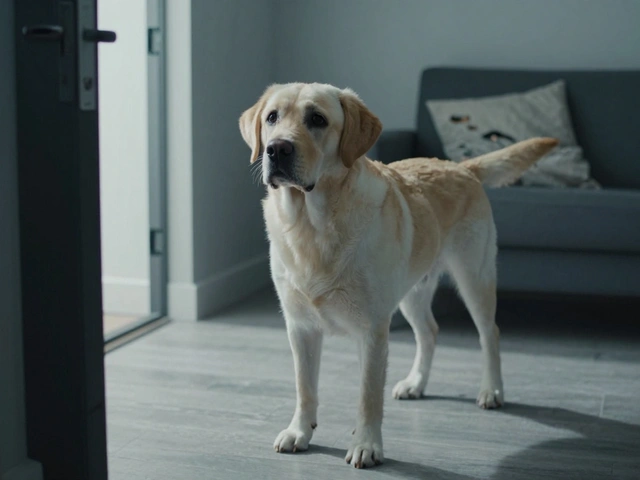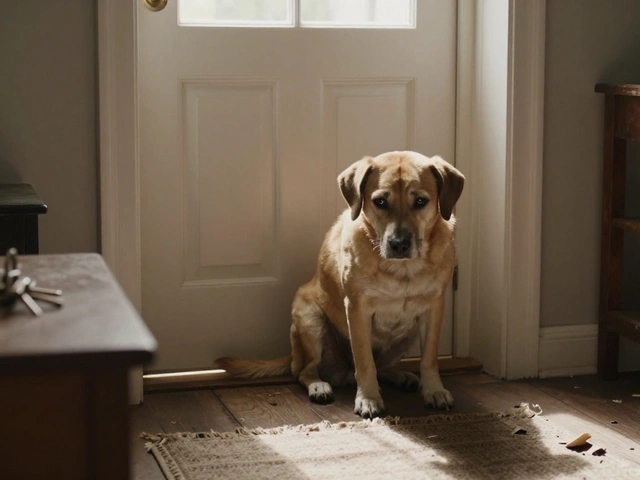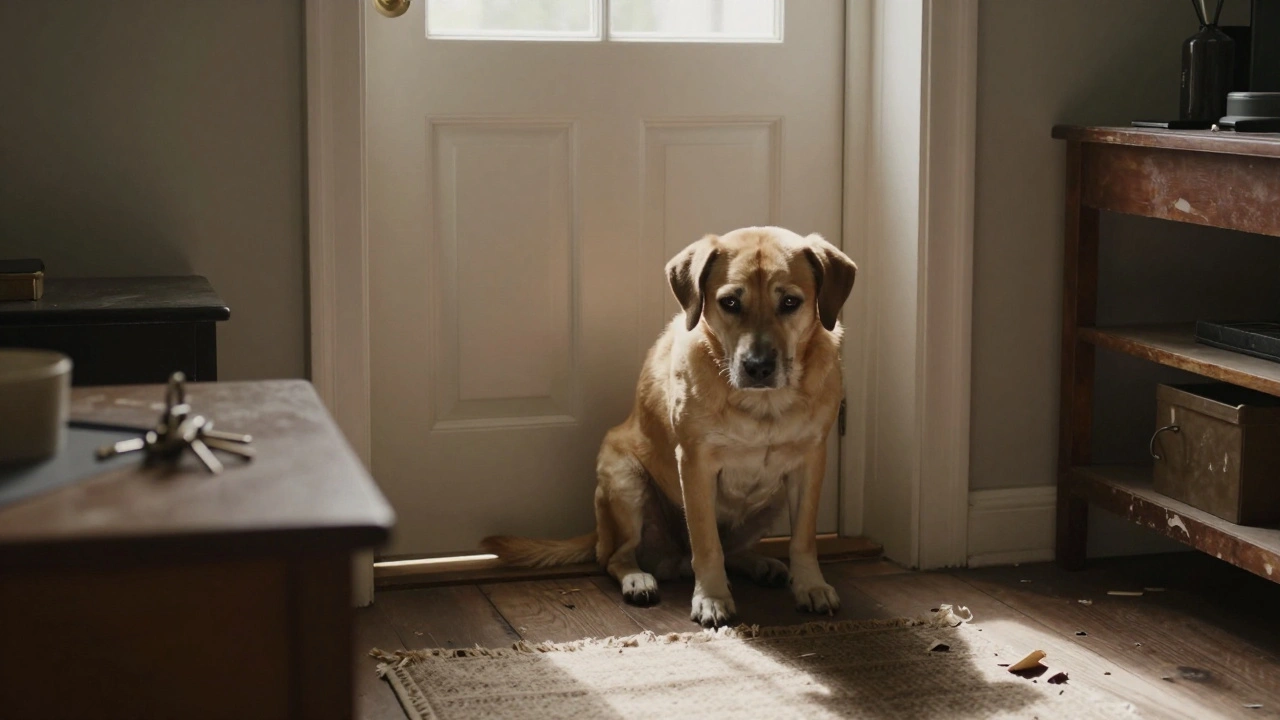
When your dog destroys the couch, barks nonstop, or pees on the rug while you’re gone, it’s easy to feel angry. You might yell. You might give them a time-out. Maybe you’ve even considered a shock collar or spraying water at them when they misbehave. But here’s the truth: punishing your dog for these behaviors doesn’t fix the problem-it makes it worse. What looks like disobedience is actually panic. And you can’t scare a dog out of anxiety.
Why Punishment Doesn’t Work for Separation Anxiety
Separation anxiety isn’t a choice. It’s a neurological response. When a dog with separation anxiety is left alone, their stress hormones spike. Their heart races. Their breathing gets shallow. Their brain floods with fear. This isn’t about being "bad." It’s about being terrified. Punishing them for peeing, chewing, or barking is like yelling at someone for having a panic attack in an elevator. It doesn’t calm them-it traps them in fear.
Studies from the University of Pennsylvania’s Animal Behavior Clinic show that dogs punished for separation-related behaviors show increased cortisol levels, meaning their stress gets worse over time. They don’t learn to be calm. They learn that being alone means pain, shame, or rejection. That deepens the anxiety, not heals it.
What Separation Anxiety Actually Looks Like
Not every destructive act is anxiety. But if your dog only acts out when you leave-or even when you’re getting ready to leave (putting on shoes, grabbing keys)-then it’s likely separation anxiety. Common signs include:
- Excessive barking, howling, or whining right after you leave
- Chewing on doors, window frames, or furniture near exits
- Urinating or defecating inside, even if they’re house-trained
- Scratching or digging at doors or windows
- Following you from room to room, then panicking when you stop moving
- Overly excited greeting rituals (jumping, drooling, trembling) when you return
These behaviors aren’t acts of revenge. They’re desperate attempts to cope with overwhelming fear. Your dog isn’t mad at you. They’re lost without you.
What Happens When You Punish Anxiety Behaviors
Punishment creates a cycle. You yell. They freeze. You leave. They panic. They destroy. You come back. You punish again. Now, every time you pick up your keys, your dog tenses up-not because they’re excited to see you leave, but because they know what’s coming next: isolation and pain.
One client in Portland, a woman named Lisa, tried every punishment method: spray bottles, time-outs in the bathroom, even a shock collar. Her dog, a 4-year-old rescue named Max, started trembling before she even finished putting on her coat. Max stopped making eye contact with her. He wouldn’t come when called. He started hiding under the bed when she moved toward the door. The punishment didn’t stop the chewing. It broke the bond.
Punishment doesn’t teach. It suppresses. And suppressed fear doesn’t disappear-it explodes later, in worse ways.
What Actually Works: Building Safety, Not Control
Recovery from separation anxiety isn’t about stopping bad behavior. It’s about changing how your dog feels when alone. You need to rebuild trust. You need to teach them that being alone is safe, not scary.
Here’s how to do it-step by step:
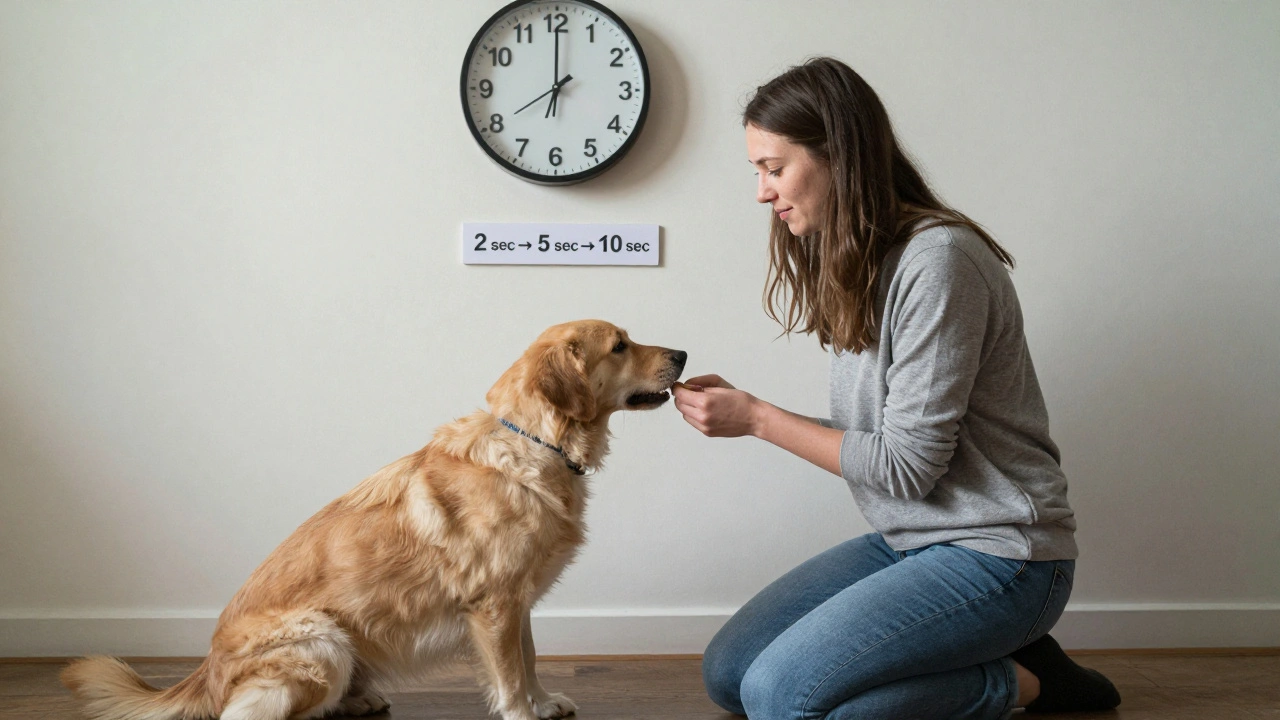
- Start with tiny separations. Leave the room for 2 seconds. Come back. Give a treat. Repeat. Gradually increase to 5, then 10, then 30 seconds. Don’t rush. This isn’t a race.
- Make departures boring. Don’t say goodbye. Don’t kiss them. Don’t coddle. Pick up your keys, put on your coat, walk out the door-and don’t make a big deal. Your dog needs to learn that your leaving is ordinary, not dramatic.
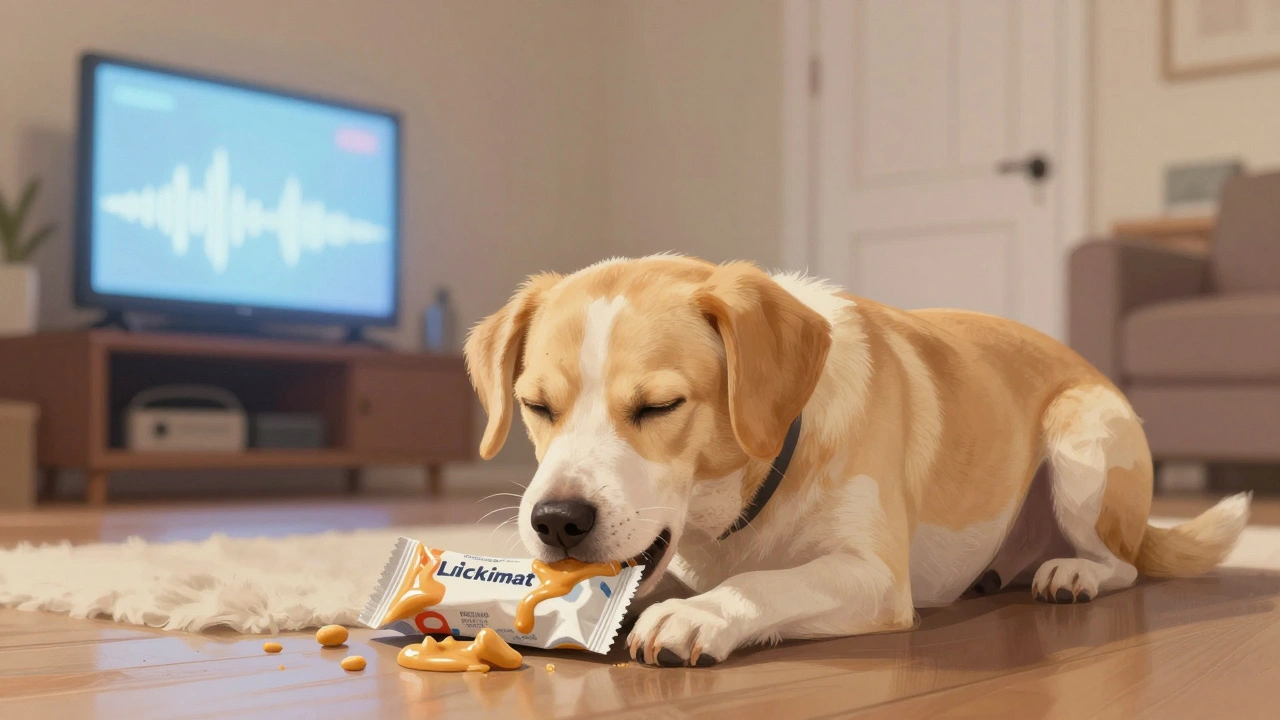
- Use calming tools. A Lickimat with frozen peanut butter, a puzzle toy with kibble, or a long-lasting chew can help redirect focus. These aren’t distractions-they’re emotional anchors.
- Use background noise. Leave the TV or radio on. White noise mimics the presence of people. Studies show it lowers stress levels in dogs left alone.
- Practice "out of sight" training. While your dog is calm, walk out of the room, close the door, and wait 10 seconds. Come back. Repeat. Do this 10 times a day. The goal is to prove that you always come back.
Consistency matters more than duration. Five 10-second absences are better than one 30-minute departure. Progress is slow, but it’s real.
When to Get Professional Help
If your dog’s anxiety is severe-if they’re injuring themselves, refusing to eat, or showing signs of depression-don’t wait. A certified veterinary behaviorist can help. They might recommend:
- Behavioral medication (like fluoxetine or clomipramine) to lower baseline anxiety
- Desensitization plans tailored to your dog’s triggers
- Environmental adjustments (like crate training if the dog finds it comforting)
Medication isn’t a crutch. It’s a bridge. It helps the dog’s brain calm down enough to learn new patterns. Think of it like giving someone with severe depression therapy and medication at the same time. You wouldn’t expect them to "just snap out of it."
What to Avoid at All Costs
Here are five common mistakes that make separation anxiety worse:
- Getting a second dog. Another dog won’t fix anxiety. It might distract them briefly, but it doesn’t teach them to be alone. Many dogs with separation anxiety become attached to just one person.
- Leaving them in a crate if they panic. If your dog screams, scratches, or tries to break out, the crate becomes a prison. Only use it if they’re calm and comfortable inside.
- Using punishment devices. Shock collars, citronella sprays, or ultrasonic trainers increase fear. They don’t reduce anxiety.
- Leaving them alone for too long too soon. Going from 1 hour to 8 hours overnight is a disaster. Build up slowly.
- Ignoring early signs. A little whining, a chewed shoe, one accident-these are red flags. Don’t wait until the couch is shredded.
Real Progress Takes Time
Most dogs show improvement in 2 to 6 weeks. Full recovery can take 3 to 6 months. It’s not fast. But it’s possible. One dog owner in Oregon, after 4 months of consistent training, reported her dog sleeping peacefully through her entire workday for the first time. No barking. No destruction. Just quiet, calm rest.
The key? Patience. And stopping the punishment.
Your dog isn’t trying to get back at you. They’re trying to survive. When you stop treating their fear as disobedience, and start treating it as a wound that needs healing-you’re not just fixing behavior. You’re rebuilding trust. And that’s worth every minute.