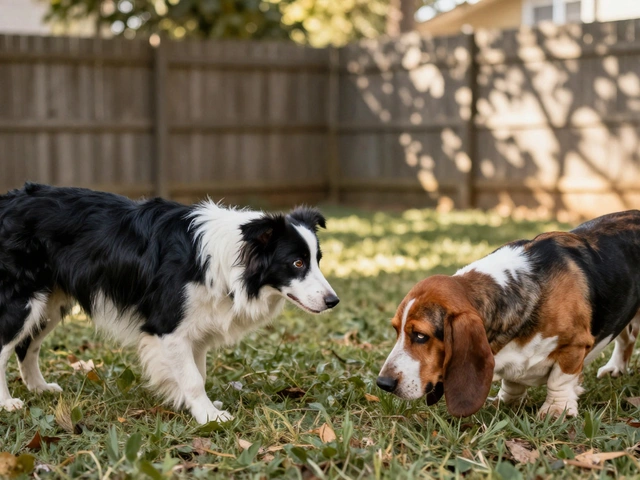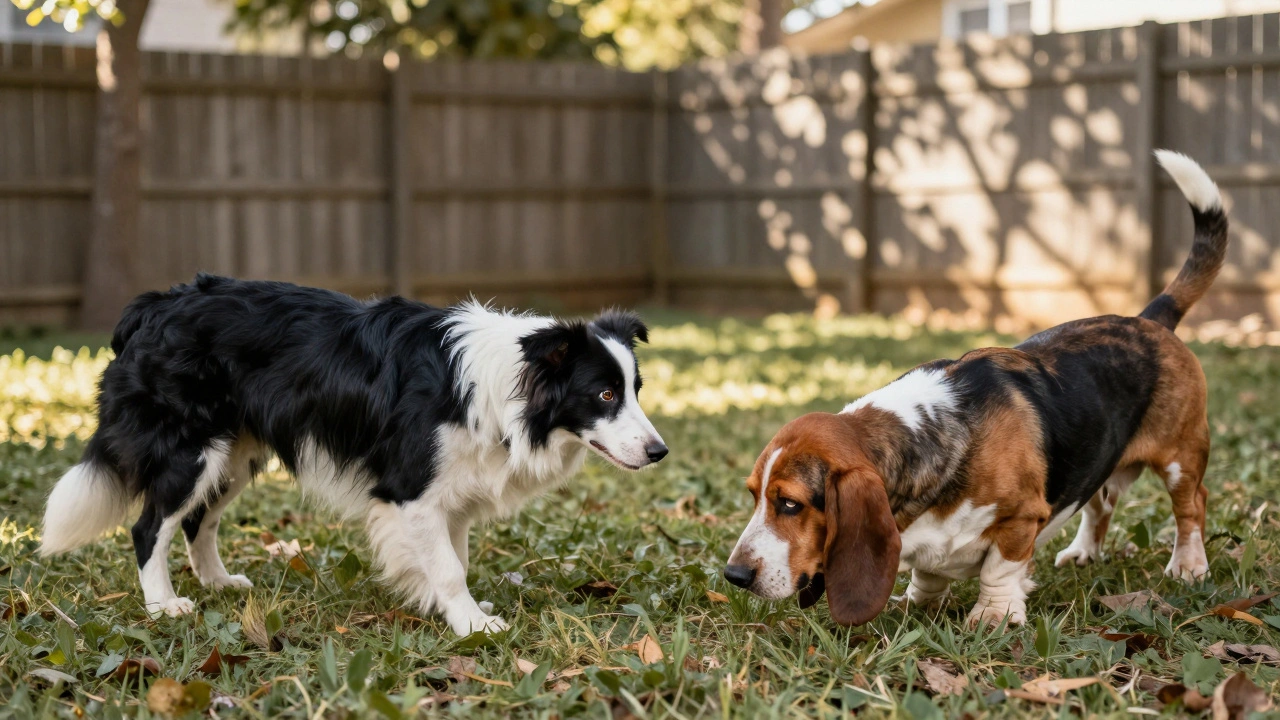
Not every dog who wags their tail at the park is ready to play. Some dogs bounce off the walls with energy, others watch from the sidelines like they’re judging the whole scene. If you’ve ever dropped your dog off at a dog park and walked away only to come back to a tense standoff or a scared pup hiding under a bench, you know playdates aren’t just about putting two dogs together. Matching energy and temperament is the real key to a successful, safe, and fun play session.
Why Most Dog Playdates Fail
Most owners think, "My dog likes other dogs, so they’ll get along." But that’s like assuming two people will be best friends because they both like pizza. One dog might be a high-octane ball of chaos who tackles every new friend like it’s a wrestling match. Another might be a quiet observer who just wants to sniff and walk away. Put them together, and you’re not setting up a playdate-you’re setting up a stress test.
A 2023 study from the University of California, Davis, tracked over 800 dog interactions at off-leash parks. The results? Dogs with mismatched energy levels were 68% more likely to have a negative interaction-growling, chasing, or freezing up-than those paired with similar play styles. It’s not about being "dog-friendly." It’s about being play-compatible.
Understanding Dog Energy Levels
Energy isn’t just about how much your dog runs. It’s about how they move, how long they sustain it, and how they recover.
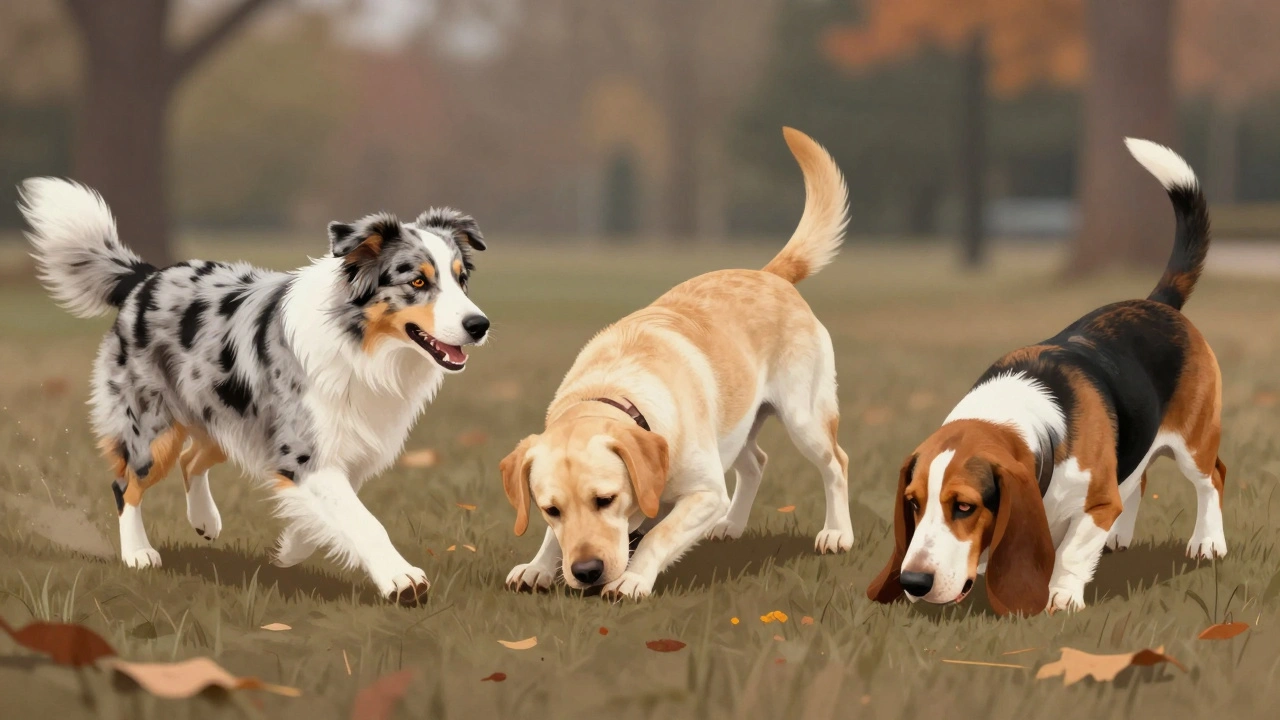
- High-energy dogs play hard, fast, and for long stretches. Think Border Collies, Australian Shepherds, or Labs that won’t stop until they collapse. They want to chase, wrestle, and keep going for 30+ minutes without a break.
- Medium-energy dogs play with bursts. They’ll sprint, then pause to sniff, then chase again. Most mixed breeds and breeds like Beagles or Cocker Spaniels fit here. They enjoy play but need breaks.
- Low-energy dogs prefer sniffing, slow walking, or light tugging. They might not chase at all. Think Basset Hounds, Shih Tzus, or older dogs. For them, play means gentle interaction-not a full-body tackle.
If you bring a high-energy dog to play with a low-energy one, you’ll see the same pattern every time: the big dog lunges, the small dog freezes or yelps, and you’re left apologizing. That’s not play. That’s overstimulation.
Reading Temperament: Play Style Matters More Than Breed
Breed can give you a hint, but temperament is the real clue. Two Golden Retrievers might have totally different play styles. One might be a gentle tugger who loves to carry toys around. The other might be a mouthy, body-slamming brawler.
Here’s how to tell what kind of player your dog is:
- Wrestlers use their whole body. They roll, flip, and bite gently. Their tails wag in wide circles. They often invite play with a "play bow"-front legs down, butt up.
- Chasers focus on movement. They bark, dart, and loop around. They might not want to wrestle at all. This is common in herding and sighthound breeds.
- Sniffers take their time. They circle, sniff each other’s rear ends, and take breaks. They’re not shy-they’re just methodical.
- Overstimulated dogs freeze, lick their lips, turn their head away, or crouch low. These are stress signals. If you see these, it’s time to pause or leave.
Matching a chaser with a wrestler? That’s a recipe for chaos. A chaser will keep running, the wrestler will try to grab them, and someone gets hurt. But match two sniffers? They’ll have a quiet, happy hour together.
How to Match Playmates the Right Way
Here’s a simple system to find the right playdate partner:
- Observe your dog at the park for 10 minutes. Don’t intervene. Watch how they react to other dogs. Do they charge? Do they hide? Do they play for 5 minutes and then nap?
- Ask other owners about their dog’s play style. "Does your dog like to chase?" "Do they get overwhelmed easily?" "Do they need breaks?" Most owners know their dog’s habits.
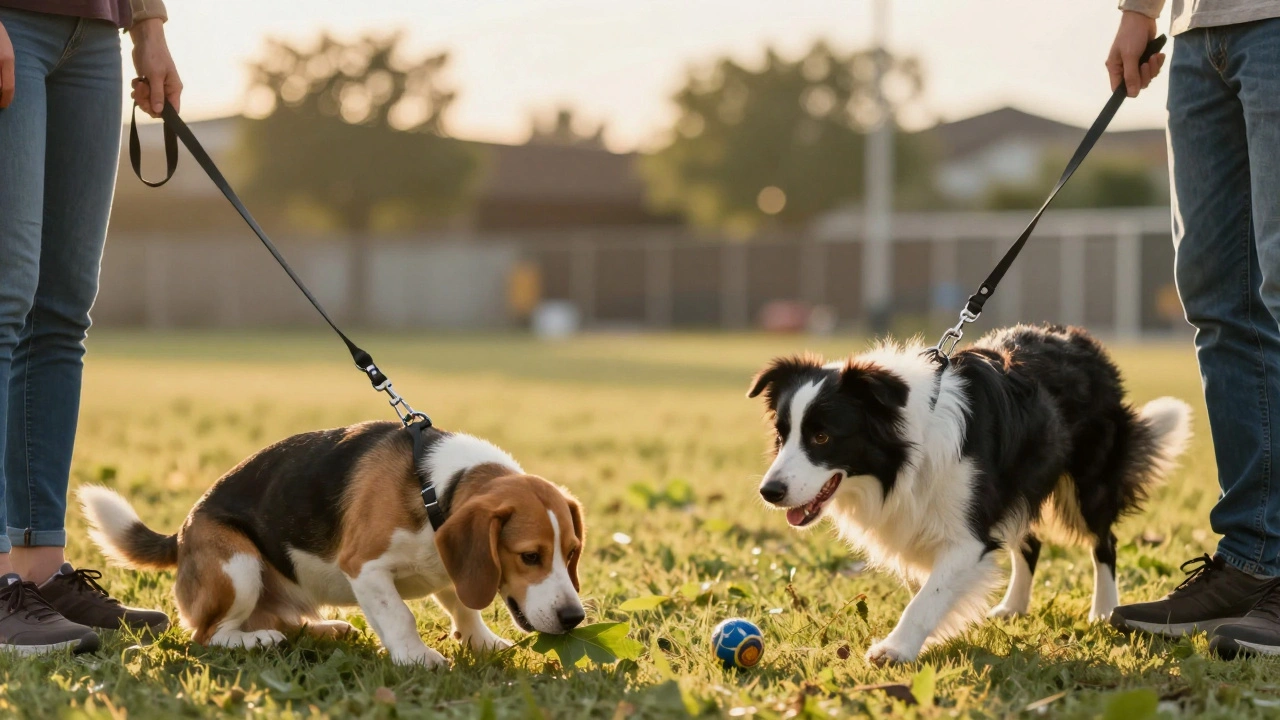
- Start slow. Don’t drop them into a group. Try a one-on-one meet in a quiet, fenced area. Let them sniff each other for a few minutes. Watch body language.
- Set a timer. Play for 10-15 minutes max the first time. If both dogs are still happy, try 20. If one looks tired, bored, or tense-call it quits.
- Use a leash at first. Even if it’s a "off-leash" park, keep leashes on during the first meeting. It gives you control if things get too intense.
At my place in Portland, I’ve started a small playgroup of four dogs. We match them by energy and style. We have a high-energy Border Collie, a medium-energy Beagle, a low-energy Basset, and a chill mixed breed. The Border Collie only plays with the mixed breed-they both sprint and tire out together. The Beagle plays with the Basset because they both move slow and sniff a lot. The Basset doesn’t even go near the Collie. And that’s fine.
Red Flags: When to Stop a Playdate
Not every dog fight is loud. Sometimes it’s silent. Here are signs to end the play immediately:
- One dog is constantly avoiding the other-turning away, walking off, or hiding.
- One dog is mounting the other repeatedly (not playfully).
- Stiff body posture, raised hackles, or a low, growling bark.
- One dog is yelping or whining without play-bowing to reset.
- Play gets too rough-biting necks, slamming into fences, or ignoring stop signals.
Even if both dogs look "happy," if one is clearly overwhelmed, it’s not a playdate. It’s a trauma.
What to Do If Your Dog Is Too Shy or Too Aggressive
Some dogs just don’t like other dogs. That’s okay. Not every dog needs to be social.
If your dog is shy:
- Try one-on-one walks with a calm, slow dog.
- Let them interact from a distance first-side-by-side walking works wonders.
- Use treats to build positive associations. Don’t force interaction.
If your dog is too rough:
- Practice "leave it" and "come" commands before play.
- Use a playtime timer. Five minutes max, then call them away.
- Work with a certified dog trainer on impulse control. This isn’t about being "bad"-it’s about learning boundaries.
Seasonal Adjustments Matter Too
Energy changes with the weather. In Portland, winter means shorter walks and less outdoor time. Dogs get cooped up. Come spring, they’re bursting with energy. That’s when mismatched playdates happen most.
Adjust your playdate plan by season:
- Winter: Short, quiet play. Focus on sniffing and calm interaction.
- Spring/Summer: Longer sessions, but still match energy. High-energy dogs need more space and time.
- Fall: Energy drops. Older dogs need more breaks. Watch for joint stiffness.
Don’t assume your dog’s summer play style will carry through winter. Their needs change. So should your plan.
Final Rule: It’s Not About Quantity-It’s About Quality
You don’t need your dog to have five playdates a week. One good, well-matched session is better than three chaotic ones. A dog who comes home tired but happy is a dog who’s thriving. A dog who comes home shaking or hiding? That’s a sign something’s wrong.
Take the time to match playmates. It’s not extra work-it’s the difference between a joyful outing and a nightmare you’ll regret.