You open a bag of premium dog kibble in January. By April, the bags smell stale, and your dog turns his nose up at dinner. It’s not just about taste-it’s about safety. Improperly stored dog food is nutritious sustenance for canines that requires specific handling to maintain freshness and prevent spoilage. When you leave dry food exposed to air or store opened cans incorrectly, you invite moisture, pests, and bacteria into your home.
I’ve seen this happen in countless Portland homes where humidity swings make storage tricky. The goal isn’t just keeping food edible; it’s preserving the nutritional integrity so your dog gets exactly what the manufacturer promised. Let’s break down how to handle both dry kibble and wet canned food properly.
The Science Behind Dry Kibble Spoilage
Dry kibble seems indestructible because it has low moisture content, usually under 10%. However, that doesn’t mean it lasts forever once the seal breaks. The main enemies are oxygen, light, heat, and humidity. Oxygen triggers oxidation in the fats used as preservatives and flavor enhancers. Once those fats go rancid, they don’t just smell bad-they can cause gastrointestinal upset in sensitive dogs.
Light accelerates this degradation process, especially UV rays from windows. Heat speeds up chemical reactions that break down vitamins. Humidity is perhaps the most dangerous factor because it introduces water activity, allowing mold spores to germinate on the surface of the kibble. You might not see visible mold immediately, but mycotoxins can develop silently.
- Oxidation: Causes fats to become rancid, leading to off-flavors and potential health issues.
- Moisture: Promotes mold growth and bacterial proliferation.
- Heat: Degrades essential vitamins like A, D, and E faster than room temperature storage.
- Pests: Weevils, moths, and rodents are attracted to the scent of meat-based proteins.
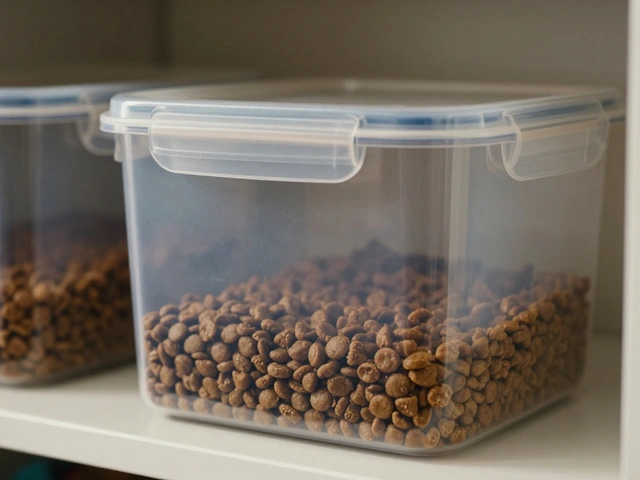
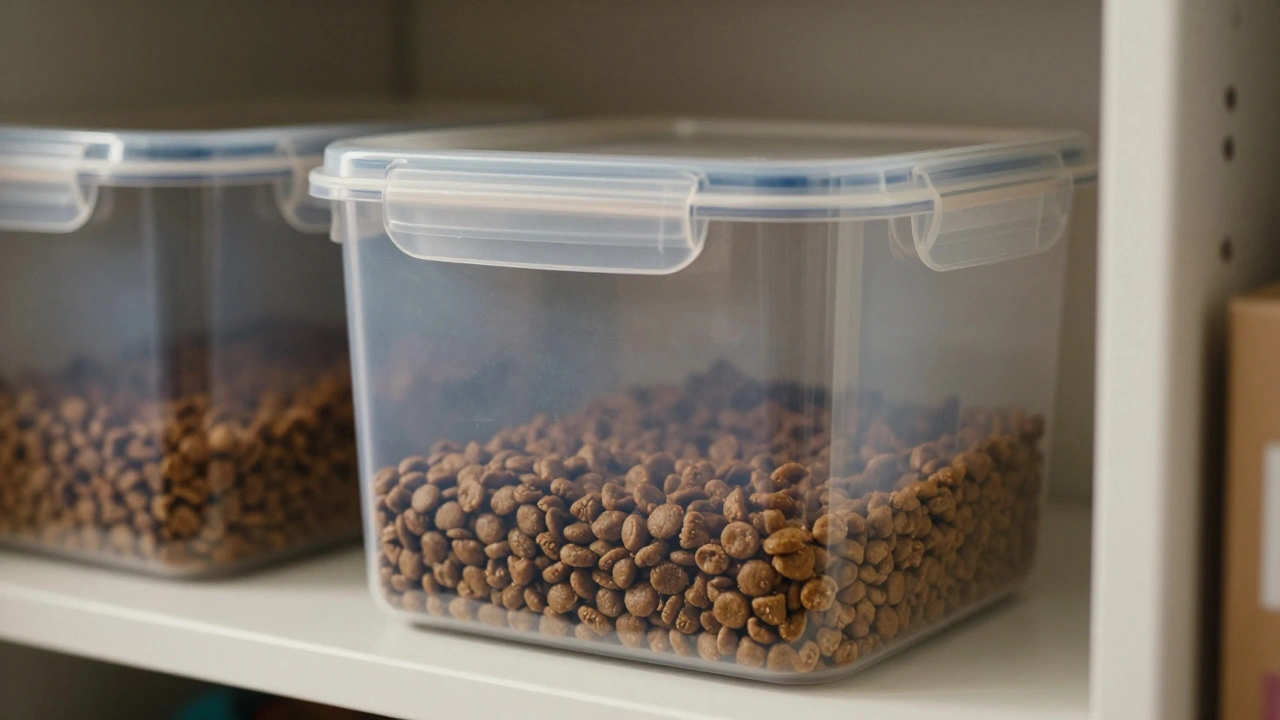
To combat these factors, you need an airtight environment. Many people think transferring kibble to a decorative ceramic bowl looks nice, but unless that bowl has a gasket-sealed lid, it fails the test. Plastic bins with tight-fitting lids work better, provided they are food-grade and cleaned regularly.
Best Practices for Storing Dry Kibble
The original bag actually serves as a good barrier against light and some oxygen if handled correctly. Here is the most effective method I recommend:
- Keep it in the bag: Do not throw away the original packaging. It often contains nitrogen-flushed layers designed to slow oxidation.
- Use a secondary container: Place the sealed bag inside a sturdy, airtight plastic bin. This protects against pests and physical damage.
- Store in a cool, dark place: Avoid garages or sheds where temperatures fluctuate wildly. A pantry or closet interior works best.
- Check expiration dates: Rotate stock so older bags get used first. Most kibble has a shelf life of 6-12 months after opening.
If you prefer using containers without the original bag, ensure the container is completely dry before adding new kibble. Even a drop of leftover moisture from washing can create a breeding ground for bacteria. Also, never store kibble directly on concrete floors, as they can wick moisture upward.
Handling Wet Dog Food Safely
Canned dog food is moist, high-protein pet food preserved in hermetic seals that requires refrigeration once opened. Unlike kibble, wet food has high water activity, making it highly perishable. Before opening, unopened cans can sit at room temperature indefinitely, provided they aren’t dented or bulging. Once you pop the lid, the clock starts ticking.
Bacteria multiply rapidly between 40°F and 140°F (the "danger zone"). If you leave an open can out for more than two hours, especially in warm weather, pathogens like Salmonella or E. coli can reach harmful levels. Always refrigerate unused portions immediately.
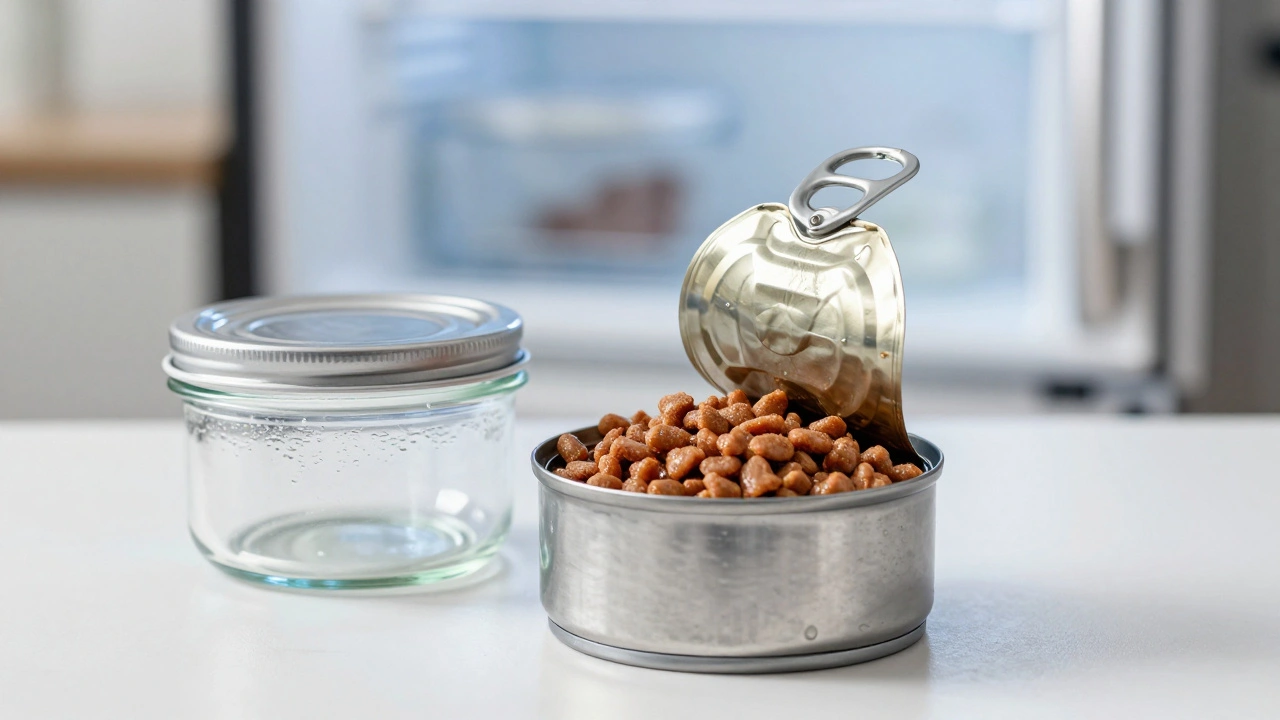
Transfer leftovers to a glass or BPA-free plastic container with a tight lid. Don’t leave the food in the metal can while storing it in the fridge, as the metal can react with acidic ingredients over time, altering the taste and potentially leaching small amounts of metals into the food.
| Food Type | Unopened Storage | Opened Storage | Max Shelf Life (Opened) |
|---|---|---|---|
| Dry Kibble | Cool, dry pantry | Airtight container | 4-6 weeks |
| Canned Food | Room temp (no dents) | Refrigerator (sealed) | 3 days |
| Fresh/Raw Food | Freezer | Refrigerator | 2-3 days |
Signs Your Dog Food Has Gone Bad
Your senses are powerful tools here. Trust them. If something smells off, it probably is. For kibble, look for a musty odor or a distinctively sour smell. Visually inspect for any clumping, which indicates moisture intrusion. If you see web-like strands or fuzzy spots, discard the entire batch immediately-mold roots can penetrate deeper than the surface.
For canned food, check for gas buildup. If a can is bloated before opening, do not use it. After opening, if the texture becomes slimy or the color changes significantly, toss it. Never feed spoiled food to your dog hoping they won’t notice. Their digestive systems are resilient, but toxins from mold or bacteria can cause severe vomiting, diarrhea, or even organ damage.
Common Mistakes to Avoid
One major error is scooping kibble directly from the bag into the bowl every time. This exposes the rest of the supply to air and contaminants each time you lift the bag. Instead, measure out portions into a separate scoop or cup, then reseal the bag tightly. Use clips or vacuum-seal devices if available.
Another mistake is storing food near cleaning supplies or chemicals. Strong odors can permeate porous packaging, affecting the palatability of the food. Keep pet food isolated from household cleaners, detergents, and pesticides.
Lastly, don’t ignore the "best by" date. While food might be safe past that date, the nutritional value declines. Vitamins degrade over time regardless of storage conditions. Feeding old food means your dog isn’t getting the balanced nutrition formulated by veterinary dietitians.
Special Considerations for Large Quantities
If you buy bulk bags to save money, consider freezing portions. Divide a large bag into smaller, manageable weekly servings. Freeze the extra portions in heavy-duty freezer bags. This extends freshness significantly and ensures you always have crisp, nutrient-rich food on hand. Just let the frozen kibble come to room temperature before serving so your dog doesn’t experience thermal shock.
For households with multiple dogs or varying schedules, label containers with the date opened. This helps track rotation and prevents accidental feeding of expired batches. Consistency in storage habits protects your pet’s health and your wallet by reducing waste.
Can I store dog kibble in the refrigerator?
It is generally unnecessary and not recommended for most kibble due to condensation risks when removing it from cold storage. However, if you live in an extremely hot climate without air conditioning, refrigerating sealed portions in airtight containers can help preserve fat quality. Ensure the container is fully sealed to prevent moisture absorption.
How long does opened canned dog food last in the fridge?
Opened canned dog food should be consumed within three days. Transfer leftovers to a sealed glass or plastic container and refrigerate immediately. Discard any food left out for more than two hours at room temperature to avoid bacterial growth.
Is it safe to transfer kibble to a different container?
Yes, but only if the container is airtight, clean, and dry. Ideally, keep the original bag inside the new container to maintain the protective barrier against light and oxygen. Avoid containers previously used for other foods unless thoroughly sanitized to prevent cross-contamination.
What should I do if my dog eats moldy kibble?
Monitor your dog closely for signs of illness such as vomiting, diarrhea, lethargy, or loss of appetite. Contact your veterinarian immediately if symptoms appear. Small amounts may pass without issue, but mycotoxins can be harmful, so professional advice is crucial.
Why does my dog food smell rancid?
Rancidity occurs when fats oxidize due to exposure to air, light, or heat. This process produces unpleasant odors and flavors. Check your storage methods: ensure containers are airtight, stored in cool dark places, and that the food hasn’t exceeded its recommended shelf life after opening.