When your dog has arthritis, grooming isn’t just about looks-it’s about comfort, safety, and trust. Many owners assume that if their dog is slowing down, they should skip baths or brushings. But skipping grooming can make arthritis worse. Matted fur pulls on sensitive joints. Overgrown nails change how they walk. Dirty skin leads to infections that cause more pain. The right grooming routine doesn’t add stress-it relieves it.
Why Grooming Matters More with Arthritis
Arthritis in dogs isn’t just stiff joints. It’s a full-body issue. Dogs with arthritis often avoid moving, which means their fur gets tangled, nails grow too long, and skin oils build up. A 2023 study from the University of Pennsylvania’s Veterinary Orthopedic Research Center found that dogs with moderate to severe arthritis who received regular, gentle grooming showed a 32% improvement in mobility over six months. Why? Because grooming reduces pressure points, improves circulation, and helps you catch early signs of swelling or skin breakdown.
Think of it this way: if you had arthritis in your knees, you wouldn’t want someone tugging on your sweater or poking at your sore spots. The same applies to your dog. Grooming becomes a therapeutic routine-not a chore.
Tools That Make a Difference
Not all brushes, combs, or shampoos work for arthritic dogs. You need tools designed for comfort, not efficiency.
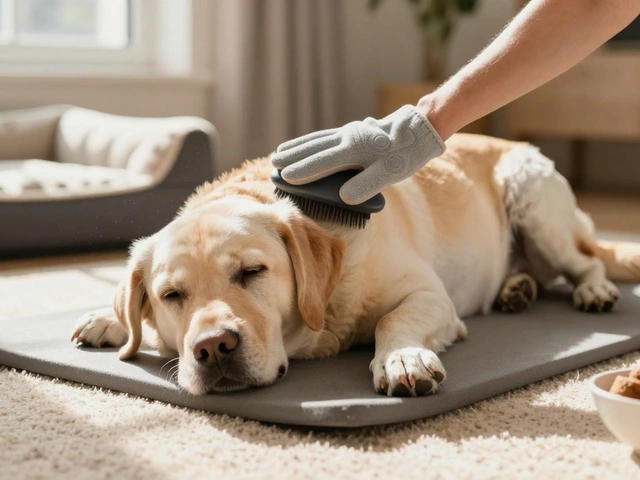
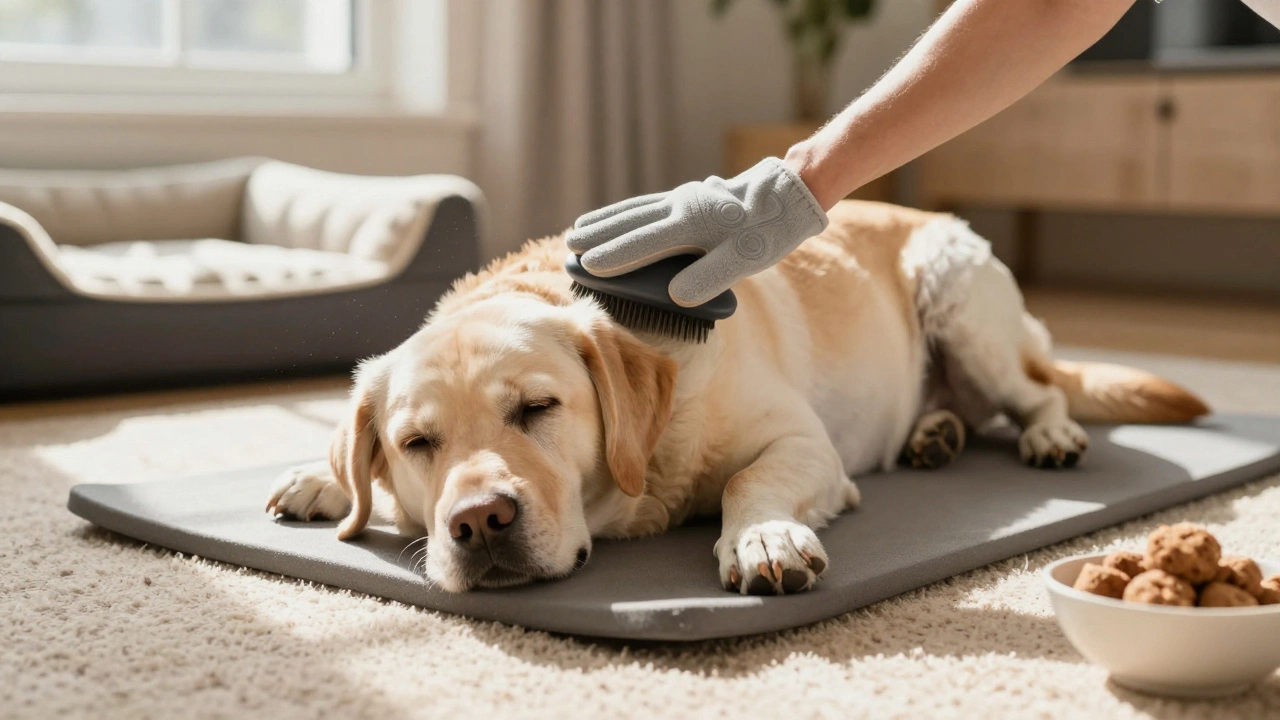
- Soft-bristle brushes or rubber grooming gloves are gentler than metal pins. They massage instead of scrape.
- Wide-tooth combs with rounded tips prevent tugging on sensitive skin.
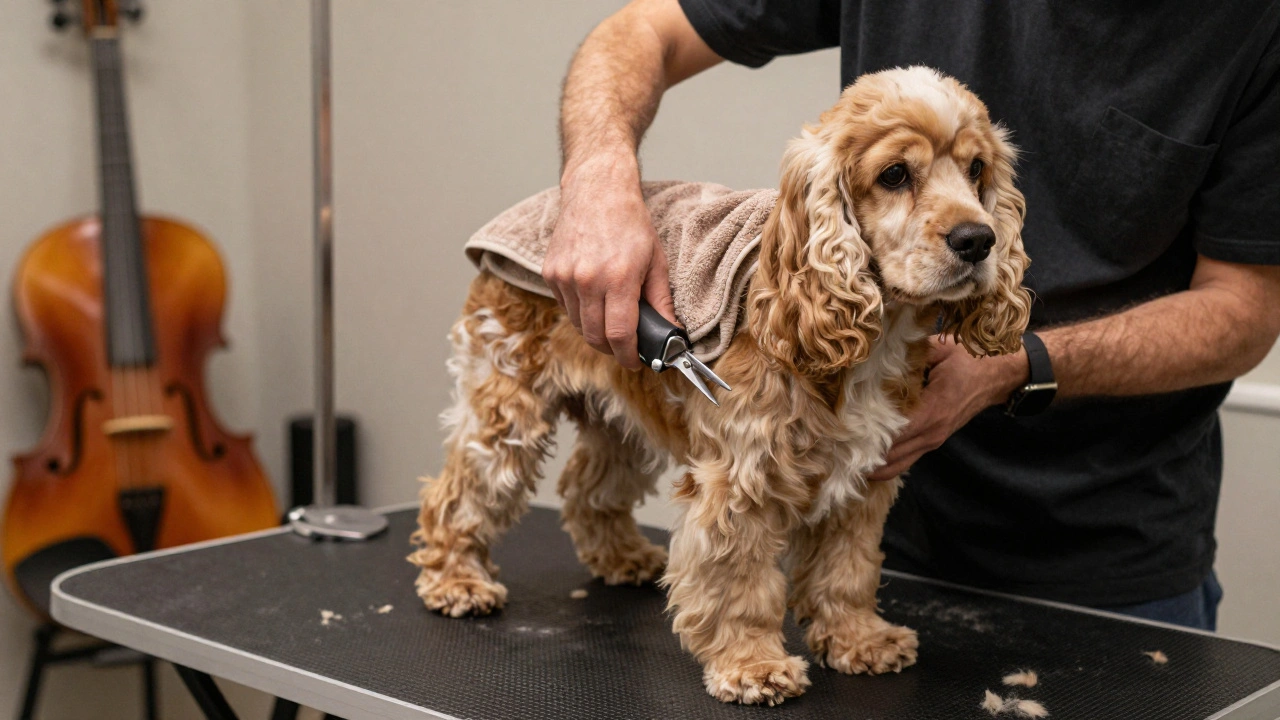
- Electric clippers with low-heat blades reduce the need for shaving large areas, which can be stressful. Look for models with adjustable speeds.
- Non-slip grooming tables or anti-slip mats on the floor help dogs feel secure. If your dog struggles to stand, skip the table entirely and groom on a carpeted floor.
- Warm water shampoos with oatmeal or aloe help soothe inflamed skin. Avoid harsh detergents-they dry out skin and worsen itching.
One owner in Portland, whose 12-year-old Labrador had hip dysplasia, switched from a metal slicker brush to a silicone grooming glove. She said her dog started leaning into the strokes instead of flinching. That’s the goal: turn grooming into something your dog looks forward to.
How to Groom Without Causing Pain
There’s a right way and a wrong way to handle an arthritic dog during grooming. Here’s how to do it right.
- Start with warmth - Warm your hands before touching your dog. Use a heating pad (on low, wrapped in a towel) for 10 minutes before grooming to loosen stiff muscles.
- Work in short sessions - 5 to 10 minutes at a time, twice a week. If your dog tenses up, stop. Wait a day. Rushing creates fear.
- Support joints while brushing - If your dog has trouble lifting their leg, gently hold their paw with one hand while brushing with the other. Don’t force a leg into a position it can’t hold.
- Never pull mats - Use scissors with rounded tips to carefully cut mats out, parallel to the skin. If a mat is too tight, skip it. A professional groomer can handle it safely.
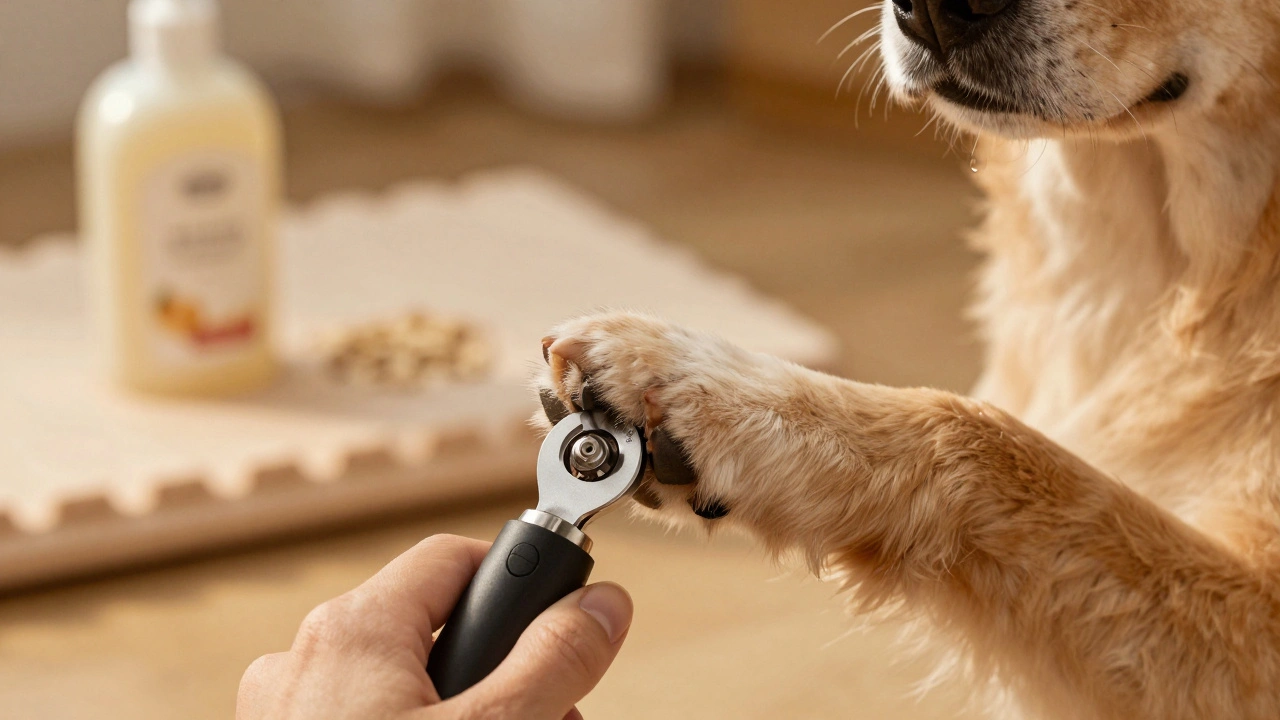
- Trim nails slowly - Arthritic dogs often have curled nails from lack of movement. Trim just the tip. If you hear clicking on the floor, it’s time. Use a rotary grinder instead of clippers-it’s quieter and less jarring.
One thing most owners miss: dogs with arthritis often don’t show pain until it’s severe. If your dog suddenly stops letting you touch their back legs, or flinches when you brush near their hips, it’s not being stubborn-it’s a warning.
Creating a Comfortable Grooming Space
Your grooming area should feel like a safe zone. Here’s how to set it up:
- Use memory foam pads under your dog’s chest and hips during brushing. These reduce pressure on sore joints.
- Keep the room warm - Cold air tightens muscles. A room temperature of 72°F (22°C) is ideal.
- Play soft music - Studies show classical music lowers cortisol levels in dogs. Try playlists designed for pets.
- Have treats ready - Not just any treats. Use soft, bite-sized ones that don’t require chewing. This keeps your dog’s jaw relaxed.
- Don’t groom after meals - Digestion can cause discomfort. Wait at least two hours after eating.
One owner in Oregon started using a heated dog bed as a grooming platform. Her 14-year-old Cocker Spaniel, who used to hide under the couch, now walks over to it on her own. That’s progress.
When to Call a Professional
You don’t have to do everything yourself. A professional groomer trained in geriatric or arthritic pet care can be a lifesaver.
Look for groomers who:
- Ask about your dog’s mobility issues before starting
- Use ramps or lifts instead of lifting your dog
- Offer shorter sessions with breaks
- Have experience with dogs on pain meds (like NSAIDs or gabapentin)
Many veterinary clinics now partner with mobile groomers who come to your home. This eliminates the stress of car rides and unfamiliar environments. In Portland, several mobile groomers specialize in senior dogs with arthritis. Ask your vet for a referral.
What to Avoid
Even well-meaning owners make mistakes. Here’s what not to do:
- Don’t use human shampoo - It’s too alkaline. Dog skin has a different pH. It causes irritation and itching.
- Don’t force a dog into a position - If they resist, it’s because it hurts. Adapt instead.
- Don’t groom when your dog is in a flare-up - If they’re limping more than usual or yelping when they move, wait until the pain eases.
- Don’t skip dental care - Arthritis often goes hand-in-hand with gum disease. Brush teeth with a soft brush or finger wrap. Bad breath isn’t normal at any age.
One common myth: "My dog doesn’t need a bath because they’re not dirty." But arthritic dogs often can’t lick themselves clean. That means dirt and oils build up, leading to hot spots and infections. Bathing every 3-4 weeks is usually safe-and necessary.
Monitoring Progress
Keep a simple log. Note:
- How your dog reacts during grooming (calm, tense, avoids touch)
- Any changes in mobility after grooming
- Signs of skin redness, swelling, or odor
Some owners use a phone app to record short videos before and after grooming sessions. Watching them side-by-side helps spot subtle improvements-like a dog lifting a paw more easily or turning their head without grimacing.
Progress isn’t always fast. But consistent, gentle grooming can slow decline. It keeps your dog cleaner, more mobile, and more connected to you.
Final Thought: It’s Not Just About Cleanliness
Grooming an arthritic dog isn’t about making them look good. It’s about helping them feel safe, respected, and cared for. Every stroke of the brush, every trimmed nail, every warm towel wrap says: "I see you. I’m not going to leave you alone with this pain."
That kind of connection doesn’t show up on a vet’s chart. But it shows up in the way your dog leans into your hand. In the way they sigh when you stop. In the way they still wag their tail-even if it’s slow.
Can I still groom my dog if they’re on pain medication?
Yes, but be extra careful. Pain meds like carprofen or gabapentin can make dogs drowsy or unsteady. Avoid grooming right after they’ve taken their dose. Wait 2-3 hours. Also, watch for signs of dizziness or loss of balance. If they seem wobbly, delay grooming until they’re more alert.
How often should I brush my arthritic dog?
Short-haired dogs: every 3-4 days. Long-haired dogs: daily, but in 5-minute sessions. Even light brushing helps prevent mats and stimulates blood flow. If your dog resists daily brushing, try every other day. Consistency matters more than frequency.
Should I bathe my arthritic dog more often?
No. Bathing more than once every 3-4 weeks can dry out their skin and make itching worse. Use a moisturizing shampoo and rinse thoroughly. If your dog gets dirty between baths, wipe them down with a damp, warm cloth-especially around the paws and rear end.
My dog hates being touched. What can I do?
Start with touch desensitization. Spend 2-3 minutes a day gently stroking areas they tolerate-like their shoulder or back. Pair it with a treat. Gradually move to more sensitive spots. Never force contact. If they move away, stop. Let them come back to you. This builds trust over weeks, not days.
Can grooming help with arthritis pain?
Not directly, but it helps indirectly. Gentle brushing improves circulation, reduces muscle tension, and helps you notice swelling or heat in joints early. It also keeps your dog mobile by preventing painful mats and overgrown nails. Many owners report their dogs seem more relaxed and willing to move after regular grooming sessions.