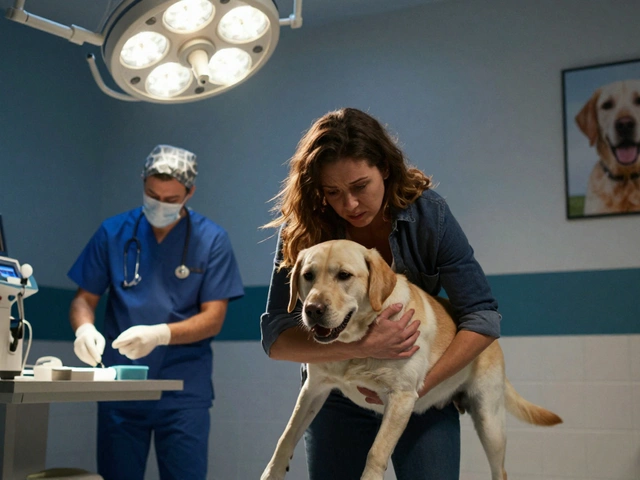
When you bring home a new puppy, you hope for wagging tails and playful naps. But if your dog starts limping at six months, or has trouble breathing by age one, you might be staring at a vet bill that hits $3,000-or more. And if your dog is a breed prone to inherited problems, like a Bulldog with breathing issues or a Golden Retriever with hip dysplasia, you need to know exactly what your pet insurance covers before it’s too late.
What Are Hereditary and Congenital Conditions?
These aren’t the same thing, but they often get mixed up. A hereditary condition is passed down through genes from parent to puppy. Think of it like inheriting your mom’s blue eyes-but instead, your dog inherited a faulty gene that causes elbow dysplasia. Breeds like German Shepherds, Dobermans, and Cavaliers are known for specific inherited issues because of selective breeding.
A congenital condition is something that develops before birth or right after, but isn’t necessarily genetic. It could be a heart defect, a cleft palate, or malformed kidneys. These show up early, often before a dog is one year old. A puppy born with a hole in its heart didn’t get it from a parent’s DNA necessarily-but it formed during fetal development.
Both can be expensive to treat. Surgery for a luxating patella in a Pomeranian? $2,500. Correcting a portosystemic shunt in a Yorkshire Terrier? Up to $5,000. And if your dog has multiple issues over its life, those bills add up fast.
Why Most Pet Insurance Plans Exclude These
Here’s the hard truth: many pet insurance companies won’t cover hereditary or congenital conditions at all. Why? Because they’re predictable. If you own a French Bulldog, it’s almost guaranteed they’ll develop brachycephalic syndrome. Insurance companies aren’t charities-they’re businesses. They price policies based on risk, and breeds with known problems = higher claims.
Some insurers outright deny coverage for these conditions. Others offer it but charge extra premiums or exclude them unless you enroll your dog before a certain age-often before 12 months. And if your dog already shows symptoms? Forget it. That’s considered a pre-existing condition, and no policy will pay for it.
One 2023 study from the American Veterinary Medical Association found that 68% of dogs under three years old with breed-related health issues had never been insured because their owners assumed “it wouldn’t happen to them.” It happened. And they paid out-of-pocket.
Which Companies Actually Cover These Conditions?
Not all insurers are the same. A few have changed their policies in the last two years to stay competitive. Here’s what’s actually available in early 2026:
- Embrace Pet Insurance: Covers hereditary and congenital conditions with no waiting period for breed-specific issues, as long as you enroll before age 12 months. They even cover hip dysplasia in large breeds with no exclusions.
- Healthy Paws: Includes congenital conditions in their standard plan. Hereditary conditions are covered only if diagnosed after enrollment and no symptoms were present before signing up.
- Petplan (Now Nationwide): Offers comprehensive coverage for both, including hereditary conditions like von Willebrand disease in Dobermans and degenerative myelopathy in German Shepherds.
- ASPCA Pet Health Insurance: Covers congenital conditions by default. Hereditary conditions are covered if enrolled before age 12 and no signs were visible at enrollment.
These four are the only ones that consistently include these conditions without heavy restrictions. Others might claim they do-but read the fine print. Some only cover them after a 12-month waiting period, or require a separate rider that adds $20-$40/month.
What to Look for in a Policy
If you’re buying insurance for a purebred puppy, here’s your checklist:
- Enroll before 12 months: Most companies require this. After that, coverage for inherited issues becomes impossible.
- Ask for a written list of excluded conditions: Don’t trust a sales rep. Get the policy document and look for the “Exclusions” section. If it says “breed-specific conditions,” walk away.
- Check waiting periods: Some plans have a 14-day wait for accidents but a 6-month wait for hereditary issues. That’s a trap.
- Confirm coverage for diagnostic tests: An MRI for spinal cord disease? A cardiac ultrasound for a heart murmur? Make sure diagnostics aren’t capped or excluded.
- Look at reimbursement rates: 70% reimbursement means you pay 30%. 90% means you pay 10%. Higher rates matter more when bills hit $4,000.
One owner in Portland enrolled her Bulldog at 10 weeks. At 14 months, he needed surgery for elongated soft palate. The procedure cost $3,800. Her insurance covered $3,420. She didn’t even blink at the $380 out-of-pocket.
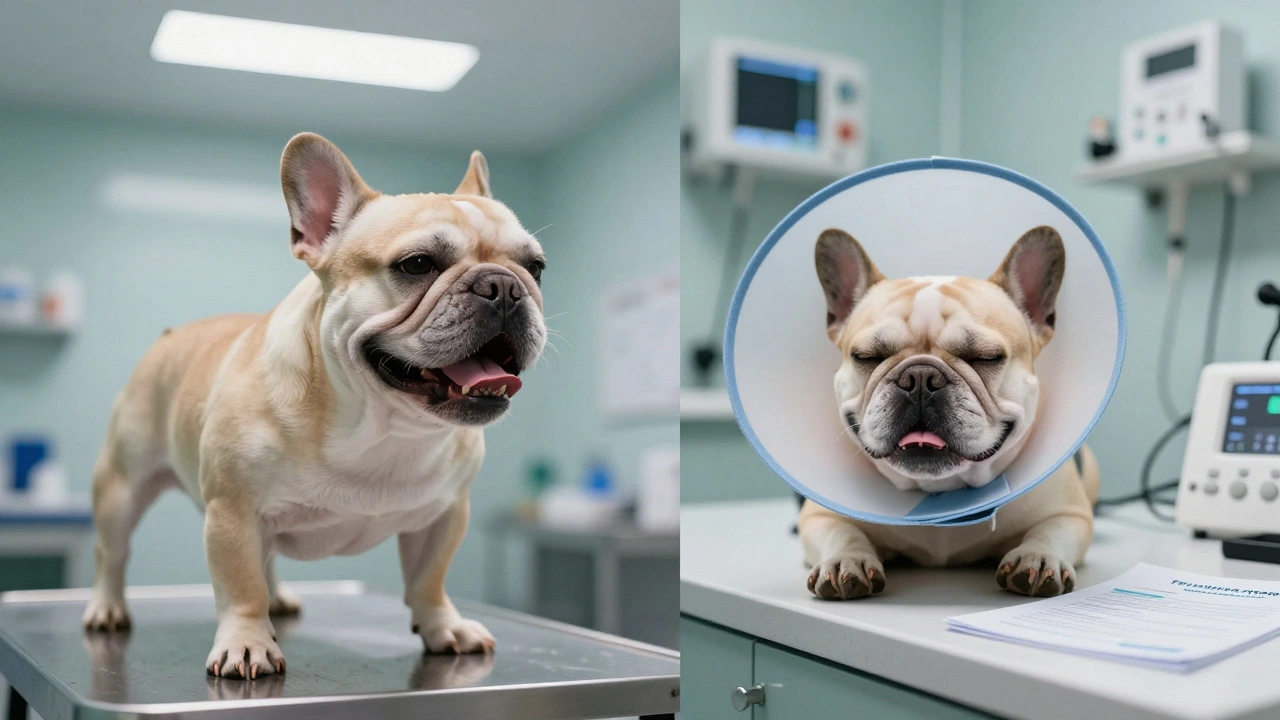
What Happens If You Don’t Get Coverage?
Some people think, “I’ll just save up.” But emergencies don’t wait. A Labrador with hip dysplasia might need a $6,000 surgery. Most families can’t afford that on short notice. And if you can’t pay? Vets may refuse treatment. Or you’re forced to euthanize a dog you love because you can’t afford to save them.
Without insurance, you’re betting your dog’s health on luck. And luck runs out fast with purebreds.
How Breed Matters
Not all dogs are equal when it comes to risk. Here are the top 5 breeds with the highest rates of hereditary and congenital conditions:
| Breed | Common Conditions | Average Treatment Cost |
|---|---|---|
| French Bulldog | Brachycephalic syndrome, spinal deformities, cherry eye | $2,200-$5,500 |
| Golden Retriever | Hip and elbow dysplasia, heart disease, cancer | $1,800-$7,000 |
| German Shepherd | Degenerative myelopathy, hip dysplasia, bloat | $2,500-$8,000 |
| Cavalier King Charles Spaniel | Chiari malformation, mitral valve disease | $3,000-$6,000 |
| Shih Tzu | Patellar luxation, eye ulcers, kidney disease | $1,500-$4,000 |
If your dog is on this list, insurance isn’t optional-it’s a safety net. And if you’re thinking of adopting a purebred, ask the breeder: “What health clearances do the parents have?” A responsible breeder will have X-rays, genetic tests, and papers. If they can’t show you proof? Run.
What About Mixed Breeds?
Mixed breeds aren’t immune. But their risk is lower. A Lab-Poodle mix might get hip dysplasia-but less likely than a purebred Lab. Insurance companies still cover congenital conditions in mutts, but hereditary ones are rarer. Still, if your mixed-breed dog shows symptoms before 12 months, many plans will cover it as long as you enrolled early.
Bottom line: if you got your dog as a puppy, get insured before they turn one. Even if they seem perfect now.

What’s Not Covered?
Even the best plans have limits:
- Conditions diagnosed before enrollment
- Preventive care like vaccines or flea meds
- Chronic conditions that started before coverage began
- Behavioral issues (anxiety, aggression)
- Elective procedures (cosmetic surgery, tail docking)
And here’s a sneaky one: some insurers will cover the surgery for hip dysplasia-but not the physical therapy afterward. Or they’ll cover the MRI but cap diagnostics at $500. Always read the fine print.
How to Get the Best Deal
Compare at least three providers. Don’t just go with the cheapest monthly rate. Look at:
- Annual reimbursement limits (some cap at $5,000-too low for major surgeries)
- Deductibles (yearly vs. per-incident)
- Reimbursement percentage (80% vs. 90% can mean $1,000 difference on a $5,000 bill)
- Whether they cover alternative therapies (acupuncture, hydrotherapy)
Use a comparison tool like PetInsuranceReview.com or the American Animal Hospital Association’s guide. Both update their data monthly. And if you’re unsure, call the company directly. Ask: “If my 8-month-old Bulldog develops a collapsed trachea next month, will you pay for it?” Record their answer. If they hesitate, move on.
Final Thought
Pet insurance isn’t about expecting the worst. It’s about giving your dog the best shot-even if the odds are stacked against them because of their breed. The right policy won’t stop your dog from getting sick. But it will stop you from having to choose between their life and your savings.
Does pet insurance cover all hereditary conditions?
No. Only a few insurers cover all hereditary conditions, and even then, only if you enroll your dog before 12 months old and no symptoms were present at enrollment. Many plans exclude specific breed-related issues like hip dysplasia in German Shepherds or heart disease in Cavaliers. Always check the exclusion list in writing.
Can I get insurance if my dog already has a congenital condition?
No. If your dog has already been diagnosed with a congenital or hereditary condition, it’s considered a pre-existing condition. Most insurers won’t cover it, even if you buy a new policy. The only exception is if the condition was never diagnosed and you enroll before symptoms appear.
Is it worth insuring a mixed-breed dog?
Yes. While mixed breeds have lower risk for inherited diseases, they can still develop congenital issues like heart defects or cleft palates. Insurance is still valuable because these conditions can cost thousands to treat. Plus, accidents and illnesses like cancer aren’t breed-specific.
What’s the best age to enroll my dog?
Between 6 and 12 weeks old. Most companies require enrollment before 12 months to cover hereditary conditions. Waiting until your dog is older means you’ll likely be denied coverage for the very issues you’re worried about. Enroll early, even if you think your dog is healthy.
Do all pet insurance plans have waiting periods for these conditions?
Yes, but the length varies. Most have a 14-day wait for accidents and a 30-day wait for illnesses. For hereditary and congenital conditions, some require a 6-month waiting period before coverage kicks in. Always confirm the exact waiting times for each type of condition before signing up.