
Watching your dog scratch until the skin bleeds is heartbreaking. You want the itching to stop now. The vet likely mentioned two main options: topical steroids (creams and sprays) or oral steroids (pills). Both work by suppressing the immune system’s overreaction to allergens, but they take very different paths through your dog’s body.
The choice isn’t just about convenience. It’s about balancing speed of relief against long-term side effects. Topical treatments stay local, reducing systemic risk, while oral meds hit harder and faster but carry heavier baggage for organs like the liver and kidneys. Let’s break down exactly how these treatments work, who they’re best for, and what you need to watch out for in 2026.
Key Takeaways
- Topical steroids are safer for long-term use because they avoid systemic absorption, making them ideal for localized hot spots.
- Oral steroids provide rapid, whole-body relief for severe cases but carry risks of increased thirst, urination, and potential organ stress if used chronically.
- Avoid using human steroid creams on dogs; potency levels differ significantly and can cause skin thinning.
- Never stop oral steroids abruptly; tapering is required to prevent adrenal crisis.
- Combination therapy (short-term oral + maintenance topical) is often the most effective strategy for moderate-to-severe atopic dermatitis.
How Steroids Actually Stop the Itch
To understand why vets prescribe these drugs, you need to know what’s happening under your dog’s skin. When a dog has allergies-whether from fleas, pollen, or food-their immune system releases inflammatory chemicals called cytokines. These cytokines trigger nerve endings, causing that maddening itch-scratch cycle.
Corticosteroids, whether applied topically or given orally, block this process. They inhibit the production of prostaglandins and leukotrienes, which are key drivers of inflammation. Think of it as turning down the volume on an alarm bell that won’t stop ringing.
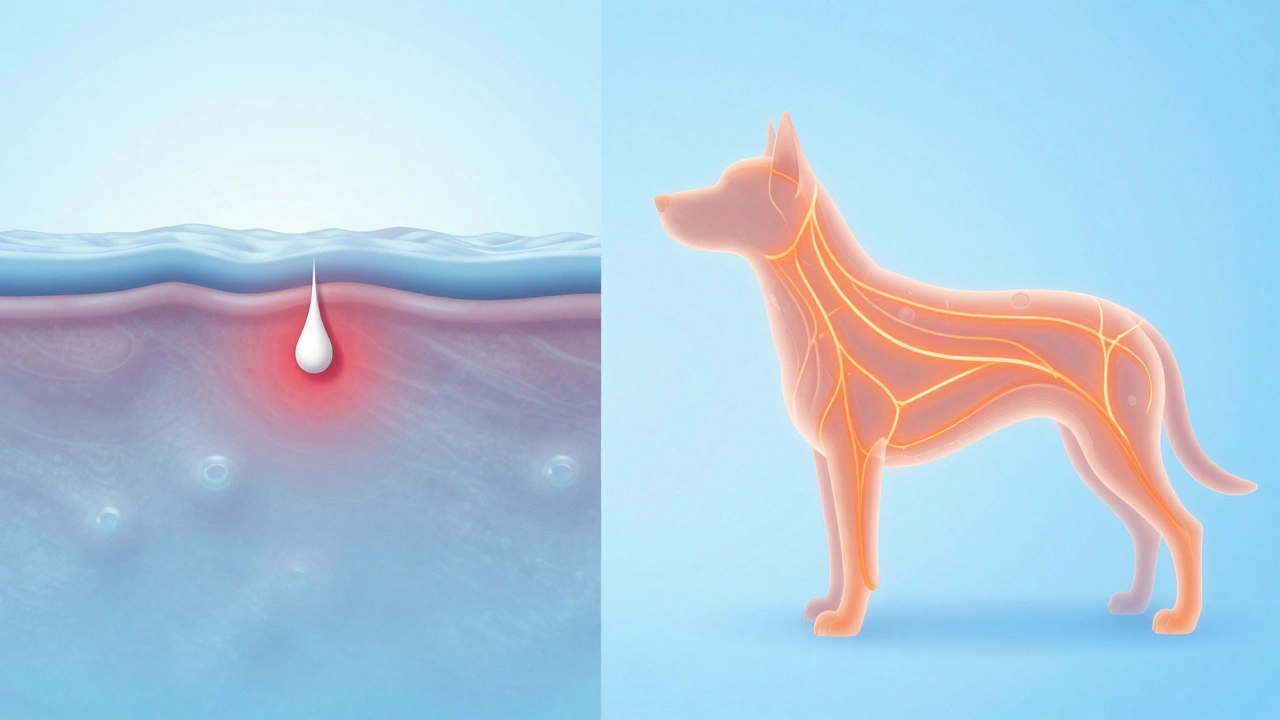
The difference lies in delivery. Topical application puts the medication directly where the problem is. Oral administration floods the bloodstream, affecting every tissue in the body-including those not involved in the allergic reaction. This distinction drives almost every decision regarding safety, efficacy, and duration of treatment.
Topical Steroids: Precision Over Power
Topical steroids come in creams, ointments, gels, and sprays. In veterinary medicine, common active ingredients include Hydrocortisone (low potency), Dexamethasone (medium-high potency), and Triamcinolone acetonide (high potency).
| Ingredient | Potency Level | Best For | Systemic Absorption Risk |
|---|---|---|---|
| Hydrocortisone 1% | Low | Mild irritation, flea bites | Negligible |
| Dexamethasone 0.1% | Medium-High | Hot spots, ear infections | Low to Moderate |
| Triamcinolone Acetonide 0.1% | High | Severe localized dermatitis | Moderate |
The biggest advantage of topical steroids is safety. Because the drug stays largely on the skin surface, less enters the bloodstream. This means fewer side effects like increased thirst (Polydipsia) or frequent urination (Polyuria).
However, there are limitations. If your dog licks the area, the medication is gone before it works. You’ll need an Elizabethan collar (cone) or bitter spray deterrent. Also, topical steroids don’t help with generalized itching across the entire body unless you apply them everywhere-which becomes impractical and increases absorption risk.
Pro tip: Apply topical steroids to clean, dry skin. Wash off any dirt or previous medications first. Massage gently into the affected area twice daily. Do not use on open wounds without veterinary guidance, as steroids can delay healing.
Oral Steroids: Fast Relief, Higher Stakes
When your dog is scratching uncontrollably all over, oral steroids are the nuclear option. The most commonly prescribed drug is Prednisone or its active form, Prednisolone. Another option is Methylprednisolone, which lasts longer and may require less frequent dosing.
Oral steroids work fast. Many owners see improvement within 24-48 hours. The anti-inflammatory effect spreads throughout the body, calming even distant areas of irritation. For dogs suffering from acute flare-ups of atopic dermatitis or severe contact allergies, this speed is invaluable.
But speed comes with cost. Systemic corticosteroids suppress the hypothalamic-pituitary-adrenal (HPA) axis. Your dog’s natural cortisol production drops because the body thinks there’s enough steroid circulating. Long-term use can lead to:
- Increased appetite leading to weight gain
- Thin, fragile skin prone to bruising
- Suppressed immune response, raising infection risk
- Development or worsening of diabetes mellitus
- Liver enzyme elevation (alkaline phosphatase)
- Urinary tract infections due to immune suppression
Vets typically prescribe oral steroids at the lowest effective dose for the shortest possible time. Chronic use requires regular blood work and urine tests to monitor for complications. Never stop prednisone abruptly after more than two weeks of use. Tapering over several days prevents Adrenal Crisis, a potentially life-threatening condition caused by sudden lack of cortisol.
Choosing Between Topical and Oral: Decision Framework
So, which one should you pick? It depends on three factors: severity, location, and duration.
Use topical steroids when:
- Itching is confined to specific areas (ears, paws, belly)
- You need long-term management with minimal side effects
- Your dog has mild to moderate symptoms
- You want to avoid systemic drug interactions
Use oral steroids when:
- Itching is widespread and severe
- Rapid relief is necessary to prevent self-trauma
- Other treatments have failed or aren’t yet available
- You can commit to monitoring for side effects and follow-up labs
In practice, many vets use a combination approach. Start with oral prednisone to knock down intense inflammation quickly, then transition to topical steroids for maintenance. This minimizes total steroid exposure while maximizing comfort.
Side Effects and What to Watch For
Even “safe” topical steroids can cause issues if misused. Prolonged application on thin-skinned areas (like inner ears or groin) can lead to Skin Atrophy-where the epidermis thins and loses elasticity. Look for shiny, stretched-looking skin or easy bruising.
With oral steroids, vigilance is critical. Monitor your dog closely for:
- Excessive drinking: Is your water bowl empty every hour?
- Frequent urination: Are accidents happening indoors?
- Behavioral changes: Restlessness, panting, or aggression?
- Gastrointestinal signs: Vomiting, diarrhea, or black tarry stools?
- Signs of infection: Recurrent ear infections, urinary tract infections, or skin abscesses?
If any of these occur, contact your vet immediately. They may adjust the dose, switch medications, or run diagnostic tests.

Alternatives to Steroids in 2026
Steroids aren’t the only game in town anymore. Newer biologics and immunomodulators offer targeted relief without the broad-side-effect profile of corticosteroids.
Oclacitinib (Apoquel) blocks JAK enzymes involved in itch signaling. It works within hours and doesn’t suppress immunity broadly. However, it’s expensive and not suitable for dogs with certain infections or cancers.
Lokivetmab (Cytopoint) is a monoclonal antibody injection that targets interleukin-31, a key itch mediator. One shot provides up to eight weeks of relief. It’s highly specific and safe for long-term use, though availability varies by region.
For mild cases, antihistamines like Cetirizine or Diphenhydramine may help, though efficacy is inconsistent in dogs. Omega-3 fatty acid supplements also support skin health and reduce inflammation over time.
Practical Tips for Administration
Getting your dog to accept treatment matters as much as choosing the right drug. Here’s how to make it easier:
- For topical steroids: Use a syringe without a needle to apply cream precisely. Avoid touching the applicator to the skin to prevent contamination.
- For oral pills: Hide tablets in soft treats like peanut butter (xylitol-free!) or cheese cubes. Pill pockets designed for dogs work well too.
- Timing: Give oral steroids with food to reduce stomach upset. Topicals work best after bathing when pores are open.
- Consistency: Set phone reminders. Missing doses reduces effectiveness and prolongs suffering.
- Record keeping: Track symptom severity daily. Note improvements or worsening. This data helps your vet adjust treatment efficiently.
When to See a Vet Immediately
Steroids manage symptoms-they don’t cure allergies. If your dog’s condition worsens despite treatment, seek professional care. Red flags include:
- No improvement after 72 hours of consistent treatment
- Open sores, pus, or foul odor indicating secondary infection
- Lethargy, collapse, or difficulty breathing
- Refusal to eat or drink for more than 24 hours
Your vet may perform skin scrapings, cytology, or allergy testing to identify triggers. Identifying and avoiding allergens remains the cornerstone of long-term management.
Can I use human hydrocortisone cream on my dog?
Yes, but cautiously. Human hydrocortisone 1% is generally safe for short-term use on small areas. Avoid higher strengths (2.5%+) unless directed by a vet. Never apply near eyes or mucous membranes. Always wear a cone to prevent licking.
How long can I give my dog prednisone safely?
Short courses (less than 2 weeks) are low-risk. Longer use requires veterinary supervision. Chronic prednisone use beyond 4-6 weeks increases risk of diabetes, liver damage, and immune suppression. Regular blood tests are essential.
Do topical steroids work for flea allergy dermatitis?
They relieve symptoms temporarily, but they don’t address the root cause. Flea control is mandatory. Without eliminating fleas, steroids merely mask ongoing allergic reactions, leading to repeated flare-ups.
Is Cytopoint better than steroids for dog allergies?
Cytopoint offers targeted relief with fewer systemic side effects. It’s ideal for long-term management. Steroids act faster during acute crises. Many vets combine both initially, then transition to Cytopoint alone for sustained control.
What should I do if my dog licks a topical steroid?
Wipe the area gently with a damp cloth to remove residue. Apply an Elizabethan collar immediately. While occasional licking rarely causes harm, repeated ingestion can lead to gastrointestinal upset or unintended systemic effects.