Most dog owners don’t realize their pet’s teeth need cleaning until they smell the breath or see the yellow buildup. By then, it’s often too late. Dental disease affects over 80% of dogs by age three, and it’s not just about bad breath-it’s pain, infection, and even organ damage hiding in plain sight. So when you hear the vet say, "Your dog needs a dental," the real question isn’t whether to do it-it’s why it costs what it does.
Why Dog Dental Cleanings Cost More Than You Think
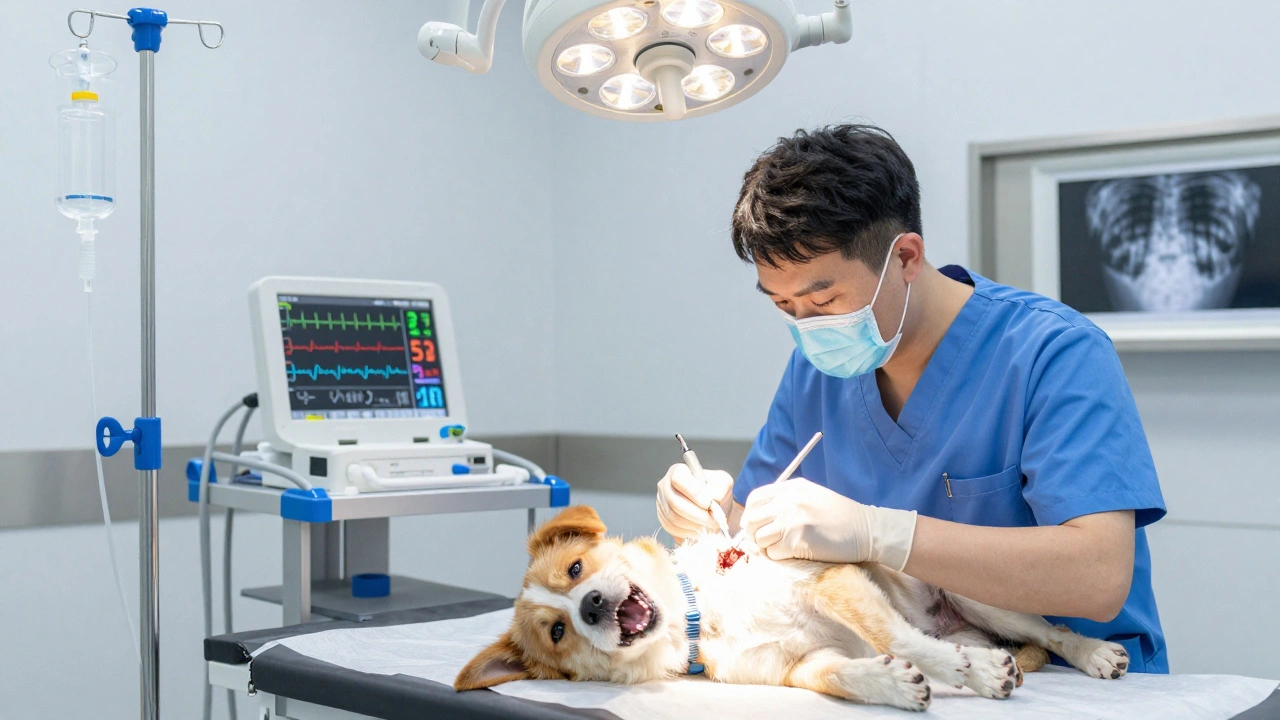
A human dental cleaning might run $75 to $200. A dog’s? $300 to $1,200. That’s a shock. But here’s the thing: your dog’s cleaning isn’t just a quick scrape. It’s a full surgical procedure under anesthesia. Unlike humans, dogs won’t sit still while a dentist pokes around their mouth. They can’t tell you if it hurts. So vets have to put them under, monitor them closely, and do a full exam-often with X-rays.
Think of it this way: a dog dental cleaning includes anesthesia, IV fluids, monitoring equipment, dental X-rays, scaling, polishing, and sometimes extractions. It’s not a grooming service. It’s medicine. And that’s why the price jumps.
The Breakdown: What You’re Actually Paying For
Here’s what’s inside the bill:
- Anesthesia - This is the biggest cost. Dogs need general anesthesia because they won’t cooperate. Vets use safe, modern anesthetics like isoflurane, and they monitor heart rate, oxygen levels, and temperature throughout. Anesthesia alone can cost $100-$300.
- Pre-anesthetic blood work - Before putting your dog under, vets check liver and kidney function. A dog with undiagnosed kidney disease could die under anesthesia. Blood tests cost $75-$150.
- Dental X-rays - Up to 70% of dental problems in dogs happen below the gumline. You can’t see them without X-rays. A full set of canine dental X-rays runs $150-$300. Skipping this is like trying to fix a car engine without opening the hood.
- Scaling and polishing - Ultrasonic scalers remove tartar, then the teeth are polished to smooth the surface. This prevents future buildup. Labor and equipment here cost $100-$200.
- Extractions - If teeth are loose, infected, or broken, they must be pulled. Each extraction adds $50-$150. Many dogs need 2-5 extractions. This can double the cost.
- Post-op care - Pain meds, antibiotics, and sometimes a protective collar. Adds $30-$80.
Put it all together, and you’re looking at $600-$900 for a standard cleaning with X-rays and one or two extractions. Without X-rays? You’re risking hidden disease. Without anesthesia? You’re not doing a real cleaning-you’re just scraping the surface.
Why Prices Vary So Much
One vet charges $400. Another charges $900. What’s the difference?
- Location - Urban clinics in cities like San Francisco or New York charge more. Rural clinics might be cheaper, but they may not have X-ray machines or trained staff.
- Practice type - General vets offer basic cleanings. Specialty veterinary dentists (board-certified) charge more but handle complex cases, like root canals or jaw fractures. If your dog has a broken tooth or severe gum disease, you’ll need one.
- Equipment - Clinics with digital X-rays, laser therapy, or dental drills can do better, faster work. These tools cost tens of thousands. That cost gets passed on.
- Size of dog - A Chihuahua takes less anesthesia and less time than a Great Dane. A small dog might cost $300-$500. A large breed? $700-$1,200.
- Pre-existing conditions - If your dog has advanced periodontal disease, infected roots, or abscesses, the cleaning becomes surgery. More time. More risk. More money.
There’s no national price standard. That’s why you need to ask for a detailed estimate before the procedure. Don’t just accept the first quote.
What Happens If You Skip It
“But he’s still eating,” you say. “He seems fine.”
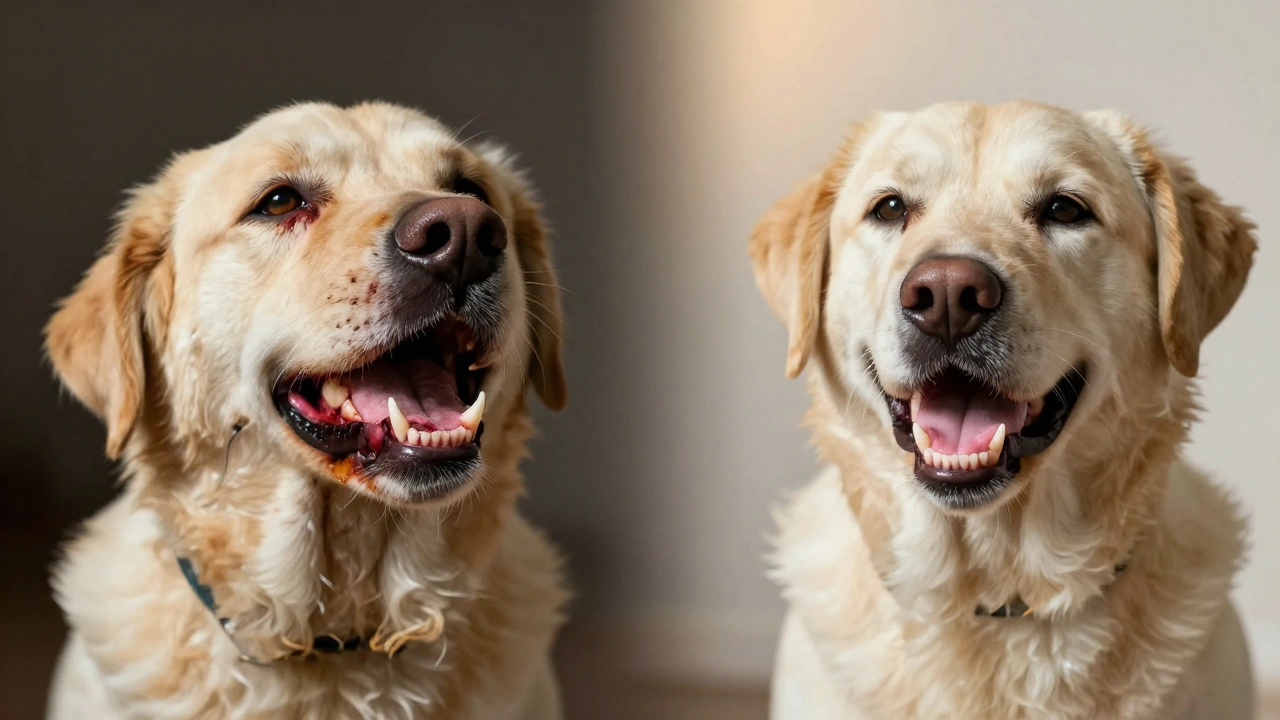
That’s the lie dental disease tells you. Dogs are masters at hiding pain. A dog with a rotten tooth won’t stop eating-they’ll just chew on one side. They’ll lick their lips more. They might drop food. They might wake up at night whimpering.
Left untreated, infected gums send bacteria into the bloodstream. That bacteria can settle in the heart, kidneys, and liver. Studies from the American Veterinary Medical Association show dogs with severe periodontal disease are 2-4 times more likely to develop heart valve infections. That’s not a myth. That’s science.
And here’s the kicker: every year you delay, the cost goes up. A simple cleaning now might be $500. A year from now, with bone loss and abscesses? $1,500. And that’s before emergency surgery.
How to Save Money Without Cutting Corners
You don’t have to pay full price. But you can’t skip the essentials.
- Ask for a written estimate - Demand a line-item quote. Make sure it includes anesthesia, X-rays, and post-op meds. If it doesn’t, walk away.
- Shop around - Call 2-3 clinics. Ask about their protocols. A cheaper clinic might skip X-rays. A pricier one might include a dental sealant or follow-up check.
- Use pet insurance - Many plans cover 70-90% of dental cleanings if you have a policy before the problem starts. Get it while your dog is young and healthy.
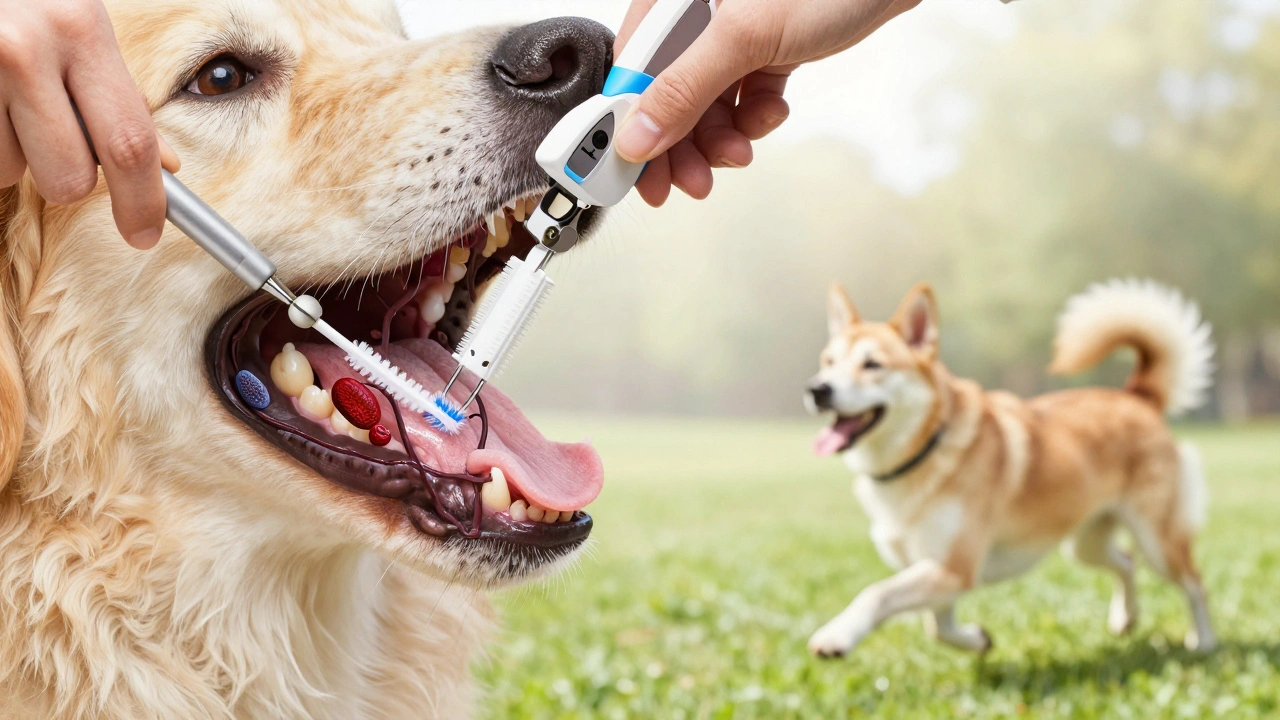
- Prevent with brushing - Brushing three times a week cuts tartar buildup by 60%. Use a dog-specific toothpaste (never human!). Start early. It’s cheaper than cleaning.
- Try dental chews - Look for VOHC-approved chews (like Greenies or CET chews). They’re not magic, but they help. Avoid hard bones or antlers-they crack teeth.
Some vets offer payment plans or discounts for seniors or rescue dogs. Ask. Don’t assume.
What to Watch For After the Cleaning
After the procedure, your dog might be groggy for 24 hours. That’s normal. But if they won’t eat after two days, have swelling, or are bleeding from the mouth, call your vet. That’s not normal.
Some dogs need soft food for a few days. Others can eat normally the next day. Ask your vet. Also, ask if you need to schedule a follow-up. Many clinics recommend a check-up in 6-8 weeks to make sure healing is on track.
Final Reality Check
Dog dental cleaning isn’t optional. It’s medical care. And like any medical care, it costs money. But the alternative-chronic pain, organ damage, early death-is far worse.
Think of it this way: if your dog’s teeth were your own, you’d go to the dentist. You’d pay the bill. You’d do the brushing. You’d get the X-rays. So why treat your dog differently?
The cost isn’t arbitrary. It’s the price of safety, precision, and care. And for most dogs, it’s the single best thing you can do to give them more healthy years.
Is dog dental cleaning covered by pet insurance?
Yes, but only if you have a policy that includes dental care-and you signed up before the problem started. Most plans cover routine cleanings, extractions, and X-rays if they’re medically necessary. However, pre-existing conditions (like existing tartar or gum disease) are almost always excluded. Always check your policy details. Some plans have annual limits on dental coverage, often between $500 and $1,500.
Can I clean my dog’s teeth at home without anesthesia?
You can brush your dog’s teeth daily to prevent buildup, but you can’t remove hardened tartar without professional tools. Tartar is calcified plaque-it’s like concrete on teeth. No brush or chew can remove it. Non-anesthetic cleanings offered by groomers only scrape the visible surface. They leave disease below the gumline untouched. That’s dangerous. It gives a false sense of security. Real dental health requires anesthesia and X-rays.
How often does a dog need a dental cleaning?
Most dogs need one every 1-2 years. Small breeds (like Yorkies or Pugs) often need it yearly because their teeth are crowded and tartar builds faster. Large breeds might go two years. But it depends on diet, brushing, and genetics. Your vet should check your dog’s mouth at every annual exam. If they see red gums, bad breath, or visible tartar, they’ll recommend a cleaning sooner.
Are there risks to anesthesia for older dogs?
There are always risks with anesthesia, but modern protocols make it very safe. Vets use pre-anesthetic blood tests to check organ function, IV fluids to support circulation, and advanced monitors to track heart and oxygen levels. For older dogs, the risk of leaving dental disease untreated is often higher than the risk of anesthesia. Many senior dogs live better, longer lives after a dental cleaning because they’re no longer in pain or fighting infection.
What if I can’t afford a dental cleaning?
If you can’t afford it, talk to your vet. Many clinics offer payment plans through services like CareCredit or Scratchpay. Some nonprofit organizations and veterinary schools offer subsidized care. Don’t wait until your dog is in pain. Start brushing daily. Switch to dental chews. Even small steps delay the need for a full cleaning and reduce future costs. But don’t skip it entirely-dental disease is progressive and irreversible.