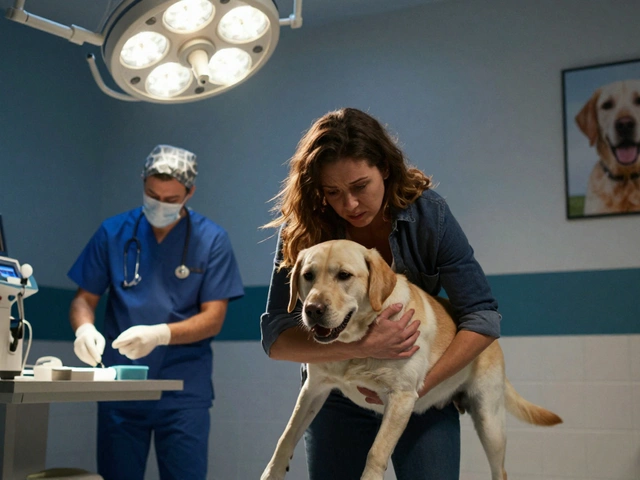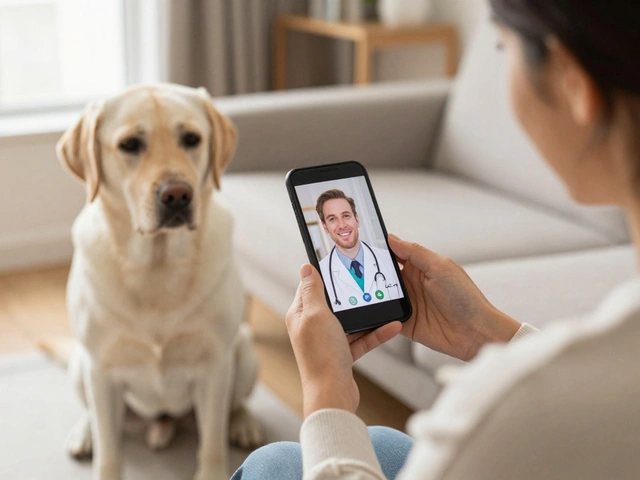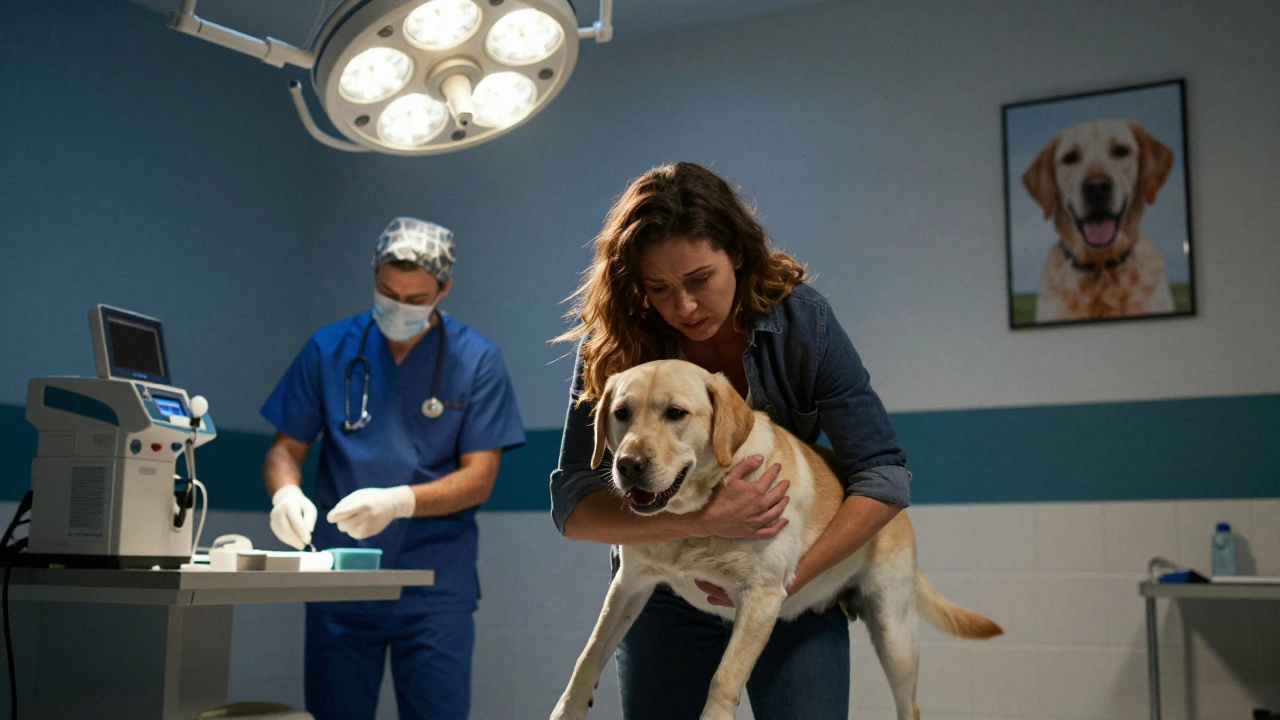
When your dog suddenly limps after a backyard leap, or starts vomiting at 2 a.m., you don’t have time to worry about costs-you just need help. That’s where accident and illness coverage for dogs comes in. It’s not just a safety net; it’s peace of mind wrapped in a policy. Unlike basic wellness plans, this type of coverage kicks in when things go wrong: broken bones, poisoning, infections, cancer, even emergency surgeries. It’s the difference between making a tough call because of money and making the right call because your dog deserves it.
What Accident and Illness Coverage Actually Covers
Most comprehensive dog insurance plans cover two major categories: accidents and illnesses. Accidents include things like being hit by a car, swallowing a toy, falling off the couch, or stepping on a sharp object. Illnesses cover everything from ear infections and allergies to diabetes, kidney disease, and tumors. Some policies even include chronic conditions like arthritis or hypothyroidism, as long as they weren’t pre-existing when you signed up.
What’s left out? Routine care like vaccines, spaying/neutering, and flea treatments usually aren’t included unless you add a wellness rider. Dental cleanings and grooming? Those are extra. But the core promise is simple: if your dog gets sick or hurt unexpectedly, you’re covered.
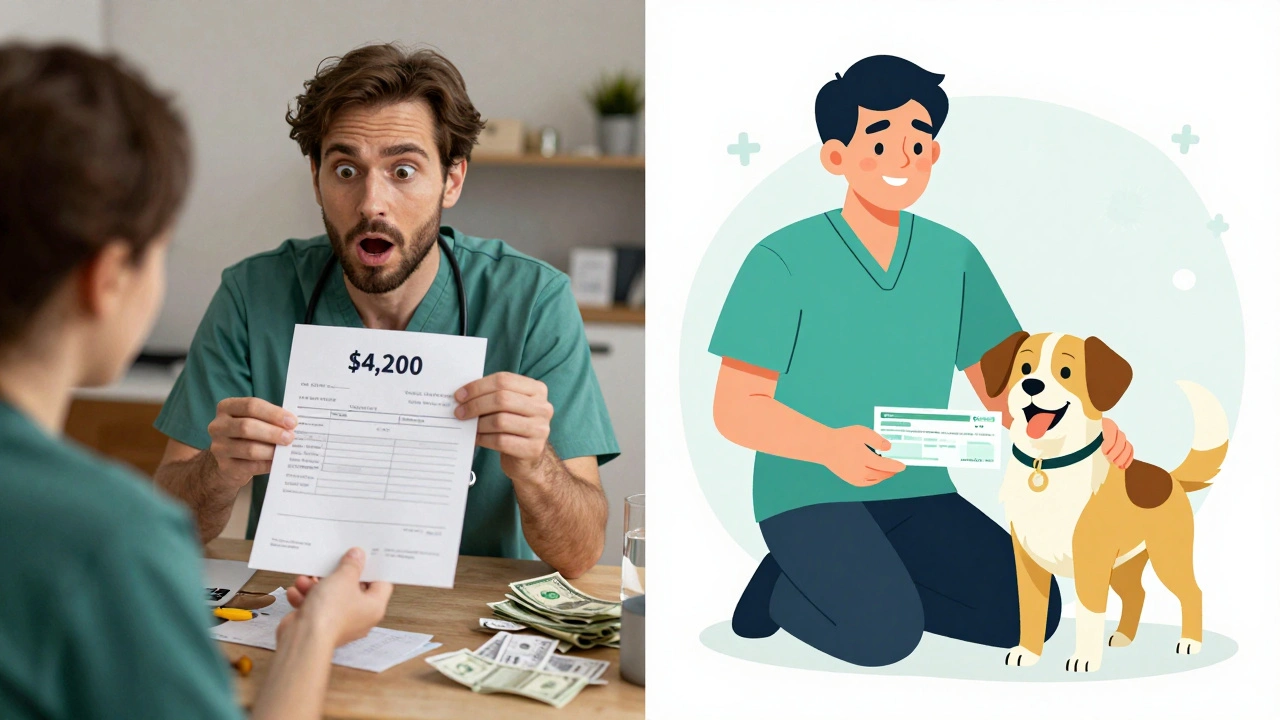
For example, a 2024 study by the North American Veterinary Community found that the average cost of treating a dog with intestinal blockage was $4,200. A torn ACL? Around $5,500. Without insurance, those are out-of-pocket hits most owners can’t absorb. With coverage, you might pay just $500-$1,000 in out-of-pocket costs after the deductible and coinsurance.
How It Works: Deductibles, Reimbursements, and Percentages
Understanding how reimbursement works is key. You don’t get billed directly by the vet. Instead, you pay the full bill upfront-then submit the receipt to your insurer. They reimburse you based on your plan’s terms.
Three numbers matter most:
- Deductible: The amount you pay before coverage starts. Options range from $100 to $1,000. Lower deductible = higher monthly premium.
- Reimbursement percentage: How much the insurer pays after the deductible. Most plans offer 70%, 80%, or 90%. Higher percentage = less you pay out of pocket.
- Annual limit: The max the insurer will pay per year. Plans range from $5,000 to unlimited. Unlimited is ideal if you have a breed prone to health issues.
Let’s say your 6-year-old Labrador gets pancreatitis. The vet bill is $3,800. Your plan has a $500 deductible and 80% reimbursement. You pay the first $500. Then the insurer covers 80% of the remaining $3,300-that’s $2,640. You pay the other $660. Total out-of-pocket: $1,160. Without insurance? You’d pay the full $3,800.
What’s Not Covered: Pre-Existing Conditions and Exclusions
Not every health problem is eligible. Pre-existing conditions-anything diagnosed or showing symptoms before your policy started-are almost always excluded. That’s why timing matters. Enroll while your dog is young and healthy. If your dog had a limp last year, and now it’s back, that’s not covered.
Some plans also exclude:
- Congenital or hereditary conditions (like hip dysplasia in German Shepherds)
- Behavioral issues (aggression, anxiety)
- Alternative therapies (acupuncture, chiropractic care) unless specifically added
- Elective procedures (cosmetic surgery, tail docking)
Always read the fine print. Some companies, like Embrace and Healthy Paws, cover hereditary conditions after a waiting period. Others don’t. It’s not about which brand is better-it’s about which plan matches your dog’s risk profile.
Choosing the Right Plan: Breed, Age, and Location Matter
Not all dogs need the same coverage. A 3-month-old Golden Retriever is more likely to swallow toys than a 12-year-old Chihuahua. A Boston Terrier has a higher risk of breathing problems. A Great Dane is prone to bloat. Your dog’s breed, age, and even where you live affect costs and risks.
In Portland, Oregon, vet costs are about 12% higher than the national average. That means a $2,000 emergency in Boise might cost $2,240 here. Insurance helps smooth that out.
Here’s what to consider:
- Young dogs (under 2): Accidents are common. Prioritize low deductibles and high reimbursement.
- Adult dogs (3-8): Illnesses start creeping in. Look for chronic condition coverage.
- Senior dogs (9+): Coverage gets expensive. Consider higher deductibles to keep premiums low.
- Large breeds: Expect higher premiums. Look for plans with no breed exclusions.
Some insurers let you customize your deductible, reimbursement, and annual limit. That flexibility lets you build a plan that fits your budget and your dog’s needs.
Real Cost Comparison: Insurance vs. Paying Out of Pocket
Let’s look at two real scenarios from dog owners in the Pacific Northwest:
Case 1: Maya, Portland
Her 5-year-old Border Collie ate a toxic mushroom during a hike. Emergency treatment: $4,100. Her plan had a $250 deductible and 90% reimbursement. She paid $640 out of pocket. Without insurance? $4,100.
Case 2: Raj, Eugene
His 11-year-old Shih Tzu developed bladder stones. Surgery: $3,900. His plan had a $500 deductible and 70% reimbursement. He paid $1,780. Without insurance? $3,900.
Monthly premiums for comprehensive plans in Oregon range from $35 to $85. That’s $420 to $1,020 a year. Even if you never file a claim, that’s cheaper than one unexpected vet visit. And if you do? The savings are massive.
When to Enroll: The Earlier, the Better
There’s no perfect time-only better and worse. The best time? Right after your puppy’s final vaccines. Most insurers require a 14- to 30-day waiting period before coverage starts. That’s to prevent people from signing up only when their dog is already sick.
Enrolling early means:
- No exclusions for future conditions
- Lower premiums (younger dogs cost less to insure)
- More time to build history with the insurer
Waiting until your dog is 7 or older? Premiums jump. Some companies won’t accept dogs over 10. Others cap coverage or exclude common senior issues. Don’t wait for a crisis to realize you’re underprotected.

What Happens If You Don’t Have It?
Some owners think, “I’ll just save up.” But emergencies don’t wait. A $3,000 vet bill isn’t something you stash away in a jar. Most people don’t have $2,000 in savings-according to the 2025 Federal Reserve Report, 38% of U.S. adults couldn’t cover a $1,000 emergency.
Without insurance, owners face impossible choices: pay the bill and go into debt, skip treatment, or-worst case-euthanize a treatable pet because they can’t afford it. That’s not a decision any pet parent should have to make.
Insurance doesn’t guarantee your dog won’t get sick. But it guarantees you won’t be forced to choose between your wallet and your best friend.
How to Compare Plans Like a Pro
Don’t just pick the cheapest monthly rate. Compare these five things:
- Deductible options: Can you choose $0, $100, $500? Flexibility matters.
- Reimbursement rate: 70% vs. 90%? That’s a $1,000 difference on a $5,000 bill.
- Annual limit: $5,000 might cover one major illness. Unlimited is better long-term.
- Waiting periods: Accidents: 2 days. Illnesses: 14-30 days. Hereditary: 6-12 months.
- Customer service: How fast do claims get processed? Look for reviews mentioning response time.
Use a comparison tool like Pawlicy Advisor or Petplan’s quote engine. Enter your dog’s age, breed, zip code, and get side-by-side quotes. You’ll see how small changes in deductible or reimbursement change your out-of-pocket risk.
Final Thought: It’s Not About If-It’s About When
Every dog will face a health crisis at some point. It might be a tick-borne illness next spring. Or a sudden tumor at age 9. Or an accident during a hike in the Columbia Gorge. You can’t predict it. But you can prepare for it.
Accident and illness coverage isn’t a luxury. It’s the smartest thing you can do for your dog-and for yourself. It turns panic into action. Fear into confidence. And a potential financial disaster into a manageable expense.
Don’t wait for the emergency to ask questions. Start comparing plans today. Your dog’s next vet visit might be routine. But the one after that? It could save their life-and yours.
Does accident and illness coverage include dental care?
Most comprehensive dog insurance plans do not cover routine dental cleanings. However, if your dog needs emergency dental treatment due to an accident-like a broken tooth from chewing on a rock or being hit by a car-that’s usually covered. Some insurers offer dental coverage as an optional add-on, but it’s rare in basic plans. Always check the fine print.
Can I use any veterinarian with dog insurance?
Yes. Unlike human health insurance, most pet insurance plans let you visit any licensed vet, specialist, or emergency clinic in the U.S. (and sometimes Canada). You pay the bill upfront and submit a claim for reimbursement. This flexibility is one of the biggest advantages of pet insurance-you’re never locked into a network.
Is it worth it for an older dog?
It depends. Premiums rise sharply after age 7, and some insurers won’t accept dogs over 10. But if your older dog is still healthy and you can find a plan that covers new illnesses (not pre-existing), it can still be worth it. A $50 monthly premium might seem high, but if it covers a $4,000 cancer treatment, you’re saving thousands. Evaluate based on your dog’s current health and your budget.
What if my dog already has a health issue?
If your dog already has a diagnosed condition-like arthritis, allergies, or a heart murmur-that’s considered pre-existing and won’t be covered. But new conditions that develop after enrollment are covered. Some insurers, like Embrace, offer coverage for pre-existing conditions after a 365-day waiting period with no symptoms. It’s rare, but worth asking about.
How long does it take to get reimbursed?
Most reputable pet insurance companies process claims within 7-14 days. Some offer direct deposit and mobile app uploads for faster service. If you submit a claim with clear receipts and a completed form, you can expect payment in under two weeks. Avoid companies with long delays or vague communication-those are red flags.