Most dog owners don’t think about their pet’s mouth until something goes wrong - bad breath, drooling, or trouble eating. But by then, it might be too late. Oral tumors in dogs are more common than you think, and they often sneak up without warning. The good news? Catching them early can mean the difference between life and death. A simple dental check can save your dog’s life, and you don’t need to wait for symptoms to get serious.
What Are Oral Tumors in Dogs?
Oral tumors are abnormal growths in the mouth or around the jaw. They can be benign, like fibromas or papillomas, or malignant, like melanomas, squamous cell carcinomas, or fibrosarcomas. Malignant tumors spread fast - sometimes in just weeks. About 6% of all dog cancers start in the mouth, and nearly 80% of those are cancerous. That’s why every dog over age 6 should get a routine oral exam.
Some breeds are at higher risk. Cocker spaniels, German shepherds, and golden retrievers show up more often in vet records for oral cancer. But any dog, even small breeds like dachshunds or pugs, can develop them. Age matters too. Most cases appear between 8 and 12 years old, but younger dogs aren’t immune.
Early Signs You Can’t Ignore
Here’s what to look for before your dog starts refusing food or bleeding from the mouth:
- Bad breath that won’t go away - not just after eating, but constant, sour, or metallic. This isn’t just plaque.
- Swelling or lumps - check along the gums, under the tongue, or on the roof of the mouth. Feel for anything hard, irregular, or growing.
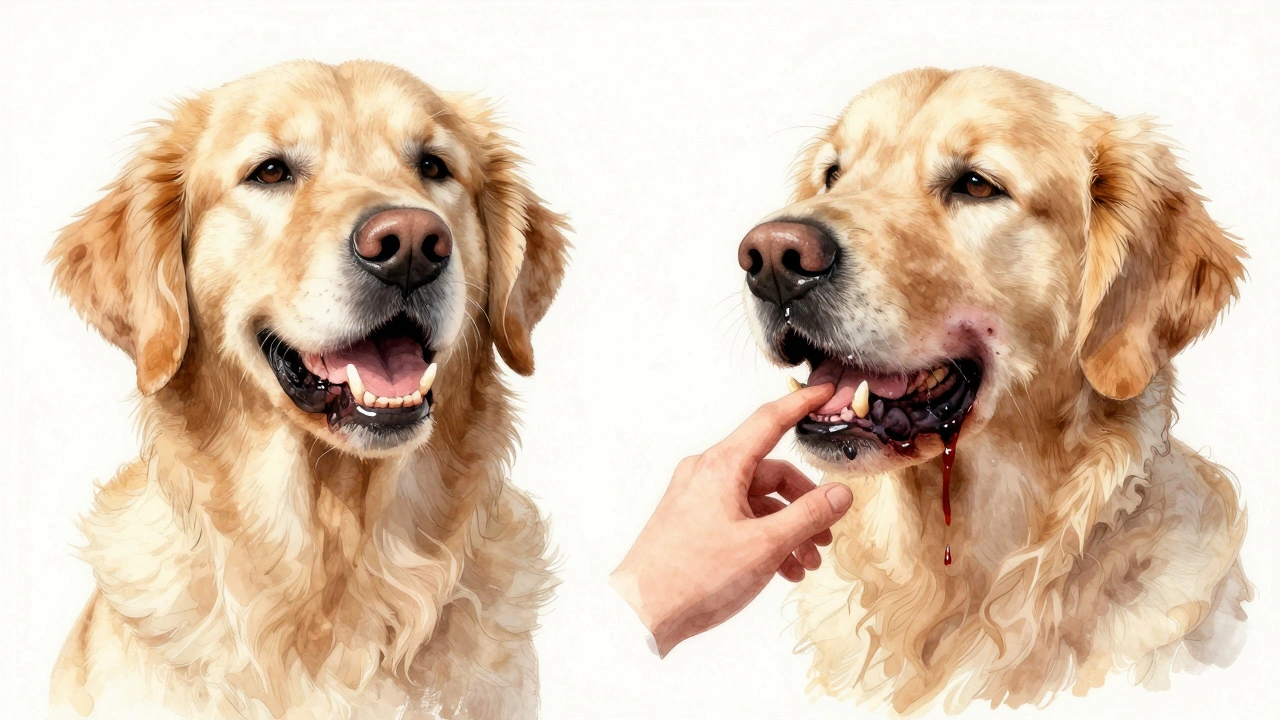
- Bleeding or blood in saliva - even a little red streak after chewing a toy is a red flag.
- Difficulty eating or dropping food - if your dog starts chewing on one side or seems to avoid hard kibble, something’s wrong.
- Excessive drooling - especially if it’s bloody or thick, not just watery.
- Loose teeth - if teeth that were solid suddenly move, it’s not gum disease. It’s bone erosion from a tumor.
- Facial swelling - one side of the face looks puffier than the other. That’s not just a bug bite.
One owner in Portland noticed her 9-year-old lab was chewing only on the left side. She thought he had a sore tooth. Three weeks later, a biopsy confirmed an aggressive squamous cell carcinoma. By then, the tumor had eaten into the jawbone. Early detection could’ve saved his jaw - and maybe his life.
Why Routine Dental Screenings Matter
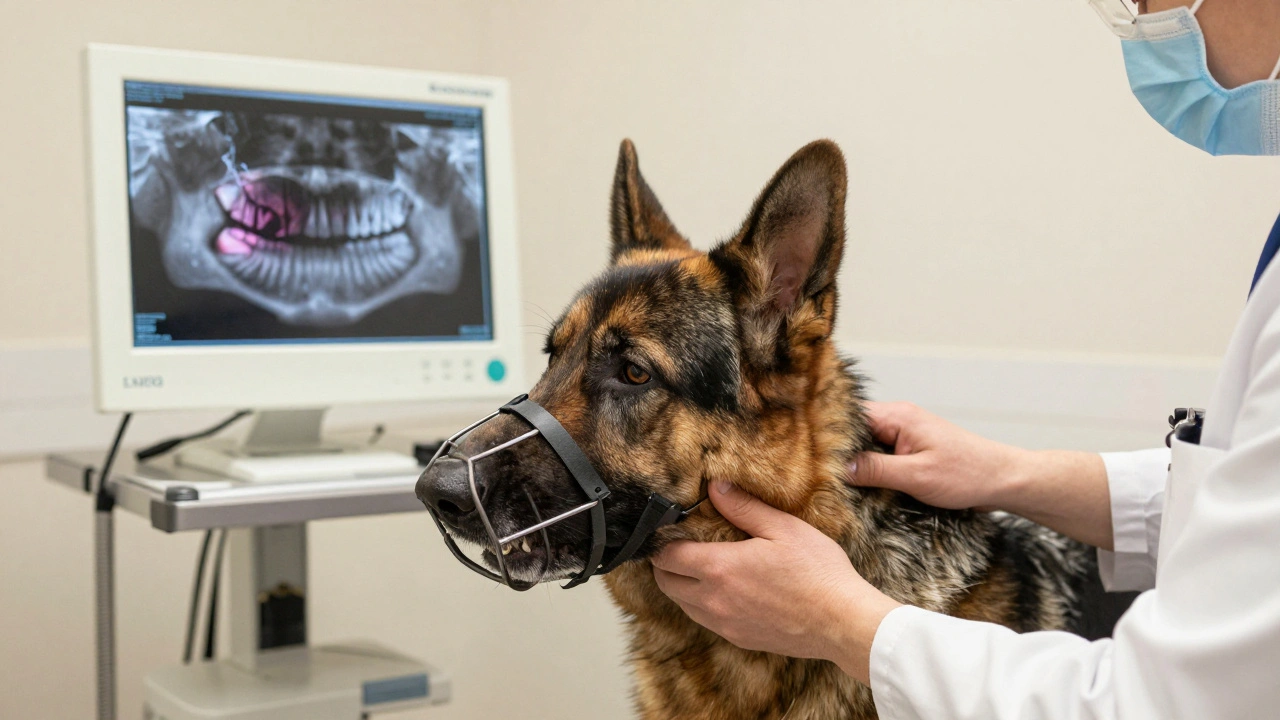
Most vets will tell you to brush your dog’s teeth. That’s important - but not enough. Brushing removes plaque, but it won’t reveal a hidden tumor growing under the gumline. That’s why annual dental screenings with a vet are critical.
A proper screening includes:
- Visual exam - the vet checks gums, tongue, tonsils, and palate for discoloration or masses.
- Manual palpation - feeling under the jaw and around the mouth for lumps or swollen lymph nodes.
- Dental X-rays - these show what’s happening below the gumline. Tumors often start there.
- Biopsy - if anything looks suspicious, a small tissue sample is taken. No guesswork.
Many owners skip these because their dog seems fine. But dogs hide pain. A tumor can grow for months without obvious signs. A 2023 study from the University of Wisconsin found that 42% of dogs with oral tumors showed no symptoms until the disease was advanced. Routine screenings caught 78% of early-stage tumors that would’ve otherwise gone unnoticed.
What Happens If a Tumor Is Found?
Not all tumors are doom and gloom. Some can be removed with surgery, especially if caught early. Melanomas are tricky - they spread fast - but if they’re small and localized, removal gives dogs over two years of survival. Squamous cell carcinomas respond well to surgery if they haven’t invaded bone.
For tumors that can’t be fully removed, radiation therapy is often used. It’s expensive - $3,000 to $6,000 - but many dogs live comfortably for a year or more. Chemo is rarely used for oral tumors in dogs because it’s not very effective. Immunotherapy is emerging, but still experimental.
One owner in Oregon chose surgery for her 10-year-old border collie after a biopsy found a small melanoma. The vet removed part of the upper jaw. The dog ate normally again within three weeks. Two years later, she’s still active. No chemo. No radiation. Just early detection and clean surgery.
How to Prevent or Reduce Risk
You can’t prevent every tumor, but you can lower the risk:
- Brush teeth weekly - even a soft brush reduces plaque buildup, which may lower inflammation-linked cancer risk.
- Avoid tobacco smoke - dogs in smoking homes have a 60% higher risk of oral cancer. Secondhand smoke isn’t just bad for you.
- Limit plastic chew toys - some contain endocrine disruptors that may affect cell growth. Choose rubber or natural fiber toys.
- Feed a balanced diet - dogs on high-quality, antioxidant-rich food show lower rates of cancer overall.
- Get annual dental exams - don’t wait for bad breath. Schedule them like vaccinations.
One vet clinic in Portland tracks over 2,000 dogs. Those with annual screenings had 3x fewer late-stage oral tumors than those who only came when they were sick.
What to Ask Your Vet
Don’t let a routine cleaning be just a teeth scrub. Push for real evaluation:
- “Can you check for lumps or unusual tissue during the exam?”
- “Are dental X-rays included in the cleaning?”
- “If I notice swelling or bleeding, what’s the next step?”
- “Do you recommend a specialist if something looks suspicious?”
Most vets are happy to do this. But if your vet dismisses your concerns or says, “It’s just aging,” find another one. Oral cancer doesn’t wait.
Final Thought: Don’t Wait for the Worst
Your dog can’t tell you when their mouth hurts. They’ll keep eating, wagging their tail, and acting like normal - even while a tumor grows. That’s why your eyes and your vet’s hands are the best tools you have. A five-minute exam once a year might give you years more with your dog. It’s not about being scared. It’s about being smart.
Can oral tumors in dogs be cured?
Some can, especially if caught early. Small tumors that haven’t spread to lymph nodes or bone can often be removed with surgery. Melanomas and squamous cell carcinomas have better outcomes when treated quickly. But once the cancer spreads, cure is unlikely. Treatment shifts to slowing progression and keeping the dog comfortable.
Are oral tumors painful for dogs?
Yes, especially as they grow. Tumors can invade nerves, erode bone, and cause infections. Dogs often hide pain, so signs like reluctance to chew, pawing at the face, or sudden aggression when touched near the mouth are clues. If your dog stops playing with toys they used to love, it could be pain.
How often should I have my dog’s mouth checked?
At least once a year starting at age 6. For high-risk breeds or dogs with existing dental disease, every 6 months is better. Don’t wait for bad breath or bleeding - schedule it like a vaccine.
Do dental cleanings under anesthesia help detect tumors?
Yes. Anesthesia allows the vet to examine the entire mouth thoroughly, take X-rays, and probe areas that are impossible to check while awake. Many tumors are found during cleanings, not because the dog was sick, but because the vet looked closely.
Is oral cancer in dogs contagious?
No. Oral tumors are not contagious to other dogs or people. They develop from genetic mutations in the dog’s own cells. You can’t catch cancer from your dog, and your dog can’t catch it from another dog.