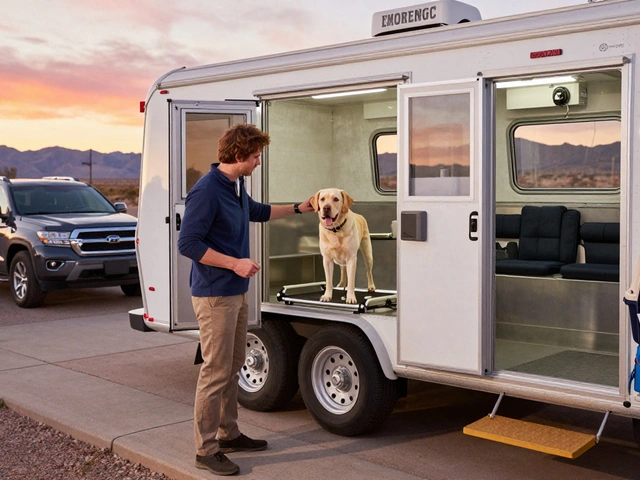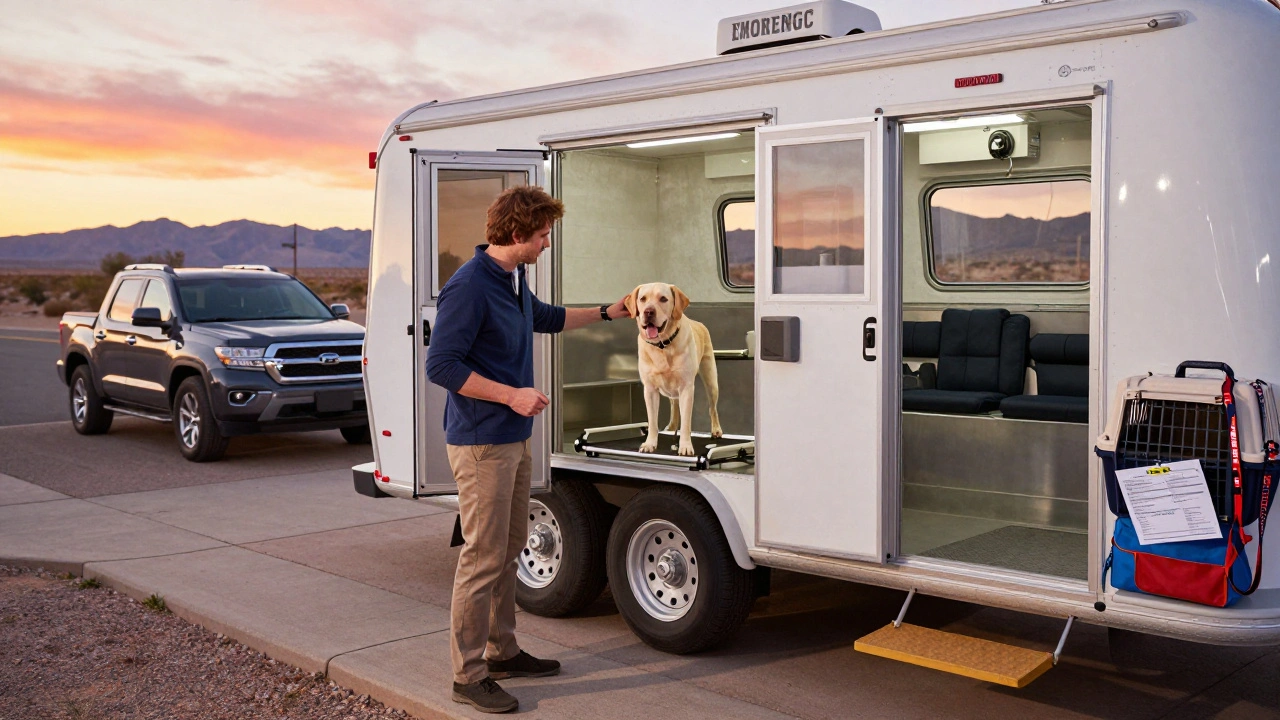
When you pack your bags for a road trip or a vacation overseas, your dog isn’t just along for the ride-they’re part of the plan. But what happens if your pup gets sick or injured while you’re far from home? Many dog owners assume their pet insurance covers them everywhere, but that’s not always true. Travel coverage in dog insurance can be tricky, and not all policies treat out-of-state trips the same as international ones. If you’re planning to take your dog beyond your backyard, you need to know exactly what your policy does-and doesn’t-cover.
What Most Dog Insurance Policies Cover by Default
Most standard dog insurance plans cover accidents and illnesses that happen at home. That means if your dog eats something toxic, slips on the stairs, or suddenly develops an ear infection, you’re covered. But coverage for travel is rarely automatic. It’s often an optional add-on, or it’s built into the policy with strict limits. For example, a typical policy might cover emergency vet visits anywhere in the U.S., but only if you’re traveling temporarily-say, for less than 90 days. If you’re relocating or living out of state for months, your coverage might vanish. Some insurers even require you to notify them before you leave, or they’ll deny a claim if you didn’t.Out-of-State Travel: Is It Covered?
The good news? Most major dog insurance providers in the U.S. do cover out-of-state travel. But the details matter. A policy that says "nationwide coverage" might still have hidden rules. Take a scenario: You drive from Florida to Colorado with your 6-year-old Labrador. Halfway through, your dog starts vomiting and has diarrhea. You rush to the nearest emergency vet. The bill comes to $1,800. Will your insurance pay? It depends. If your policy includes emergency treatment anywhere in the U.S. and you’ve met your deductible, then yes. But if your plan only covers vets within 50 miles of your home address, you’re out of luck. Some companies even require you to use their network of clinics-even on the road-which means you might have to drive hours to find an approved provider. Here’s what to check before you leave:- Does your policy define "covered area"? Look for phrases like "all 50 U.S. states" or "any licensed veterinarian in the U.S."
- Is there a time limit? Many policies cap travel coverage at 30-90 days per trip.
- Do you need pre-approval? Some insurers require you to call before visiting an out-of-state vet.
- Are emergency services included? Routine care like vaccines or checkups usually won’t be covered while traveling.
Going Abroad: The Big Question
If you’re thinking about taking your dog to Canada, Mexico, or Europe, you’re entering a whole different world. Almost no U.S.-based dog insurance policies cover international travel by default. A few niche providers offer it as a premium add-on, but they’re rare. Why? Because veterinary care abroad works differently. Costs vary wildly. A simple surgery in the UK might cost $1,200, while the same procedure in Thailand could be $300. Insurers can’t easily standardize reimbursement rates across borders. Plus, language barriers, documentation rules, and different medical standards make claims messy. There are exceptions. A 2024 survey by the American Veterinary Medical Association found that only 3 out of 15 major U.S. pet insurers offered international coverage as an optional upgrade. Of those, two required you to purchase the add-on before leaving the U.S., and one only covered trips under 30 days. If you’re planning a long trip abroad with your dog, here’s what to do:- Contact your insurer and ask if international coverage is available. Don’t assume it is.
- If they offer it, get the terms in writing. Ask: "What countries are included? What’s the maximum payout per incident? Are pre-existing conditions excluded?"
- Consider travel-specific pet insurance. Companies like PetPlan International is a specialized pet insurance provider that offers coverage for dogs traveling outside the U.S. with emergency treatment, trip cancellation, and lost pet assistance. or Trupanion’s Global Coverage offers emergency veterinary care for dogs in over 100 countries, with reimbursement based on actual vet bills, not fixed schedules. specialize in this.
- Know the destination’s rules. Some countries require proof of vaccination, microchip registration, or health certificates. Your insurance won’t cover you if you’re turned away at the border.
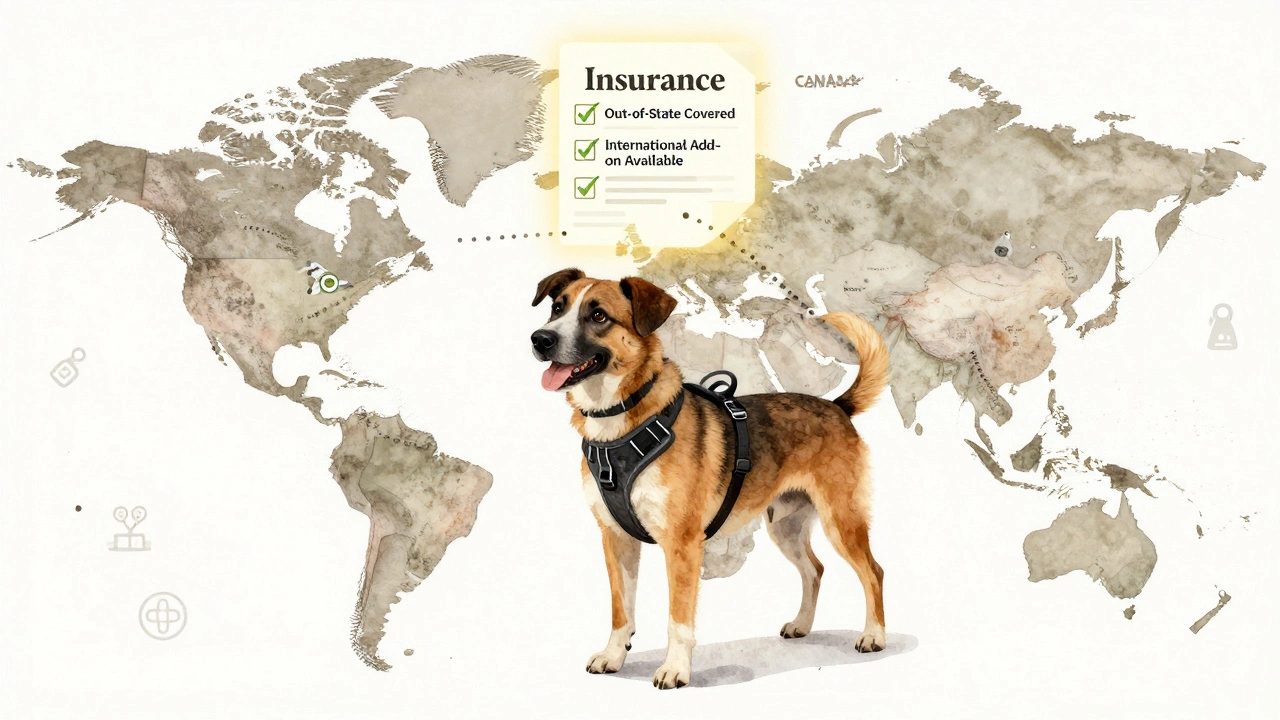
What Happens If You Don’t Have Travel Coverage?
Let’s say you didn’t check your policy, and now your dog is in a vet clinic in Arizona with a $2,500 bill. Without travel coverage, you’re on the hook for the full amount. That’s not just stressful-it can be financially crushing. Some owners try to use credit cards with pet travel benefits. But those usually cover only accidental injury during flights, not illness or routine emergencies. Others turn to crowdfunding or payment plans. Neither is ideal. The real cost? It’s not just money. It’s peace of mind. A 2025 study by the Pet Insurance Institute found that 68% of dog owners who faced an unexpected vet bill while traveling said they regretted not having better coverage. Many said they cut trips short or avoided travel altogether afterward.How to Get Travel Coverage That Actually Works
Not all dog insurance is built the same. If travel matters to you, here’s how to find a policy that doesn’t leave you stranded. Start by comparing three top providers known for flexible travel terms:| Provider | Out-of-State Coverage | International Coverage | Max Trip Duration | Emergency Only? |
|---|---|---|---|---|
| Embrace | Yes, nationwide | No | 90 days per trip | No |
| Trupanion | Yes, worldwide | Yes, optional add-on | 30 days per trip | No |
| PetPlan | Yes, nationwide | Yes, with approval | 60 days per trip | No |
Notice something? Trupanion is the only one that includes international coverage as a standard option (with an upgrade). Embrace and PetPlan are strong for U.S. travel but fall short abroad. If you’re planning to hike in Banff or visit family in Spain, Trupanion’s global option is your best bet.
Also, look for policies that reimburse based on actual vet bills-not fixed schedules. Some insurers pay a set amount per condition (like $500 for a broken leg), no matter how much the vet charges. That can leave you paying the difference. Trupanion and PetPlan use actual cost reimbursement, which is far more reliable.
What to Do Before You Leave
Even with the best policy, preparation is key. Don’t wait until your dog gets sick to figure things out.- Call your insurer and confirm your coverage. Ask for a written summary.
- Save the emergency contact number for your insurer’s 24/7 vet line. Keep it in your phone and wallet.
- Carry a copy of your policy, your dog’s medical records, and vaccination history. Many foreign vets won’t treat your pet without proof.
- Know the nearest emergency vet at your destination. Google it ahead of time.
- Update your dog’s microchip info. If they get lost, the chip must link to your current phone number and address.
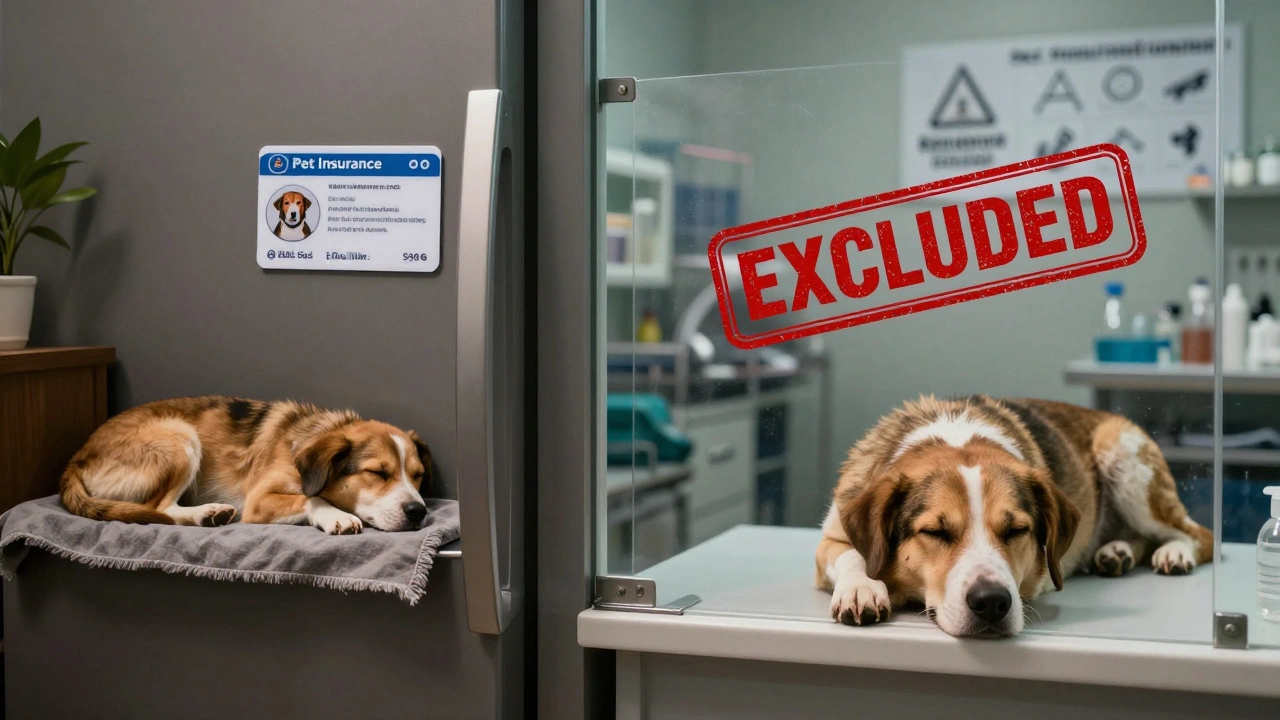
What’s Not Covered (Even with Travel Coverage)
Travel coverage doesn’t mean everything is covered. Here are common exclusions:- Pre-existing conditions diagnosed before you left home
- Behavioral issues (anxiety, aggression during travel)
- Routine care (vaccines, flea treatments, grooming)
- Travel-related injuries from risky activities (skateboarding with your dog, jumping off cliffs)
- Trips longer than the policy’s time limit
One owner in Oregon took her dog to Hawaii for six months. She thought her policy covered it. When the dog developed a skin infection, the insurer denied the claim-because the trip exceeded their 90-day limit. She paid $3,200 out of pocket.
Final Advice: Don’t Guess, Verify
Dog insurance isn’t a one-size-fits-all product. What works for a dog that stays home might not work for one that travels. If you’re planning to take your dog out of state or abroad, don’t rely on assumptions. Read the fine print. Call your provider. Ask for examples. Get confirmation in writing.Traveling with your dog should be joyful-not stressful. The right insurance doesn’t just cover vet bills. It gives you the freedom to explore without wondering what will happen if something goes wrong.
Does dog insurance cover my dog if I travel out of state?
Yes, most major dog insurance providers cover out-of-state travel, but only if your policy includes nationwide coverage. Always check the fine print-some plans limit coverage to within 50 miles of your home address or require you to notify them before leaving. Trip duration limits (usually 30-90 days) also apply.
Can I get dog insurance that covers international travel?
Only a few providers offer international coverage, and it’s usually an optional upgrade. Trupanion and PetPlan are among the few that include it, but only for trips under 30-60 days. Most standard policies do not cover overseas vet care. You’ll need to purchase a specialized plan or add-on before you leave the U.S.
What if my dog gets sick while I’m abroad and I don’t have travel coverage?
You’ll have to pay the full cost of treatment out of pocket. Veterinary care abroad can be expensive, and U.S. insurance won’t reimburse you. Some pet owners use emergency credit cards, payment plans, or crowdfunding, but these are stressful and unreliable. The best solution is to buy international coverage before you leave.
Are pre-existing conditions covered during travel?
No. Pre-existing conditions-anything diagnosed or showing symptoms before your policy started or before your trip began-are never covered, whether you’re at home or on the road. This applies even if the condition flares up during travel.
Do I need a health certificate for my dog to travel internationally?
Yes. Every country has its own rules. Most require a health certificate issued by a licensed vet within 10 days of travel, proof of rabies vaccination, and a microchip registered to your name. Insurance won’t cover you if you’re denied entry due to missing paperwork.
How long can I travel with my dog before my insurance expires?
Most policies limit travel coverage to 30-90 days per trip. If you plan to stay longer-like moving abroad for work-you’ll need to reapply for coverage or switch to a plan designed for long-term travelers. Staying past the limit voids your coverage, even if you’re still within the policy term.