Imagine you are looking at two beautiful dogs. They have great temperaments, perfect coats, and the pedigrees look clean on paper. You want to breed them. But before that litter is born, there is a hidden layer of risk. It’s not just about what you see; it’s about what’s in their DNA. This is where genetic counseling comes into play. It is no longer just a human medicine concept. For modern dog breeders, it is the difference between producing healthy companions and accidentally passing on debilitating conditions.
We used to rely on visual inspection and basic health clearances. Those methods are still important, but they miss the silent carriers. Today, with advances in canine genomics, we can look inside the double helix. We can see if a dog carries a gene for Progressive Retinal Atrophy or Hip Dysplasia even if the dog itself never shows symptoms. Understanding this process helps you make ethical, informed decisions that protect the future of your breed line.
The Shift from Pedigree to Genotype
For decades, breeders trusted the pedigree chart. If a dog’s parents and grandparents were healthy, the assumption was that the offspring would be too. That logic has a flaw. Many genetic disorders are recessive. This means a dog can carry one copy of a faulty gene without ever getting sick. When two carriers mate, there is a 25% chance each puppy will inherit two copies of the bad gene and develop the disease.
Genetic testing changes this dynamic. Instead of guessing based on family history, you get data. You send a cheek swab to a laboratory like Embark or Wisdom Panel. They sequence the dog’s genome. The report tells you exactly which variants the dog carries. It distinguishes between being "clear," a "carrier," or "affected." This precision removes the guesswork. It allows you to plan matings that avoid pairing two carriers of the same mutation.
Think of it like checking the weather forecast before a trip. You can hope for sunshine, or you can look at the radar and bring an umbrella. Genetic counseling gives you the radar. It doesn’t stop the rain, but it prepares you for it.
Understanding Inheritance Patterns
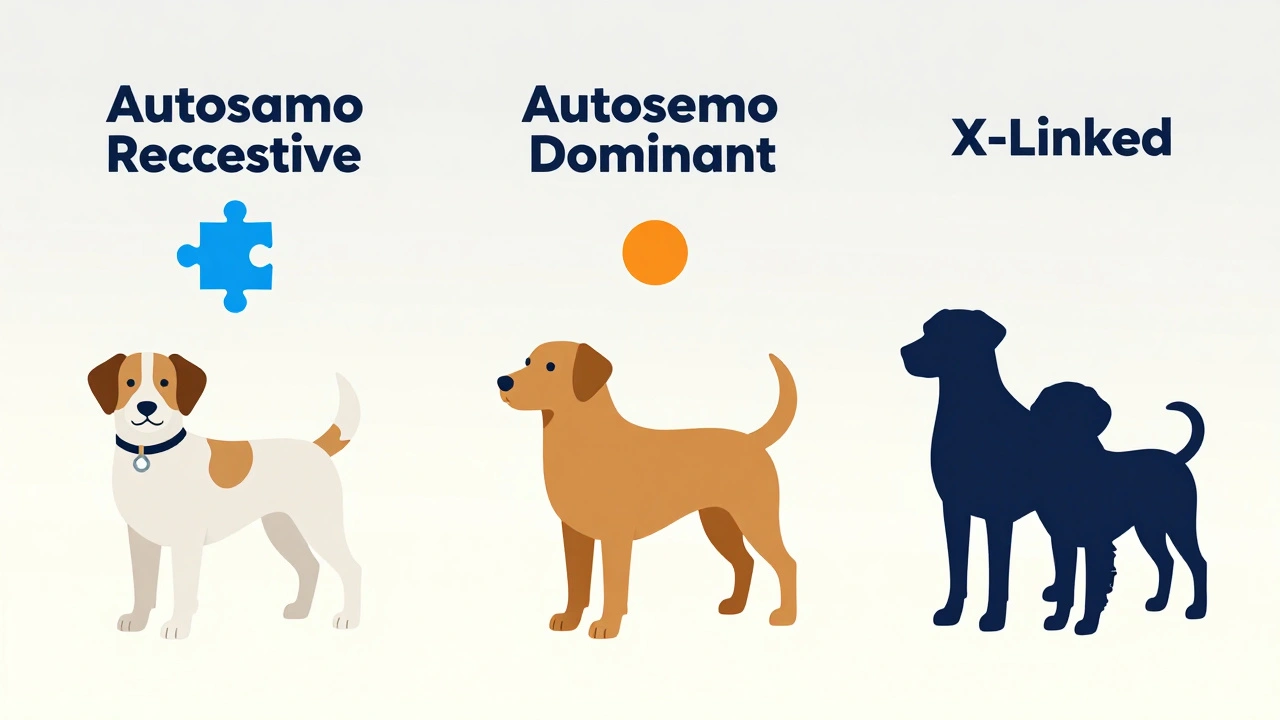
To use genetic information effectively, you need to understand how traits pass down. Not all genes work the same way. There are three main patterns you will encounter in dog breeding.
- Autosomal Recessive: This is the most common pattern for serious inherited diseases. The dog needs two copies of the mutated gene to show the disease. Carriers have one copy and are healthy. Examples include Degenerative Myelopathy in German Shepherds and Mucopolysaccharidosis VI in Standard Poodles. The goal here is to never breed two carriers together.
- Autosomal Dominant: Only one copy of the gene is needed to express the trait. If a dog has the gene, it will likely show the condition. Some structural traits fall here, but many dominant mutations are lethal or cause severe issues. Identifying these allows you to remove the gene from the breeding pool entirely.
- X-Linked: These genes are located on the X chromosome. Males (XY) are more frequently affected because they only have one X chromosome. Females (XX) can be carriers. Hemophilia A in Doberman Pinschers is a classic example. Breeding a carrier female to an affected male produces high-risk litters.
Knowing the pattern tells you the math. If you know both parents are carriers for a recessive condition, you know the risk is real. If you know one parent is clear, the risk drops to zero for that specific condition. This is the core calculation of genetic counseling.
Interpreting Genetic Test Results
When your results come back, the report can look intimidating. It lists dozens, sometimes hundreds, of genetic markers. Here is how to read them without panic.
First, look for "Health Conditions." These are mutations linked to known diseases. The lab usually categorizes them as Clear, Carrier, or Affected. If a dog is "Affected" for a serious condition, most ethical breeding organizations advise against breeding that dog. If the dog is a "Carrier," you can still breed it, provided you pair it with a "Clear" mate. This preserves the genetic diversity while preventing the disease.
Second, check the "Coat Color" and "Traits" sections. While less critical for health, these help you predict appearance. More importantly, some coat colors are linked to health issues. For instance, the Merle gene causes beautiful spotted patterns, but two merles mating can produce "double merles." Double merles often suffer from deafness, blindness, and other developmental defects. Genetic tests identify if a dog carries the merle allele, allowing you to avoid this dangerous combination.
Don’t ignore the "Ancestry" section. Knowing the exact mix of breeds helps you understand potential risks. A dog might be registered as purebred, but genetic testing might reveal significant outcrossing generations ago. This affects how you interpret health trends in the line.
| Sire Status | Dam Status | Risk to Puppies | Recommendation |
|---|---|---|---|
| Clear | Clear | 0% | Safe to breed |
| Clear | Carrier | 0% affected (50% carriers) | Safe to breed; test puppies |
| Carrier | Carrier | 25% affected | Avoid this pairing |
| Affected | Any | High risk | Do not breed |
Balancing Health and Diversity
There is a trap in genetic screening. It is tempting to breed only "perfect" dogs-those who are clear for every single tested condition. This sounds ideal, but it leads to inbreeding depression. By narrowing the gene pool so aggressively, you increase the chance of other unknown genetic issues popping up. You also lose valuable traits like immune system strength or fertility.
Responsible genetic counseling emphasizes balance. You don’t need to eliminate every carrier from the population. Carriers are essential for maintaining genetic variety. The key is management. You keep the carriers in the gene pool but manage their matings carefully. You pair a carrier with a clear dog. You track the lineage. You ensure that over several generations, the frequency of the harmful allele decreases naturally without wiping out entire bloodlines.
This approach requires patience. It means saying no to a popular stud dog because he is a carrier for a condition the dam also carries. It means waiting for the right match rather than rushing a litter. The long-term health of the breed depends on these small, disciplined choices.
Integrating Physical and Genetic Data
Genetics is powerful, but it is not the whole story. A dog can be genetically clear for known diseases but still have poor physical structure or unstable temperament. Genetic counseling works best when combined with traditional health evaluations.
You should still perform OFA hip and elbow scores. You should conduct cardiac exams. You should evaluate temperament through standardized tests. These physical checks catch polygenic traits-conditions influenced by many genes that current tests cannot fully predict. For example, while there are genetic markers for hip dysplasia, the actual development of the joint depends on nutrition, exercise, and environment during growth.
Combine the DNA report with the physical exam. If a dog is genetically clear but has poor hips, do not breed it. If a dog has great hips but is a carrier for a deadly disease, breed it carefully with a clear mate. The full picture emerges only when you overlay the genetic map onto the living dog.

Legal and Ethical Considerations
As genetic testing becomes standard, ethical expectations rise. Buyers expect transparency. Hiding a positive result for a serious condition can damage your reputation and lead to legal disputes. Many kennel clubs now require disclosure of genetic test results for registration.
Be honest with potential buyers. Provide them with the health records of the sire and dam. Explain what "carrier" means. Offer to test the puppies before they go to their new homes. This builds trust. It shows you care about the lifelong welfare of the dog, not just the sale.
Also, consider the cost. Testing isn’t free. A comprehensive panel can cost several hundred dollars per dog. Factor this into your breeding budget. It is an investment in quality. Cheap breeding programs that skip testing ultimately pay higher prices in vet bills and emotional tolls for owners dealing with sick dogs.
Next Steps for Breeders
If you are starting out, begin by testing your foundation stock. Identify the major health risks for your specific breed. Join a breed-specific health registry. Share your data with other breeders. Collaboration improves the entire breed’s health profile.
Stay updated. New genetic mutations are discovered regularly. A dog tested as "clear" today might be reclassified tomorrow as a new variant is identified. Subscribe to updates from your testing provider. Re-evaluate your breeding plans annually.
Finally, find a mentor or a veterinary geneticist. Complex cases require expert advice. They can help you interpret conflicting data or navigate difficult ethical dilemmas. You don’t have to figure it all out alone.
Is genetic testing mandatory for dog breeding?
While not legally mandatory in most regions, it is becoming an ethical standard. Major kennel clubs and responsible breeding organizations strongly recommend it. Skipping tests increases the risk of passing on hereditary diseases, which can harm your reputation and the breed's health.
Can I breed two carrier dogs together?
Generally, no. Breeding two carriers for an autosomal recessive condition results in a 25% chance of affected puppies. Ethical guidelines advise avoiding this pairing. Instead, breed a carrier to a clear dog to maintain genetic diversity without risking diseased offspring.
What is the difference between OFA and genetic testing?
OFA evaluates physical structure, such as hip joints, through X-rays. Genetic testing analyzes DNA for specific mutations. Both are necessary. A dog can have good hips physically but carry a gene for a different disease, or vice versa. Use both tools for a complete health assessment.
How much does canine genetic testing cost?
Prices vary by provider and panel size. Basic panels may cost around $100-$150, while comprehensive genomic tests can range from $200 to $400. This cost is an investment in preventing future medical expenses and ensuring litter health.
Does genetic testing guarantee a healthy puppy?
No. Genetics is only one factor. Environment, nutrition, and random mutations also play roles. Additionally, tests only screen for known mutations. New diseases or polygenic traits not yet mapped may still occur. Testing significantly reduces risk but does not eliminate it entirely.