Why Your Puppy Ignores You (And How to Fix It)
You call your puppy’s name. They look at you for half a second, then immediately sniff the floor or chase their tail. It’s frustrating, especially when you’re trying to teach them something important. But here’s the truth: your puppy isn’t being stubborn. They just don’t understand that puppy name recognition is a critical skill where a dog learns to associate their specific name with positive outcomes and immediate attention. Without this foundation, every other command becomes harder to teach.
Most owners skip the basics because they want their puppy to sit, stay, or come right away. But if you don’t build strong focus games for puppies are structured activities designed to improve a young dog's ability to maintain eye contact and ignore distractions during training sessions, you’re building on sand. In this guide, we’ll walk through exactly how to turn those ignored calls into reliable responses using simple, fast-engagement techniques.
The Science Behind Name Response
Dogs don’t naturally understand names like humans do. When you say "Buddy," your puppy hears a sound. Their job is to figure out what that sound means. Research in canine cognition shows that dogs respond best to high-pitched, distinct sounds followed by consistent rewards. This is why baby talk often works better than stern commands.
Operant conditioning is a learning process where behavior is modified by its consequences, such as rewards or punishments plays a huge role here. Every time you say your puppy’s name and they look at you, you need to mark that moment instantly. If you wait even two seconds, they might think you’re rewarding them for looking away. Timing is everything.
Think of it like this: if you clap every time someone sneezes, eventually people will start sneezing just to get your applause. With puppies, you’re clapping (or clicking) when they make eye contact. Over time, they’ll seek that connection voluntarily.
Step-by-Step: Teaching Name Recognition
Start in a quiet room with zero distractions. No TV, no kids running around, no squirrels outside the window. Just you and your puppy. Here’s the exact process:
- Say the name clearly. Use a happy, upbeat tone. Don’t shout. Don’t drag out the syllables. Just "Max" or "Luna."
- Wait for any head movement. Even if they just twitch an ear or glance sideways, that’s progress.
- Mark the moment immediately. Use a clicker or a sharp "Yes!" sound. This tells them, "That’s exactly what I wanted."
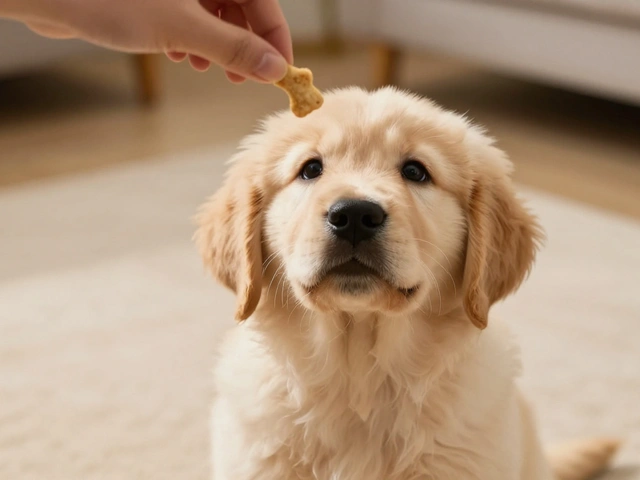
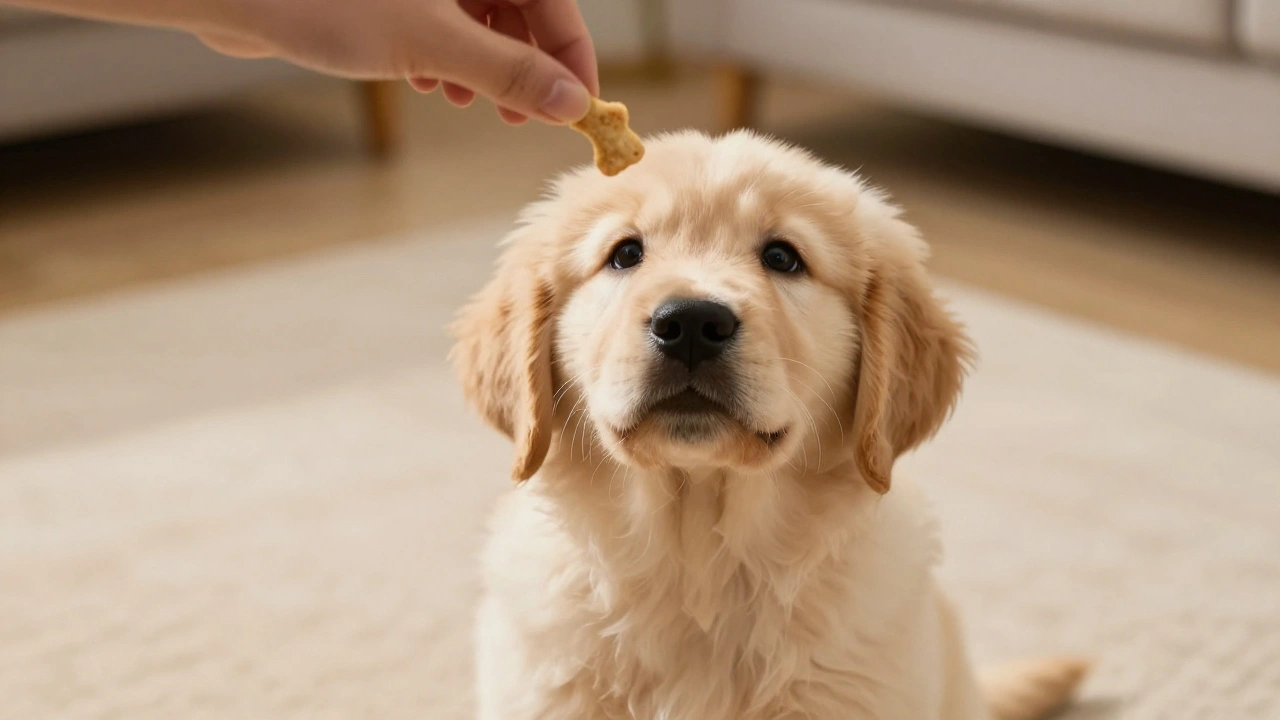
- Reward instantly. Toss a small treat near their nose so they can eat it while still facing you.
- Repeat 5-10 times per session. Keep it short. Puppies have tiny attention spans. Three sessions a day beat one long session.
After three days, move to a slightly more distracting environment. Maybe the kitchen instead of the bedroom. Add mild noise-like a radio playing softly. Gradually increase difficulty as your puppy succeeds.
Focus Games That Actually Work
Once your puppy responds to their name about 80% of the time, it’s time to deepen their focus. These aren’t tricks. They’re mental workouts that strengthen the bond between you and your dog while improving obedience.
The "Watch Me" Game
This is the cornerstone of all focus training. Stand in front of your puppy. Hold a treat close to your eyes. Say "Watch me." Wait for them to lock eyes with you. Click and reward. Repeat until they offer eye contact without waiting for the treat cue. Then phase out the treat entirely, replacing it with praise and occasional play.
Pro tip: Never force eye contact. If your puppy looks away, reset and try again. Forcing creates resistance. Inviting builds trust.
The "Find It" Game
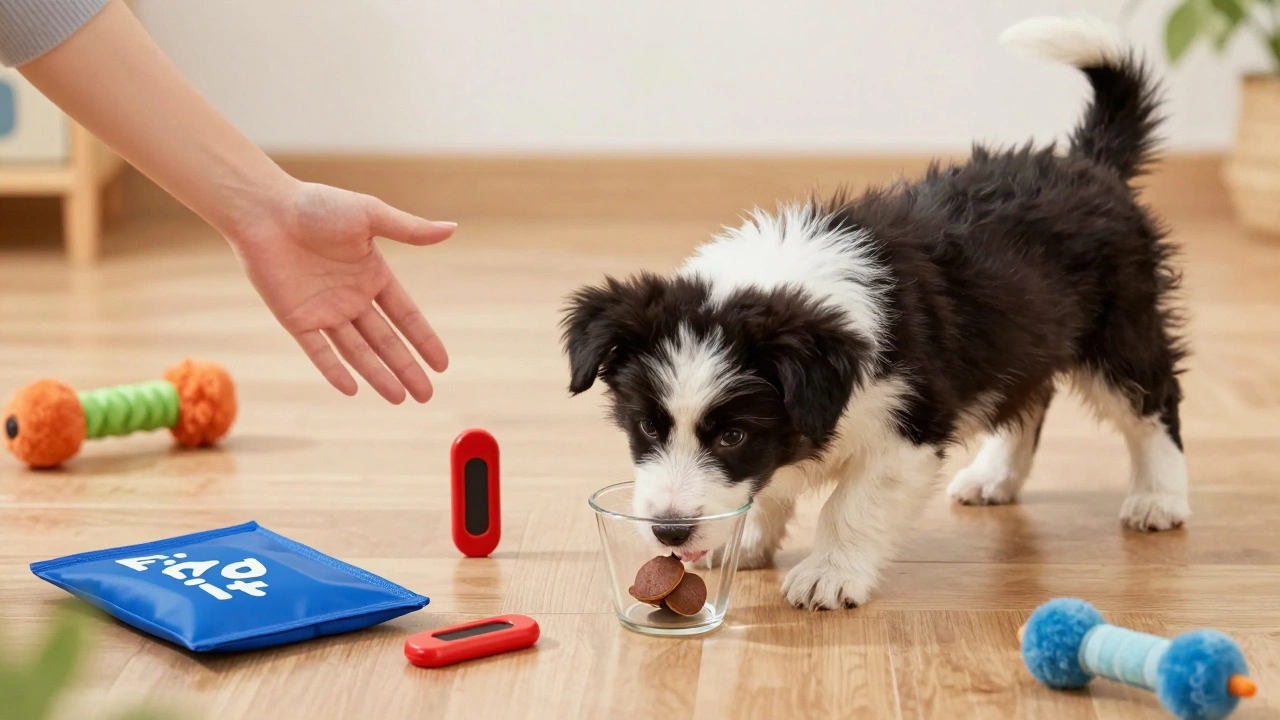
This game teaches impulse control and sustained focus. Start by hiding a treat under your hand. Let your puppy sniff it. Then place it behind your back or under a cup. Say "Find it." When they locate it, celebrate wildly. Over time, hide treats in increasingly complex spots-under furniture, inside boxes, or even outdoors in grass.
This game also doubles as enrichment. Mental stimulation tires puppies faster than physical exercise alone. A tired brain is a focused brain.
The "Leave It" Drill
Place a low-value treat on the floor. Cover it with your hand. Say "Leave it." Wait for your puppy to stop nudging your hand. Mark and reward from your other hand. Gradually remove your hand but keep saying "Leave it." Only release the command when they’ve fully disengaged.
This drill prevents scavenging and reduces begging. More importantly, it reinforces that your voice overrides temptation-a crucial safety skill.
Common Mistakes That Sabotage Progress
Even experienced trainers slip up. Here are the most frequent errors:
- Repeating the name. Saying "Fido, Fido, Fido" dilutes the meaning. Dogs tune out repetition. One clear call is enough.
- Punishing after the name. If you only call your puppy to scold them, they’ll learn to avoid you. Always pair the name with something good first.
- Using the name as a command. "Sit" is a command. "Bella" is not. Don’t say "Bella, sit." Say "Bella," wait for eye contact, then say "sit."
- Training when distracted. Trying to teach focus in a busy park is like teaching calculus during a rock concert. Start calm, add chaos later.
When to Introduce Distractions
Distraction training shouldn’t happen until your puppy reliably responds indoors. Once they’re solid, introduce controlled variables:
- Distance: Start five feet away. Move farther only when success rate stays above 90%.
- Duration: Ask for eye contact for one second. Build to five, then ten.
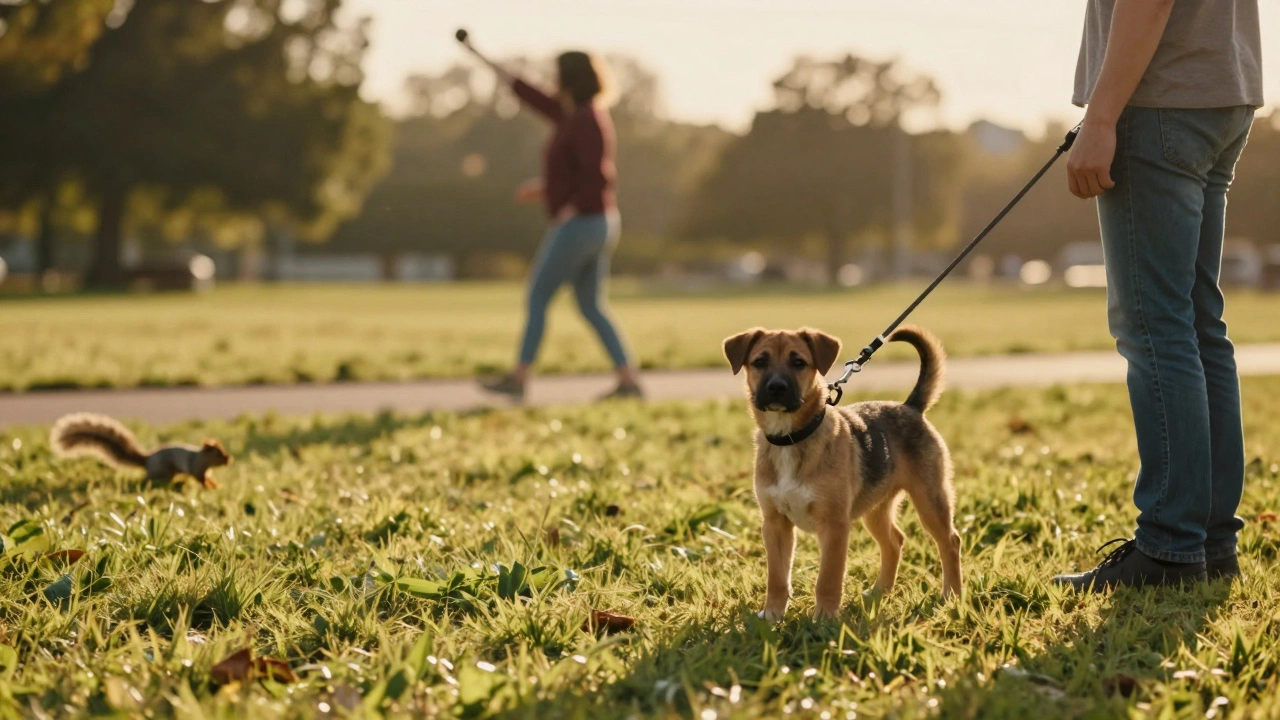
- Distractors: Have a friend toss a ball nearby. Reward your puppy for staying locked on you despite the action.
If your puppy breaks focus, go back a step. Don’t push forward. Consistency beats speed.
Tools That Help (But Aren’t Required)
You don’t need fancy gear to train focus. But these tools can accelerate results:
- Clicker: Provides precise timing. Cheaper than verbal markers because clicks are identical every time.
- Treat pouch: Keeps rewards accessible. Slower retrieval = broken focus.
- Long line: Allows safe outdoor practice without leash tension interfering with communication.
- High-value treats: Chicken, cheese, or commercial soft chews work better than kibble during early training.
Real-Life Scenarios Where Focus Matters
Let’s talk about why this matters beyond the living room. Imagine walking down the street. A squirrel darts across the path. Without focus training, your puppy bolts. With it, they glance at you, check in, and wait for direction. That split-second decision could prevent injury-or worse.
In veterinary clinics, focused puppies tolerate exams better. At boarding facilities, they adapt quicker. Even at home, a focused puppy is less likely to chew shoes or jump on guests. Focus isn’t just obedience. It’s safety, confidence, and connection.
How Long Does It Take?
There’s no universal timeline. Some puppies grasp name recognition in three days. Others take three weeks. Factors include breed, age, prior exposure, and consistency. The key metric isn’t speed-it’s reliability. Aim for 90% response rate in varied environments before moving on.
If your puppy stalls, revisit the basics. Was the reward valuable enough? Were sessions too long? Did you accidentally punish a correct response? Troubleshoot gently. Patience pays off.
Can I use my puppy’s name as a punishment?
No. Using your puppy’s name before scolding creates negative associations. They’ll learn to ignore you or fear your voice. Reserve the name for positive interactions only. Correct behaviors separately, without linking them to identity.
What if my puppy doesn’t respond to their name?
Try changing the tone or adding a unique sound afterward. Sometimes names blend together. Test different variations-shorter, sharper, or higher-pitched versions. Also ensure you’re not repeating the name multiple times, which confuses the signal.
Should I use a clicker or verbal marker?
Both work. Clickers offer precision; verbal markers require consistent pronunciation. Choose based on convenience. Most trainers prefer clickers for beginners due to uniformity. Switch to verbal once the behavior is solid.
How many times a day should I train focus?
Three short sessions of 3-5 minutes each are ideal. Puppies fatigue mentally quickly. Frequent, brief reps reinforce learning without overwhelming them. Quality matters more than quantity.
Is focus training necessary for all breeds?
Yes. While some breeds may pick up cues faster, all dogs benefit from structured focus work. Herding breeds might engage eagerly; hounds may drift easily. Tailor methods to temperament, but never skip foundational skills.