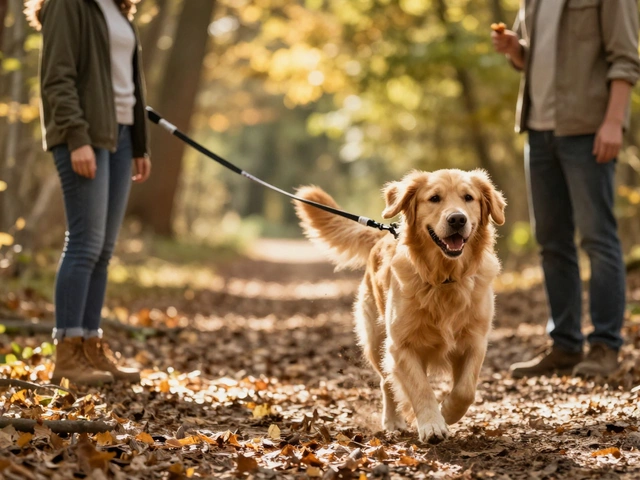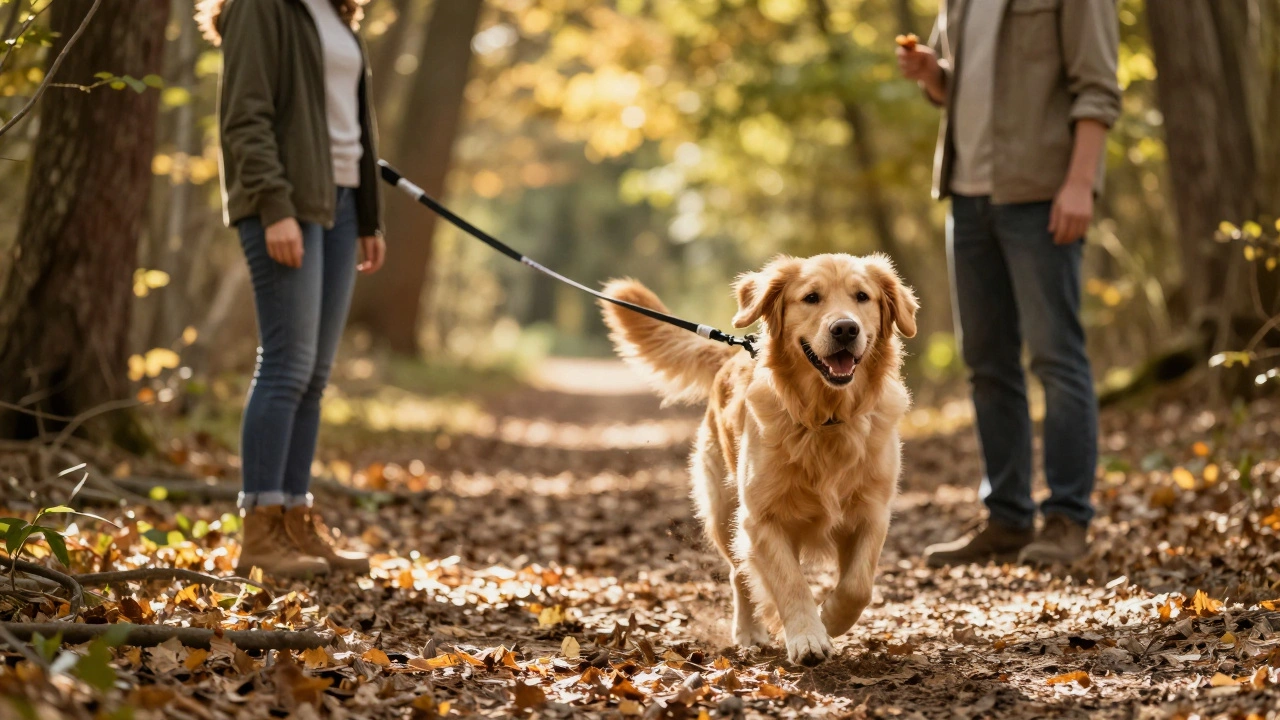
Most dog owners dream of letting their pup run free-no leash, no restrictions, just open space and fresh air. But letting your dog off-leash isn’t just about trust. It’s about control. And that’s where the long line comes in. It’s not a leash. It’s not a choke chain. It’s your dog’s ticket to real freedom-with a safety net.
Why Long Lines Work Better Than Regular Leashes
A regular 6-foot leash feels like a cage to a dog who’s built to explore. It tugs, it snaps, it limits movement. A long line? That’s different. Typically 10 to 30 feet long, made of lightweight nylon or cotton, it gives your dog room to sniff, chase, and explore-while still keeping them within your reach. You’re not holding them back. You’re giving them space to be a dog.
Here’s the truth: most dogs don’t need to be on a leash because they’re disobedient. They need one because they haven’t learned how to come back when called. And that’s where a long line becomes your best training tool. It lets you practice recall in real-world conditions-not just in your backyard, but in parks, trails, and open fields.
How to Choose the Right Long Line
Not all long lines are made the same. Here’s what actually matters:
- Length: Start with 20 feet if your dog is new to off-leash training. Go longer (30 feet) if they’re already confident and you’re in a safe, open area.
- Material: Nylon is durable and weather-resistant. Cotton is softer on your hands but wears faster. Avoid retractable leash cords-they tangle and snap under tension.
- Handle: Look for one with a padded grip or a quick-release clip. You don’t want to lose control if your dog bolts.
- Weight: Lighter is better. A heavy line drags and can trip your dog. A 20-foot line should weigh less than 8 ounces.
Brands like Ruffwear and Outward Hound make solid options. But you don’t need to spend $50. A $15 long line from a trusted pet supply store works just fine if it’s built right.
Training Your Dog to Come Back on Command
Recall isn’t something you teach once. It’s something you reinforce every time you go out. Here’s how to do it right:
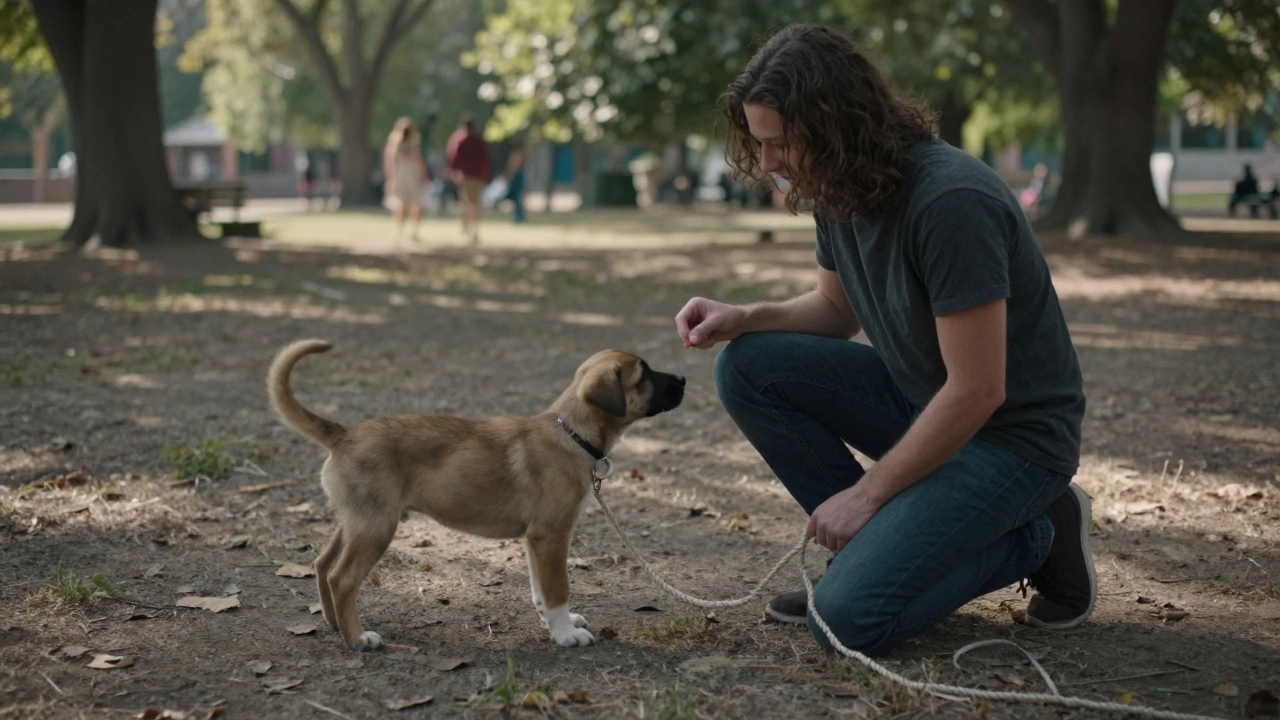
- Start in a quiet, enclosed space-your backyard or a fenced park. Attach the long line and let your dog wander.
- Call their name + “Come!” in a happy, upbeat tone. Don’t yell. Don’t repeat it five times. Say it once.
- The moment they turn toward you, reward them with a high-value treat (think chicken, cheese, or freeze-dried liver). Don’t just give it. Make it exciting. Jump, clap, praise.
- If they don’t come, don’t pull the line. Walk toward them calmly, gently guide them back, then reward. Pulling teaches them to resist, not respond.
- Repeat 5-10 times per session. Two sessions a day, five days a week. That’s all it takes to build a solid habit.
After a week, move to a slightly more distracting area-a trail with other dogs, a quiet street, a grassy field. Keep the long line on. If they get distracted, wait. Let them explore. Then call again. Dogs learn from consequences, not punishment.
When to Skip the Long Line
Even the best-trained dogs can have off days. Here’s when you should never skip the leash entirely-even with a long line:
- Areas with heavy foot traffic or cyclists
- Near roads with fast-moving cars
- During hunting season (birds, deer, and other wildlife can trigger prey drive)
- If your dog has a history of chasing animals or people
- When you’re tired, distracted, or in a hurry
There’s no shame in using a leash. The goal isn’t to never use one. The goal is to earn the freedom to not need one.
Real-Life Scenarios: What Works
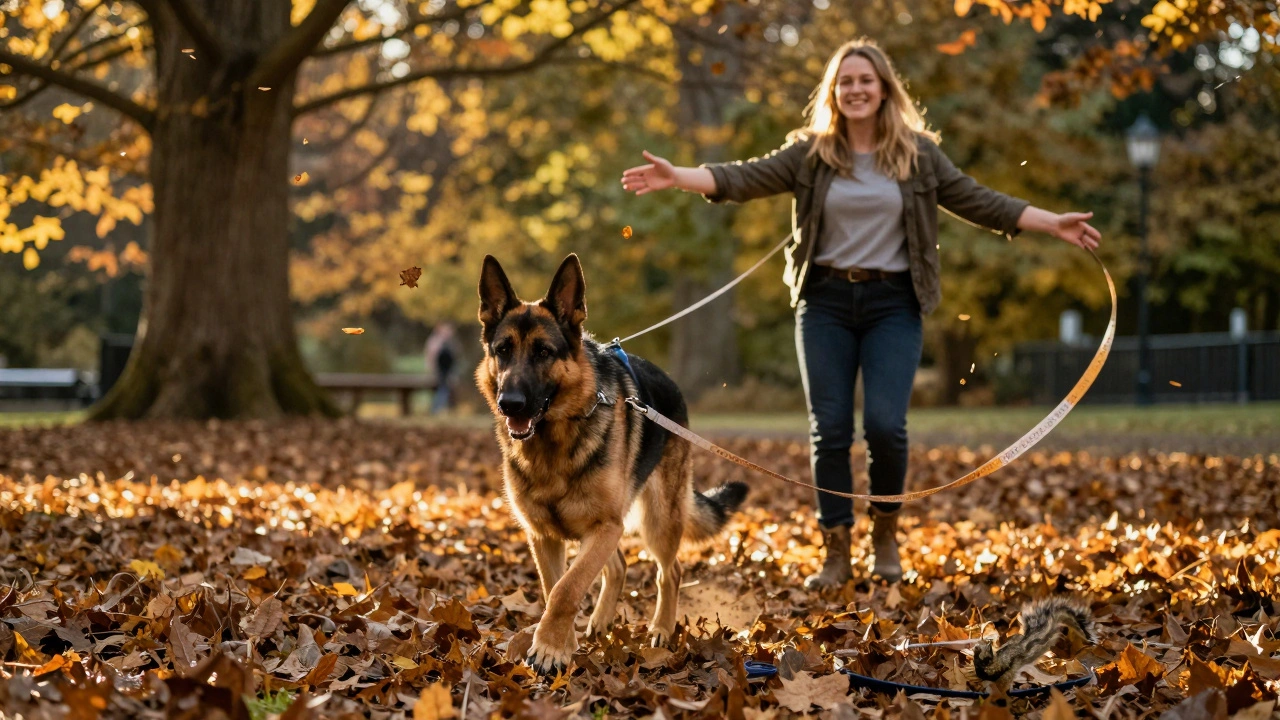
I’ve seen it happen in Portland’s Forest Park: a German Shepherd named Kai, 3 years old, used to bolt after squirrels. His owner started with a 20-foot long line. First week, Kai ignored the “Come!” every time. Second week, he came half the time. By week four, he’d drop the squirrel and trot back to her-tail wagging-like it was a game.
Another dog, Luna, a border collie mix, would race toward other dogs on walks. Her owner used the long line to teach her that approaching other dogs meant the walk ended. No play. No sniffing. Just a turn around. After a few sessions, Luna started checking in with her owner before lunging. Now she walks off-leash in the dog park without a problem.
These aren’t magic stories. They’re results of consistency. No treats. No shock collars. Just time, patience, and a long line.
Common Mistakes (And How to Fix Them)
Most people think long lines are for “advanced” dogs. They’re not. They’re for beginners. But here are the mistakes people make:
- Using it in a crowded place. Too many distractions? You’re setting your dog up to fail. Start small.
- Letting the line drag. A tangled or dragging line can trip your dog or get caught on branches. Keep it loose but not on the ground.
- Only using it when you want to call them back. If you only use it to correct bad behavior, your dog will associate the line with punishment. Use it during play, walks, and calm moments too.
- Not rewarding fast enough. If you wait more than 2 seconds to reward, your dog won’t connect the action with the treat. Reward immediately.
What Comes Next? Beyond the Long Line
Once your dog reliably comes back on a 30-foot line in a busy park, you’re ready to try off-leash freedom. But don’t just take it all off at once.
Try this:
- Go to a fenced area and let them off-leash. Keep the long line clipped to their collar, just in case.
- Call them every 5 minutes. Reward every time.
- After 10 successful recalls, remove the long line.
- Still carry a leash. Use it when you enter a new environment-like a busy street or a dog-friendly cafe.
The goal isn’t to never use a leash again. It’s to give your dog the confidence to choose to come back. And that’s something no shock collar, no treat bag, no training class can give you. Only time, repetition, and a long line can.
Final Thought: Freedom Isn’t Chaos
Letting your dog run free isn’t about letting them do whatever they want. It’s about teaching them they don’t have to. A long line gives them space to be curious, to explore, to chase-but it also gives you the power to guide them back. That’s the balance. That’s the trust. And that’s what makes every walk, every trail, every adventure better.
Can I use a long line with a puppy?
Yes, and it’s one of the best ways to start training. Puppies have short attention spans, so keep sessions under 10 minutes. Use a 10- to 15-foot line in a quiet, enclosed space. Reward every tiny step toward you. Early success builds confidence.
What if my dog ignores the long line and runs away?
Don’t chase. Don’t yell. Walk calmly toward them, gently guide them back with the line, and reward them as soon as they’re near you. If this happens often, you’re training in an area with too many distractions. Go back to a quieter spot and rebuild the behavior.
Is a long line better than a retractable leash?
Yes. Retractable leashes are dangerous for training. The thin cord can snap, the lock can fail, and the constant tension teaches dogs to pull. A long line gives you control, feedback, and safety. It’s made for training, not convenience.
How often should I practice recall with a long line?
Two short sessions a day, five days a week, for at least three weeks. After that, keep practicing once a week to keep the skill sharp. Like any habit, recall fades without reinforcement.
Can I use a long line for multiple dogs?
Not safely. Each dog needs their own line. Trying to manage two on one long line increases tangles, confusion, and risk. Train them separately, then practice together only after both have strong recall.