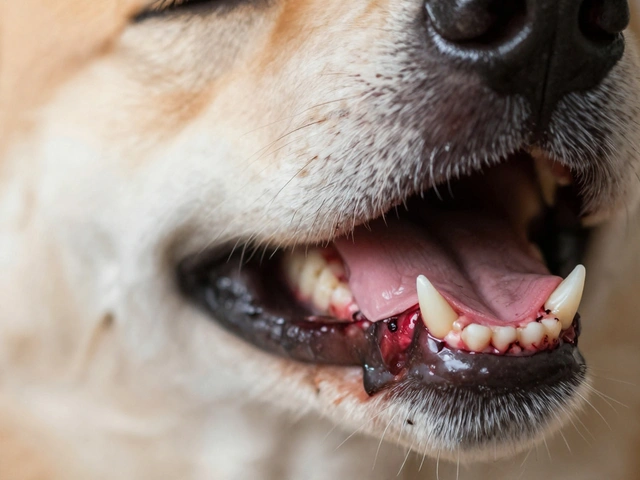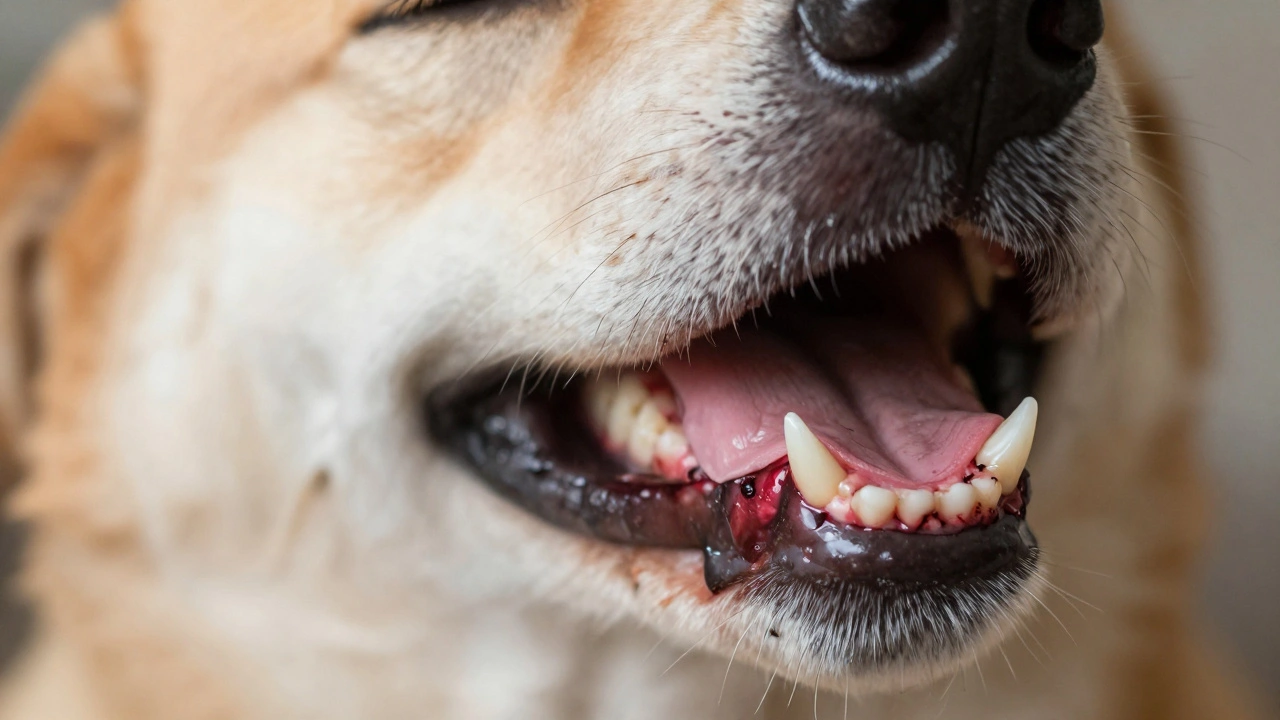
Most dog owners don’t realize their pet’s bad breath isn’t just annoying-it’s a warning sign. Over 80% of dogs show signs of periodontal disease by age three. That’s not normal aging. It’s preventable damage building up silently, often until it’s too late. This isn’t about a dirty tooth. It’s about infection spreading from the gums into the bloodstream, affecting the heart, kidneys, and liver. If your dog hasn’t had a real dental checkup in the last year, you’re risking their long-term health.
What Exactly Is Periodontal Disease?
Periodontal disease in dogs is an infection of the structures that hold teeth in place: gums, ligaments, and bone. It starts with plaque-a sticky film of bacteria-forming on the teeth within hours after eating. If plaque isn’t removed, it hardens into tartar within days. Tartar sticks to the tooth surface and pushes the gums away, creating pockets where more bacteria hide. These pockets become infected. The body fights back, but over time, the infection destroys the bone and tissue holding the tooth. That’s when teeth loosen, fall out, or need to be pulled.
Unlike humans, dogs don’t brush their teeth. They don’t floss. They don’t rinse with mouthwash. Their mouths are designed for tearing meat and chewing bones, not for modern diets full of soft kibble and treats. This mismatch is why periodontal disease is so common.
How Does It Start? The First Stage
The process begins with gingivitis. This is the earliest and only reversible stage. You’ll notice red, swollen gums, especially near the base of the teeth. The gums might bleed slightly when your dog eats or when you gently touch them. Bad breath is usually the first clue owners notice. At this point, there’s no bone loss yet. Just inflammation.
Here’s what most people miss: gingivitis isn’t just a cosmetic issue. It’s the body’s alarm system. The immune system is already working overtime trying to fight off bacteria. If you catch it here-through a vet exam or even just regular at-home checks-you can reverse it with professional cleaning and consistent home care.
The Silent Progression: From Gingivitis to Bone Loss
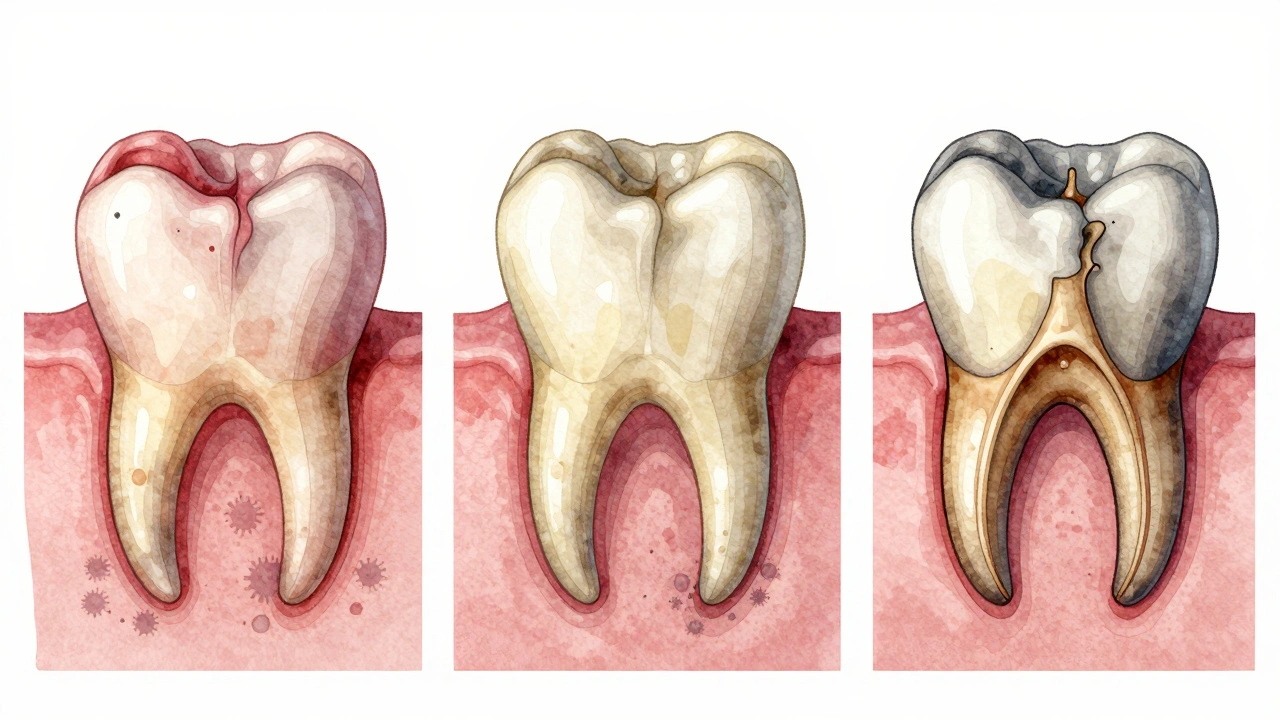
Without intervention, gingivitis becomes periodontitis. This is where things get serious. Bacteria spread below the gumline. The immune system’s response starts breaking down the connective tissue and bone that anchor teeth. You won’t see this happening. It’s hidden. X-rays are the only way to measure bone loss accurately.
Stage two: 25% bone loss. Teeth may still look fine, but the roots are weakening. Your dog might start chewing on one side of the mouth. They might drop food. You might notice them pawing at their face.
Stage three: 25-50% bone loss. Now the gums are receding visibly. Teeth start to shift. Pain becomes constant. Appetite drops. Weight loss follows. This is when many owners finally take their dog to the vet-often because the dog won’t eat dry food anymore.
Stage four: Over 50% bone loss. Teeth are loose or falling out. Infection spreads into the jawbone. Abscesses form. The bacteria enter the bloodstream, increasing the risk of heart valve damage, kidney scarring, and liver inflammation. Studies from the American Veterinary Dental College show dogs with advanced periodontal disease have up to a 30% higher risk of organ damage.
What Causes It? Beyond Just “Not Brushing”
Yes, lack of brushing contributes. But that’s not the whole story. Some breeds are genetically prone. Small dogs-Chihuahuas, Yorkies, Poodles-have teeth packed tightly in small jaws. Food gets trapped. Plaque builds faster. Brachycephalic breeds-Pugs, Bulldogs, Shih Tzus-have misaligned teeth that trap debris. Their anatomy makes cleaning nearly impossible without professional help.
Diet matters too. Soft, sticky foods and sugary treats cling to teeth. Dry kibble isn’t a magic solution. Most kibble crumbles before it can scrub the tooth surface. Only dental-specific diets with the Veterinary Oral Health Council (VOHC) seal actually help reduce plaque buildup.
Age is another factor. Older dogs have weaker immune systems. Their gums thin. Their ability to heal slows. But even young dogs can develop severe disease if they’ve never had a dental exam.
Signs You Can’t Ignore
Bad breath is the most obvious sign-but not the only one. Watch for:
- Chewing on one side of the mouth
- Dropping food while eating
- Excessive drooling, especially with blood
- Red, swollen, or bleeding gums
- Loose or missing teeth
- Swelling under the eyes or along the jaw
- Reluctance to play with chew toys
- Changes in behavior-irritability, hiding, lethargy
Some dogs hide pain incredibly well. A dog that won’t eat dry kibble but still eats treats? That’s a red flag. They’re not being picky-they’re in pain. The treat is soft. The kibble isn’t.
What Happens at the Vet?
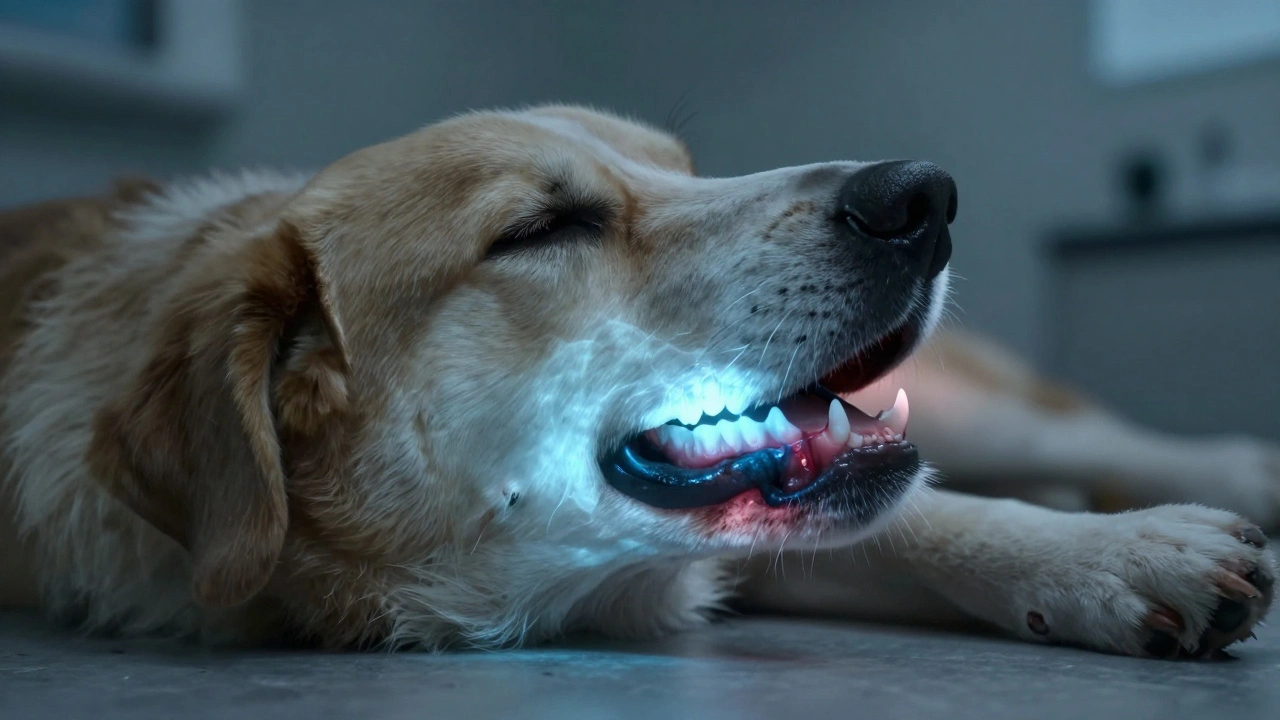
A dental cleaning for dogs isn’t like yours. You can’t just sit in a chair. Your dog needs general anesthesia. Why? Because cleaning below the gumline requires tools that can’t be used on a conscious animal. X-rays are taken to check for hidden bone loss. Teeth are scaled (cleaned) above and below the gumline. Then polished. Infected teeth are extracted if needed.
Many owners worry about anesthesia. But modern veterinary anesthesia is very safe. The risk of complications is lower than the risk of leaving infected teeth in place. Vets check liver and kidney function first. They monitor heart rate, oxygen levels, and temperature throughout. A dental procedure under anesthesia is one of the safest surgeries performed in veterinary medicine.
After cleaning, your vet will give you a plan: how often to return, what to feed, how to brush, and which chew products actually work. Not all “dental chews” do. Look for the VOHC seal. Avoid hard bones, antlers, or hooves-they can crack teeth.
What You Can Do at Home
Brushing is the gold standard. Use a dog-specific toothpaste (never human toothpaste-it contains xylitol, which is toxic). Start slowly. Let your dog taste the paste. Rub their gums with your finger. Then use a soft-bristled brush or finger brush. Aim for every day. Three times a week is the minimum.
Chew toys and dental treats help, but they’re supplements-not replacements. The right chew should flex and bend, not stay rigid. Look for products approved by the VOHC. Rawhide? Avoid it. It can cause choking or intestinal blockages.
Water additives? Some work. Others are just flavored sugar water. Check labels. Look for ingredients like chlorhexidine or enzymes proven to reduce plaque.
How Often Should Your Dog Get Cleaned?
There’s no one-size-fits-all answer. Small breeds often need cleanings every 6-12 months. Large breeds might go 18-24 months. But it depends on genetics, diet, and home care. If your dog has gingivitis now, they need a cleaning within 6 weeks. If their teeth look clean and their breath is fresh, you might have 18-24 months before the next one.
Ask your vet to grade your dog’s dental health at every checkup. A score of 0 means perfect. A score of 3 or higher means active disease. Don’t wait for symptoms. Schedule a dental exam like you would a heart or kidney check.
Why This Matters More Than You Think
Periodontal disease isn’t just about teeth. It’s about longevity. Dogs with untreated gum disease live, on average, 2 years less than those with healthy mouths. That’s not a guess. That’s from a 2024 study of over 12,000 dogs published in the Journal of Veterinary Dentistry.
Every infected tooth is a source of chronic inflammation. Your dog’s body is constantly fighting. That drains energy. Weakens immunity. Damages organs. It’s why so many older dogs develop unexplained kidney failure or heart murmurs-because the infection started in their mouth years ago.
Fixing dental disease doesn’t just make your dog’s breath better. It gives them more energy, better appetite, fewer infections, and more years with you.
Can periodontal disease in dogs be reversed?
Yes-but only in the earliest stage, called gingivitis. Once bone loss occurs, it’s permanent. Professional cleaning and daily home care can stop further damage and improve gum health, but lost bone won’t grow back. That’s why early detection matters.
Is anesthesia safe for older dogs during dental cleanings?
Yes, when done properly. Modern veterinary anesthesia is safer than ever. Vets perform pre-anesthetic blood work to check liver and kidney function. They use monitoring equipment to track heart rate, oxygen levels, and temperature. The risk of complications is far lower than the risk of leaving infected teeth in place. For older dogs, the benefits of pain relief and infection control often outweigh the risks.
Do dental chews really work for dogs?
Some do, many don’t. Look for the VOHC (Veterinary Oral Health Council) seal. Products with this seal have been tested and proven to reduce plaque or tartar. Avoid hard chews like antlers, hooves, or cooked bones-they can crack teeth. Soft, flexible chews that your dog can chew for 30 seconds or more are best.
Why do small dogs get periodontal disease faster than large dogs?
Small dogs have teeth packed tightly in small jaws. This creates more spaces for food and bacteria to get trapped. Their gums are also more sensitive to plaque buildup. Combined with often being fed softer diets and less chewing, plaque hardens into tartar faster than in larger dogs with more space between teeth.
Can I clean my dog’s teeth at home without anesthesia?
You can remove surface plaque with brushing and dental wipes, but you can’t clean below the gumline without professional tools and anesthesia. That’s where the real damage happens. Non-anesthetic cleanings are cosmetic only-they make teeth look better but leave infected areas untouched. They can even be dangerous if they give owners a false sense of security.