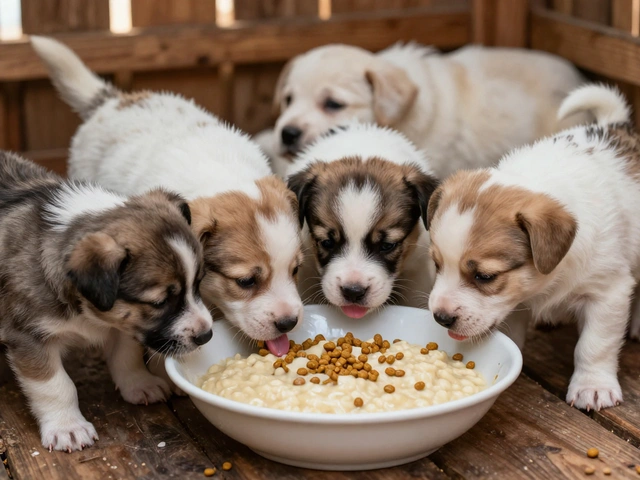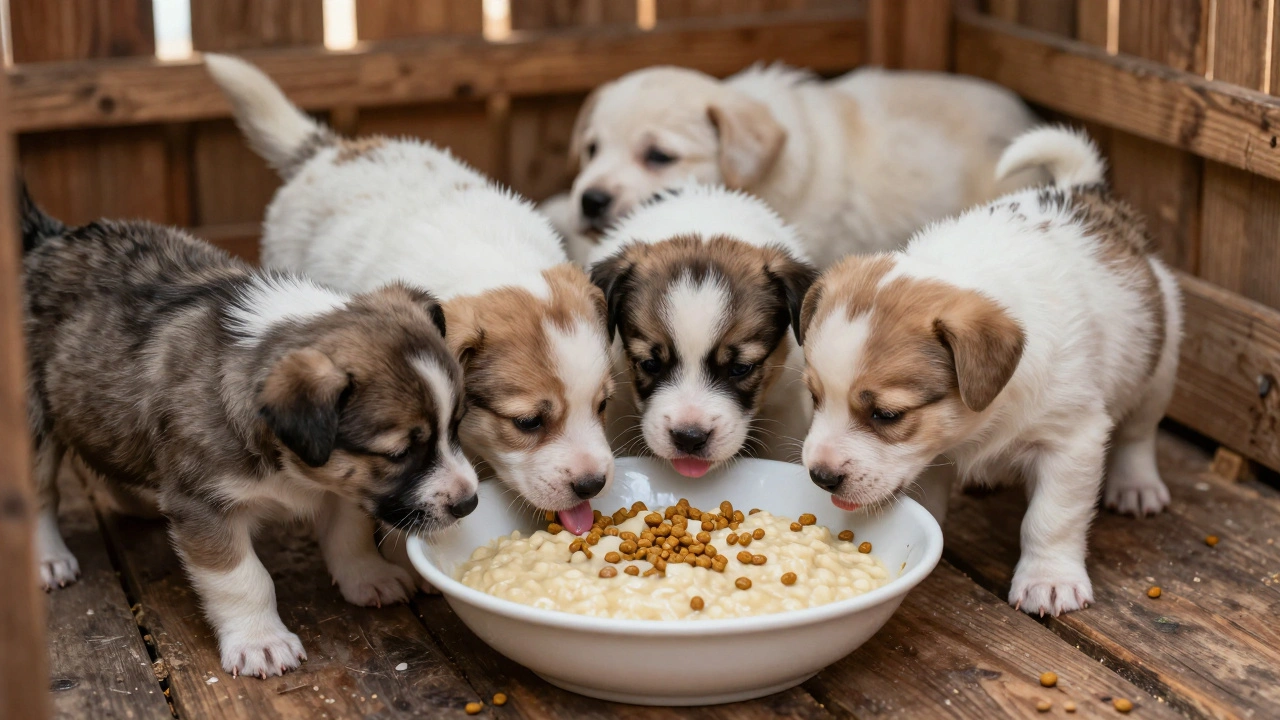
When puppies are born, they rely entirely on their mother’s milk for nutrition and immunity. But that doesn’t last forever. Around 3 to 4 weeks of age, something important begins to shift-the weaning process. This is when puppies start moving from milk to solid food. It’s not a single event. It’s a slow, natural transition that, if done right, sets the foundation for lifelong health. Get it wrong, and you risk digestive upset, poor growth, or even behavioral issues later on.
Why Weaning Matters
Weaning isn’t just about switching food. It’s about teaching puppies how to eat, digest, and interact with their environment outside of nursing. The mother dog naturally starts pulling away from her pups around 3 weeks. She may lick them less, lie farther away, or even growl if they try to nurse. This is her way of telling them it’s time to move on. As a breeder or owner, your job isn’t to rush this, but to support it.
Without proper weaning, puppies can develop nutrient deficiencies. They might become picky eaters, have weak immune systems, or struggle with food anxiety. On the flip side, if you introduce solids too early-before 3 weeks-their digestive systems aren’t ready. Their intestines haven’t developed the enzymes needed to break down anything other than milk. Pushing food too soon can lead to diarrhea, bloating, or even life-threatening dehydration.
Timeline: When to Start and How Long It Takes
The weaning process typically begins between 3 and 4 weeks of age and finishes by 7 to 8 weeks. Here’s what happens week by week:
- Week 3: Puppies start showing interest in food. They may nibble at their mother’s bowl or sniff around the crate. This is your cue to introduce a gruel.
- Week 4: Begin offering a soft, warm mixture of high-quality puppy kibble soaked in warm water or puppy milk replacer. The texture should be like thin oatmeal. Offer this 3-4 times a day, away from the mother.
- Week 5-6: Gradually reduce the liquid in the mixture. Make it thicker. Puppies should now be eating more solids and nursing less. The mother will naturally reduce nursing sessions, often stopping completely by week 6.
- Week 7-8: Puppies are eating dry kibble. They should no longer rely on milk. At this point, they’re ready for independent feeding and often get their first veterinary checkup and vaccinations.
Some breeders start weaning at 3 weeks if the litter is large or the mother is underweight. Others wait until 5 weeks if the puppies are small or slow to develop. The key is watching the puppies, not the calendar. Look for signs: are they standing steady? Are they playing and exploring? Do they ignore nursing attempts? If yes, they’re ready.
How to Make the Gruel
You can’t just dump dry kibble in a bowl and expect puppies to figure it out. They need texture, warmth, and smell. Here’s how to make a simple, effective gruel:
- Choose a high-protein, puppy-specific kibble (look for AAFCO statements on the bag). Avoid generic or adult formulas.
- Measure out 1 cup of kibble.
- Add 1 cup of warm water or puppy milk replacer (never cow’s milk-it causes diarrhea).
- Let it soak for 10-15 minutes until soft.
- Mash it with a fork until it’s smooth, like thick pancake batter.
- Warm it slightly (to body temperature) before serving.
Feed this in a shallow dish-too deep and they’ll struggle to reach it. Place it near their sleeping area, but not right next to their bed. You want them to associate eating with activity, not sleep.
What to Avoid
Weaning mistakes are common-and often costly.
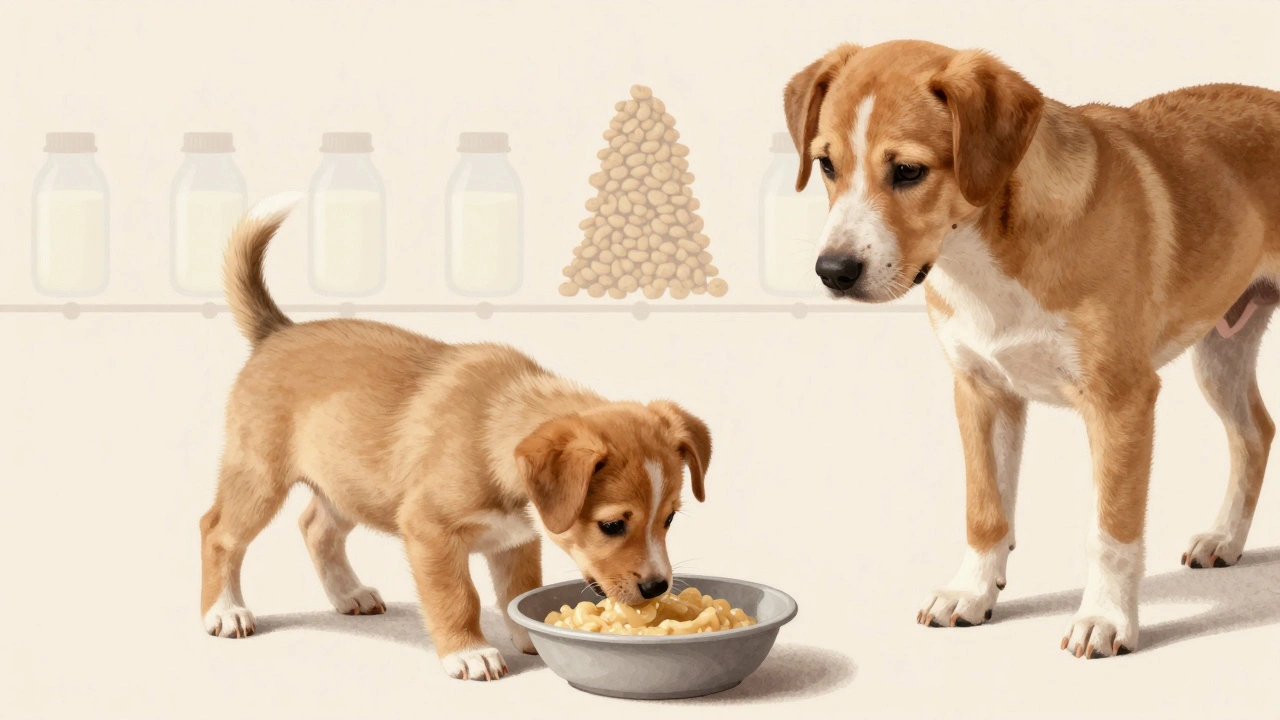
- Don’t use cow’s milk. Puppies lack the enzyme lactase. It causes loose stools and dehydration.
- Don’t add eggs, meat, or table scraps. Their digestive systems can’t handle complex proteins yet. Stick to formulated puppy food.
- Don’t leave food out all day. Puppies need scheduled meals to learn routine and portion control.
- Don’t force feed. If a pup ignores the gruel, try again in a few hours. Hunger will motivate them.
- Don’t separate puppies from mom too early. Even if they’re eating solids, they still need her for warmth, social cues, and immune support. Keep them together until at least 7 weeks.
Monitoring Progress
Keep a simple log: weight, appetite, stool consistency, energy level. Weigh each pup once a week on a kitchen scale. Healthy puppies should gain 5-10% of their body weight daily during weaning. If a pup isn’t gaining, or if their stools are watery or bloody, stop the process and call your vet.
Also watch for behavioral changes. Puppies who are stressed or uncomfortable may whine, refuse to eat, or hide. This could mean the food is too cold, too thick, or they’re being bullied by siblings. If one pup is always left out, feed them separately for a few days.
What Comes After Weaning
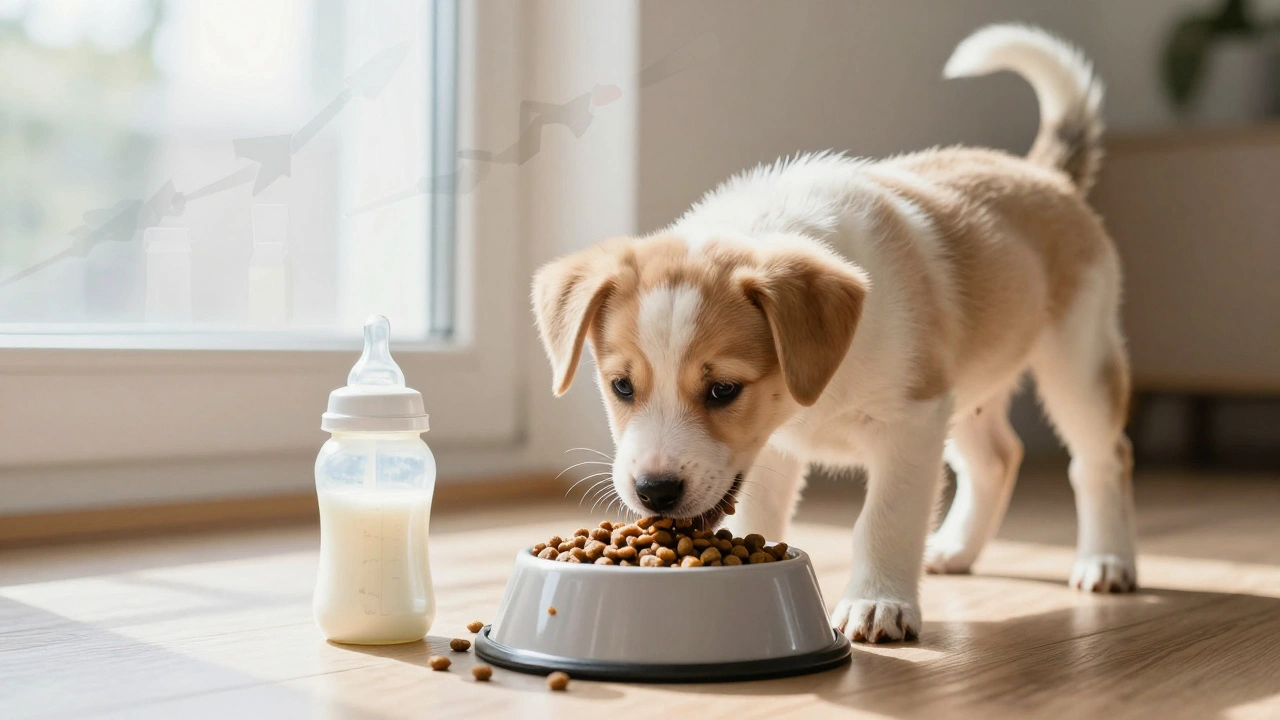
Once puppies are eating dry kibble reliably by 8 weeks, you’re not done. You’ve just entered the next phase: transition to adult feeding routines. Start by feeding 3 meals a day. By 12 weeks, drop to 2 meals. Always measure portions-overfeeding leads to rapid growth, which can cause joint problems in large breeds.
Keep the same food for at least 4-6 weeks after weaning. Changing brands too soon can upset their stomachs. If you plan to switch, do it slowly: mix 25% new food with 75% old food for 3 days, then 50/50 for 3 days, then 75/25, then 100%.
Also, make sure they have fresh water available at all times. Puppies don’t always drink enough, especially when adjusting to solids. If you notice dry gums or slow skin elasticity (pinch the skin on their back-it should snap back fast), they’re dehydrated.
Common Questions
Can puppies be weaned earlier than 3 weeks?
No. Puppies under 3 weeks old lack the digestive enzymes to process anything other than milk. Their intestines are still developing, and their immune systems depend entirely on their mother’s colostrum. Early weaning increases the risk of malnutrition, infection, and death. If a mother dies or abandons the litter, use a puppy milk replacer and bottle-feed until 4 weeks, then begin weaning.
How do I know if my puppy is ready for solid food?
Look for physical and behavioral signs. Can they stand and walk steadily? Are they curious about food in the mother’s bowl? Do they try to chew on toys or objects? Do they ignore nursing attempts? If yes, they’re ready. Also, their teeth should be starting to poke through-this usually happens around 3 weeks and makes nursing uncomfortable for the mother, which naturally encourages weaning.
Should I separate puppies from their mother during weaning?
Not completely. Keep them together until at least 7 weeks. The mother teaches bite inhibition, social boundaries, and calm behavior. Separating them too early leads to fearfulness, aggression, or poor social skills. You can create a separate feeding area, but keep the puppies in the same room. Let her come and go as she chooses. Her presence is still essential.
What if my puppy refuses to eat the gruel?
It’s normal for a pup to be hesitant at first. Try warming the gruel slightly more. Add a teaspoon of puppy milk replacer to make it smell more familiar. You can also smear a little on their gums or paws-they’ll lick it off. Don’t force it. Skip a meal, then try again. Puppies are smart. If they’re hungry, they’ll eat. Never offer human food as a bribe. It creates picky eaters.
How much should I feed during weaning?
Follow the feeding guidelines on the puppy food bag, but divide the daily amount into 3-4 small meals. For example, if the bag says 1 cup per day for a puppy your size, give 1/4 cup four times a day. Adjust based on weight gain. If they’re gaining too fast, reduce portions. If they’re losing weight or seem lethargic, increase food or consult a vet. Overfeeding is just as dangerous as underfeeding.
Final Thoughts
Weaning is one of the most critical phases in a puppy’s life. It’s not just about food-it’s about independence, learning, and building trust. Done right, it leads to healthy, confident dogs. Done poorly, it can leave lasting scars. Stick to the timeline. Watch your pups closely. Trust their instincts-and yours. You don’t need fancy tools or complicated recipes. Just patience, consistency, and good puppy food.