Your dog just got too close to a prickly neighbor. One moment they were sniffing around the backyard, and the next, you’re holding a trembling pup with sharp needles sticking out of their face. It’s a terrifying scene, but panic is your enemy here. Porcupine quill injuries are common in many parts of North America, especially during spring and early summer when these animals are most active. Knowing exactly what to do-and what absolutely not to do-can save your dog significant pain and prevent serious infection.
This guide cuts through the noise. We’ll walk you through the immediate steps to take, how to safely assess the damage, and why some home remedies can actually make things worse. By the end, you’ll feel confident handling this specific veterinary emergency.
Quick Summary / Key Takeaways
- Never pull quills yourself: They have microscopic barbs that break off if pulled, leading to deep infections or abscesses.
- Muzzle immediately: A dog in pain may bite, even if they’ve never been aggressive before. Use a soft cloth or commercial muzzle.
- Time is tissue: Seek veterinary care within hours. Quills near eyes, mouth, or lungs require urgent surgical intervention.
- Pain management matters: Do not give human painkillers like ibuprofen or acetaminophen; they are toxic to dogs.
- Prevention works: Secure trash cans and keep dogs on leashes in porcupine-heavy areas during dusk and dawn.
Understanding the Danger: Why Quills Are Different from Splinters
You might think a porcupine quill is just a big splinter. It’s not. Porcupine quills are modified hairs covered in thousands of microscopic backward-facing barbs. When a quill penetrates skin, those barbs act like fishhooks. If you try to yank it out, the quill often snaps. The broken tip remains embedded, migrating deeper into tissue over time.
Worse yet, the shaft of the quill can act as a conduit for bacteria. As the quill moves slightly with muscle movement, it drags surface bacteria down into the wound. This creates a high risk for abscesses, cellulitis, and systemic infection. In severe cases, quills can penetrate the eye, causing blindness, or enter the throat, obstructing breathing.
It’s also important to understand that porcupines don’t shoot their quills. They detach them upon contact. Your dog likely lunged or snarled at the animal, resulting in multiple impacts. This means there could be dozens of quills hidden under the fur, not just the ones you see sticking out.
The Immediate Response: First Aid Steps to Take Now
If you suspect your dog has encountered a porcupine, stay calm. Your dog is already stressed and in pain. Here is your step-by-step action plan:
- Secure the Dog: Approach slowly. Speak in a low, soothing voice. If possible, have another person help you. Place a towel or blanket over the dog’s head (leaving the nose exposed) to reduce visual stress and protect yourself from bites.
- Muzzle the Dog: Even the gentlest dog may snap when in extreme pain. Use a commercial muzzle, or improvise with a strip of cloth, a leash, or shoelace. Tie it loosely enough for panting but tight enough to prevent biting. Check every few minutes to ensure airway clearance.
- Assess Visible Injuries: Look at the face, muzzle, paws, and neck. Count visible quills if you can do so without causing more distress. Note any swelling, bleeding, or difficulty breathing.
- Do Not Touch the Quills: Resist the urge to wiggle or pull them. Cover exposed quills with gauze or a clean cloth to prevent further irritation or accidental poking of your hands.
- Transport Safely: Carry small dogs in a crate or box. For large dogs, use a leash and keep them close to your side. Drive directly to the nearest open veterinary clinic or emergency hospital.
If you live in a rural area far from a vet, call ahead. Let them know you’re bringing a porcupine-quilled patient. They may advise you on whether to attempt removing easily accessible surface quills while en route, but generally, professional removal is safer.
What NOT to Do: Common Mistakes That Worsen Injuries
In the heat of the moment, well-meaning owners often make errors that complicate treatment. Avoid these pitfalls at all costs:
- Don’t Pull Quills Blindly: Using tweezers without proper lighting and anesthesia increases the chance of breaking the quill. Broken fragments are much harder for vets to locate and remove later.
- Don’t Apply Alcohol or Hydrogen Peroxide: These substances irritate the tissue and delay healing. They do not sterilize deep puncture wounds effectively.
- Don’t Give Human Pain Medication: Ibuprofen (Advil), acetaminophen (Tylenol), and aspirin can be fatal to dogs. They cause gastrointestinal ulcers, kidney failure, and liver damage. Only administer medication prescribed by your veterinarian.
- Don’t Wait and See: Some owners hope the quills will work themselves out. They won’t. Instead, they migrate inward, potentially damaging nerves, blood vessels, or organs. Early removal is always easier and less invasive.
- Don’t Ignore Hidden Quills: Just because you only see three quills doesn’t mean there aren’t twenty more buried under the fur. A thorough veterinary exam, including palpation and possibly X-rays, is essential.
Veterinary Treatment: What to Expect at the Clinic
When you arrive at the vet, the team will prioritize stabilizing your dog. Here’s the typical process:
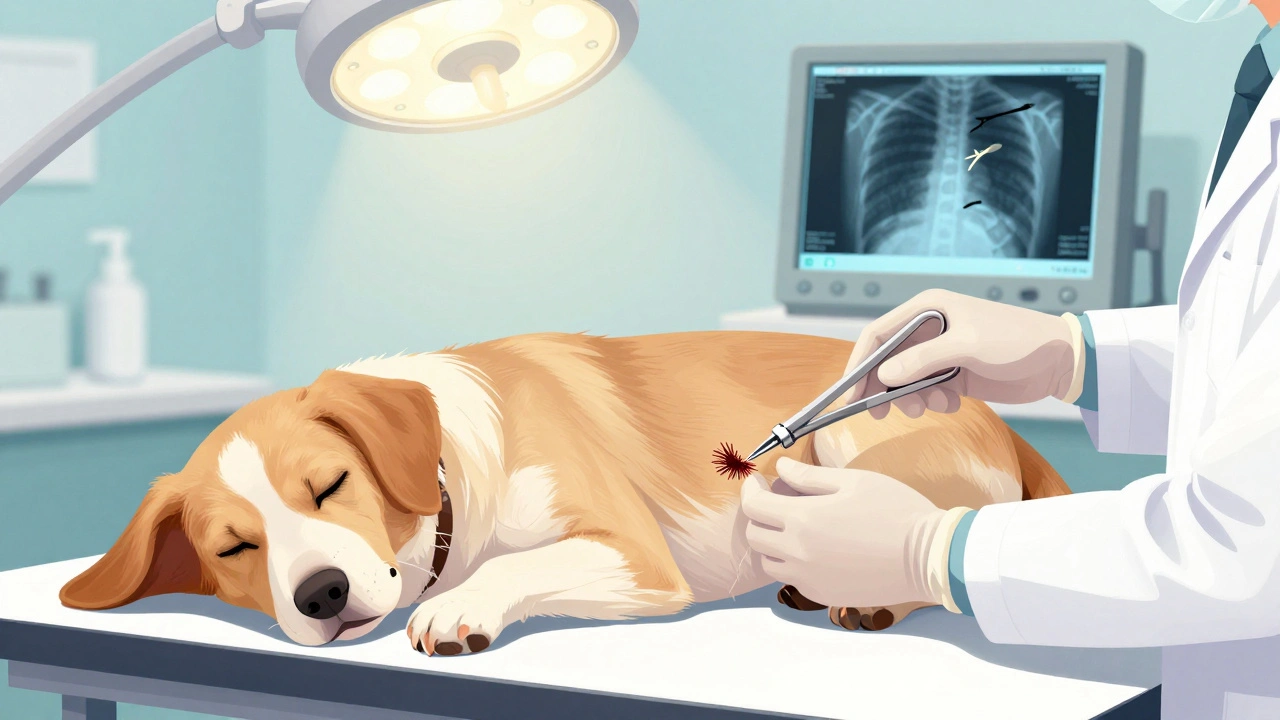
Sedation and Anesthesia: Removing quills is painful. Most vets will sedate or fully anesthetize the dog to ensure comfort and safety. This allows them to manipulate tissues gently and access deep-seated quills.
Quill Removal: Vets use hemostats (locking forceps) to grasp the base of each quill. They pull steadily along the angle of entry to minimize tissue damage. For quills near sensitive areas like the eyes or ears, specialized tools and microscopes may be used.
Imaging: If quills are suspected in the chest, abdomen, or deep muscle layers, X-rays or ultrasound may be ordered. Porcupine quills are radiopaque, meaning they show up clearly on X-rays. This helps identify fragments that broke off during initial impact.
Wound Care and Medication: After removal, wounds are flushed with sterile saline. Antibiotics are almost always prescribed to prevent infection due to the bacterial load on the quills. Anti-inflammatory drugs and pain relievers safe for dogs are also given.
Follow-Up: You’ll need to monitor the sites for signs of abscess formation (swelling, heat, pus). Return visits may be necessary if infections develop or if additional fragments are discovered later.
| Factor | Home Removal Attempt | Professional Veterinary Care |
|---|---|---|
| Pain Management | None (extreme discomfort) | Sedation/Anesthesia (pain-free) |
| Risk of Breakage | High (barbs catch on skin) | Low (specialized tools & technique) |
| Infection Control | Minimal (household cleaners harmful) | Comprehensive (sterile flush + antibiotics) |
| Hidden Quill Detection | Impossible without imaging | X-ray/Ultrasound available |
| Cost | $0 upfront, higher long-term if infected | $150-$500+ depending on severity |
Recovery and Aftercare at Home
Once your dog is home, the job isn’t done. Proper aftercare ensures quick healing and prevents complications.
Restrict Activity: Keep your dog quiet for 3-5 days. No running, jumping, or rough play. Excessive movement can reopen wounds or dislodge healing tissue.
E-Collar Usage: If quills were in the face or neck, an Elizabethan collar (cone) is mandatory. Dogs will lick and chew at sore spots, introducing bacteria and delaying healing. Leave the cone on until all scabs fall off naturally.
Medication Adherence: Finish the entire course of antibiotics, even if the wounds look better. Stopping early can lead to resistant bacterial strains. Give pain meds exactly as directed.
Monitor for Red Flags: Watch for lethargy, loss of appetite, vomiting, or increased swelling. If any site becomes hot, red, or starts draining pus, contact your vet immediately. These are signs of abscess formation requiring drainage.
Prevention Strategies: Keeping Dogs Safe
Porcupine encounters are largely preventable. These animals are nocturnal and often found near woodpiles, rock crevices, and trash cans. Here’s how to reduce risk:
- Supervised Yard Time: During dusk and dawn, keep dogs on leashes or inside. Porcupines are most active then.
- Secure Trash Bins: Porcupines seek food sources. Lock lids tightly to avoid attracting them to your property.
- Clear Debris: Remove woodpiles, rock piles, and dense brush near your home where porcupines hide.
- Train Recall: A strong "come" command can stop your dog from investigating strange smells in the wild.
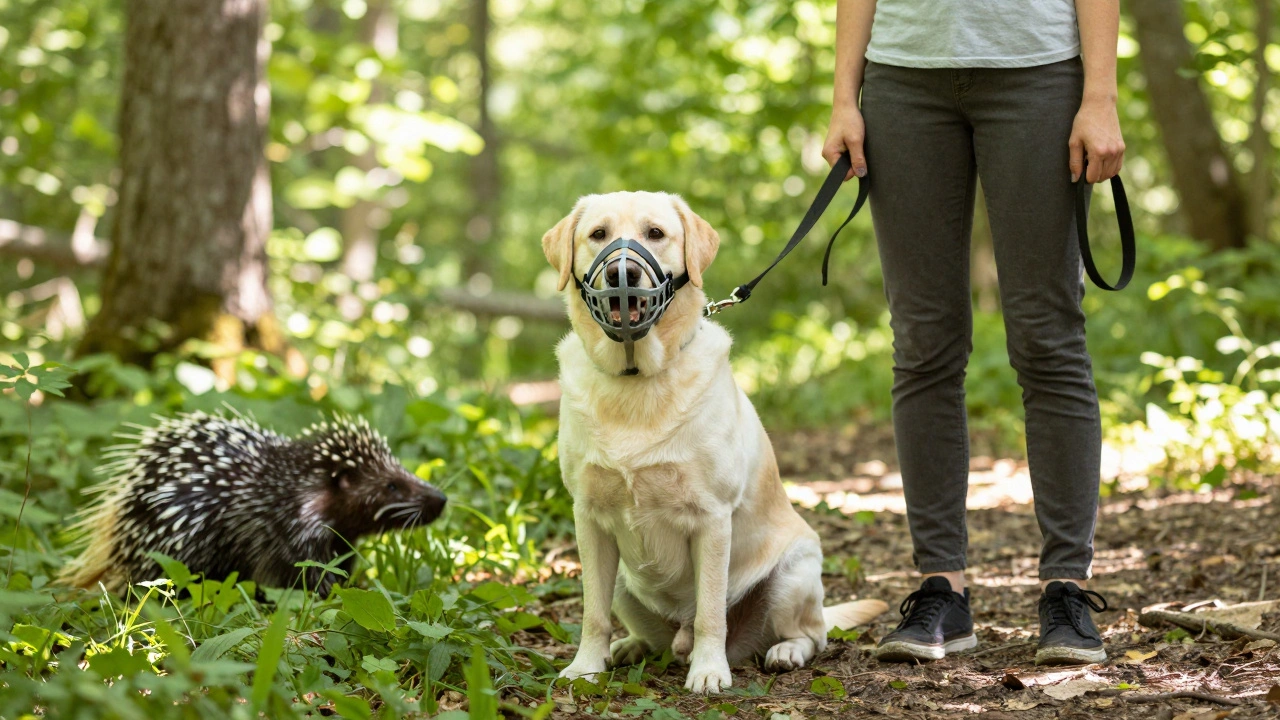
- Use Muzzles Proactively: If you hike in porcupine country, consider a basket muzzle that allows panting but prevents lunging.
Remember, porcupines are defensive animals. They raise their quills when threatened. Teaching your dog to respect wildlife boundaries saves everyone pain.
How long does it take for porcupine quills to heal?
Most superficial quill wounds heal within 7 to 10 days with proper antibiotic treatment. Deep punctures or those complicated by infection may take 2 to 4 weeks. Full tissue regeneration depends on the depth of penetration and the dog's overall health.
Can porcupine quills kill a dog?
While rare, yes. Death usually results from secondary complications rather than the quills themselves. Severe infections can lead to sepsis. Quills penetrating the eye can cause blindness and subsequent trauma. Quills in the throat or lungs can obstruct breathing or cause pneumonia. Prompt veterinary care drastically reduces these risks.
Should I cut the quills short if I can't get to a vet?
Only as a last resort if transport is impossible for many hours. Use sterilized scissors to trim the quill flush with the skin. Do not push the quill in further. This reduces snagging but does not remove the infection risk. Seek professional help as soon as possible.
Are porcupine quills poisonous?
No, porcupine quills are not venomous or poisonous. The danger lies in their physical structure (barbs) and the bacteria they carry. The pain and swelling are inflammatory responses to the foreign object, not a toxin reaction.
How much does porcupine quill removal cost?
Costs vary by location and severity. Simple facial quill removal may range from $150 to $300. Complex cases involving anesthesia, X-rays, surgery, and hospitalization can exceed $500 to $1,000. Pet insurance often covers emergency trauma treatments, so check your policy details.