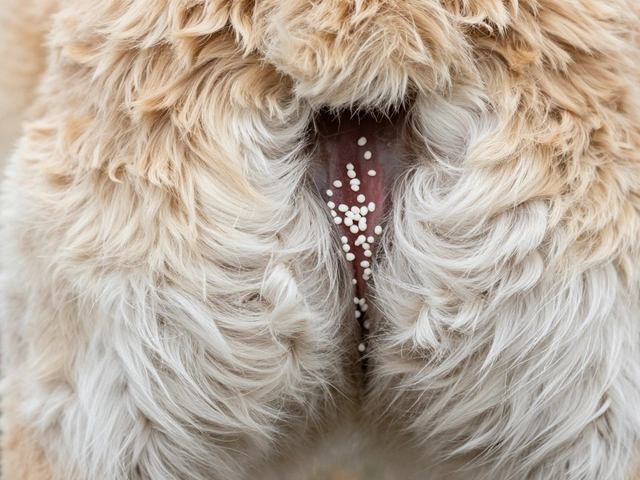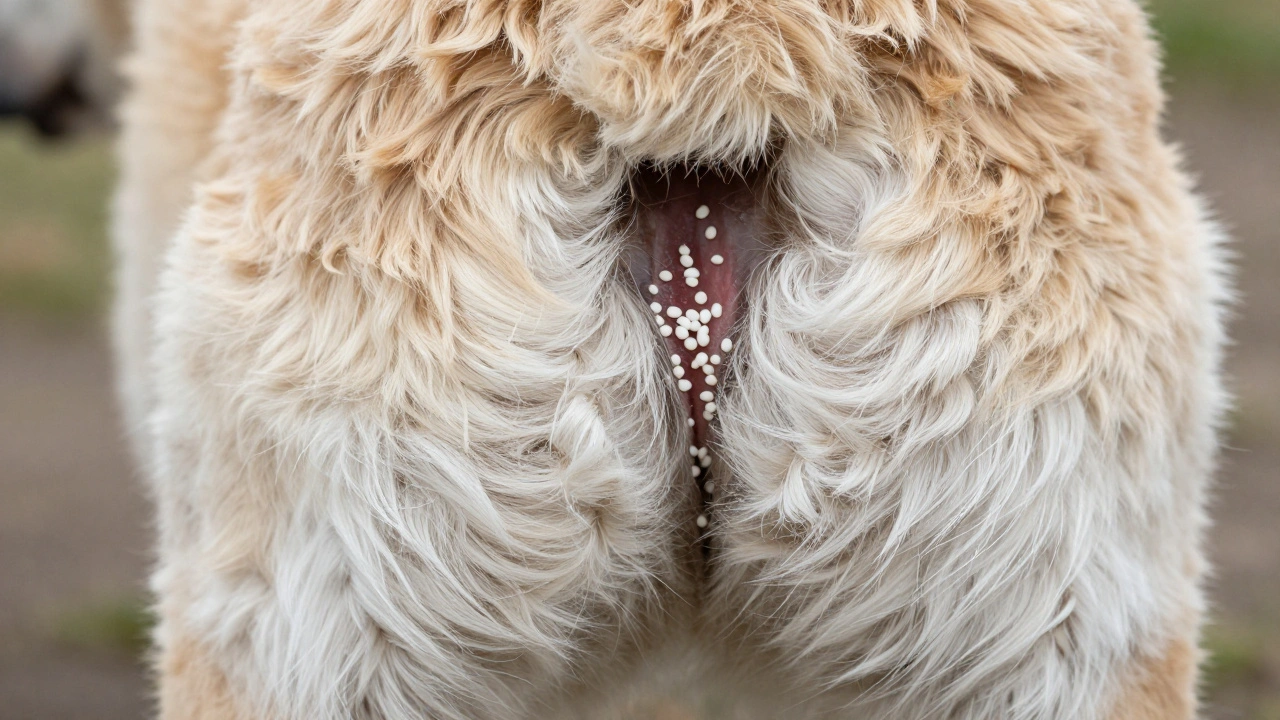
If you’ve ever seen small, white, rice-like segments near your dog’s butt or in their poop, you’re not imagining things. That’s likely tapeworms - one of the most common and unsettling parasites in dogs. Unlike roundworms or hookworms, tapeworms don’t crawl out on their own. They hitch a ride through fleas or raw meat, and once inside, they grow long, flat bodies that break off in pieces. Left untreated, they can make your dog itchy, lethargic, and even cause weight loss. But here’s the good news: tapeworms are easy to identify and simple to treat. You don’t need a vet visit every time you spot a segment. Knowing what to look for and how to respond makes all the difference.
What Tapeworms Look Like in Dogs
Tapeworms aren’t usually visible as whole worms. Instead, you’ll see their segments. These look like tiny, moving grains of white rice stuck to your dog’s fur around the anus or in their feces. When they dry out, they turn golden and start to crack open, releasing eggs. Sometimes, dogs drag their rear end across the floor because the segments itch. This is called "scooting," and while it can be caused by other issues like anal gland problems, it’s a red flag when paired with rice-like bits.
There are two main types of tapeworms in dogs: Dipylidium caninum is the most common. It’s spread by fleas. The second is Taenia spp., which comes from eating infected rabbits, rodents, or raw meat. Both live in the small intestine and can grow up to 18 inches long. But you’ll rarely see the full worm - just the pieces.
How Dogs Get Tapeworms
Tapeworms don’t jump from dog to dog. They need an intermediate host. For Dipylidium caninum, that’s fleas. When a dog grooms itself and swallows a flea carrying tapeworm larvae, the larvae wake up and grow into adult worms inside the gut. That’s why dogs with flea problems almost always have tapeworms too.
For Taenia, the host is prey. If your dog hunts or eats raw meat - especially rabbit, deer, or rodent meat - they’re at risk. Raw diets without proper freezing or cooking can introduce these worms. Even a single piece of infected meat can be enough. It’s not about how much they eat; it’s about whether the meat was contaminated.
Signs Your Dog Has Tapeworms
Most dogs with tapeworms show no serious symptoms. But here are the clear signs:
- White, rice-like segments in feces or around the anus
- Excessive licking or biting at the rear end
- Visible segments moving in the fur near the tail
- Mild weight loss despite normal appetite
- Occasional vomiting with visible worm pieces
Some dogs get bloated or have diarrhea, but those symptoms are more common with other worms. Tapeworms rarely cause severe illness. That’s why they’re often missed. Owners think their dog is fine because they’re still energetic. But even if your dog seems normal, those segments mean the infection is active.
How Vets Diagnose Tapeworms
You don’t need a fancy test. Most vets will diagnose tapeworms just by seeing the segments. If you’re unsure, collect a sample - a few segments on a piece of paper or in a sealed bag - and bring it in. Labs can confirm the type under a microscope, but it’s rarely necessary. Flea history and diet are bigger clues than lab results.
Standard fecal floats often miss tapeworm eggs because they’re not shed in large numbers. That’s why vets rely on visual evidence. If you see rice-like bits, assume it’s tapeworms. No need to wait for a test.

Treatment: What Works and What Doesn’t
Tapeworms respond well to specific dewormers. The most common and effective one is praziquantel. It comes in tablet, injection, or topical form. A single dose kills the adult worms within hours. The dead worms dissolve in the gut and pass out unnoticed. You won’t see them in the poop.
Over-the-counter dewormers? Most won’t touch tapeworms. Products labeled for "roundworms" or "hookworms" are useless here. Always check the label for praziquantel. Brands like Droncit, Cestex, and some combo products (like Drontal) contain it. Your vet can prescribe it, or you can get it from a trusted online pet pharmacy with a prescription.
Home remedies like garlic, pumpkin seeds, or diatomaceous earth? They don’t work. There’s zero scientific proof. Relying on them delays real treatment and lets the infection spread.
Prevention: Stop the Cycle Before It Starts
Treating tapeworms is easy. Preventing them is even easier - if you tackle the root cause.
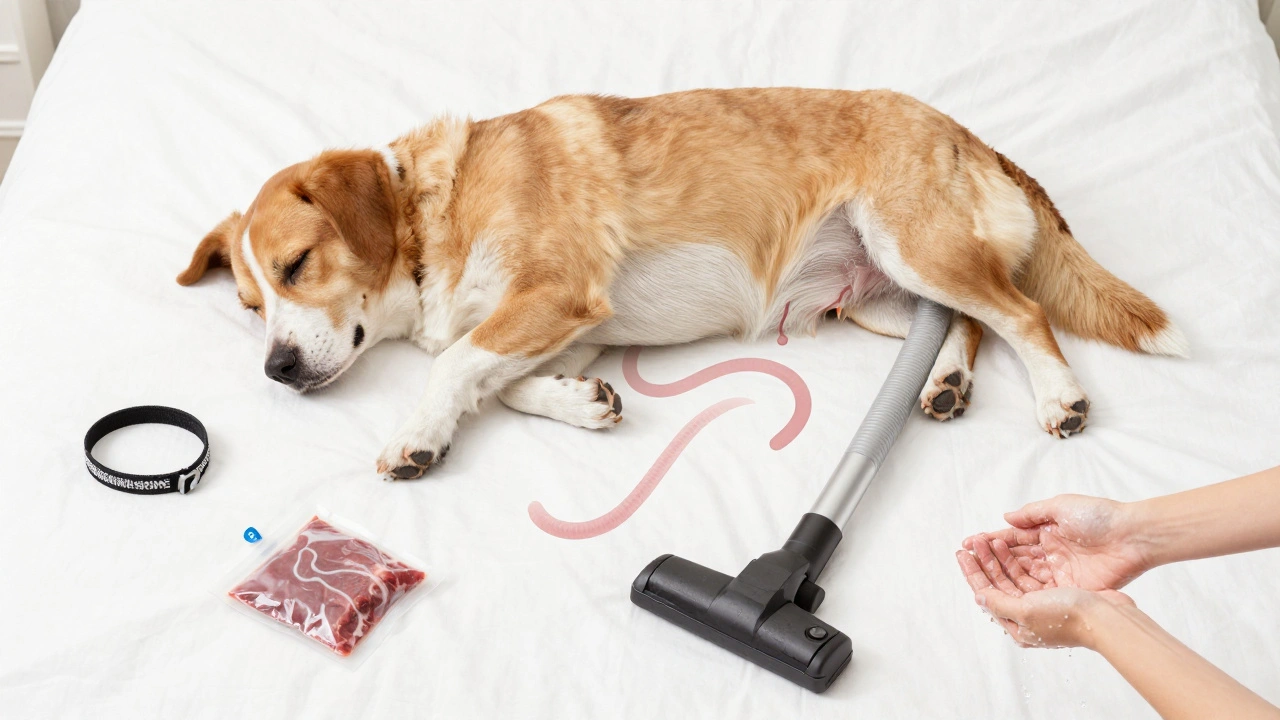
- Use monthly flea control. This is the #1 step. Products like NexGard, Bravecto, or Seresto collars stop fleas before they become a problem. Even indoor dogs need it - fleas hitch rides on shoes, clothes, or visitors.
- Avoid raw meat. If you feed raw, freeze meat for at least 72 hours before serving. Freezing kills tapeworm larvae. Cooked meat is safer.
- Don’t let your dog roam unsupervised. Dogs that chase rabbits or eat dead animals are at high risk. Keep them on leash in wooded areas.
- Clean up poop fast. Tapeworm eggs can survive in soil for months. Pick up feces daily, especially in yards or dog parks.
- Treat all pets in the house. If one dog has tapeworms, others might too. Even if they show no signs, deworm them at the same time.
What Happens If You Ignore It?
Tapeworms rarely kill dogs. But they’re not harmless. A heavy infestation can cause malnutrition. The worms steal nutrients your dog needs to thrive. Puppies are especially vulnerable - they can stunt growth or get anemia.
Also, tapeworm segments can cling to carpets, furniture, and your clothes. If you accidentally swallow a flea carrying the larvae (yes, it’s possible), you could get infected too. Human cases are rare, but they happen. That’s why hygiene matters. Wash your hands after handling feces or cleaning up after your dog.
When to Call the Vet
You don’t need to rush to the clinic every time you see a segment. But call if:
- Your dog is vomiting repeatedly and you see worm pieces
- They’re losing weight fast or seem unusually tired
- They’re a puppy under 6 months old
- You’ve treated them before and the segments keep coming back
Recurring tapeworms mean one thing: the source hasn’t been stopped. Fleas are still around. Raw meat is still being fed. Or the environment is contaminated. A vet can help you track down the source.
What to Expect After Treatment
Within 24 to 48 hours, the worms die and break down. You won’t see them in poop. But you might still see a few dry, golden segments for a day or two - these are leftovers from before treatment. They’re dead and harmless.
Watch your dog for a week. If new segments appear after that, the treatment didn’t work or the source is still active. Go back to the vet. They might need a second dose or a different flea control plan.
How Often Should You Deworm?
Most dogs don’t need regular deworming for tapeworms unless they’re at high risk. If your dog hunts, eats raw, or has chronic flea issues, deworm every 3 to 6 months. Otherwise, treat only when you see signs. Over-treating can stress your dog’s system and lead to resistance.
Always pair treatment with flea control. You can’t beat tapeworms if fleas are still in your home. Vacuum carpets, wash dog bedding in hot water, and treat your yard if fleas are common in your area.
Can tapeworms in dogs spread to humans?
Yes, but it’s rare. Humans can get tapeworms only by accidentally swallowing a flea infected with tapeworm larvae - usually from close contact with an infested dog or contaminated surfaces. Good hygiene, like washing hands after handling pets or cleaning up poop, makes this risk extremely low. Children are more at risk because they’re more likely to put things in their mouths.
Do tapeworms cause diarrhea in dogs?
Not usually. Tapeworms live in the small intestine and don’t irritate the gut like other worms. Diarrhea is more likely caused by something else - like a sudden diet change, stress, or another parasite. If your dog has diarrhea and tapeworm segments, treat the tapeworms, but also check for other issues.
Can I treat tapeworms without a vet?
Yes, but only if you’re sure it’s tapeworms and you use the right product. Over-the-counter dewormers labeled for tapeworms contain praziquantel. Read the label carefully. If you’re unsure, or if your dog is young, pregnant, or sick, see a vet first. Misuse can lead to underdosing or side effects.
Why do tapeworm segments keep coming back after treatment?
Because the source hasn’t been eliminated. If fleas are still in your home, yard, or on other pets, your dog will swallow them again. If you’re feeding raw meat or letting your dog hunt, they’ll keep getting infected. Treatment kills the worms, but not the cause. You need to break the transmission cycle.
Is there a vaccine for tapeworms in dogs?
No. There is no vaccine for tapeworms. Prevention relies entirely on controlling fleas, avoiding raw meat, and keeping dogs from eating wildlife. Regular use of flea control is the most effective shield.
Final Thoughts
Tapeworms are annoying, but they’re not a crisis. They’re a sign that something else in your dog’s environment needs attention - usually fleas or diet. Once you know what to look for and how to act, you can stop them fast. Treat the worm, but fix the cause. That’s the only way to keep your dog worm-free for good.