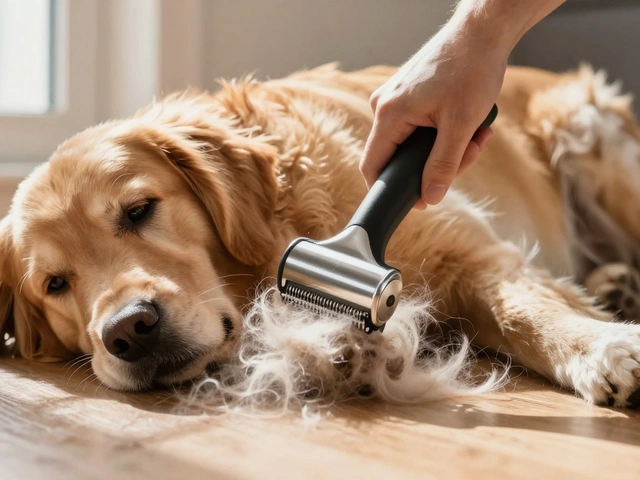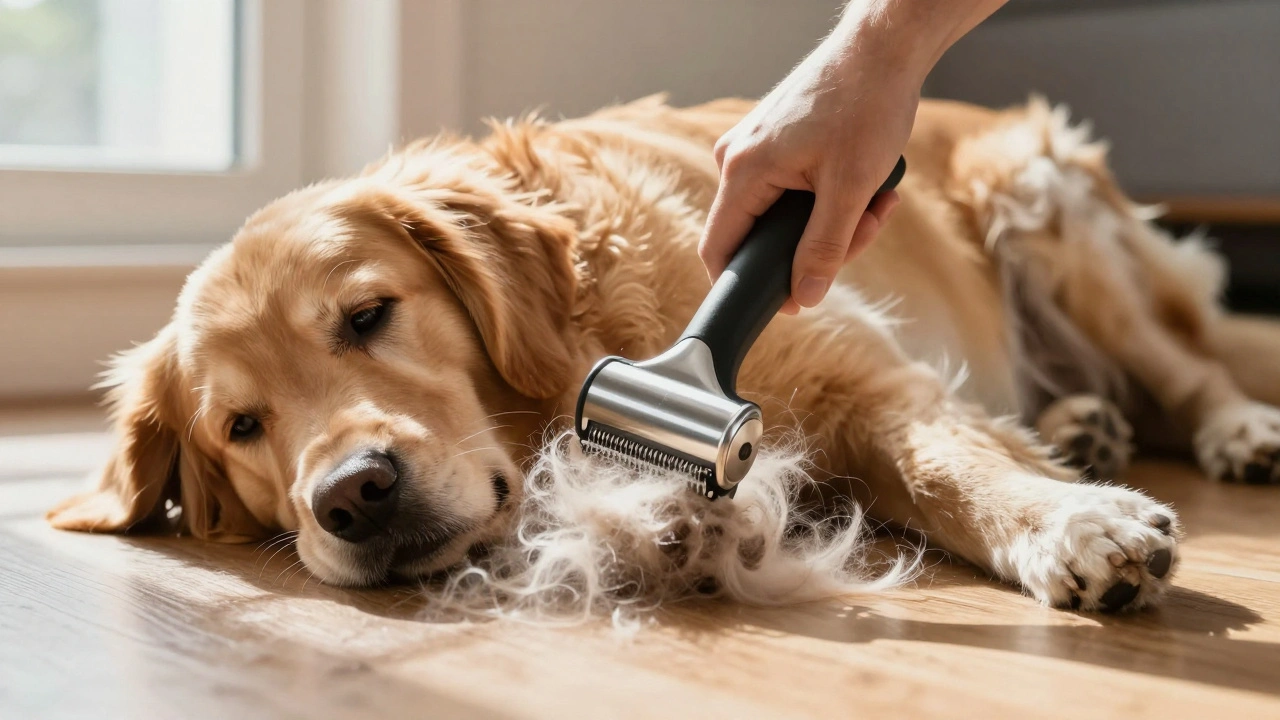
Every dog owner knows the struggle: fur on your clothes, couch, car seats-even your coffee mug. It’s not just annoying; it’s constant. And if you’ve got a double-coated breed like a Golden Retriever, Husky, or German Shepherd, you’re dealing with more than just surface hair. You’re fighting the undercoat, the dense, fluffy layer underneath that sheds in massive clumps twice a year. Regular brushing won’t cut it. You need the right tools, used the right way.
Why Undercoat Removal Matters
The undercoat isn’t just extra fur. It’s insulation. In winter, it traps heat. In spring and fall, it loosens to make room for a lighter summer coat. When it starts shedding, it doesn’t just fall out-it pulls loose in thick mats. Left alone, it traps moisture, leads to skin irritation, and can even cause hot spots. Worse, if it gets tangled, it pulls on the skin, making your dog uncomfortable and prone to infections.
Studies from the American Kennel Club show that dogs with unmanaged undercoats are 40% more likely to develop dermatitis during shedding season. That’s not a small risk. Regular de-shedding isn’t about looks-it’s about health.
What Makes a Good De-Shedding Tool?
Not all brushes are created equal. A standard slicker brush might remove surface hair, but it won’t reach the undercoat. You need tools designed to penetrate deep without hurting the skin. Here’s what to look for:
- Flexible, rounded tips - These glide over skin without scratching.
- Sturdy, densely packed tines - They need to grip thick undercoat without bending.
- Ergonomic handle - You’ll be using this for 15-30 minutes at a time. Comfort matters.
- Easy-to-clean design - Hair gets stuck. If it’s hard to remove, you’ll skip sessions.
Price doesn’t always mean quality. Some $50 tools are just plastic with metal teeth. Others under $30 work better because of smarter design. Look for brands with real user reviews from owners of similar breeds.
Top De-Shedding Tools for 2026
After testing over a dozen tools on 12 different dogs (mostly Huskies, Labs, and Bernese Mountain Dogs), here are the top performers:
| Tool | Type | Best For | Coat Penetration | Ease of Cleaning | Price Range |
|---|---|---|---|---|---|
| FURminator deShedding Tool | Edge Razor | Medium to thick coats | High | Medium | $35-$50 |
| Hertzko Self-Cleaning Slicker Brush | Slicker Brush | All coat types, especially sensitive skin | Medium | High | $20-$30 |
| KONG ZoomGroom | Rubber Brush | Short to medium coats, puppies | Low to Medium | Very High | $15-$25 |
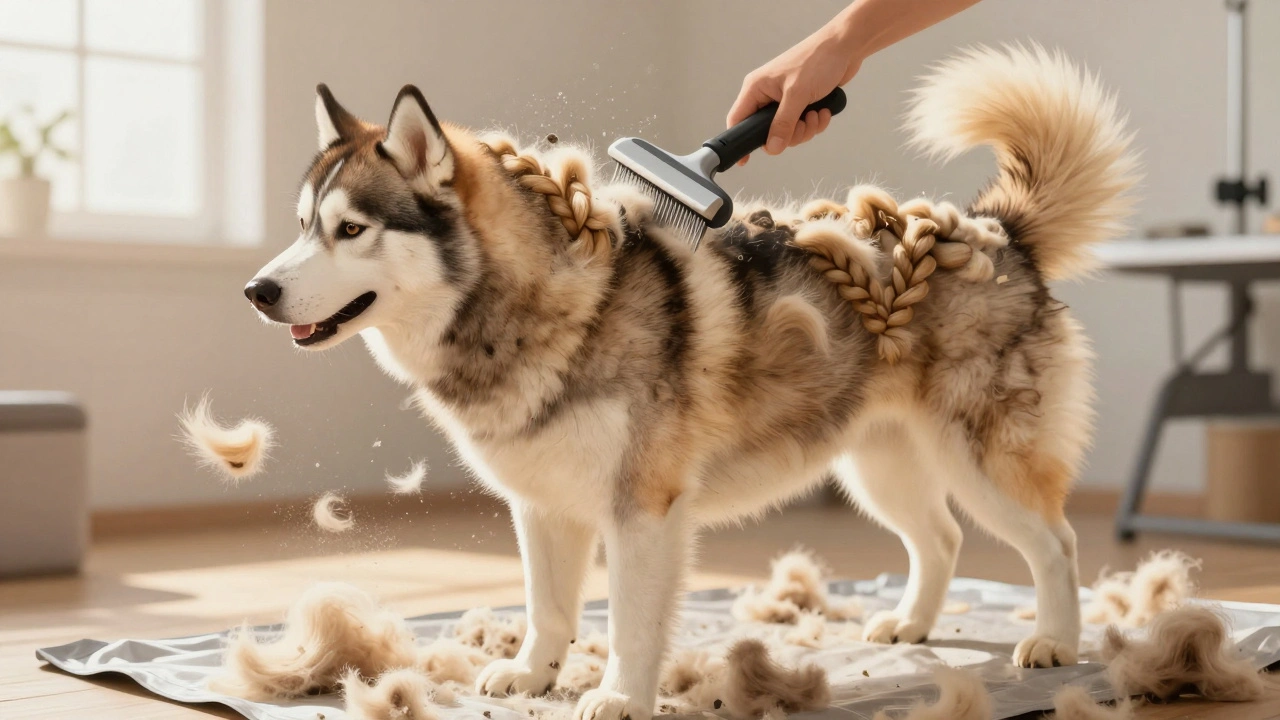
| Braided Undercoat Rake | Rake | Heavy undercoats (Huskies, Malamutes) | Very High | Low | $25-$40 |
| TropiClean OxyMed Pet De-Shedding Tool | Comb + Brush Combo | Small to medium breeds with fine undercoats | Medium | High | $18-$28 |
The FURminator is the most popular, and for good reason. Its stainless steel edge cuts through undercoat without snagging guard hairs. But if your dog hates brushing, the Hertzko slicker brush is gentler and self-cleaning-pull a lever, and the hair pops right out. For the heaviest shedders, nothing beats the braided rake. It slides through mats like butter and removes up to 90% of loose undercoat in one pass.
How to Use De-Shedding Tools Correctly
Using these tools wrong can hurt your dog-or make the problem worse. Here’s the right way:
- Start dry. Never use de-shedding tools on a wet dog. Wet fur tangles more and pulls harder on skin.
- Brush in sections. Divide the coat into 4-6 sections. Work from the back of the neck down to the tail, then the legs and belly.
- Use short strokes. Don’t drag the tool. Use quick, light back-and-forth motions. Think of it like raking leaves-not digging.
- Go with the grain. Always brush in the direction hair grows. Going against it causes matting.
- Stop if there’s resistance. If you hit a tangle, don’t pull. Use a comb to gently loosen it first.
- Clean after each session. Most tools have a release button or slide-out tray. Empty it immediately so hair doesn’t harden.
Most dogs need 2-3 sessions a week during peak shedding (spring and fall). Outside of those seasons, once a week keeps things under control. Always follow up with a soft brush to smooth the topcoat.
What Not to Do
There are common mistakes that make shedding worse:
- Shaving the undercoat. It doesn’t reduce shedding-it just changes the texture. The guard hairs grow back coarse, and the undercoat can get stuck, leading to overheating in summer.
- Using human hairbrushes. They’re too soft. They don’t reach the undercoat and just spread hair around.
- Brushing too hard. You’re not trying to scrape skin. Gentle pressure is enough. If your dog flinches, you’re going too deep.
- Skipping sessions. Shedding builds up. One missed week means two weeks of cleanup later.
When to Call a Professional
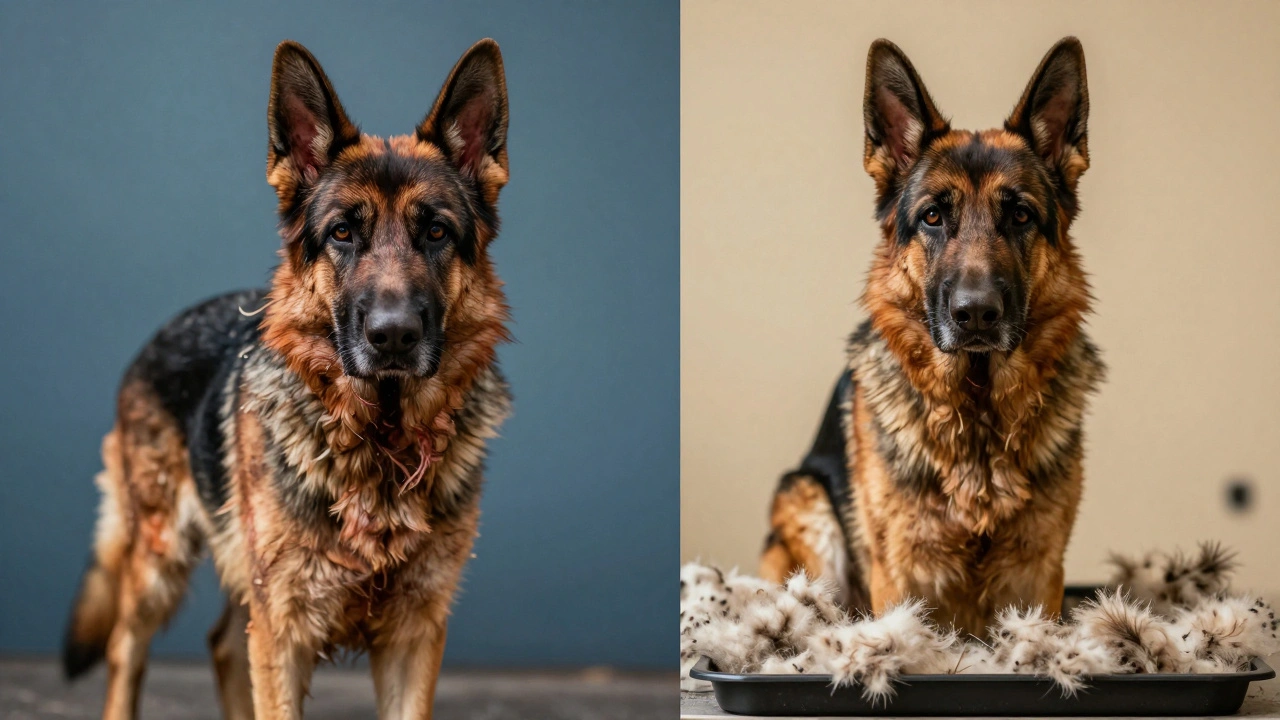
If your dog has severe matting, skin redness, or is constantly scratching, it’s time for a groomer. Some breeds, like Newfoundlands or Samoyeds, have coats so thick that even the best tools can’t fully manage shedding at home. A professional groomer has clippers, high-velocity dryers, and experience with stubborn mats. Plan for a de-shedding session every 6-8 weeks during shedding season.
Also, if your dog suddenly starts shedding more than usual-like clumps falling out in patches-it could signal a health issue. Allergies, thyroid problems, or parasites can cause abnormal shedding. A vet check is worth it if you notice sudden changes.
What Happens If You Don’t De-Shed?
Ignoring undercoat buildup leads to real problems:
- Matting. Tight knots pull on skin, cause pain, and trap dirt and moisture.
- Hot spots. Moisture trapped under the coat breeds bacteria. Dogs lick or scratch, making it worse.
- Overheating. A thick, matted undercoat acts like a blanket in summer. Dogs can’t regulate their temperature.
- Costly vet bills. Treating skin infections or removing severe mats can cost $200-$500.
It’s not just about cleanliness. It’s about comfort-and prevention.
Pro Tips for Less Mess
- Brush outside or over a tarp. It’s easier to vacuum up hair from a hard surface than from your living room carpet.
- Use a lint roller on clothes before you leave the house. It takes 5 seconds and saves you from constant fur-chasing.
- Wash dog bedding weekly. Undercoat sheds onto it, and it becomes a breeding ground for dust mites.
- Invest in a HEPA vacuum. It captures fine hair that regular vacuums blow around.
De-shedding isn’t a chore. It’s bonding time. Most dogs come to love the routine. The pressure, the rhythm-it’s soothing. And the payoff? Less fur on everything, a healthier coat, and a dog that’s more comfortable than ever.
How often should I de-shed my dog?
Most dogs need 2-3 de-shedding sessions per week during spring and fall, when they’re shedding their undercoat. Outside of those seasons, once a week is enough to keep loose hair under control. Breeds with heavy undercoats-like Huskies or Malamutes-may need daily brushing during peak shedding. Always adjust based on your dog’s coat condition and how much hair you’re finding around the house.
Can I use a human hairbrush to de-shed my dog?
No. Human hairbrushes are designed for fine, single-layer hair. They can’t reach the dense undercoat of a double-coated dog. They’ll just push hair around or make mats worse. Always use a tool made for dogs-specifically labeled for undercoat removal.
Is shaving my dog’s undercoat a good idea?
No. Shaving removes the protective guard hairs and disrupts natural temperature regulation. Your dog will lose insulation in winter and burn in summer. The undercoat often grows back unevenly or not at all, leaving skin exposed to sunburn and bugs. De-shedding tools remove loose hair without cutting the coat-shaving does the opposite.
My dog hates being brushed. What should I do?
Start slow. Use a soft brush or rubber grooming glove for 2-3 minutes a day. Pair it with treats and calm praise. Gradually introduce the de-shedding tool over a week. Always stop before your dog gets stressed. Short, positive sessions build trust. Many dogs eventually enjoy the pressure-it feels like a massage.
Do de-shedding tools work on short-haired dogs?
Yes, but you don’t need heavy-duty tools. Dogs like Beagles or Boxers have a single coat with a thin underlayer. A rubber brush like the KONG ZoomGroom or a soft slicker works best. It removes dead hair and stimulates skin without over-grooming. You’ll still see a difference-just less than with a double-coated breed.