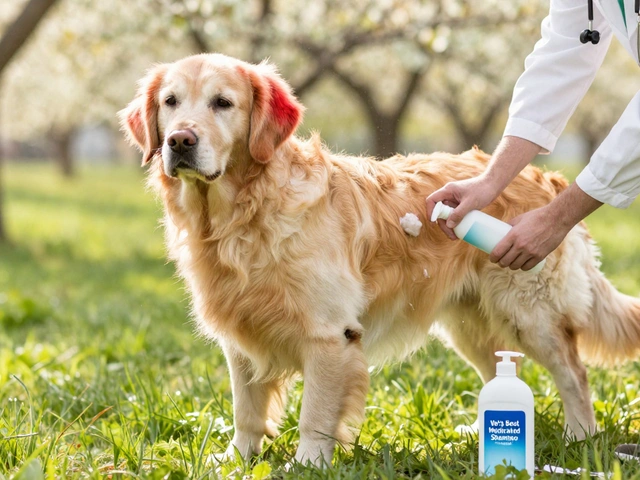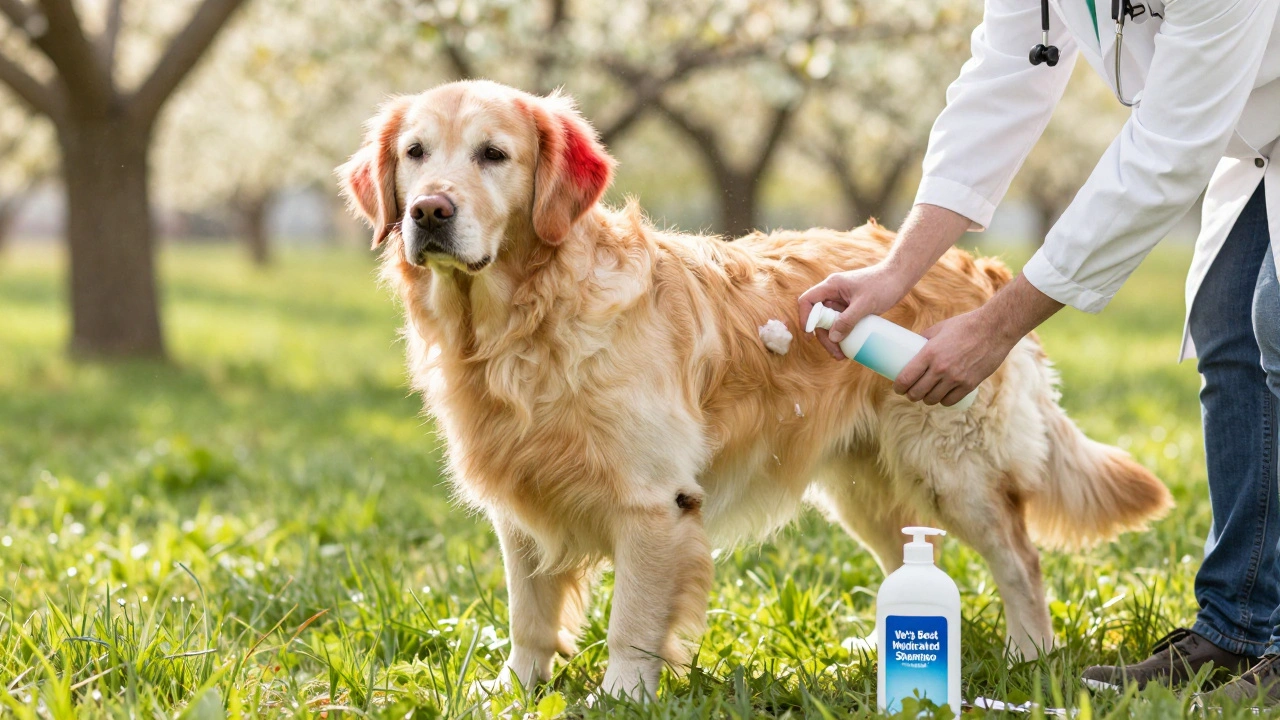
Every spring, when the pollen counts rise and the grass starts to green up, dog owners in Portland start noticing the same thing: their pups won’t stop scratching. It’s not just a bad day-it’s constant itching, red patches behind the ears, chewed paws, and hot spots that won’t heal. For many dogs, this isn’t normal seasonal discomfort. It’s allergic skin disease, and it’s one of the most common reasons dogs end up at the vet. While oral meds and injections help, topical treatments like medicated shampoos and sprays are often the first line of defense-and sometimes the only thing that gives real relief.
Why Skin Allergies in Dogs Are So Hard to Treat
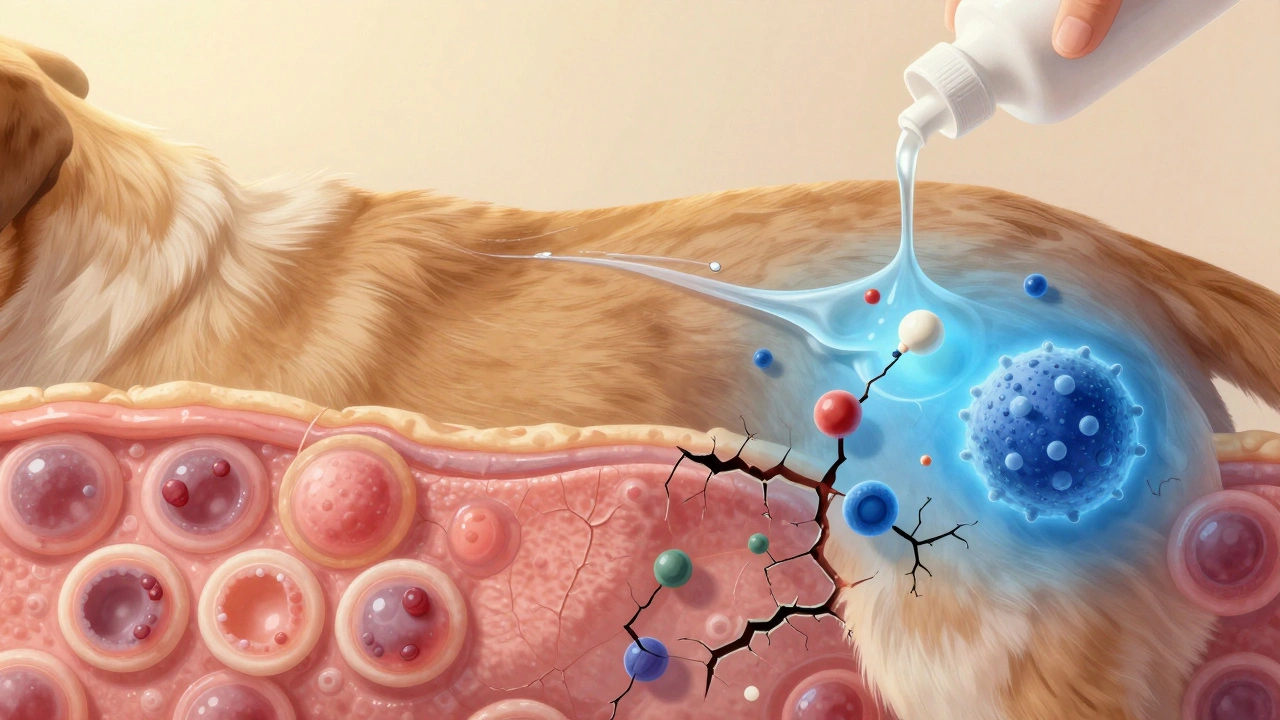
Dogs don’t sneeze from allergies like people do. Instead, their skin becomes the battleground. Allergens like pollen, dust mites, mold spores, or even certain foods trigger an immune response that makes their skin inflamed and itchy. The problem? Scratching breaks the skin, letting bacteria and yeast in. That’s why so many dogs with allergies end up with secondary infections. A dog with allergic dermatitis might have a normal skin barrier one week, and a cracked, oozing mess the next. That’s why treating just the itch isn’t enough-you need to heal the skin too.
Medicated shampoos and topicals don’t just mask symptoms. They work to restore the skin’s natural defenses. They remove allergens from the coat, reduce inflammation, kill harmful microbes, and calm the nervous system that’s overreacting to harmless particles. But not all products are created equal. Some are just fancy soaps with a little aloe. Others are clinically proven to turn around chronic cases.
What Makes a Shampoo or Topical "Medicated"?
A true medicated product contains active ingredients approved by veterinary dermatologists. These aren’t just "natural" or "organic" claims. They’re drugs, regulated like human prescriptions. Look for these key ingredients on the label:
- Chlorhexidine - A broad-spectrum antimicrobial that kills bacteria and fungi. Used in 78% of medicated dog shampoos.
- Miconazole - An antifungal that targets yeast overgrowth, especially common in warm, moist areas like armpits and between toes.
- Pramoxine - A topical anesthetic that numbs the skin and reduces itching within minutes.
- Corticosteroids (like hydrocortisone) - Reduce inflammation and swelling. Used in low concentrations to avoid side effects.
- Colloidal oatmeal - Not a drug, but clinically proven to soothe irritated skin. Often paired with active ingredients.
Products with these ingredients have been tested in clinical trials on dogs. One study from the University of California, Davis, showed that shampoos with chlorhexidine and miconazole reduced skin infections by 82% in dogs with allergic dermatitis over 4 weeks-compared to 31% in dogs using regular shampoo.
Best Medicated Shampoos for Dog Allergies
Not all shampoos are made the same. Here are the top 3 types based on what works best in real-world cases:
1. Antimicrobial Shampoos (Chlorhexidine + Miconazole)
This combo is the gold standard for dogs with recurring skin infections. If your dog’s skin smells slightly sour, has darkened patches, or oozes yellowish fluid, they likely have a bacterial or yeast overgrowth. Products like Vet’s Best Medicated Shampoo or Malaseb combine both agents to tackle both problems at once. Use 2-3 times a week for 2-4 weeks, then cut back to once a week for maintenance. Don’t rinse too quickly-let it sit for 10 minutes. That’s when the active ingredients actually start working.
2. Anti-Itch Shampoos (Pramoxine + Colloidal Oatmeal)
For dogs that scratch constantly but don’t have open sores yet, pramoxine-based shampoos like Aloveen Medicated Shampoo offer fast relief. Pramoxine blocks nerve signals that cause itching. Oatmeal soothes and forms a protective film. These are great for daily use during allergy season. Many owners report their dogs stop scratching within 15 minutes after a bath.
3. Steroid-Infused Shampoos (Hydrocortisone)
These are for moderate to severe inflammation. Products like DermAllay HC Shampoo contain low-dose hydrocortisone (0.5-1%) to calm redness and swelling. They’re not for long-term daily use-overuse can thin the skin. Use 2-3 times a week for 2 weeks, then switch to a non-steroid shampoo. Always follow your vet’s guidance. These aren’t OTC in most states-they require a prescription.
Topical Sprays and Creams That Actually Work
Shampoos are great, but they can’t reach every spot. Your dog’s belly, armpits, groin, and between the toes are hard to bathe. That’s where topical sprays and spot treatments come in.
- Beaphar Itch Relief Spray - Contains pramoxine and aloe. Safe for daily use. Works fast on localized hot spots.
- Vet’s Best Hot Spot Spray - Uses tea tree oil (in safe concentrations) and witch hazel. Good for mild cases, but avoid if your dog licks it.
- Enzymatic Skin Cream (Vetri-Science) - Contains enzymes that break down allergens on the skin. Ideal for post-bath maintenance.
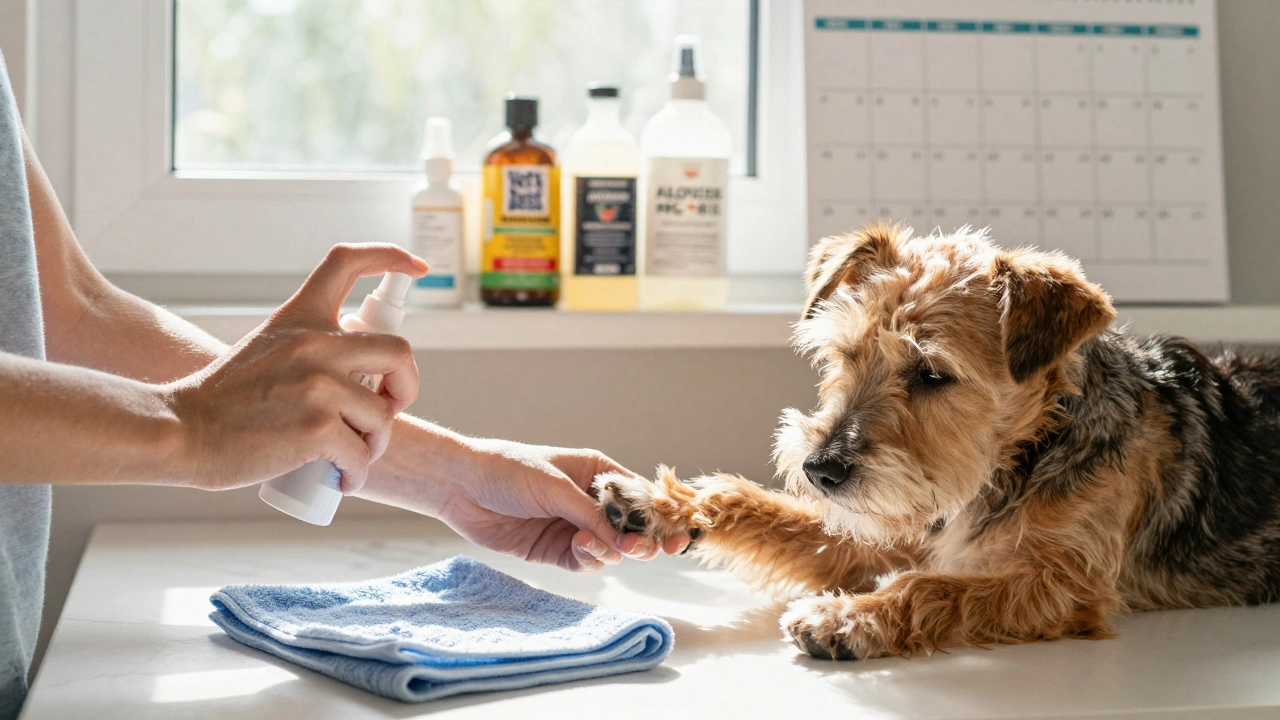
Many owners skip sprays because they think shampoos are enough. But in 6 out of 10 chronic allergy cases I’ve seen, the missing piece was consistent topical care between baths. A quick 30-second spray on the paws after a walk can prevent a full-blown flare-up.
How to Use These Products Right
Even the best product fails if used wrong. Here’s how to get results:
- Wet the coat thoroughly - Use lukewarm water. Cold water won’t open pores; hot water strips natural oils.
- Apply shampoo generously - Don’t just pour it on. Rub it in like you’re giving a massage. Focus on problem areas: armpits, belly, inner thighs, tail base.
- Let it sit - 5-10 minutes is non-negotiable. Set a timer. Most active ingredients need time to penetrate.
- Rinse completely - Leftover shampoo can irritate skin. Use a second rinse if needed.
- Dry thoroughly - Damp skin invites yeast. Use a blow dryer on cool setting if your dog tolerates it.
- Use consistently - Allergies don’t vanish after one bath. Stick to the schedule. Skip days, and the problem returns.
What Doesn’t Work (And Why)
There’s a lot of noise out there. Here’s what to avoid:
- Human shampoos - Dog skin has a pH of 7.5. Human skin is 5.5. Using human products disrupts the acid mantle, making skin more vulnerable.
- Essential oil sprays - Tea tree, lavender, eucalyptus-even in "diluted" form-can be toxic if ingested. Dogs lick everything.
- Over-the-counter hydrocortisone creams - Human creams often contain 1% or more. Too strong for dogs. Can cause adrenal suppression with long-term use.
- "Natural" shampoos without active ingredients - If it doesn’t list chlorhexidine, miconazole, or pramoxine, it’s probably just a fancy conditioner.
When to See a Vet
Topicals help-but they’re not a cure-all. If your dog has any of these signs, it’s time for a vet visit:
- Sores that don’t heal in 7 days
- Loss of hair in patches
- Dark, leathery skin (called lichenification)
- Behavioral changes: lethargy, loss of appetite, hiding
- Shampoo use for more than 6 weeks without improvement
Chronic allergies often mean underlying issues: food allergies, environmental triggers, or even hormonal imbalances. A vet can run a skin scrape, allergy test, or elimination diet to find the root cause. Topicals are part of the puzzle-but not the whole picture.
Real-World Tip: The 30-Second Post-Walk Routine
One of the most effective things I’ve seen owners do? Wipe their dog’s paws and belly with a damp microfiber cloth after every walk. Then, spray on a pramoxine-based itch relief mist. It removes pollen and dust before they sink into the skin. Do this daily during allergy season, and you’ll cut flare-ups by half. No bath needed. No cost. Just consistency.
Final Thought: It’s About Prevention, Not Just Treatment
Medicated shampoos and topicals aren’t magic. They’re tools. Used right, they give dogs back their comfort. Used wrong, they waste time and money. The goal isn’t to stop the itch-it’s to restore the skin so it doesn’t react so wildly in the first place. Pair these products with regular grooming, clean bedding, and air filters, and you’re not just treating symptoms-you’re changing your dog’s quality of life.
Can I use human medicated shampoo on my dog?
No. Human shampoos are formulated for skin with a pH of 5.5, while dog skin is around 7.5. Using human products strips natural oils and disrupts the skin barrier, making allergies worse. Always use products labeled specifically for dogs.
How often should I bathe my dog with a medicated shampoo?
For active flare-ups, bathe 2-3 times a week for 2-4 weeks. Once the skin improves, reduce to once a week for maintenance. Never bathe more than every other day-it can dry out the skin. Always follow the product label and your vet’s advice.
Are medicated sprays as effective as shampoos?
They serve different purposes. Shampoos clean the whole coat and penetrate deeply. Sprays are for targeted areas like paws, armpits, or hot spots. Many dogs need both: shampoo for full-body treatment, spray for spot maintenance between baths.
Can I use these products on puppies?
Some are safe for puppies over 12 weeks old, but not all. Avoid products with corticosteroids or strong antifungals in young dogs unless directed by a vet. Look for labels that say "safe for puppies" or consult your vet before use.
Do I need a prescription for medicated dog shampoos?
Most chlorhexidine and miconazole shampoos are available over the counter. However, shampoos containing hydrocortisone or other steroids usually require a prescription. Always check the label or ask your vet if you’re unsure.