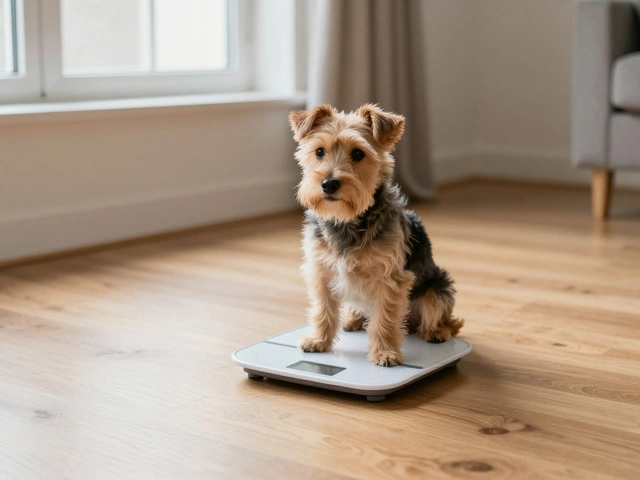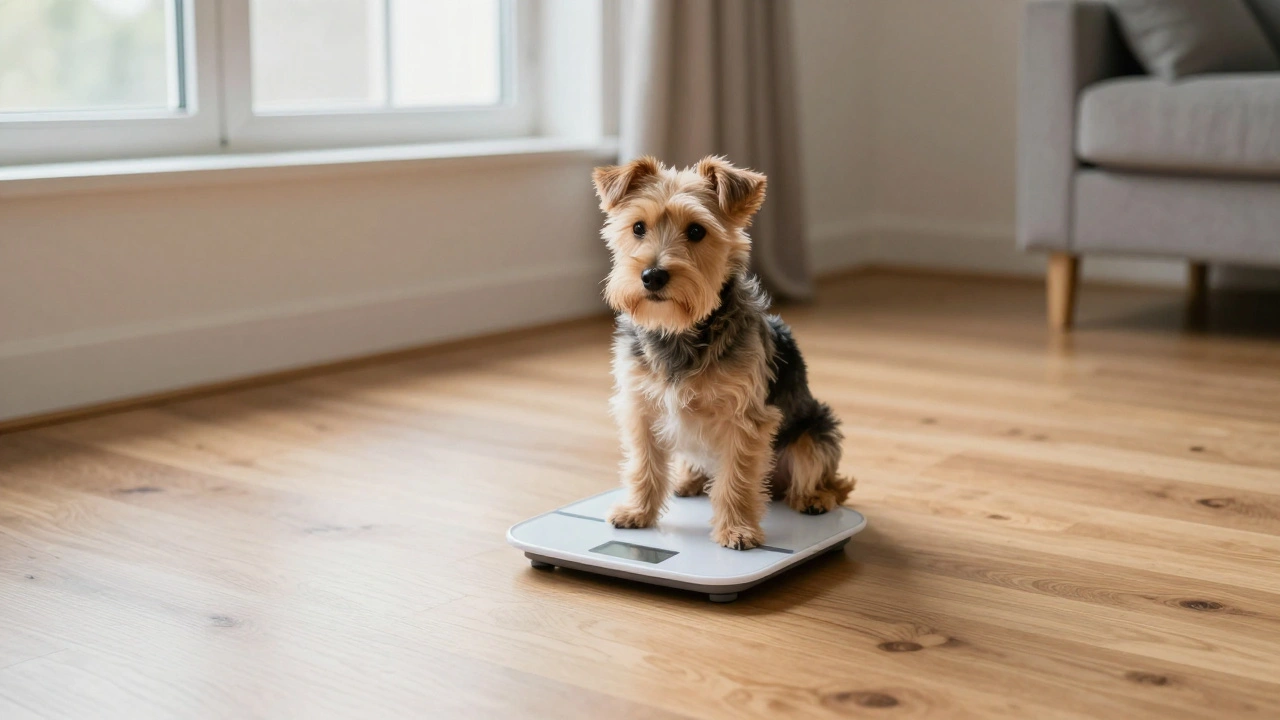
Why Tracking Your Dog's Weight Actually Matters
You might think your dog looks "fine," but weight is one of the most honest indicators of what's happening inside your pet. A gain of just two pounds might not seem like much on a human, but for a 20-pound Terrier, that's a 10% increase. Sudden weight shifts often signal health issues long before you notice a change in behavior. Whether you're managing a prescription diet or just keeping an eye on those extra treats, knowing how to get a precise number without a trip to the clinic is a game-changer.
Most of us have tried the "stand on the scale and hold the dog" method. It works, but it's often a recipe for a scratched foot or a tipped-over scale. To get a reliable reading, you need a strategy that matches your dog's size and temperament. The goal isn't just a number; it's a trend. When you track weight over time, you can spot slow creeps toward obesity or sudden drops that might indicate kidney issues or parasites.
Weighing dogs at home doesn't require professional medical equipment, but it does require a bit of physics and a lot of patience. Depending on whether you have a tiny Chihuahua or a massive Great Dane, your approach will vary wildly.
| Dog Size | Recommended Scale Type | Estimated Cost | Best For... |
|---|---|---|---|
| Small (under 25 lbs) | Digital Baby Scale / Kitchen Scale | $20 - $60 | High precision (ounces) |
| Medium (25 - 60 lbs) | Digital Bathroom Scale | $30 - $100 | Ease of use, general trends |
| Large (60+ lbs) | Heavy-Duty Platform Scale | $100 - $300 | Stability and safety |
The Best Equipment for the Job
Not all scales are created equal. If you use a standard bathroom scale for a small dog, the sensor often fails to register the low weight, or the dog's paws don't distribute the weight evenly. For small breeds, look for a Digital Baby Scalea high-precision weighing device designed for infants that can accurately measure increments as small as 0.1 lbs. These have a concave tray that keeps your dog from jumping off and ensures their entire body is supported.
For medium to large dogs, a standard digital scale works, but the key is the surface area. Flat, hard surfaces are a must. If you're using a scale on a carpet, the reading will be off by several pounds because the carpet absorbs some of the pressure. Always place your scale on a hard floor like tile or hardwood. If you have a giant breed, you might consider a Veterinary Platform Scalea large, flat-bed industrial scale designed to hold heavy animals without tipping. These are more expensive but prevent the "wiggle factor" that ruins a reading.
Techniques for Accurate Results
The biggest challenge isn't the scale; it's the dog. Here are the three most effective ways to get a real number based on your dog's cooperation level.
The Subtraction Method (The "Hold and Weigh")
This is the most common method for dogs that won't stand still. Here is the process:
- Step on the digital scale yourself and record your exact weight.
- Pick up your dog and hold them securely against your chest.
- Step back on the scale and record the combined weight.
- Subtract your weight from the total.
To make this safer, use a towel under your arms to get a better grip. Avoid this method if you have a dog that panics when held; a struggling 40-pound dog can easily cause you to lose your balance.
The "Temptation" Method (The Static Weigh)
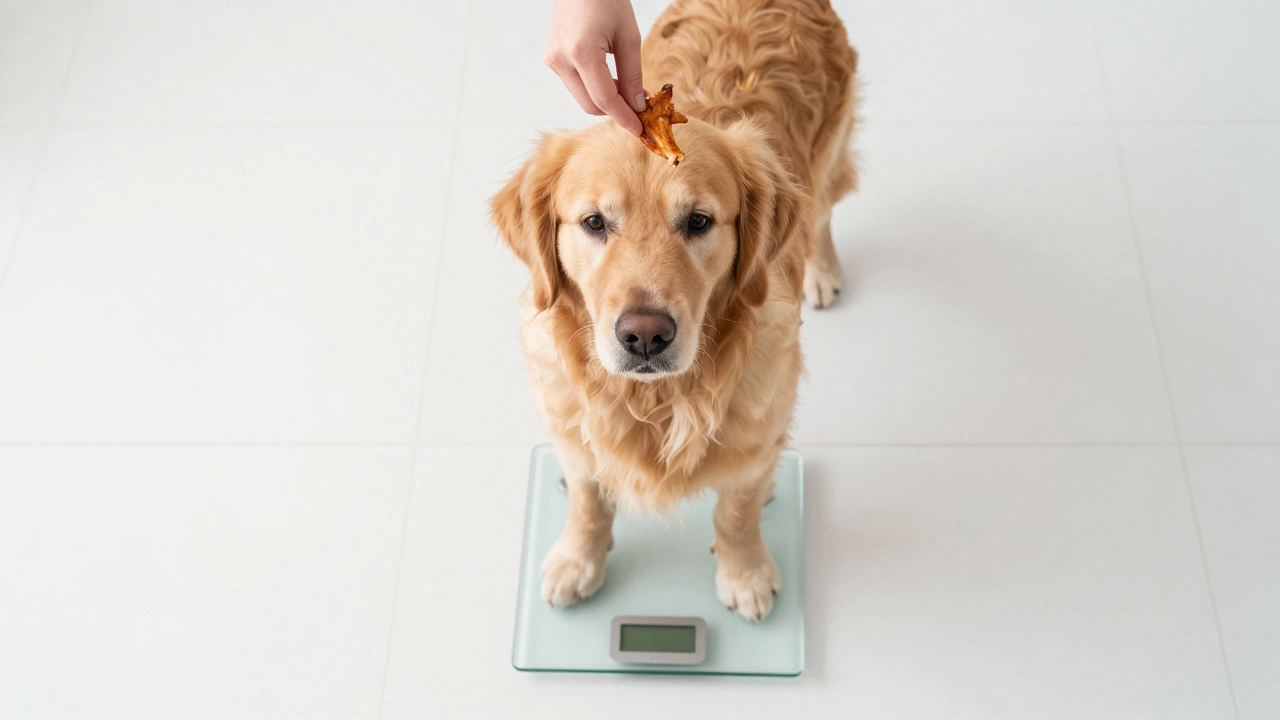
For dogs that are calm enough to stand for three seconds, use a high-value treat. Place the scale in a familiar spot. As you lead the dog onto the scale, hold a piece of chicken or a High-Value Treata strong-smelling, desirable snack used to motivate dogs during training or weighing directly above their nose. The moment they freeze to focus on the treat, lock in the reading. If they shift their weight, the number will fluctuate, so wait for the display to stop blinking.
The Support Method (For Seniors or Injured Dogs)
If your dog has arthritis or mobility issues, they can't stand on a small scale. Use a sturdy laundry basket or a plastic tub. Weigh the empty basket first. Place your dog inside the basket on the scale, then subtract the basket's weight. This keeps them stable and prevents them from sliding off the glass surface of a bathroom scale.
How Often Should You Actually Weigh Your Dog?
You don't need to weigh your dog every day. In fact, doing so can be frustrating because weight fluctuates based on water intake and how recently they ate. For a healthy dog with a stable weight, once a month is plenty. This helps you establish a "baseline" so you know what is normal for your pet.
However, there are scenarios where you need to be more aggressive. If your dog is on Diureticsmedications that increase urine production and can cause rapid fluid loss or managing Congestive Heart Failurea chronic condition where the heart doesn't pump blood as well as it should, often leading to fluid buildup in the lungs, weighing them daily or weekly is critical. In these cases, a sudden gain of 1-2 pounds in 48 hours isn't fat-it's fluid, and it's a sign that they need immediate veterinary attention.
For dogs on a weight-loss plan, a weekly check-in is ideal. This allows you to adjust their caloric intake without causing them to lose weight too quickly, which can lead to metabolic issues.
Common Pitfalls and How to Fix Them
If you're getting wildly different numbers every time, check these common errors:
- The Carpet Trap: As mentioned, scales on rugs are useless. Move to the kitchen or bathroom.
- The Edge Effect: If your dog's paws are hanging off the edge of the scale, the sensor isn't getting the full load. Use a non-slip mat on top of the scale if your dog is sliding.
- The "Excitement Shift": Dogs often shift their weight from side to side. If you see the number jumping from 32.4 to 33.1, take the average of the two.
- Timing Issues: Weigh your dog at the same time of day. The best time is usually in the morning, before their first big meal.
Beyond the Scale: The Body Condition Score
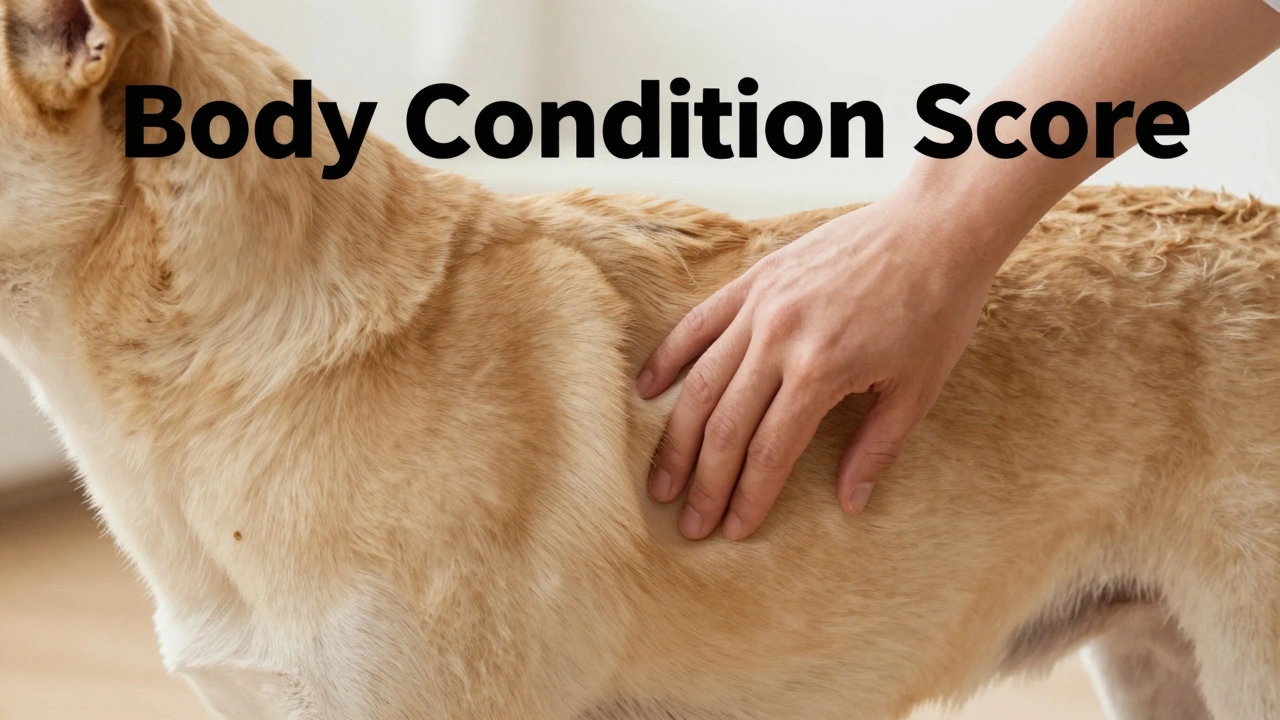
Numbers are great, but they don't tell the whole story. A muscular dog might weigh more than a sedentary dog of the same size, but they aren't "overweight." This is where the Body Condition Score (BCS)a standardized system used by veterinarians to assess a pet's fat and muscle mass through touch and sight comes in. Instead of just looking at the scale, use your hands.
Run your hands along your dog's ribs. You should be able to feel the ribs without pressing hard, like you can feel your own ribs. If you have to push through a layer of fat to find them, your dog is likely overweight. Look at them from above; they should have a visible "waist" behind the ribs. If they look like a rectangle or an oval, it's time to cut back on the treats, regardless of what the scale says.
Can I use a human scale for my dog?
Yes, but it depends on the dog's size. For medium to large dogs, a digital bathroom scale is perfect. For small dogs, human scales are often not sensitive enough, and you'll get better results using the "subtraction method" (weighing yourself, then weighing yourself while holding the dog).
Why does my dog's weight change by a pound every day?
Minor fluctuations are normal. They are usually caused by the amount of food in their stomach, hydration levels, or even how much they've exercised. Focus on the long-term trend rather than day-to-day changes.
What is the most accurate way to weigh a puppy?
A digital baby scale is the gold standard for puppies. Because they grow so quickly, being off by a few ounces can make it hard to track their growth curve accurately. If you don't have one, the subtraction method is your next best bet.
Is it dangerous to weigh my dog too often?
It's not physically dangerous, but it can be stressful for the dog. If your pet becomes anxious about the scale, limit weighing to once a month or during vet visits to avoid creating a negative association with the process.
When should I be worried about weight loss in my dog?
Any unintentional weight loss of more than 5% of their body weight over a short period (a few weeks) is a red flag. If your 50-pound dog suddenly drops to 47 pounds without a diet change, call your vet immediately.
Next Steps for Pet Owners
If you've just discovered your dog is overweight, don't slash their food in half overnight. This can lead to nutrient deficiencies. Start by swapping half of their treats for green beans or pieces of carrot. These provide the "crunch" dogs love without the calories.
If your dog is losing weight unexpectedly, start a weight log. Record the date and the exact weight every three days. When you go to the vet, this log is far more valuable than saying "I think they've lost some weight." It gives the doctor a data point to determine if the loss is linear or erratic, which helps them narrow down the cause much faster.