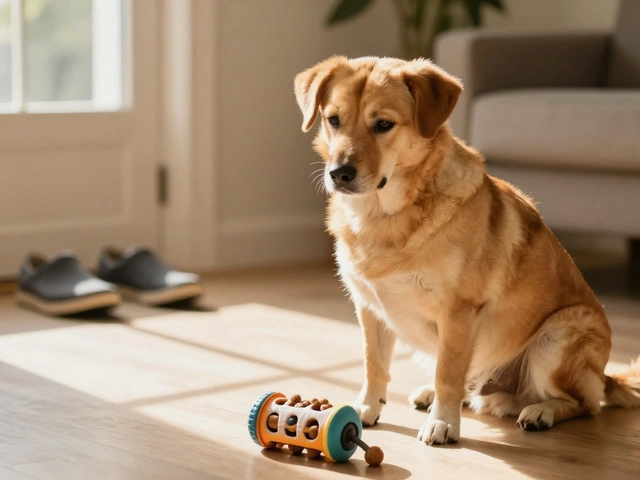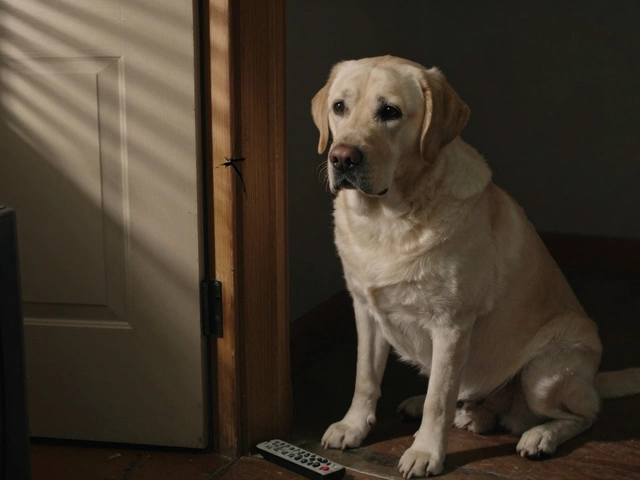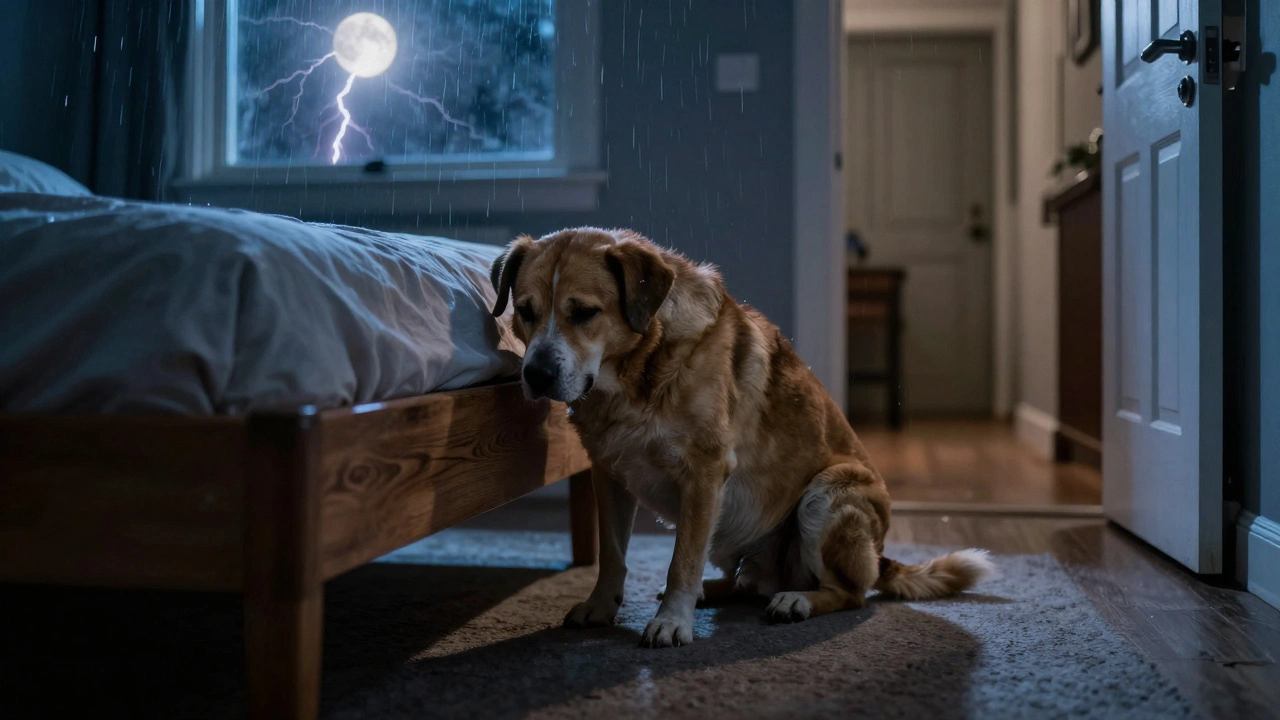
Ever seen your dog cower under the bed during a thunderstorm, or freeze up when a stranger walks in? You're not alone. Around dog anxiety affects nearly 70% of dogs at some point in their lives, according to the American Veterinary Medical Association. It’s not just about being shy-it’s a real, measurable stress response that can lead to health problems, destructive behavior, and strained bonds between pets and owners. The good news? You can identify it early and help your dog feel safer, calmer, and more confident.
What Does Dog Anxiety Really Look Like?
Most people think of trembling or hiding as signs of fear. But anxiety in dogs shows up in ways you might not expect. A dog that barks nonstop at the mail carrier? That’s not aggression-it’s panic. A dog that chews up your shoes when you leave? That’s separation anxiety, not spite. These behaviors aren’t bad habits. They’re survival tactics.
Here are the most common signs:
- Excessive panting, even when it’s not hot
- Pacing back and forth without stopping
- Whining, yelping, or howling when left alone
- Refusing to eat or drink, especially when stressed
- Shaking or trembling uncontrollably
- Accidents in the house despite being house-trained
- Flattened ears, tucked tail, or crouching low to the ground
- Trying to escape or dig through doors/windows
Some dogs become overly clingy. Others shut down completely-staring blankly, not responding to their name. If you notice even one of these behaviors regularly, especially in new or loud situations, it’s not just "being nervous." It’s anxiety.
Why Do Dogs Get Fearful?
It’s not just "bad upbringing." Genetics, early experiences, and even brain chemistry all play a role. A study from the University of Helsinki tracked over 9,000 dogs and found that dogs with a history of early separation from their mothers (before 8 weeks) were 3 times more likely to develop long-term fear responses. Noise phobias-like thunderstorms or fireworks-often start between 6 and 12 months of age. That’s when a dog’s brain is still learning what’s dangerous and what’s not.
Some breeds are more prone to fear. Shetland Sheepdogs, Border Collies, and Cavalier King Charles Spaniels show higher rates of anxiety in veterinary records. But any dog can develop it. A single traumatic event-a car accident, a violent encounter with another dog, even a loud vacuum cleaner-can trigger lasting fear.
And here’s something most owners don’t realize: your own stress affects your dog. Dogs pick up on your body language, tone of voice, and even your heartbeat. If you tense up when the doorbell rings, your dog learns to panic too.
How to Identify Specific Triggers
You can’t fix what you don’t understand. The first step is tracking. Keep a simple log for two weeks:
- Date and time
- What happened right before the behavior started
- How long it lasted
- What you did to respond
Common triggers include:
- Noise: Fireworks, thunder, vacuum cleaners, doorbells
- People: Strangers, children, men with hats, people wearing uniforms
- Environments: Car rides, vet visits, new homes, crowded parks
- Separation: Being left alone for even 10 minutes
- Other animals: Especially unfamiliar dogs or cats
One owner in Portland noticed her dog would panic every Tuesday at 3 p.m. Turns out, the neighbor’s trash truck came by then-and the dog associated the sound with being left alone. Once she knew the trigger, she could start working on it.
What NOT to Do
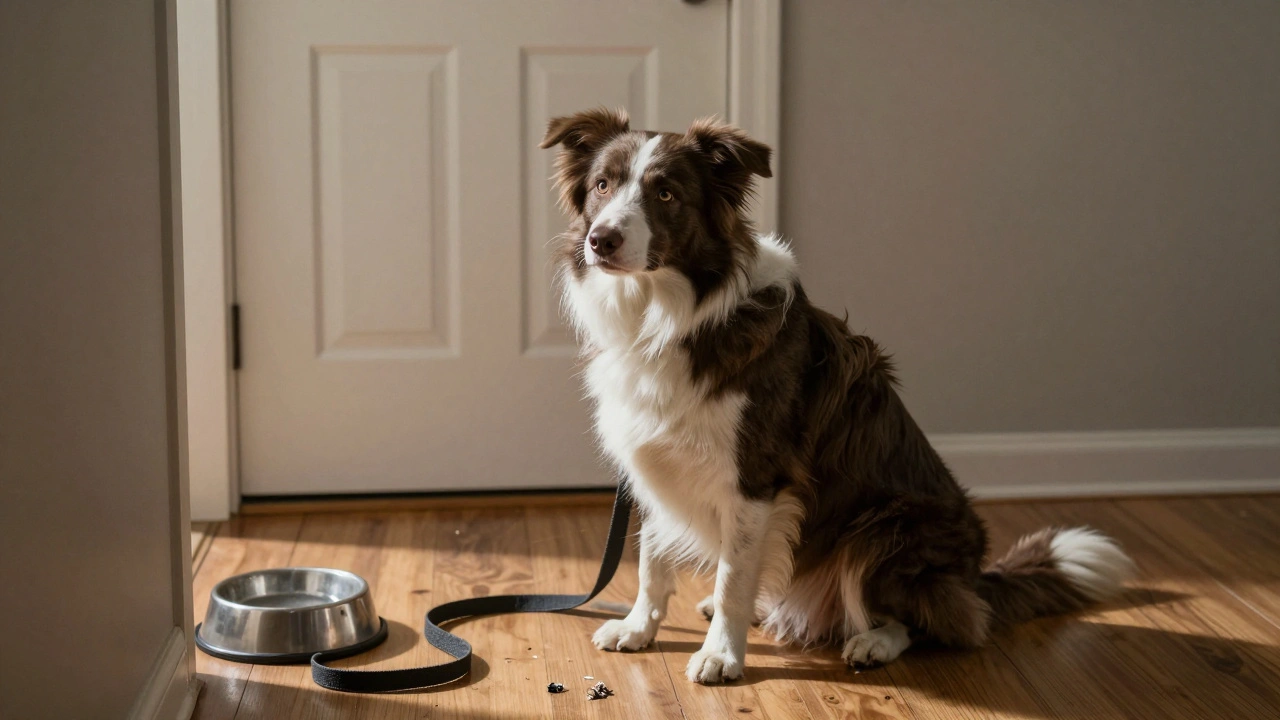
It’s tempting to comfort a fearful dog by hugging them, talking soothingly, or giving treats. But here’s the catch: if you reward fear with attention, you accidentally reinforce it. Your dog learns: "When I act scared, I get petted." That doesn’t help them overcome it.
Never yell, punish, or force your dog into the scary situation. Telling a dog to "just get over it" doesn’t work. It just makes them feel more unsafe. And don’t rely on quick fixes like anxiety wraps or calming supplements without a plan. They might help temporarily, but they won’t fix the root problem.
How to Help Your Dog Feel Safe
Real progress comes from building confidence, not just managing symptoms. Here’s how:
1. Create a Safe Space
Designate a quiet corner-maybe under the stairs or in a closet-with a comfortable bed, familiar toys, and white noise. This is their escape zone. Never force them to leave it. Let them choose when to come out.
2. Desensitization and Counter-Conditioning
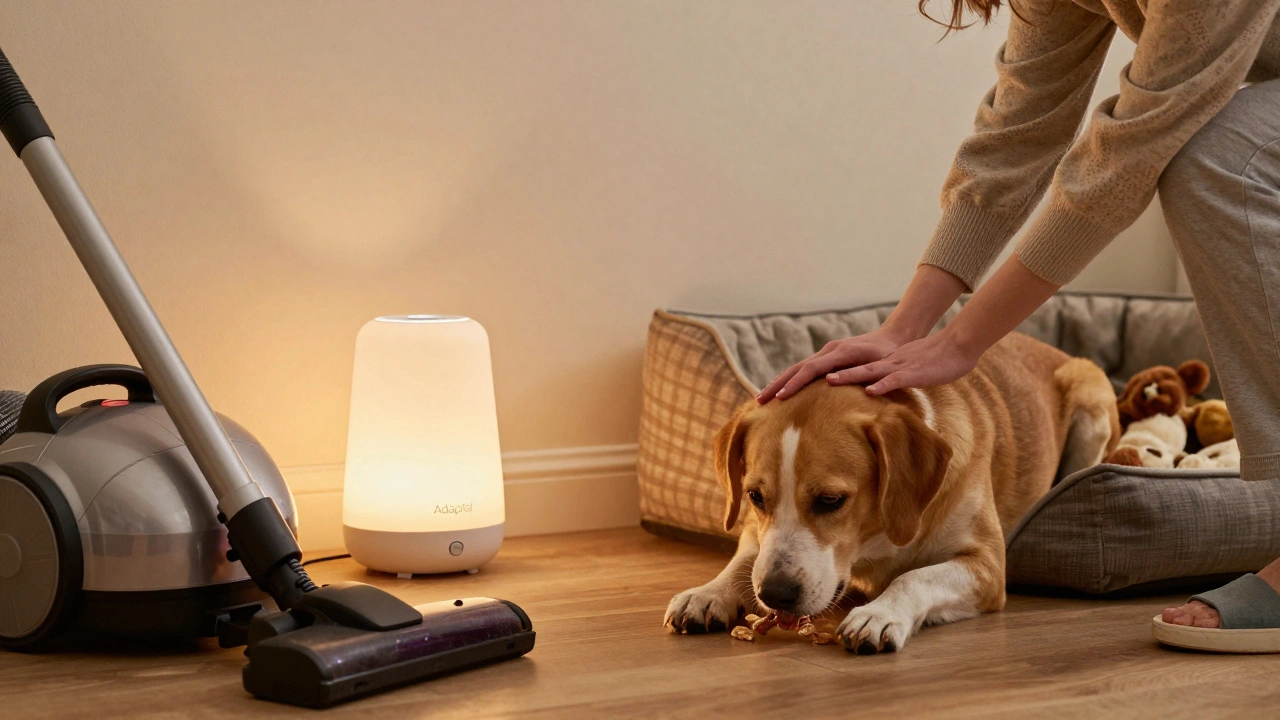
This is the gold standard for treating fear. Start with the trigger at a level your dog notices but doesn’t panic over. For example, if your dog fears vacuum cleaners:
- Turn it on in another room while you give high-value treats (chicken, cheese, freeze-dried liver)
- Gradually move it closer over days or weeks
- Stop if your dog tenses up. Go slower next time
Pair the scary thing with something amazing. Your dog learns: "The vacuum means good things happen." This takes patience. Weeks, sometimes months. But it works.
3. Routine Is Your Best Friend
Anxious dogs thrive on predictability. Feed, walk, and play at the same times every day. Even small changes-like a new leash or different route-can spike anxiety. Stick to patterns. It gives your dog a sense of control.
4. Use Calming Tools Wisely
Adaptil diffusers (pheromone-based) and anxiety wraps like ThunderShirts can reduce stress in some dogs. A 2023 study in the Journal of Veterinary Behavior showed a 40% reduction in panic behaviors when used alongside behavior training. But they’re not magic. Use them as a bridge, not a solution.
5. Talk to Your Vet
If your dog’s anxiety is severe-destroying property, refusing to eat, or harming themselves-it’s time for professional help. Veterinarians can rule out medical causes (like thyroid issues) and may recommend short-term anti-anxiety meds like fluoxetine. These aren’t sedatives. They help the brain process fear more calmly while you do the behavior work.
When to Seek Professional Help
Don’t wait until your dog is a wreck. If:
- Behavior has lasted more than 6 weeks
- It’s getting worse, not better
- You’ve tried basic steps with no improvement
- Your dog is self-harming (licking paws raw, biting tail)
Then find a certified applied animal behaviorist (CAAB) or a veterinary behaviorist. These professionals have years of training in animal psychology. They’ll create a custom plan-no cookie-cutter advice.
Long-Term Outlook: Can Fearful Dogs Get Better?
Yes. Not all of them. But many do. Dogs that start behavior work before age 3 have the highest success rates. Even older dogs can improve. One 10-year-old rescue in Oregon went from shaking during car rides to happily going to the dog park after 8 months of consistent training.
Recovery isn’t about becoming fearless. It’s about becoming resilient. Your dog doesn’t need to love thunderstorms. They just need to know they’re safe with you.
Progress is slow. Some days feel like backsliding. That’s normal. Keep going. Your dog’s brain is rewiring. And with time, consistency, and patience-they’ll learn to trust again.