
Your dog is scratching. It’s 2 AM, and the sound of claws on hardwood keeps you awake. You’ve tried medicated shampoos, changed their kibble, and maybe even bought a fancy air purifier. Now, your vet suggests allergy testing. But before you hand over $500 for a blood panel or an intradermal test, you need to know what those results actually tell you-and what they don’t.
Many owners walk out of the clinic with a list of 15 allergens and assume that if grass is on the list, grass is the cause. If chicken is flagged, chicken is the enemy. This is where most people get it wrong. Allergy testing in dogs is not a crystal ball; it’s a map with some blank spots. Understanding the difference between sensitization and clinical allergy is the key to stopping the itch without breaking the bank.
The Core Confusion: Sensitization vs. Allergy
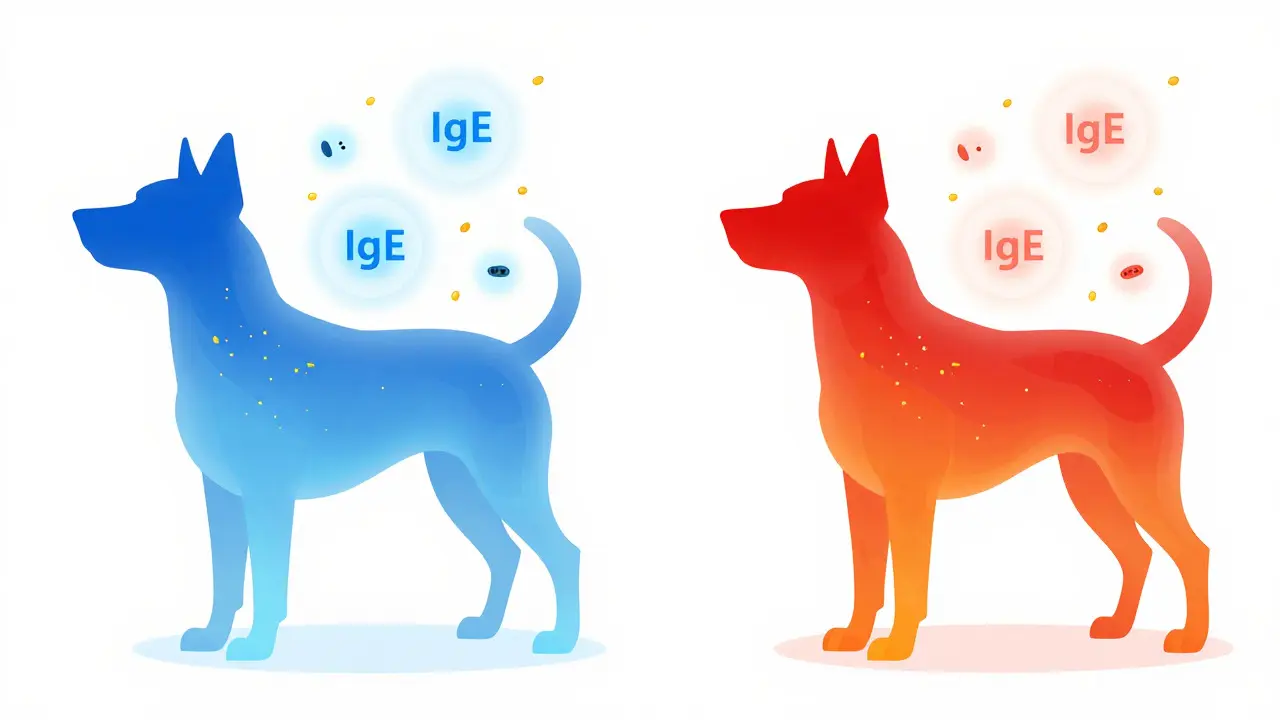
To understand why tests can be misleading, you have to distinguish between two concepts that are often confused: Sensitization is the presence of specific antibodies (IgE) against an allergen in the body. It means your dog’s immune system has met the substance and made a weapon against it. However, having the weapon doesn’t mean you’re using it. A dog can be sensitized to cedar pollen but never scratch when exposed to it because the threshold for a reaction hasn’t been reached.
Clinical Allergy is the actual physical reaction (itching, hives, ear infections) caused by exposure to the allergen. This is what we treat. The problem? Standard allergy tests only measure sensitization. They do not measure clinical relevance. So, if a test shows high levels of ragweed IgE, it confirms your dog has ragweed antibodies. It does not confirm that ragweed is causing the current flare-up. It might just be that your dog lives in a region with high ragweed counts and has built up tolerance, or it could be the primary culprit. Without correlating the test results with the timing and location of symptoms, the data is incomplete.
Blood Tests: The Convenience Trap
Serum IgE testing, commonly known as a blood test, is the most popular method because it’s non-invasive. You draw a tube of blood, send it to a lab, and get a report back in a week. It sounds easy, right? Well, there are caveats. Blood tests detect total serum IgE and specific IgE levels. In humans, this is quite accurate. In dogs, however, the correlation between serum IgE levels and allergic skin disease is weaker than we’d like.
Studies suggest that while about 70-80% of allergic dogs will show positive results on a blood test, many dogs with severe atopic dermatitis may have normal or low serum IgE levels. This is called a false negative. Conversely, a healthy dog might have high IgE for environmental reasons unrelated to their itching. Because of this variability, veterinarians often view blood tests as a screening tool rather than a definitive diagnostic one. They are best used when the history is clear and the suspected allergens are limited.
Intradermal Tests: The Gold Standard with Caveats
If blood tests are the screen door, Intradermal Testing (IDT) is a direct injection of small amounts of allergens into the skin to observe immediate wheal-and-flare reactions. IDT is generally considered more sensitive than blood tests. It detects more true positives and fewer false negatives. Why? Because it mimics the actual mechanism of Type I hypersensitivity reactions happening in real-time in the skin.
However, IDT requires your dog to be off certain medications for several weeks. Antihistamines, steroids, and immunomodulators can suppress the skin’s ability to react, leading to false negatives. This preparation period is a significant hurdle for owners whose dogs are currently suffering. Additionally, IDT must be performed by a veterinary dermatologist or a highly trained specialist. If the technique is off-wrong needle depth, incorrect wait time-the results become unreliable. When done correctly, IDT provides the strongest evidence for which allergens are driving the immune response.

Food Allergies: Why Tests Often Fail
This is the biggest myth-buster section. Many owners ask for a "food allergy test" via blood or hair analysis. Here is the hard truth: Food Allergy in dogs is primarily a Type IV delayed hypersensitivity reaction, not a Type I immediate reaction. Since standard IgE blood tests look for Type I reactions, they are often useless for diagnosing food allergies. A dog can have a severe reaction to beef protein, yet show zero elevated IgE for beef in a blood test.
The only reliable way to diagnose a food allergy is the Elimination Diet, also known as a strict hydrolyzed protein or novel protein diet trial lasting 8-12 weeks. No shortcuts. No homeopathics. No hair tests. If your dog improves on a strict diet and relapses when you reintroduce the old food, you have your answer. Until then, any commercial "food sensitivity