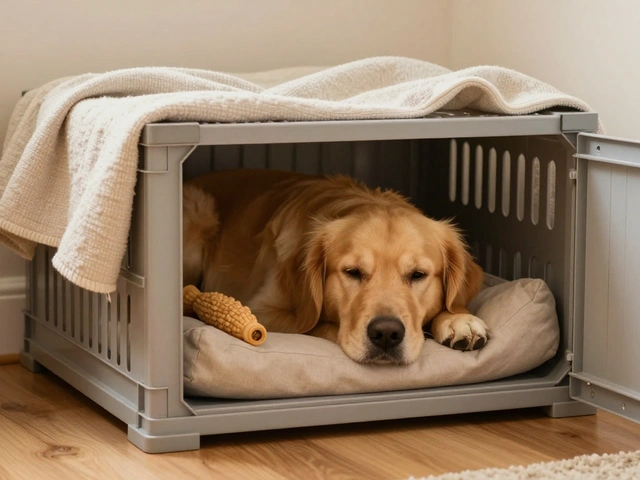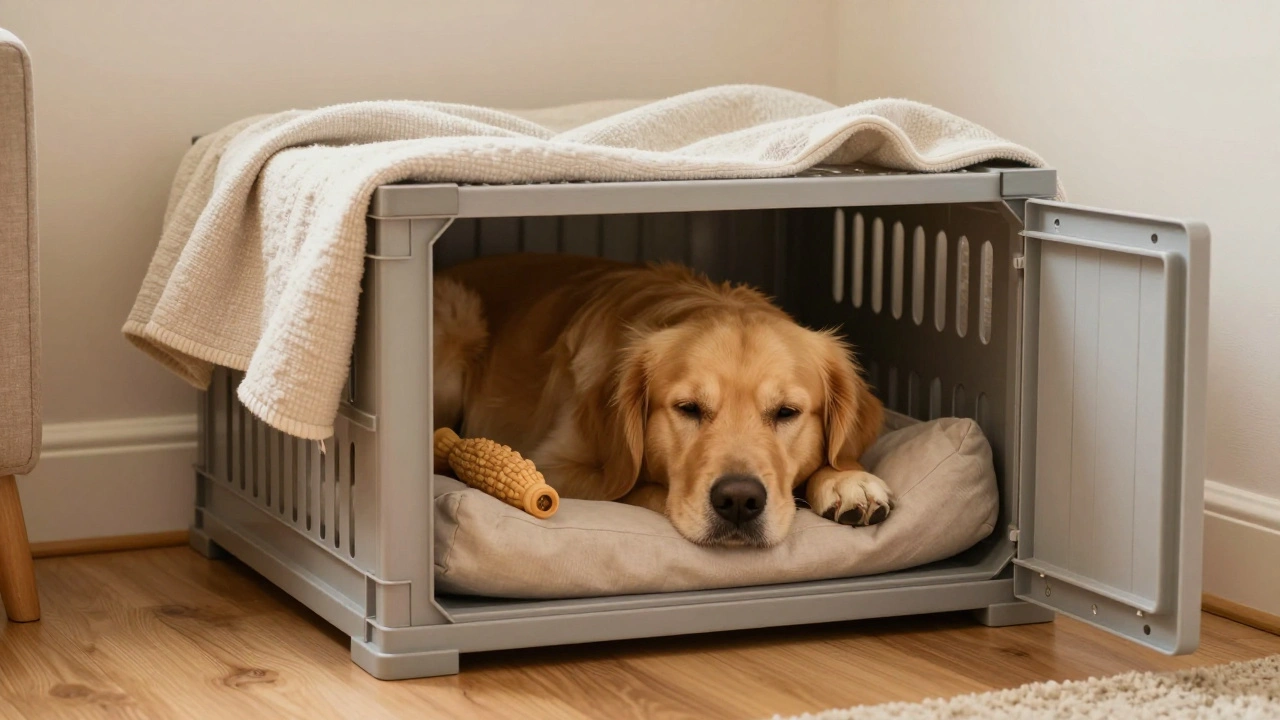
Every dog deserves a place they can call their own-a quiet corner where the world slows down and they feel safe. For many dogs, that place is a crate. But a crate isn’t just a box with a door. When done right, crate training becomes one of the most powerful tools you’ll ever use to help your dog feel calm, secure, and confident.
Why a Crate Works Better Than a Room
Think about how you feel when you’re in a cozy, enclosed space-like a blanket fort or a warm bed under the covers. Dogs aren’t so different. Their natural instinct is to seek out den-like spaces. That’s why a properly sized crate feels like home, not a prison. A dog left loose in a room might chew shoes, dig at carpets, or panic when left alone. A crate, on the other hand, gives them boundaries without isolation.Studies from the American Veterinary Medical Association show that dogs crated during the day are less likely to develop separation anxiety. Why? Because they learn that being alone doesn’t mean being abandoned. The crate becomes a safe harbor, not a punishment.
Choosing the Right Crate
Not all crates are created equal. The size matters more than you think. Too small, and your dog can’t stand up, turn around, or stretch out. Too big, and they might start using one end as a bathroom. The rule? Your dog should be able to stand up, turn around, and lie down comfortably-with just enough extra room to feel relaxed, not spacious.Plastic crates are great for travel and give a more den-like feel. Metal wire crates offer better airflow and can be folded down for storage. Soft-sided crates work for calm dogs but aren’t ideal for chewers or anxious ones. If you’re buying a crate for a puppy, consider one with a divider panel. That way, you can adjust the space as they grow.
Setting Up the Perfect Crate Environment
A crate isn’t just a cage. It’s a bedroom. Start by placing it in a quiet corner of the living room or bedroom-not tucked away in the basement or laundry room. Dogs are social animals. They want to feel part of the family, even when they’re resting.Line the bottom with a washable bed or blanket. Avoid fluffy pillows or toys that can be torn apart. A chew-resistant Kong stuffed with peanut butter (xylitol-free) or a frozen treat can turn crate time into something they look forward to. Keep the door open at first. Let your dog explore it on their own. Place treats inside. Talk to them in a calm voice. No forcing. No yelling. Just patience.
Introducing the Crate: Step-by-Step
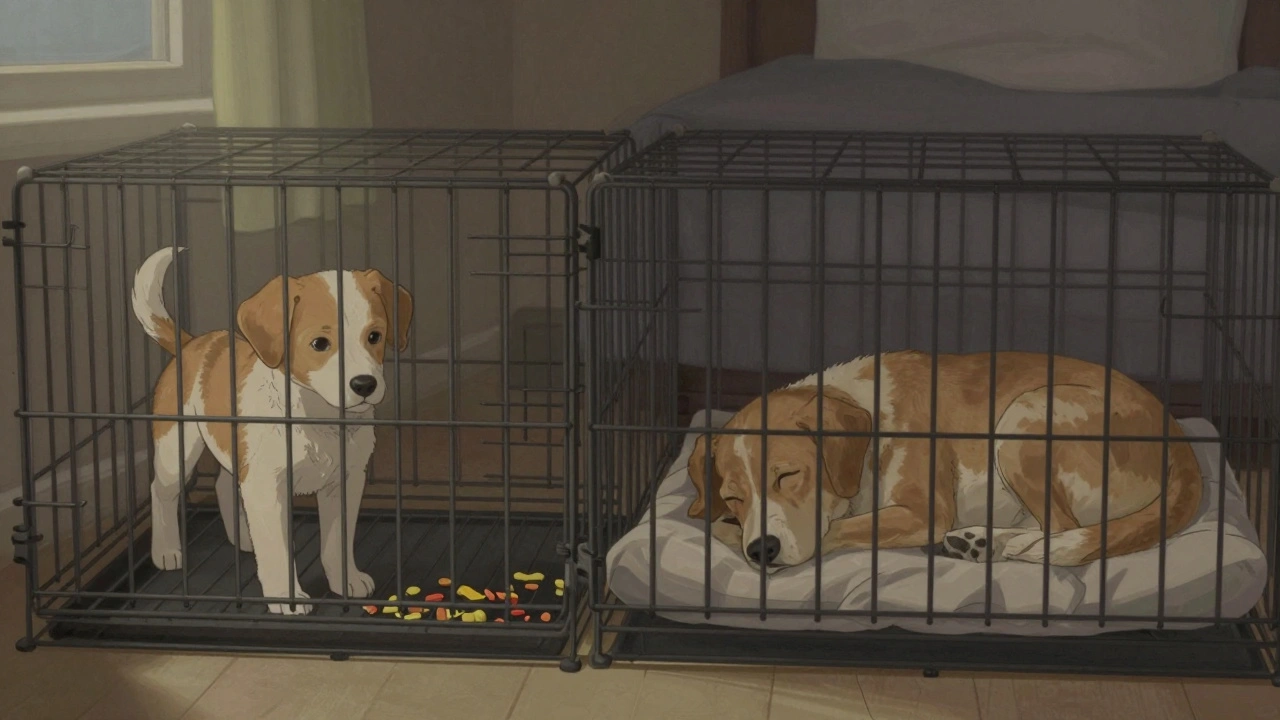
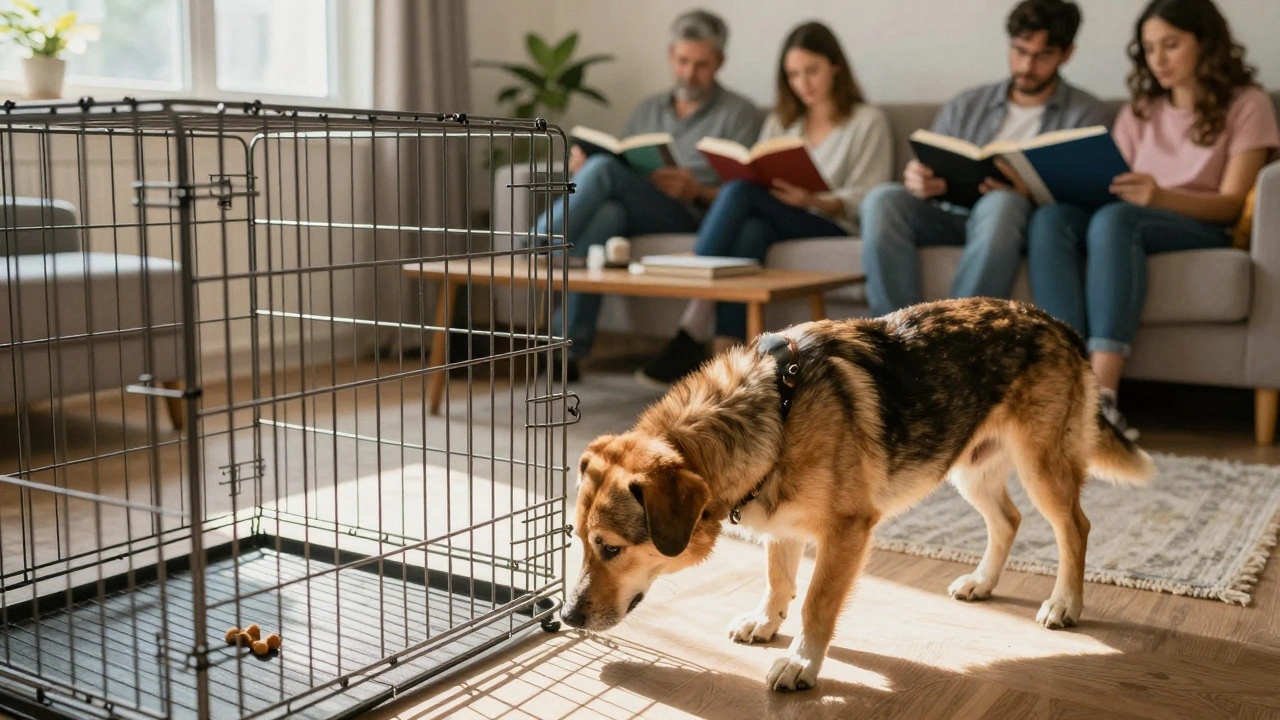
Here’s how to make the crate feel like the best spot in the house:- Leave the door open for a few days. Toss treats inside. Let your dog walk in and out whenever they want.
- Once they’re comfortable entering, start feeding meals inside the crate. Close the door for 10 seconds after they start eating. Open it. Repeat daily.
- Gradually increase the time the door stays closed-5 minutes, then 10, then 20. Always let them out before they start whining.
- Use a cue word like “kennel” or “crate” as they go in. Say it calmly, then close the door.
- Once they’re relaxed, start leaving the house for short periods-5 minutes, then 15, then 30. Always return before they get anxious.
Never use the crate as punishment. If your dog barks or whines, don’t rush to let them out. Wait for a quiet moment. That teaches them that calm behavior gets them what they want.
What to Do When Things Go Wrong
Some dogs panic. They scratch at the door, cry, or even hurt themselves trying to escape. This isn’t defiance-it’s fear. If your dog shows signs of distress, go back a step. Maybe they’re not ready for closed-door time. Maybe the crate is too big. Maybe they’ve had a bad experience in the past.If your dog has a history of trauma or severe anxiety, talk to a certified dog behaviorist. Crate training might not be the right fit. There are alternatives: baby gates, dog-proof rooms, or even doggy daycares. The goal isn’t to force a crate. It’s to build trust.
Using the Crate Long-Term
Once your dog is comfortable, the crate becomes part of their routine. Use it during thunderstorms, fireworks, or when you’re cleaning. It’s a safe spot when visitors come over. It’s a quiet place after a long walk. It’s not a jail. It’s a sanctuary.Adult dogs don’t need to be crated all day. Two to four hours at a time is plenty. Overnight? Fine. But if you’re gone for eight hours, make sure they’ve had plenty of exercise and mental stimulation before you leave. A tired dog is a quiet dog.
Common Mistakes to Avoid
- Using the crate to solve behavioral problems like barking or chewing. That doesn’t fix the root issue.
- Leaving food or water inside for long periods. Water can spill. Food can spoil. Use a water bowl only if you’re home.
- Ignoring signs of distress. Panting, pacing, drooling, or frantic scratching mean something’s wrong.
- Buying a crate based on looks instead of function. A cheap plastic crate might look nice, but if it cracks under pressure, it’s not safe.
When to Stop Crate Training
There’s no expiration date. Many owners keep the crate open for life. It’s just another cozy spot. But if your dog is fully house-trained, calm when left alone, and shows no interest in the crate, you can phase it out. Let them choose. If they start using it on their own? Keep it around. If they never go in again? That’s okay too.The real win isn’t having your dog sleep in a crate. It’s knowing they have a place they feel safe. And that’s worth more than any training trick.
How long can a dog stay in a crate?
Puppies under six months should not be crated for more than 2-3 hours at a time. Adult dogs can handle 4-6 hours, but only if they’ve had exercise and bathroom breaks. Never exceed 8 hours unless it’s overnight and your dog is used to it. Always give them a chance to stretch, drink, and go outside.
Is crate training cruel?
No, when done correctly. A crate becomes a den-a place of comfort, not confinement. Dogs with access to a well-set-up crate show lower stress levels than those left in open rooms. The key is positive association. If your dog whines, panics, or tries to escape, the crate isn’t working. That’s a sign to slow down, not push harder.
Can I use a crate for a rescue dog?
Yes, but take it slow. Rescue dogs often come from unstable backgrounds. They may fear enclosed spaces. Start by leaving the crate open in a common area. Let them explore. Offer high-value treats. Don’t rush. Some dogs take weeks to feel safe. Patience builds trust.
What if my dog pees in the crate?
Dogs naturally avoid soiling their sleeping area. If your dog is peeing in the crate, it’s likely too big, they’re being left too long, or they have a medical issue. Clean the crate thoroughly with an enzymatic cleaner. Reduce crate time. Take them out more often. If it continues, see a vet to rule out urinary infections or incontinence.
Should I cover the crate?
Some dogs feel more secure with a light blanket over the top and sides, especially if the room is noisy or bright. Don’t fully enclose it-airflow is critical. Use a thin sheet or towel. If your dog starts chewing the fabric, remove it. It’s not necessary for every dog.