When your dog starts dragging their butt, losing weight, or passing strange stuff in their poop, you know something’s off. But before you panic or reach for dewormer, you need to know what’s actually in there. Two tests are commonly used to find intestinal parasites in dogs: the fecal float and the antigen test. They sound similar, but they’re not the same. One catches eggs. The other catches proteins. And mixing them up could mean missing a serious infection.
What’s a Fecal Float Test?
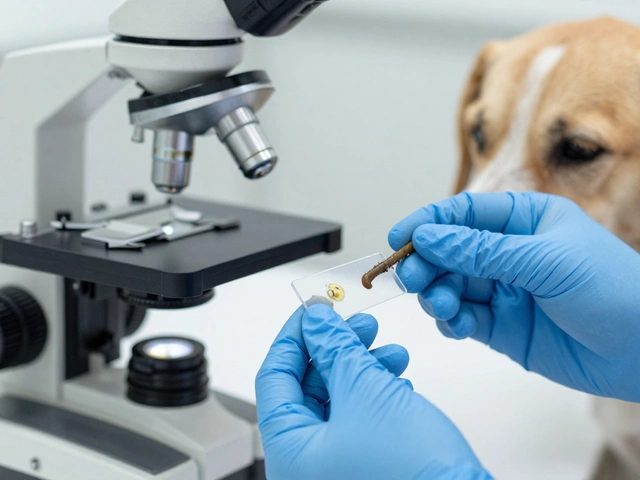
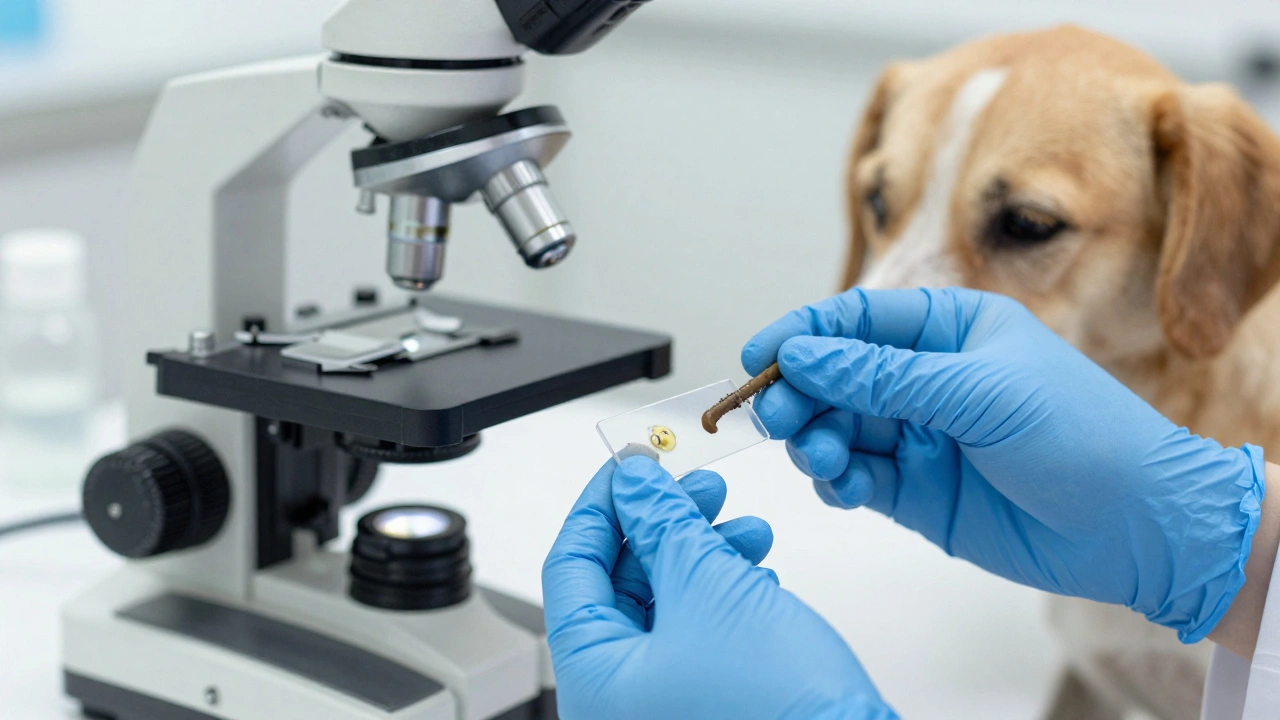
The fecal float, also called a fecal flotation, is the oldest and most common test for dog parasites. Vets have been using it for decades. It’s simple: a small sample of your dog’s stool is mixed with a special solution that makes parasite eggs float to the top. Then, a coverslip is placed over the mixture, and the vet looks at it under a microscope.
This test finds eggs from roundworms, hookworms, whipworms, tapeworms, and coccidia. If you see those tiny, egg-shaped structures, you’ve got a parasite. It’s cheap, fast, and widely available. Most vet clinics do it right in the exam room.
But here’s the catch: it only works if the worm is actively laying eggs. That doesn’t happen all the time. A female hookworm might lay 20,000 eggs a day - but only for a few weeks. If you test outside that window, you get a false negative. Same with tapeworms. They shed eggs in segments, not constantly. And puppies? They often pass worms before the eggs show up in stool. That’s why vets sometimes recommend repeating the test.
What’s an Antigen Test?
The antigen test is newer, faster, and more sensitive. Instead of looking for eggs, it looks for proteins - called antigens - that parasites release into your dog’s gut. These proteins get into the stool and stay there even when eggs aren’t being shed.
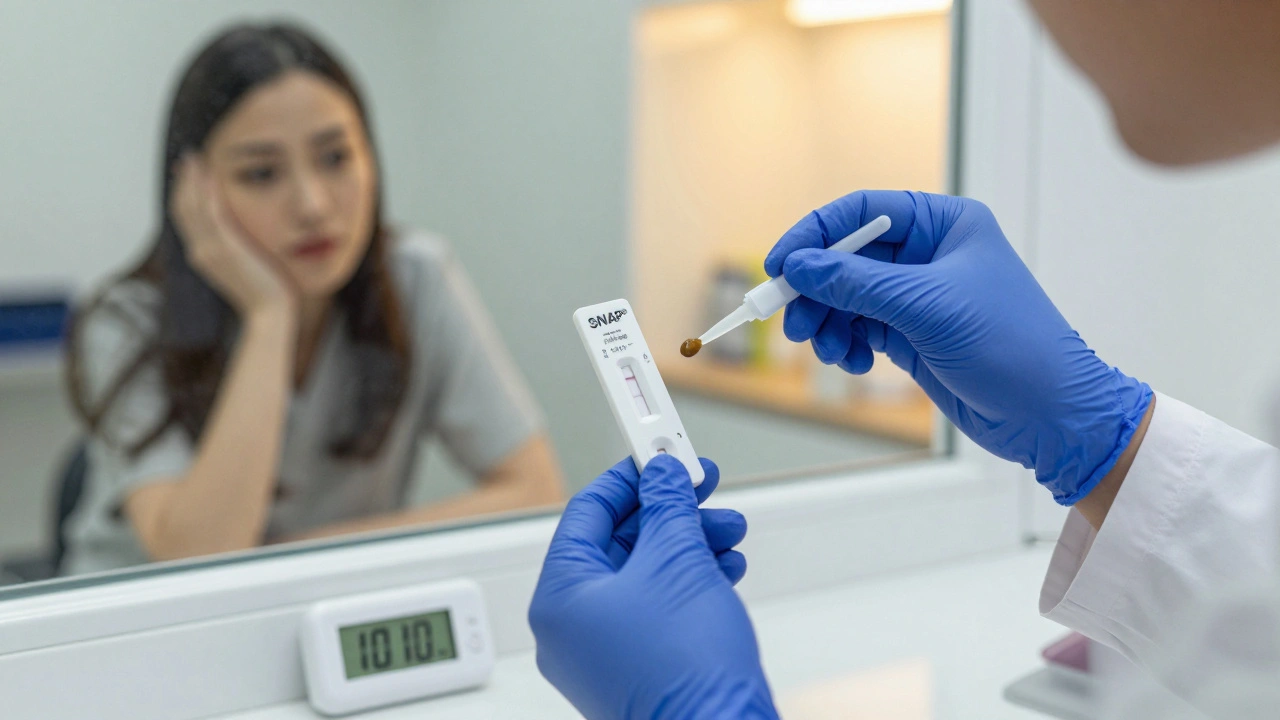
This test is usually done with a quick in-clinic kit, like the SNAP® test. You put a drop of stool on a card, add a few drops of solution, and wait 10 minutes. A line appears if the parasite protein is there. No microscope needed.
Antigen tests are especially good for detecting Giardia and certain types of hookworms. They can find infections even if your dog hasn’t started passing eggs yet. That’s huge. A dog can be infected for weeks before eggs show up. With an antigen test, you catch it early.
But it’s not perfect. Antigen tests can’t tell you what kind of worm you’re dealing with. If the test is positive, you know there’s something - but you still need a fecal float to figure out if it’s roundworms, tapeworms, or something else. Also, some tests can give false positives if your dog ate raw meat or was recently dewormed.
When to Use Each Test
Think of it this way: fecal float is your general detective. Antigen test is your sniffer dog.
- Use a fecal float if your dog has visible worms in poop, diarrhea, or is due for routine screening. It’s great for catching common worms and giving you a full picture of what’s in there.
- Use an antigen test if your dog has recurring GI issues, is a puppy, or if the fecal float came back negative but you still suspect parasites. It’s your backup when eggs aren’t showing up.
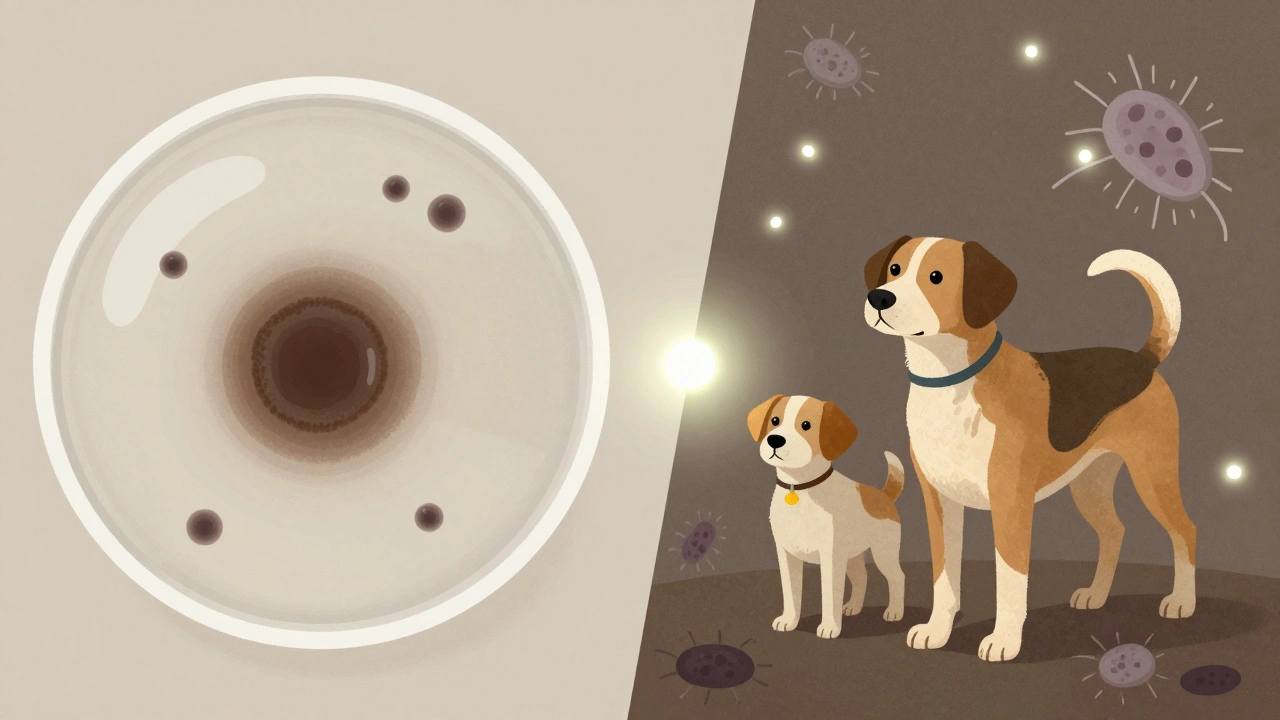
Many veterinarians now do both together - especially for puppies under six months, dogs with chronic diarrhea, or dogs who go to dog parks, boarding facilities, or hiking trails. In Portland, where so many dogs hike in the Columbia River Gorge, it’s not unusual to see dogs pick up Giardia from stream water. That’s one parasite that’s almost always caught with an antigen test.
Why You Can’t Rely on Just One
Here’s a real example: a 9-month-old Labrador from Beaverton came in with intermittent diarrhea. The first fecal float showed nothing. The owner gave a broad-spectrum dewormer anyway. Two weeks later, the diarrhea came back. This time, the antigen test for Giardia came back strong. The vet prescribed metronidazole. Within three days, the dog was fine.
If the vet had only done the fecal float, the Giardia would’ve been missed. And if they’d only done the antigen test, they wouldn’t have known if there were also roundworms or tapeworms.
Parasites don’t play fair. Some shed eggs sporadically. Others only release antigens during active infection. One test alone is like checking one room in a house for a burglar. You might find something - or you might walk right past them.
What About Home Test Kits?
You’ve probably seen ads for at-home parasite test kits. They promise quick results without a vet visit. But here’s the truth: most of them are antigen tests, and they’re not reliable unless paired with professional interpretation.
Home kits can give false negatives if the sample isn’t fresh. They can’t distinguish between active infection and leftover proteins from a recent deworming. And if they come back positive? You still need a vet to confirm, identify the parasite, and prescribe the right treatment. A misdiagnosed tapeworm treated with a roundworm pill? That’s wasted time and money.
Save the home kits for screening between vet visits - not as your main diagnostic tool.
What Vets Recommend Today
In 2026, the American Society for Veterinary Clinical Pathology recommends:
- Test all puppies at 2, 4, 6, and 8 weeks of age using both fecal float and antigen testing.
- Test adult dogs with diarrhea or weight loss using both tests.
- Test dogs in high-risk environments (dog parks, shelters, boarding) at least twice a year.
- Repeat testing 2-4 weeks after deworming to confirm clearance.
That’s not just caution - it’s science. Studies from the University of California, Davis, show that using both tests together catches 98% of intestinal parasite infections. Using just fecal float? You’ll miss nearly 1 in 5 cases.
What Happens If You Skip Testing?
Some owners think, “My dog acts fine. Why test?” But parasites don’t always make dogs look sick. A dog with a light hookworm infection might just seem a little sluggish. A dog with tapeworms might not show anything until they’re losing weight or scooting constantly.
And here’s the scary part: some parasites can infect humans. Hookworm larvae can burrow into skin. Roundworm eggs can end up in soil and cause blindness in kids. Giardia can spread through contaminated water. Testing your dog isn’t just about their health - it’s about protecting your whole family.
Final Checklist: What to Do Next
- If your dog is under 1 year old: Get both tests done at least twice this year.
- If your dog goes to dog parks, trails, or boarding: Ask for both tests at every wellness visit.
- If your dog has diarrhea or is losing weight: Demand both tests - don’t accept a single result.
- If you’re using a home test: Always confirm with your vet. Don’t guess.
- If your dog was recently dewormed: Wait 2-4 weeks before retesting. Antigens can linger.
There’s no single best test. The best approach is using both - together. It’s not about spending more money. It’s about catching what matters before it becomes a problem.