When your dog hits their golden years, their body changes in ways you might not notice right away. Their energy drops. Their joints creak. They might not chew as well. And their digestion? It slows down. But the biggest mistake most owners make is keeping their senior dog on the same food they ate at age three. That’s like giving a 70-year-old person the same diet they had at 25. It doesn’t work. Senior dog nutrition isn’t just about cutting calories-it’s about rethinking what your dog needs to stay healthy, comfortable, and active for as long as possible.
What Changes in a Senior Dog’s Body?
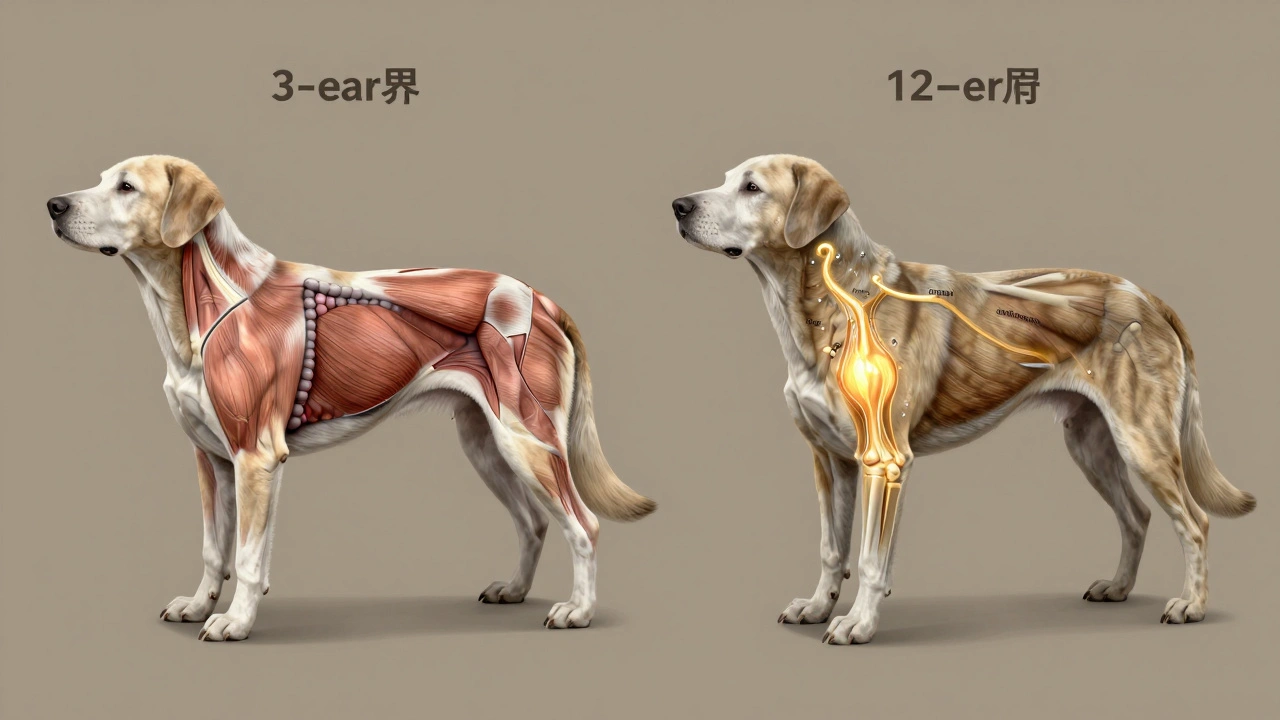
Dogs are considered seniors around age seven, but it varies by breed. A Great Dane might be senior at six, while a Chihuahua might not show signs until ten. Once they hit that stage, their metabolism slows by 20-30%. That means they burn fewer calories just sitting still. Muscle mass starts to fade, too. Without enough protein, they lose strength, which makes it harder to walk, stand, or even get up after a nap.
Joint wear becomes obvious. Arthritis isn’t rare-it’s common. Up to 80% of dogs over age 12 show signs of joint degeneration. Their kidneys also work harder to filter waste, and their liver efficiency drops. Digestive enzymes decrease, so they absorb fewer nutrients from food. That’s why a senior dog might eat the same amount but lose weight or have loose stools.
Key Nutrients for Older Dogs
Not all dog foods labeled "senior" are created equal. Some are just lower in calories with added fillers. Real senior nutrition focuses on quality, not just quantity.
- High-quality protein: Older dogs need more, not less. Aim for 25-30% protein on a dry matter basis. Look for meat as the first ingredient-chicken, fish, or lamb. Low-quality protein (like corn gluten or meat meal) doesn’t help rebuild muscle.
- Omega-3 fatty acids: Found in fish oil, flaxseed, or algae. These reduce inflammation in joints and skin. A 2023 study showed dogs with arthritis moved more freely after 8 weeks of daily omega-3 supplementation.
- Glucosamine and chondroitin: These aren’t magic pills, but they help slow cartilage breakdown. Look for foods with at least 500 mg glucosamine and 400 mg chondroitin per cup.
- Fiber: Soluble fiber from pumpkin, sweet potato, or beet pulp helps regulate digestion. Too little leads to constipation; too much causes gas and loose stools.
- Antioxidants: Vitamins E and C, beta-carotene, and selenium fight free radicals that damage cells. Older dogs need more to support immune function.
Feeding Amounts and Frequency
Most senior dogs do better with smaller meals, twice a day. Their stomachs can’t hold as much, and digesting one big meal strains their system. A 50-pound senior dog that ate 2 cups of food daily at age 6 might only need 1.25 cups now. But don’t just guess-use a calorie calculator based on weight and activity level.
Weight loss? That’s a red flag. If your dog’s ribs are poking through and they’ve lost muscle tone, they’re not getting enough protein or calories. Weight gain? They’re probably eating too much fat or carbs. Adjust portion sizes every 2-3 weeks based on body condition-not just the bag instructions.
Food Texture and Dental Health
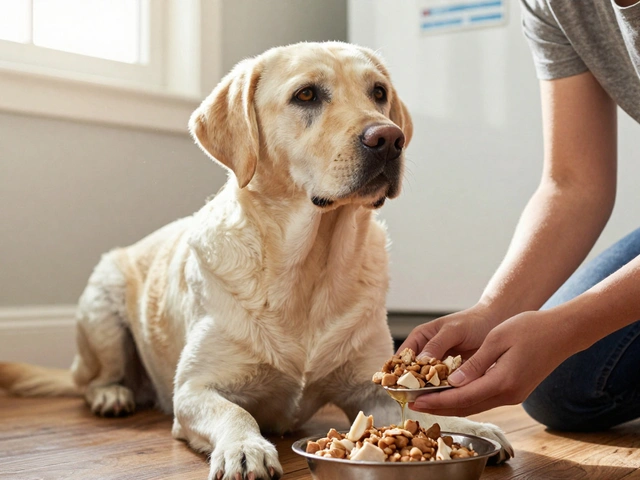
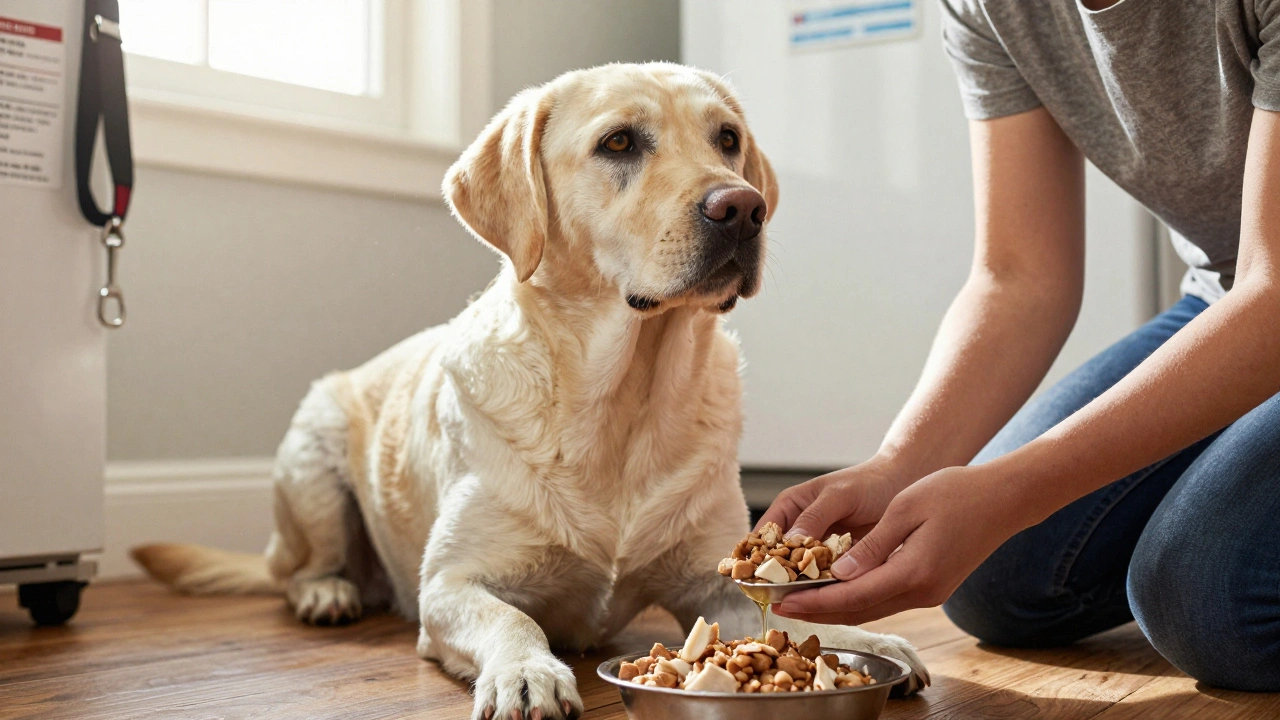
By age 10, many dogs have missing teeth or painful gums. Hard kibble can be unbearable. Soft food, wet food, or kibble soaked in warm water helps. Some owners mix in cooked chicken or broth to make meals more appealing. If your dog turns their nose up at food, it’s not being picky-it might be hurting.
Don’t ignore dental checkups. A dog with infected gums can’t chew properly, even if the food is soft. That leads to malnutrition. Brush their teeth weekly or use dental wipes. Ask your vet about dental diets designed for older dogs-they’re formulated to reduce plaque without requiring hard chewing.
When to Switch to a Senior Diet
Don’t wait until your dog looks thin or limps. Start thinking about dietary changes at age 7, even if they seem fine. The best time to switch is before problems show up. Transition slowly: mix 25% new food with 75% old food for 3 days, then 50/50 for 3 more days, then 100% new food. Sudden changes cause upset stomachs.
Some dogs do fine on adult maintenance food if it’s high in protein and low in fillers. Others need specialized formulas. Look for AAFCO statements that say "for maintenance" or "for senior dogs." Avoid foods labeled "all life stages"-they’re designed for growing puppies and active adults, not aging bodies.
Common Mistakes to Avoid
- Feeding table scraps. Fatty meats, cheese, or bones can trigger pancreatitis or upset digestion.
- Assuming "light" or "low-fat" means "better." Some low-fat foods are high in carbs and sugar, which spike blood sugar and worsen arthritis.
- Ignoring hydration. Older dogs drink less, but dehydration strains kidneys. Always have fresh water available. Add wet food or broth to increase moisture.
- Skipping vet checkups. Blood tests every 6-12 months catch kidney disease, thyroid issues, or diabetes early. These conditions change nutritional needs dramatically.
Supplements and Homemade Diets
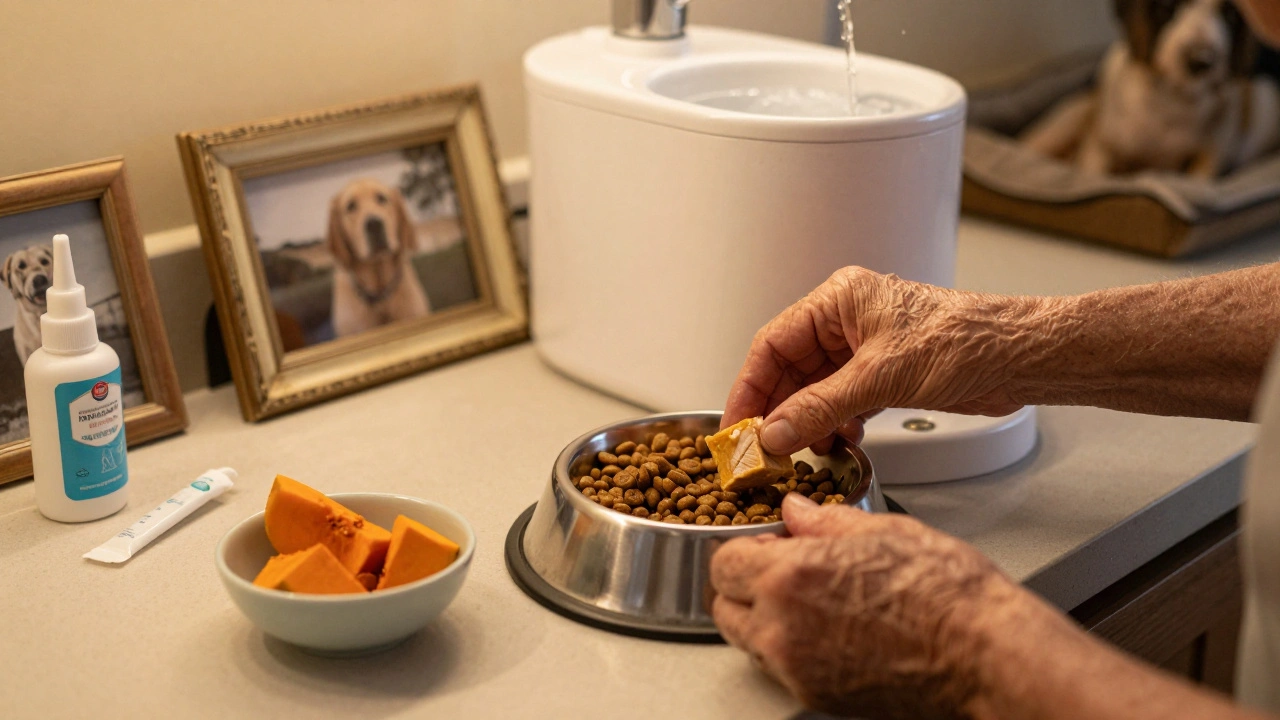
Supplements can help-but only if they’re right for your dog. Joint supplements, probiotics, and fish oil are generally safe. Always talk to your vet before starting anything. Too much calcium can harm kidneys. Too much vitamin D can be toxic.
Homemade diets? They’re possible, but risky. Most homemade recipes lack balance. A 2024 study of 120 homemade dog diets found 92% were deficient in at least one essential nutrient. If you want to cook for your senior dog, use a service like BalanceIT or PetDIETS that formulates recipes based on your dog’s weight, health, and lab results.
Signs Your Senior Dog’s Diet Isn’t Working
- Weight loss despite eating normally
- Dull, brittle coat or excessive shedding
- Constipation or diarrhea lasting more than 3 days
- Increased thirst or urination
- Lethargy, stumbling, or reluctance to move
- Bad breath or drooling
If you see any of these, talk to your vet. It might be a dietary issue-or something more serious like kidney disease or cancer. Don’t wait.
Real-Life Example: Max, the 12-Year-Old Labrador
Max used to eat 2.5 cups of regular adult kibble. At 12, he started losing weight, his back legs shook when he stood, and he stopped fetching. His owner switched him to a senior formula with 30% protein, added fish oil, and soaked his kibble. Within 6 weeks, Max gained back 4 pounds of muscle, walked without wobbling, and started wagging his tail again. He’s still alive at 15-not because of magic, but because his food finally matched his body’s needs.
How do I know if my senior dog is getting enough protein?
Look at your dog’s body condition. If their ribs are visible, their hips are sharp, or their muscles look thin, they’re likely protein-deficient. Check the food label: protein should be at least 25% on a dry matter basis. You can calculate this by dividing the protein percentage by (100 - moisture percentage). For example, if a food has 22% protein and 10% moisture, the dry matter protein is 22 ÷ 90 = 24.4%. That’s borderline. Aim for 25-30%.
Should I feed wet food or dry food to my senior dog?
It depends on your dog’s teeth and hydration. Wet food has 70-80% water, which helps kidney and bladder health. It’s also easier to chew. But dry food can help with dental plaque. Many owners mix both: 75% dry, 25% wet. If your dog has dental pain, go wet. If they’re healthy but need hydration, add broth to dry food. Don’t force one type-adapt to your dog’s comfort.
Is grain-free food better for senior dogs?
No. Grain-free doesn’t mean healthier. The FDA has linked grain-free diets to heart disease in dogs, especially those high in legumes like peas and lentils. Most senior dogs do fine with moderate grains like brown rice or oats-they provide fiber and slow-release energy. Avoid foods with no grains and high legume content unless your vet recommends it for allergies.
Can I give my senior dog human supplements like fish oil or glucosamine?
You can, but dosing matters. Human fish oil capsules often have too much vitamin A or D, which can be toxic to dogs. Glucosamine supplements meant for humans may contain xylitol, which is deadly. Always use pet-specific supplements. A 50-pound dog needs about 1,000 mg of EPA/DHA (omega-3) daily from fish oil. Check labels carefully or ask your vet for a recommended brand.
What should I do if my senior dog won’t eat?
First, rule out illness. Loss of appetite can signal kidney disease, cancer, or dental pain. If your vet says they’re healthy, try warming the food to release aroma, adding low-sodium broth, or switching textures. Some dogs prefer pâté over kibble. Don’t offer treats or human food-this teaches them to hold out. If they haven’t eaten for 48 hours, see your vet immediately.
Feeding a senior dog isn’t about making them eat less. It’s about making sure what they eat helps them live better. Their needs change, and your food choices should change too. A little attention now can mean more walks, more cuddles, and more years with your best friend.