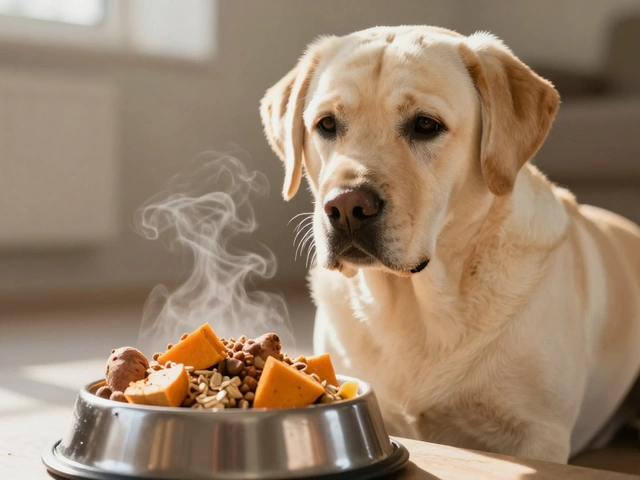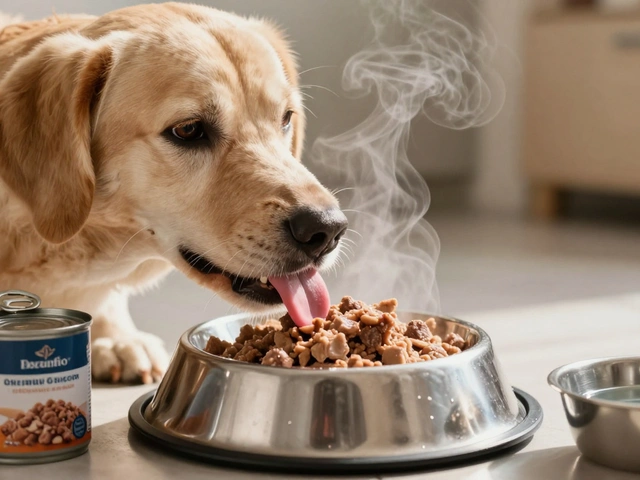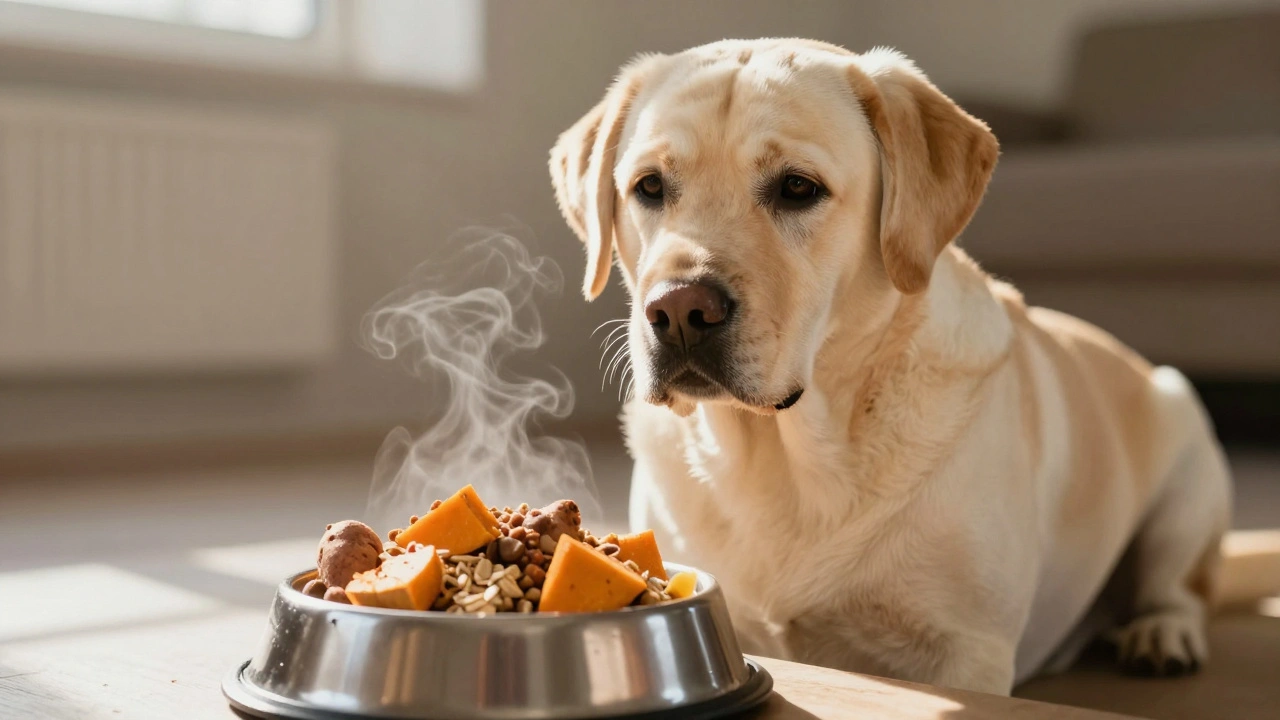
Over 50% of dogs in the U.S. are overweight or obese, according to the Association for Pet Obesity Prevention. That’s not just a cosmetic issue-it’s a health crisis. Extra weight strains joints, increases the risk of diabetes, and can cut a dog’s life short by up to two years. If your dog is carrying too much weight, changing their diet is the most effective place to start. And one of the most reliable tools in your toolbox? High-fiber dog food.
Why Fiber Works for Dog Weight Loss
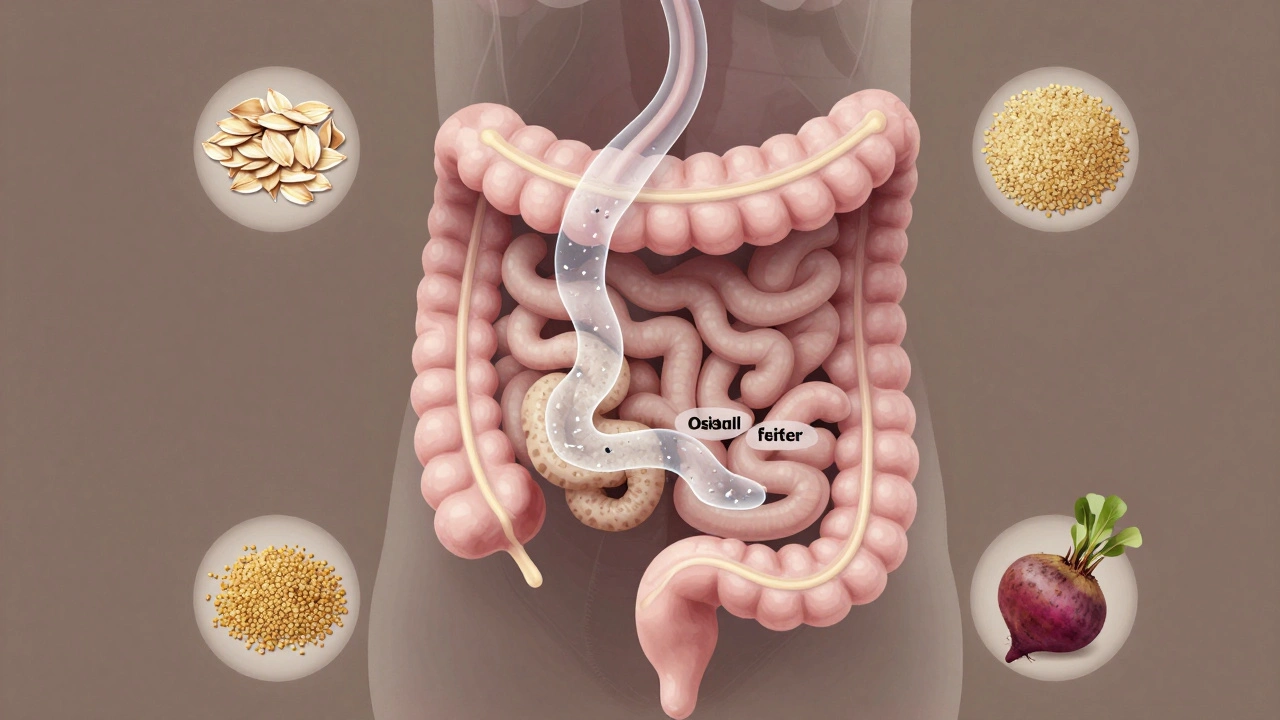
Fiber isn’t just for humans. In dogs, it acts like a natural appetite regulator. Unlike fats and proteins, fiber doesn’t get digested in the small intestine. Instead, it moves slowly through the gut, creating a feeling of fullness without adding many calories. This means your dog eats less, feels satisfied longer, and burns more fat instead of storing it.
Studies from the University of Illinois and the Journal of Nutrition show that dogs on high-fiber diets lose weight faster than those on low-fat, low-fiber diets-even when calorie counts are the same. Why? Fiber slows digestion, stabilizes blood sugar, and reduces begging behavior. Dogs on fiber-rich meals aren’t constantly asking for snacks because their bodies aren’t spiking and crashing like they do on carb-heavy kibble.
How Much Fiber Should a Dog Eat?
Most commercial dog foods contain 2-4% fiber. For weight loss, you need more. The sweet spot is 8-12% dietary fiber. That’s not a guess-it’s backed by veterinary nutrition research. A 2023 study published in the Journal of Veterinary Internal Medicine tracked 87 overweight dogs on high-fiber diets. After 12 weeks, 82% lost at least 10% of their body weight without changing activity levels.
But not all fiber is the same. There are two types:
- Soluble fiber-absorbs water, forms a gel, and slows digestion. Found in oats, psyllium, sweet potatoes, and pumpkin.
- Insoluble fiber-adds bulk, speeds up stool passage, and helps with regularity. Found in beet pulp, rice bran, and cellulose.
The best weight-loss formulas combine both. Soluble fiber keeps your dog full. Insoluble fiber keeps things moving. Together, they create a balanced, natural weight-loss system.
What to Look for in High-Fiber Dog Food
Not every bag labeled "light" or "weight management" is actually high in fiber. Many just cut calories by reducing fat, leaving your dog hungry and unsatisfied. Here’s what to read on the label:
- Fiber percentage-look for at least 8% on the guaranteed analysis. If it’s not listed, call the manufacturer.
- First five ingredients-should include whole foods like sweet potato, pumpkin, brown rice, or oatmeal-not just "fiber" or "cellulose" as a filler.
- Protein level-should be 25% or higher. Fiber helps with fullness, but protein preserves muscle during weight loss.
- Calories per cup-aim for 300-350 kcal/cup for medium dogs. Too high? You’re just feeding more of the same problem.
Brands like Hill’s Science Diet Metabolic, Royal Canin Weight Control, and Blue Buffalo Weight Control have consistently met these benchmarks in independent testing. Avoid foods with "chicken meal" or "corn gluten" as the main protein source-these are low-quality fillers that spike blood sugar.
Real-World Results: A Case Study
Meet Luna, a 7-year-old Labrador Retriever who weighed 92 pounds when she should have been 70. Her owner tried portion control, but Luna begged constantly. After switching to a high-fiber formula with 10% fiber and 28% protein, she lost 14 pounds in 14 weeks. Her energy improved. Her joint pain decreased. And she stopped begging at the table. No treats. No extra walks. Just better food.
This isn’t magic. It’s biology. Fiber changed her hunger signals. Her body stopped storing fat and started using it.
How to Transition Your Dog Safely
Switching diets too fast can cause diarrhea, gas, or refusal to eat. Do this instead:
- Day 1-3: Mix 25% new food with 75% old food.
- Day 4-6: Mix 50% new food with 50% old food.
- Day 7-9: Mix 75% new food with 25% old food.
- Day 10: Switch to 100% new food.
Monitor stool consistency. If it becomes loose, slow down the transition. If it’s too hard, add a tablespoon of canned pumpkin (unsweetened) to each meal.
What to Avoid
Many owners think adding vegetables or bran to their dog’s food will help. It won’t-and it might hurt.
- Don’t use wheat bran-it’s too coarse and can irritate the gut.
- Don’t give raw veggies-most dogs can’t digest them well. Cooked or pureed is better.
- Don’t use human fiber supplements-psyllium husk is fine in small doses, but many contain xylitol, which is deadly for dogs.
Stick to vet-formulated diets. They’re balanced. They’re tested. And they’re designed to work with your dog’s digestive system, not against it.
When Fiber Isn’t Enough
Fiber is powerful-but not a cure-all. If your dog isn’t losing weight after 8-10 weeks on a high-fiber diet, it’s time to look deeper.
- Check for hypothyroidism-common in middle-aged dogs and causes stubborn weight gain.
- Rule out Cushing’s disease-excess cortisol leads to fat accumulation around the belly.
- Review treats and table scraps-even a few cheese cubes a day can sabotage progress.
Ask your vet for a full metabolic panel. Sometimes, the problem isn’t food. It’s hormones.
Final Tip: Measure, Don’t Guess
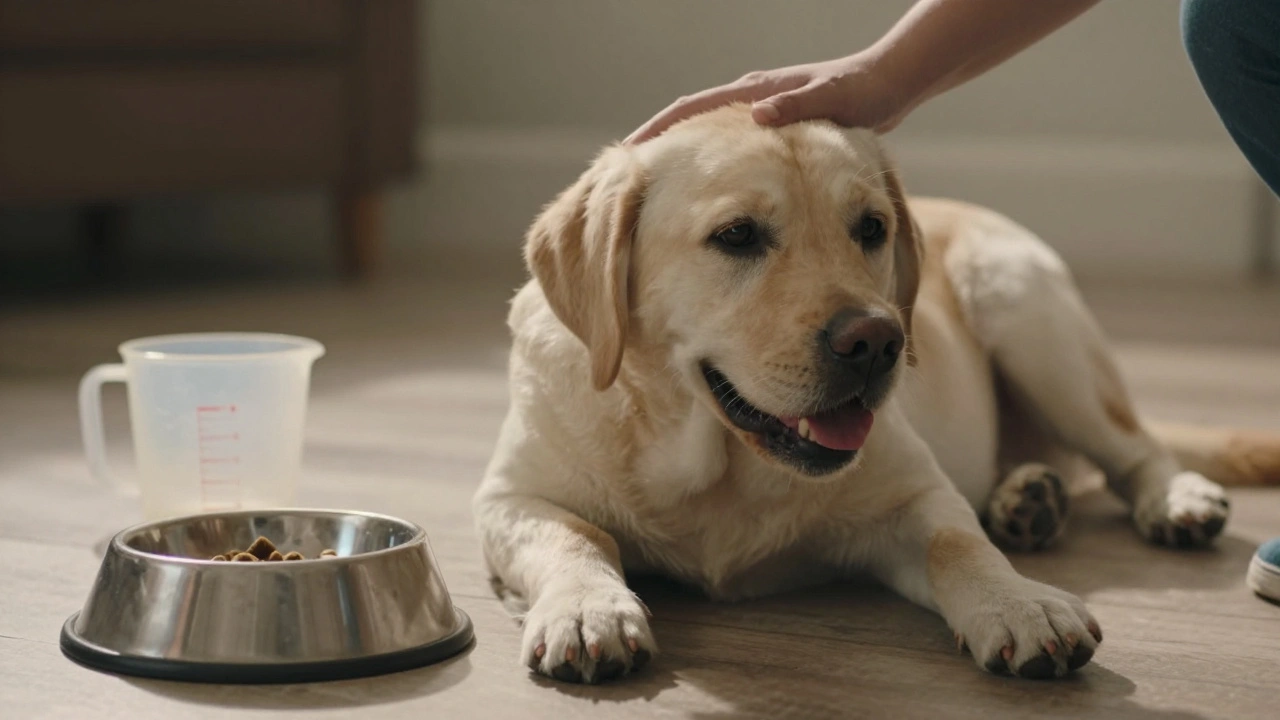
Most owners estimate portions. That’s how dogs get fat. Use a measuring cup. Weigh the food. Follow the feeding guide on the bag, not your gut. A 60-pound dog on a high-fiber diet might need only 1.5 cups per day-not the 2.5 cups they’ve been giving "since forever."
Weight loss in dogs isn’t about deprivation. It’s about smart nutrition. High-fiber formulas give your dog the fullness they crave without the calories they don’t need. It’s simple. It’s science. And for many dogs, it’s the difference between a short, painful life-and a long, happy one.