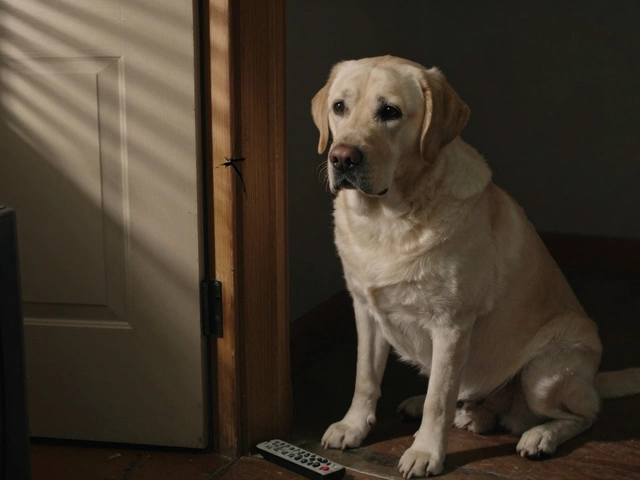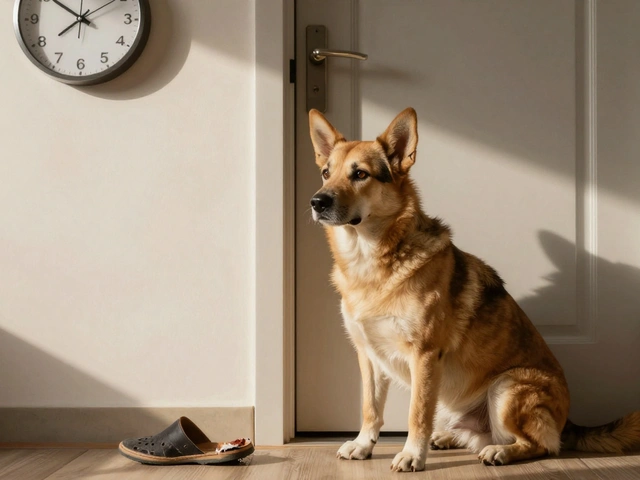
When your dog follows you from room to room, whines the second you step out the door, or destroys the couch the moment you leave, you’re not dealing with a bad dog-you’re dealing with hyper-attachment. This isn’t just clinginess. It’s a deep, anxious bond that turns love into a crisis. Unlike normal companionship, hyper-attachment makes your dog physically sick, emotionally overwhelmed, and behaviorally unstable when alone. And it’s more common than most owners realize.
What Exactly Is Hyper-Attachment?
Hyper-attachment in dogs is an extreme form of separation anxiety where the dog’s emotional regulation depends entirely on your presence. It’s not about boredom or mischief. It’s about panic. A dog with this condition can’t relax, rest, or even eat without you nearby. Studies from the University of Pennsylvania’s Animal Behavior Clinic show that 14% of dogs brought in for behavioral issues have severe separation distress, and nearly half of those cases are rooted in hyper-attachment-not poor training.
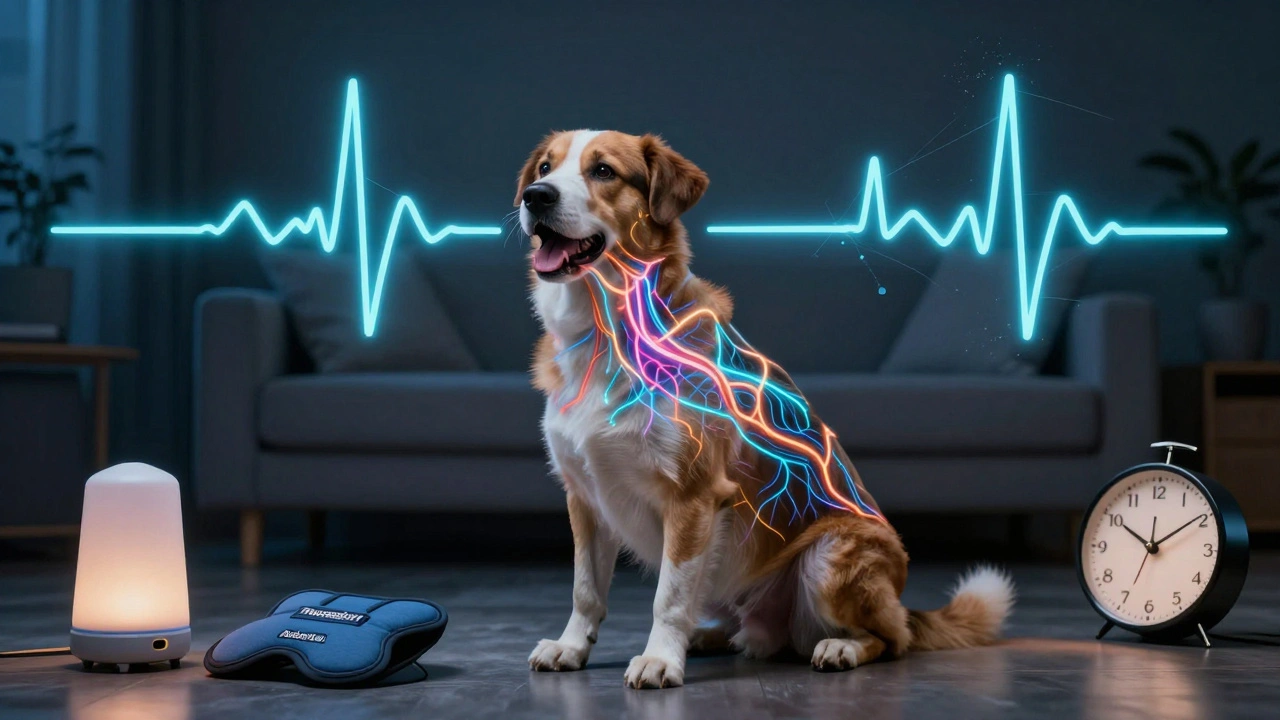
Think of it like this: your dog doesn’t just miss you when you leave. Their nervous system goes into overdrive. Their heart rate spikes, cortisol levels rise, and their brain locks into survival mode. This isn’t attention-seeking. It’s a neurological response to perceived abandonment.
Signs Your Dog Is Hyper-Attached
Not every dog that follows you around is hyper-attached. But if you notice three or more of these behaviors consistently, it’s time to act:
- Constantly staying within arm’s reach-even when you’re sitting still
- Whining, pacing, or trembling the moment you grab your keys or put on shoes
- Refusing to eat, drink, or sleep unless you’re in the same room
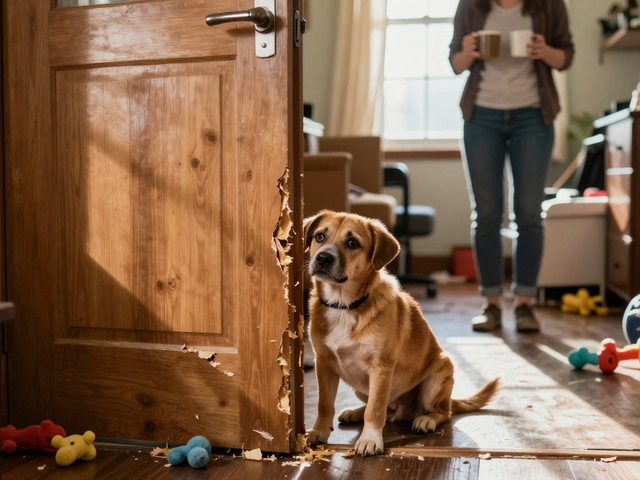
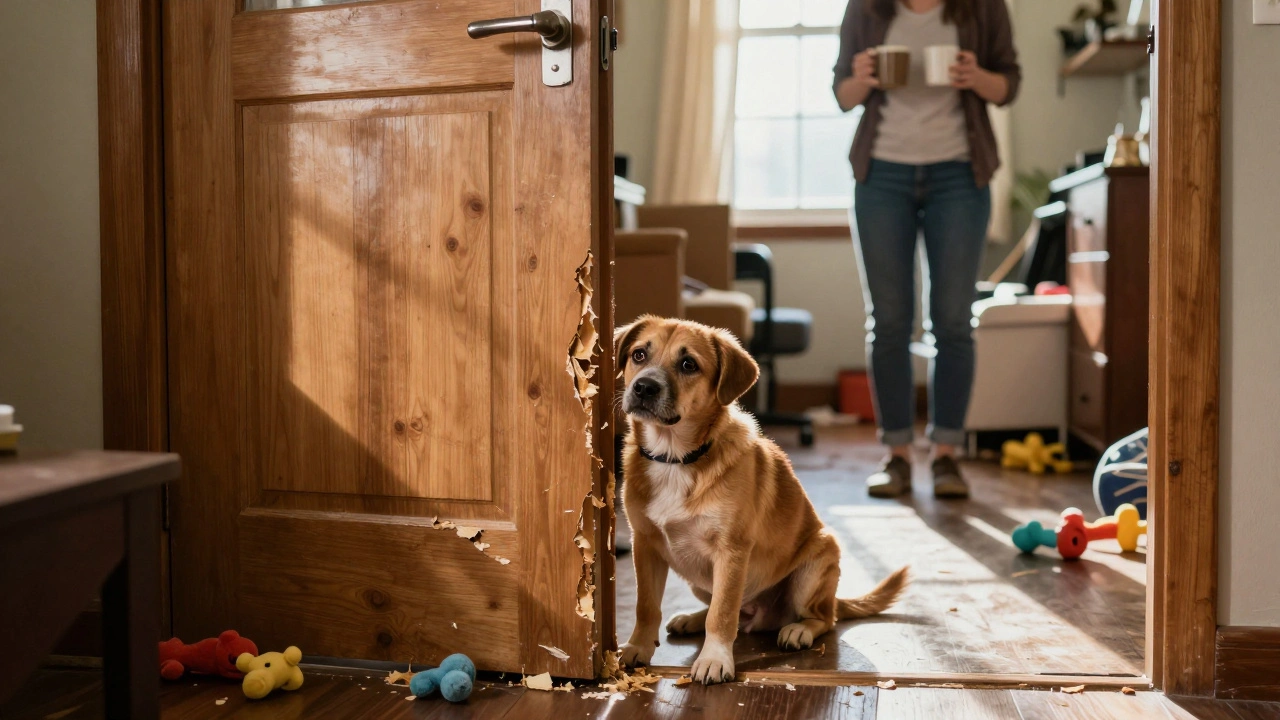
- Excessive licking, chewing, or scratching when left alone (often focused on doors or windows)
- Accidents in the house only when you’re gone, even if fully house-trained
- Overly excited greetings-jumping, barking, or hyperventilating when you return
- Following you into the bathroom, bedroom, or even while you shower
One client in Portland, a woman named Lisa, had a 3-year-old rescue mix named Milo. He slept on her chest every night. If she stood up to make coffee, he’d yelp. When she left for work, he chewed through two doors. She thought he was just lonely. He was terrified.
Why Does This Happen?
Hyper-attachment doesn’t come from too much love. It comes from inconsistent boundaries, trauma, or accidental reinforcement.
Many owners unknowingly train this behavior. Letting your dog sleep in bed with you, carrying them everywhere, or rushing to comfort them every time they whimper teaches them: My distress = your immediate attention. That’s a powerful loop.
Rescue dogs are especially prone. Dogs from shelters often experience multiple losses-first their litter, then their previous home, then maybe another foster family. Their brain learns: Attachment = temporary. So they cling harder, faster, and with more desperation.
Other triggers include:
- Sudden life changes (new job, move, divorce)
- Long periods of isolation (pandemic lockdowns)
- Lack of early socialization (under 16 weeks old)
- Overly protective parenting (never leaving the dog alone, even briefly)
What Not to Do
Most well-meaning owners make the same mistakes. Avoid these:
- Don’t punish-yelling, crate punishment, or shock collars only increase fear. Your dog isn’t being defiant. They’re in panic mode.
- Don’t give constant reassurance-coddling, petting, or talking soothingly when they’re anxious reinforces the idea that their distress is the problem to solve. It isn’t. Their lack of self-regulation is.
- Don’t leave them alone too abruptly-going from 24/7 companionship to 8 hours alone overnight is like throwing someone into deep water without training.
- Don’t rely on TV, toys, or calming supplements alone-these are band-aids. They don’t teach the dog how to be calm without you.
How to Fix It: A Step-by-Step Plan
Recovery takes time. But it’s possible. Here’s what actually works, based on clinical behavior protocols from the American Veterinary Society of Animal Behavior.
Step 1: Reset the Bond
Stop following your dog. Start ignoring them-on purpose.
For one week, do this:
- Don’t speak to them unless they’re calm and still (no whining, no jumping).
- Don’t make eye contact when they’re anxious.
- Only give attention when they’re relaxed-lying down, chewing a toy, or just resting.
This teaches them: Peaceful behavior gets love. Distress gets silence.
Step 2: Teach Alone Time (Gradually)
Start with 30 seconds. Not 30 minutes. Not 5 minutes. Thirty seconds.
Here’s how:
- Put your dog in a safe space (crate, gated room, or bed).
- Walk out the door. Wait 30 seconds. Come back. Don’t greet them. Just stand still.
- Repeat 5 times a day.
After three days, go to 45 seconds. Then one minute. Then two. If they panic, go back a step. Progress is measured in small, calm wins-not how long you can leave them.
Step 3: Build Independence
Teach your dog to be okay with distractions. Start with:
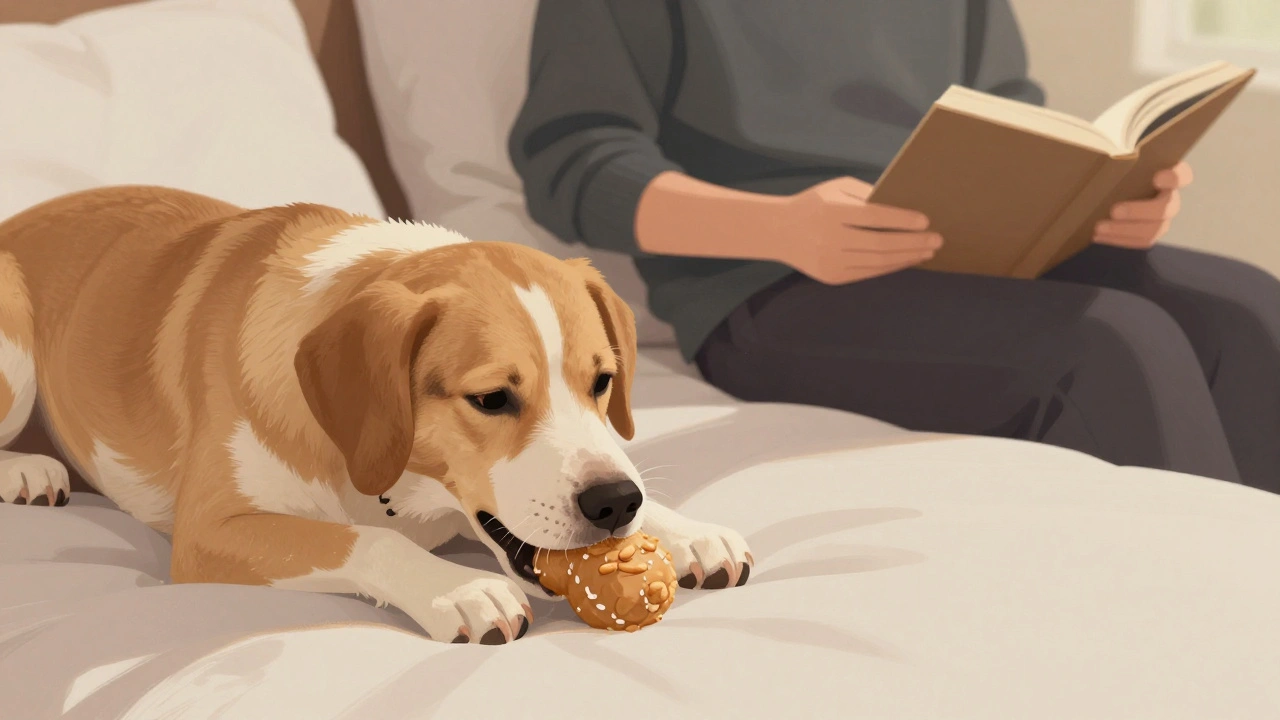
- Food puzzles (Kong, Buster Cube, or lick mat with frozen peanut butter)
- Chew toys that require effort (Nylabone, rope tug)
- Background noise (white noise machine, low-volume classical music)
Never give these items only when you leave. Give them during the day while you’re home. That way, the toy isn’t tied to your absence. It becomes a normal, calming activity.
Step 4: Practice Absences
Once they can handle 10 minutes alone, start practicing full routines:
- Get dressed like you’re leaving
- Pick up your keys
- Walk to the door
- Open it
- Step out
- Wait 30 seconds
- Come back
Do this 10 times a day. Don’t leave the house. Just go through the motions. This desensitizes them to the triggers that set off panic.
Step 5: Use Desensitization Tools
Some dogs need extra help. Consider:
- Adaptil diffusers (pheromone-based, proven in 2023 clinical trials to reduce anxiety by 42%)
- Calming wraps (Thundershirt, which reduces heart rate during stress)
- Low-dose melatonin (only under vet guidance-typically 1-3 mg for medium dogs)
These aren’t cures. They’re tools to reduce panic while you rebuild confidence.
When to See a Professional
If after 6 weeks of consistent effort, your dog still can’t handle 15 minutes alone-or if they’re injuring themselves, vomiting, or refusing food-you need help.
Look for a certified applied animal behaviorist (CAAB) or a veterinary behaviorist (DACVB). They’ll use:
- Video monitoring to track behavior patterns
- Customized exposure schedules
- Medication (like fluoxetine) if anxiety is neurologically rooted
Medication isn’t a shortcut. It’s a bridge. It helps the dog’s brain calm down enough to learn new behaviors.
Real Change Takes Patience
One dog in Portland, a 5-year-old Border Collie named Scout, took 11 months to stop shredding the living room. His owner kept at it. She didn’t give up when he broke a window. She didn’t rush. She stuck to the steps. Now, he sleeps in his bed while she works from home. He doesn’t follow her everywhere. He’s calm. He’s happy.
Hyper-attachment isn’t a life sentence. It’s a learned behavior-and learned behaviors can be unlearned. But it takes consistency, not force. Calmness, not chaos. And time, not quick fixes.
Prevention Is Easier Than Repair
If you have a puppy or new dog:
- Start alone-time training at 8 weeks old-even 5 minutes at a time
- Let them sleep in a separate space from day one
- Don’t respond to every whimper
- Teach them to be entertained alone with toys
Early independence prevents hyper-attachment before it starts. It’s not cold. It’s caring.