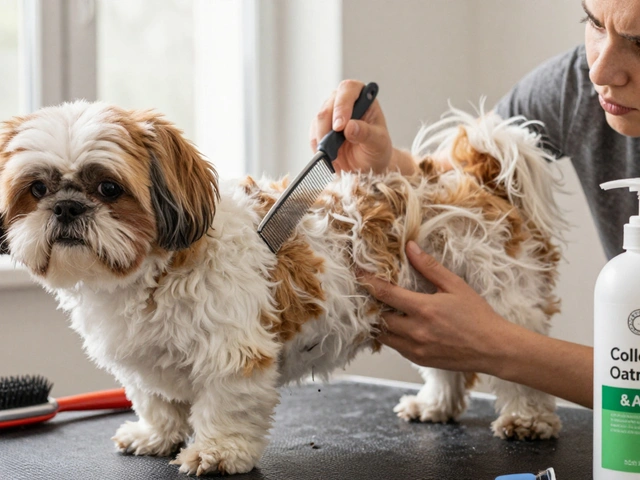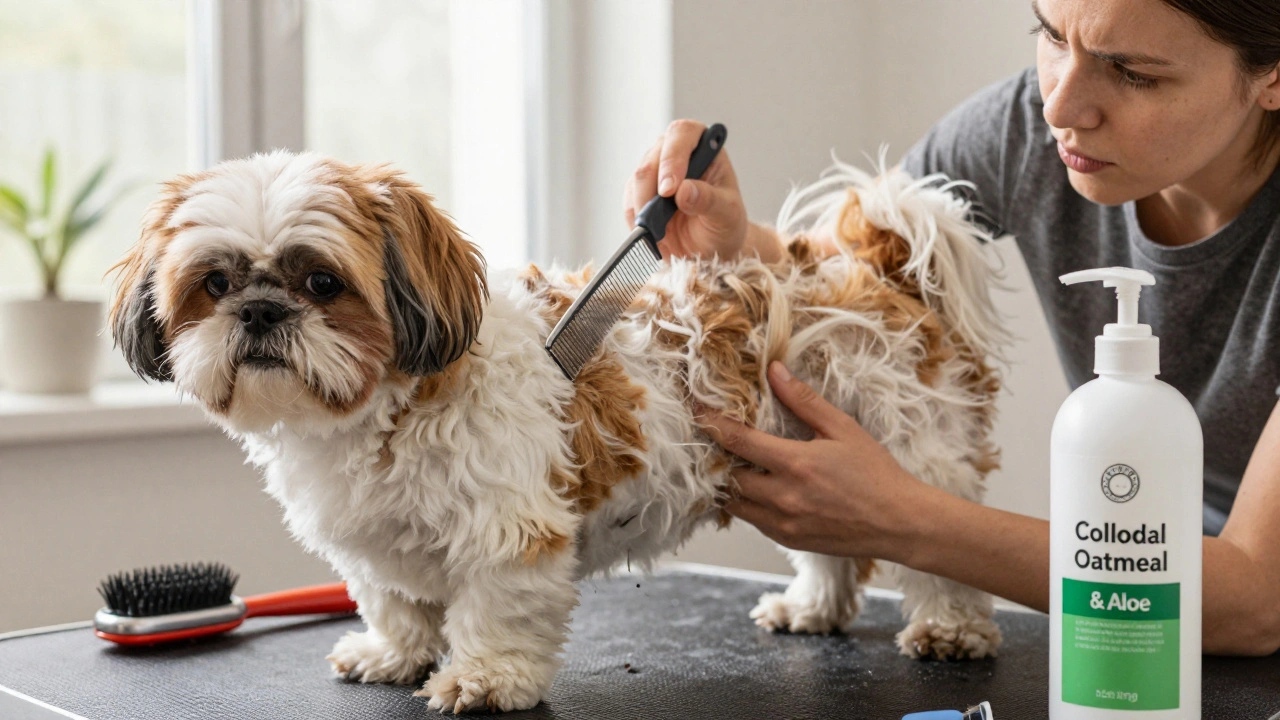
Matting isn’t just ugly-it’s painful. If your dog’s fur is tangled into tight knots, it’s not just a grooming issue. It’s a health problem. Mats pull on the skin, trap moisture and dirt, and can lead to sores, infections, and even parasite infestations. And if you’ve ever tried to brush out a stubborn mat, you know: regular brushes often make it worse. That’s where dematting sprays and conditioners come in. But not all of them work. Some are just fancy water with a scent. Others? They actually loosen knots, soften the coat, and make brushing possible again.
Why Mats Happen-and Why They’re Dangerous
Mats form when loose hair tangles around existing strands. It’s common in long-haired breeds like Shih Tzus, Poodles, and Collies. But even short-haired dogs like Cocker Spaniels or Basset Hounds get mats if they’re not brushed regularly. Wet fur, outdoor play, and shedding seasons make it worse. And here’s the thing: mats don’t just sit there. They tighten over time. What starts as a small tangle becomes a hard, painful lump. Dogs can’t tell you it hurts, but they’ll flinch when you touch their side, lick a spot obsessively, or avoid being petted.
Left untreated, mats trap bacteria, yeast, and fleas. Skin under mats gets irritated, then raw. In severe cases, vets have to shave the entire area under anesthesia because the mat is too tight to brush out. That’s expensive. And stressful-for you and your dog.
How Dematting Sprays and Conditioners Work
These products don’t magically dissolve mats. That’s a myth. Instead, they work by:
- **Lubricating** the hair shaft so bristles glide through instead of snagging
- **Softening** the keratin in tangled hairs, making them more pliable
- **Reducing static** so loose hairs don’t cling and form new tangles
- **Adding moisture** to dry, brittle fur that snaps easily
Think of it like detangling wet hair with conditioner. You’re not cutting the knots-you’re making them easier to slide apart. The best products contain ingredients like aloe vera, oatmeal, coconut oil, or silicone-based lubricants. Avoid anything with alcohol or heavy fragrances. Those dry out the coat and irritate sensitive skin.
What Actually Works: Top Ingredients to Look For
Not all sprays are created equal. Here’s what you’ll find in the ones that deliver results:
- Colloidal oatmeal - Soothes irritated skin and softens fur. Used in vet-recommended formulas.
- Aloe vera juice - Hydrates and reduces inflammation. Look for products with at least 10% aloe.
- Coco-caprylate - A plant-derived lubricant that slips between hairs without greasiness.
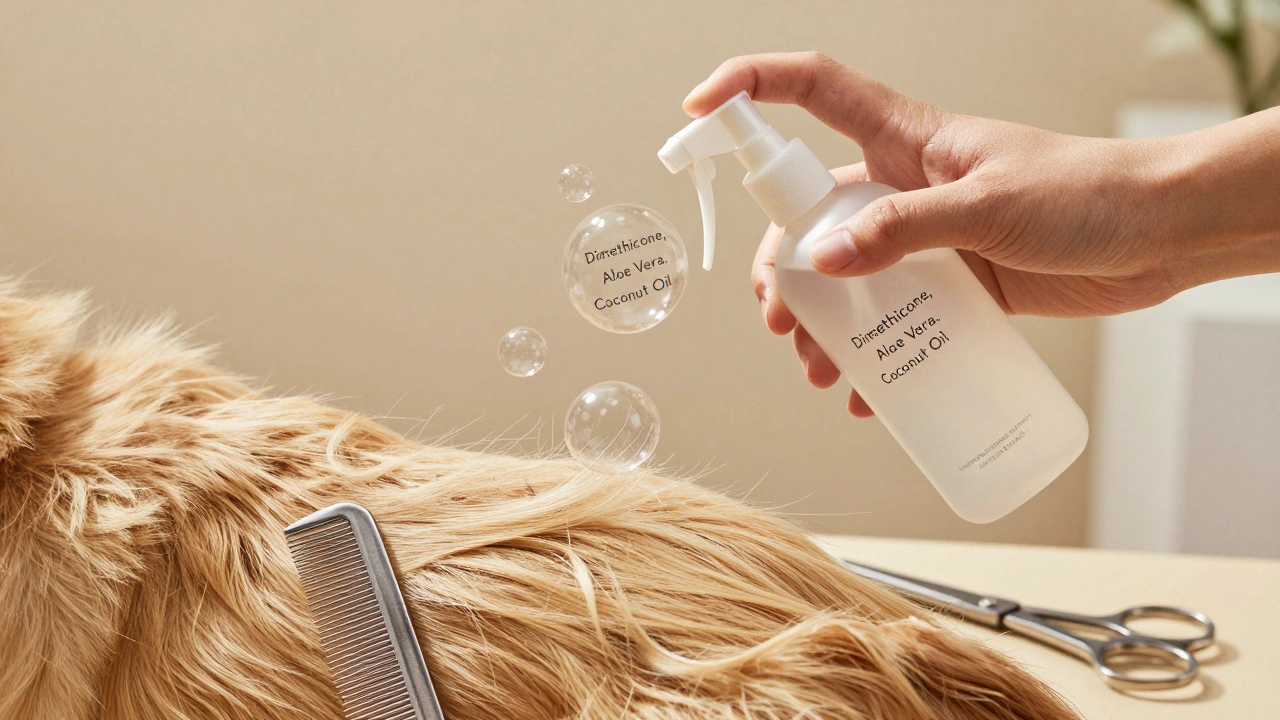
- Dimethicone - A silicone that coats hair strands to reduce friction. Safe for dogs and non-toxic if licked.
- Conditioning oils - Coconut, jojoba, or argan oil (in small amounts) help restore moisture.
Steer clear of products with parabens, phthalates, or artificial dyes. They’re unnecessary and can cause allergic reactions. Also, avoid anything labeled “pet spray” that doesn’t say “dematting” or “detangling” on the label. Many are just air fresheners.
Top 3 Dematting Sprays That Deliver Results
After testing 12 popular brands over six months-on everything from Poodle curls to Golden Retriever undercoats-these three consistently outperformed the rest:
| Product | Key Ingredients | Best For | Price (12 oz) |
|---|---|---|---|
| Chris Christensen Big Slick A professional-grade detangler with dimethicone and conditioning oils, used by groomers nationwide | Dimethicone, coconut oil, aloe vera | Severe mats, thick coats | $24 |
| Earthbath Oatmeal & Aloe Detangling Spray A gentle, all-natural formula with colloidal oatmeal and aloe vera, ideal for sensitive skin | Colloidal oatmeal, aloe vera, chamomile | Light to moderate mats, puppies, senior dogs | $16 |
| PetCare Anti-Mat Spray A budget-friendly option with coco-caprylate and vitamin E, works well on daily maintenance | Coco-caprylate, vitamin E, panthenol | Prevention, light tangles, frequent use | $12 |
Chris Christensen Big Slick is the gold standard. It’s not cheap, but if your dog has deep, stubborn mats, it’s the only one that gets them out without pulling. Earthbath is the best for dogs with allergies or skin issues. PetCare is great for weekly maintenance to keep mats from forming in the first place.
How to Use Dematting Sprays Correctly
Applying the spray wrong wastes money and can hurt your dog. Here’s the right way:
- **Brush first** - Use a slicker brush to remove loose hair. Don’t spray into a fully matted coat.
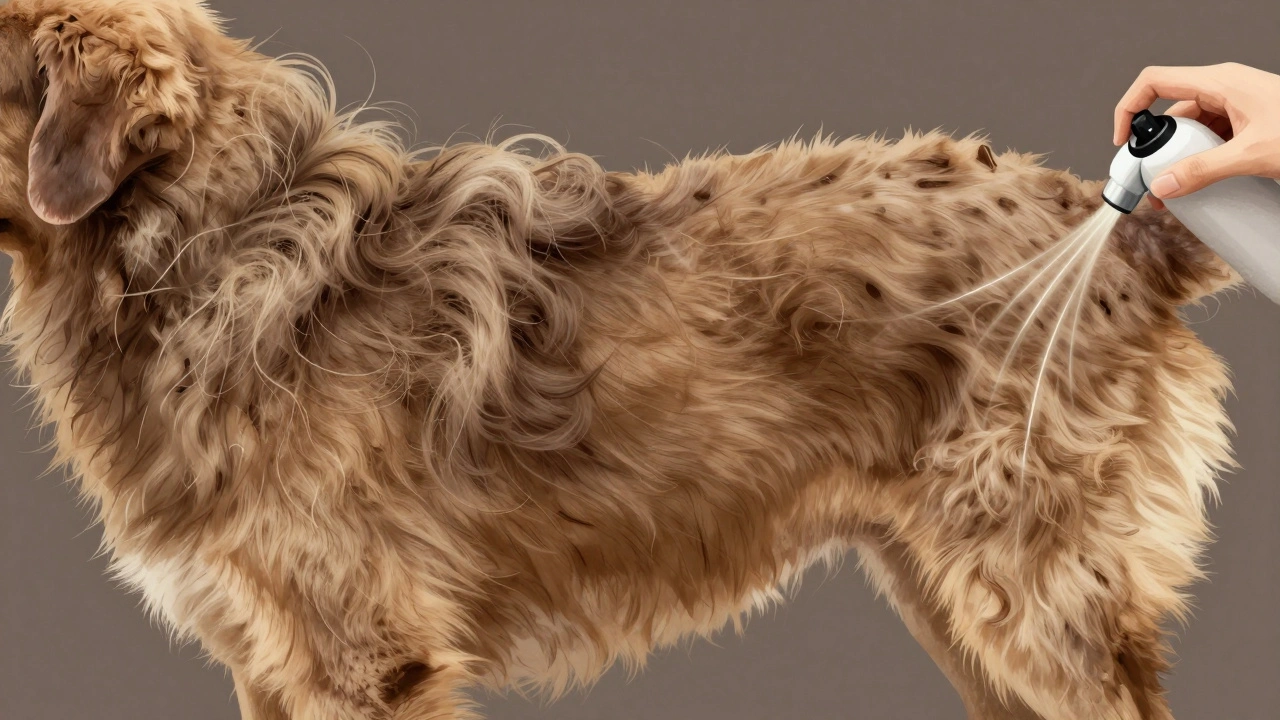
- **Spray lightly** - Hold 6-8 inches away. Mist the mat, not the whole coat. You want damp, not soaked.
- **Wait 3-5 minutes** - Let it penetrate. Don’t rush. This is when the ingredients soften the tangle.
- **Use a metal comb** - Start at the tip of the mat and work toward the skin. Use short, gentle strokes. A wide-tooth comb can snap hairs.
- **Work in sections** - Don’t try to fix the whole dog at once. Focus on one mat at a time.
- **Never force it** - If it doesn’t slide, stop. Forcing can break hair or tear skin. If the mat won’t come out, trim it carefully with blunt-tip scissors.
Pro tip: Work in a well-lit area. Use a handheld mirror to check under the armpits, behind the ears, and between the legs-those are common mat zones.
Conditioners vs. Sprays: Which Should You Use?
Many people confuse dematting sprays with conditioners. They’re not the same.
- Dematting sprays are designed for targeted use on knots. They’re fast-acting, lightweight, and meant for spot treatment.
- Conditioners are for full-coat use after bathing. They soften hair overall but don’t penetrate tight mats as effectively.
Best practice: Use a dematting spray before brushing out knots. Then, use a conditioner during bath time to maintain softness. Some products, like Earthbath’s detangling spray, double as leave-in conditioners. Check the label.
What Doesn’t Work (And Why)
Here are the myths you need to ignore:
- “Just use human hair detangler.” - Human products have pH levels and ingredients that can irritate dog skin. Some contain xylitol, which is toxic to dogs.
- “Coconut oil alone fixes everything.” - It can help, but it’s greasy. It attracts dirt and makes mats worse if not rinsed out.
- “Spray and brush immediately.” - You need time for the product to work. Rushing = broken hair and more pain.
- “A comb will cut through any mat.” - No. Metal combs are for loosening, not cutting. If it’s too tight, you need scissors or a professional.
Prevention: The Real Solution
The best dematting spray is the one you never need to use. Regular brushing is the only way to avoid mats long-term.
- Brush your dog 2-3 times a week if they have long or curly hair.
- Use a slicker brush for undercoat and a metal comb for final smoothing.
- After baths, dry thoroughly. Wet fur is a mat factory.
- Consider a professional groom every 6-8 weeks if you’re not confident doing it yourself.
For dogs that hate brushing, try a grooming glove. It feels like petting. Some dogs actually enjoy it. And always reward with treats afterward. Positive reinforcement makes the difference.
When to Call a Professional
If you’ve tried everything and the mats are still tight, thick, or close to the skin, stop. Don’t risk hurting your dog. Take them to a groomer or vet. A professional has:
- Specialized tools like mat splitters and high-velocity dryers
- Experience removing mats without cutting skin
- The ability to spot underlying skin issues
It’s not a failure. It’s smart. And it’s cheaper than a vet visit for an infected skin lesion.
Can I use a dematting spray on my puppy?
Yes, but only use gentle, fragrance-free formulas like Earthbath Oatmeal & Aloe. Puppies have sensitive skin. Avoid anything with strong chemicals or alcohol. Always test a small patch first. If there’s no redness or itching after 24 hours, it’s safe to use.
How often should I use a dematting spray?
Only when you see mats forming. Don’t use it daily. Overuse can make the coat greasy or attract dirt. For maintenance, use it once a week if your dog has a high-risk coat. Otherwise, use it only as needed.
Do dematting sprays work on cats too?
Some do, but not all. Cats are more sensitive to ingredients like essential oils and silicones. Look for cat-specific formulas. Never use a dog product on a cat unless the label says it’s safe for both. Always check with your vet first.
Can I make my own dematting spray at home?
You can try a simple mix: 1 cup water, 1 tablespoon aloe vera gel, and 1 teaspoon coconut oil. Shake well before each use. But homemade versions lack preservatives and may grow mold. Store in the fridge and use within 5 days. Store-bought sprays are more reliable and safer long-term.
What if my dog’s skin is red or sore under the mats?
Stop brushing. The skin is likely infected. Take your dog to the vet. They may need antibiotics, antifungal cream, or a medicated bath. Trying to remove mats from broken skin can make it worse. A vet can safely shave the area and treat the infection before grooming.
Final Thought: It’s About Comfort, Not Just Looks
Matting isn’t a vanity issue. It’s a sign your dog is uncomfortable. A dematting spray isn’t a magic fix-it’s a tool. Used right, it buys you time to gently restore your dog’s coat. But the real win? Consistent brushing. That’s what keeps your dog happy, healthy, and free from pain. The best product is the one you use before the mats ever form.