Quick Wins for New Puppy Parents
- Stick to a rigid feeding and watering schedule.
- Take your pup out every 30 to 60 minutes when they are awake.
- Use a high-value treat immediately after they finish their business outside.
- Avoid punishing accidents; it only teaches them to hide where they go.
Building the Foundation with a Routine
Dogs crave predictability. When their world is predictable, their bladder becomes more predictable. If you feed your puppy at random times, they'll go at random times. Start by establishing a 'potty window.' For most pups under four months, this means going out first thing in the morning, after every nap, after every meal, and right before bed.
A common mistake is waiting for the puppy to 'tell' you they need to go. While some dogs paw at the door, many just walk straight to the rug. You have to be the one initiating the trip. If you're working from home, set a timer on your phone for every two hours. Even if they seem fine, a proactive trip to the yard prevents the accidental puddle that ruins your afternoon.
The Role of Crate Training in Success
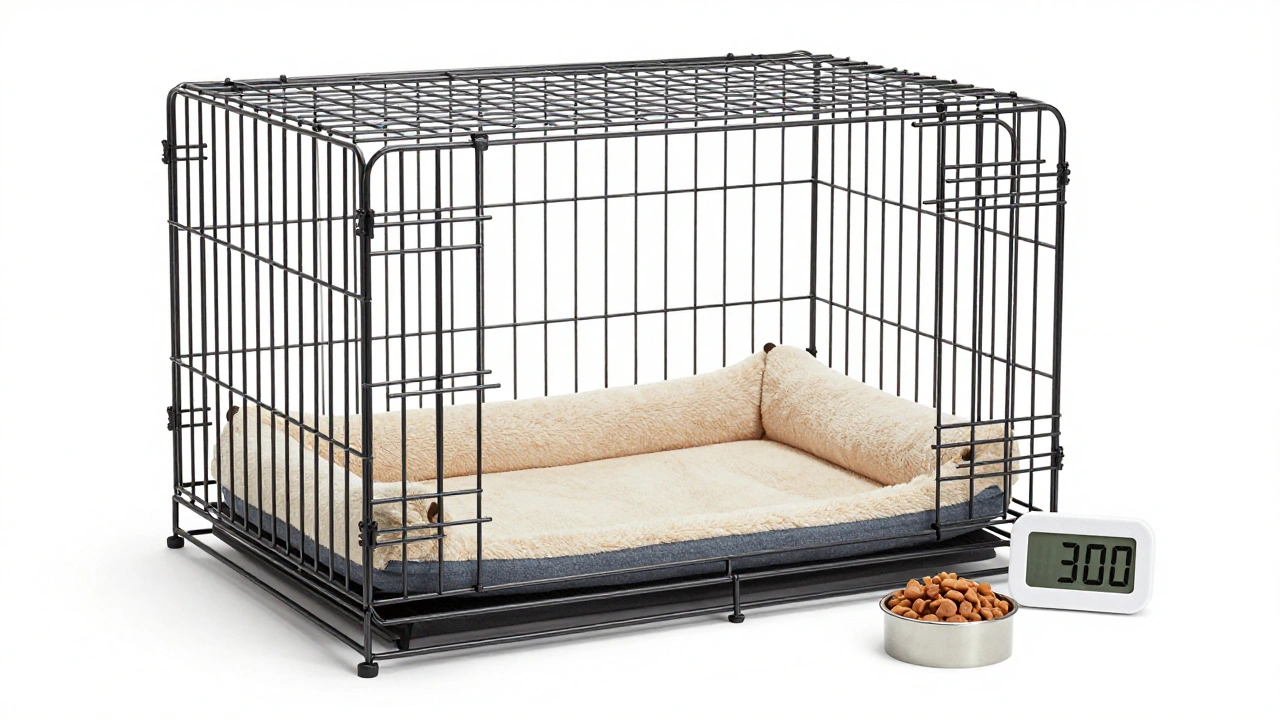
You can't monitor a puppy 24/7 without losing your mind. This is where Crate Training is a method of using a confined indoor space to encourage a dog to hold their urine and feces. By utilizing the dog's instinct to avoid soiling where they sleep, a crate acts as a powerful tool for bladder control.
The key is size. If the crate is too big, your puppy will simply pee in one corner and sleep in the other. The space should be just large enough for them to stand up, turn around, and lie down. When they've been in the crate for a few hours, the very first thing they should do upon release is head outside. Don't stop for breakfast or toys; go straight to the grass.
| Age of Puppy | Estimated Max Hold Time | Frequency of Trips | Primary Goal |
|---|---|---|---|
| 8-12 Weeks | 2-3 Hours | Every 30-60 Mins | Establishing the 'Outside' Concept |
| 3-4 Months | 4-5 Hours | Every 2-3 Hours | Increasing Bladder Strength |
| 5-6 Months | 6-8 Hours | Every 3-4 Hours | Generalizing the Routine |
Mastering the Art of Positive Reinforcement
If you scold a puppy for an accident, they don't think, 'I shouldn't have peed on the carpet.' They think, 'My human is scary when I pee.' This leads to "stealth peeing," where they hide behind the sofa to avoid your reaction. Instead, focus all your energy on the wins.
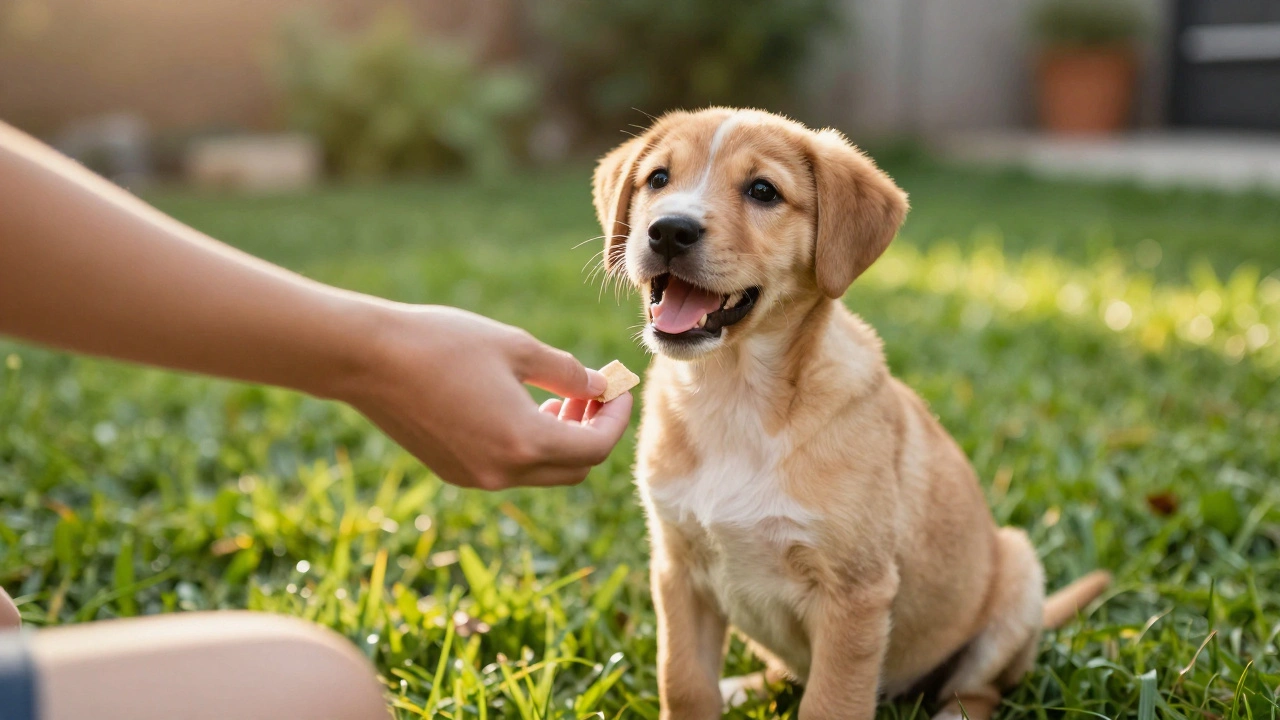
The moment your puppy finishes their business outside, throw a party. Use Positive Reinforcement, which is the addition of a reinforcing stimulus following a behavior that makes it more likely that the behavior will occur again in the future. Give them a small piece of boiled chicken or a tiny dog treat immediately. The timing is critical; if you wait until you get back inside to give the treat, the puppy thinks they are being rewarded for coming inside, not for peeing.
Dealing with Accidents and Regressions
Accidents will happen. You might have a perfect week, and then suddenly, your puppy has a "relapse." This often happens during teething or when the household routine changes. When you find a mess, don't make a scene. Simply clean it up using an Enzymatic Cleaner, which is a cleaning solution containing proteins that break down the organic molecules of urine and feces to remove the scent completely. Regular soap leaves behind a pheromone trail that tells the dog, 'This is a bathroom,' which practically invites them to go there again.
If you catch them in the act, a gentle, sharp "Oops!" is enough to interrupt them. Immediately scoop them up and carry them outside. This prevents them from finishing the act inside and associates the movement toward the door with the need to go.
Management Strategies for Different Environments
Not every puppy has a fenced-in yard. If you live in an apartment, the process takes a bit more effort. You'll need to get your puppy used to the sounds of the elevator or the stairs. For many city dwellers, a Potty Patch or a designated grass area on a balcony serves as a bridge until the puppy can handle longer trips to the park.
Use a specific "potty spot" outside. The scent of previous visits triggers the urge to go. By taking them to the same square foot of grass every time, you're using their own biology to speed up the process. If they just sniff around for ten minutes without going, bring them back inside, put them in the crate for 15 minutes, and try again. This prevents them from thinking that outdoor time is purely for playing.
When to Seek Professional Help
While most puppy house training issues are behavioral, some are medical. If your puppy is suddenly unable to hold their urine despite a strict routine, or if they seem to be straining, it could be a urinary tract infection (UTI). A quick visit to the vet can rule this out. Additionally, if you've been consistent for over a month and see zero progress, a certified dog trainer can help identify if there's a communication gap or a deeper anxiety issue hindering their progress.
How long does it usually take to house train a puppy?
Most puppies take anywhere from 4 to 6 months to be fully reliable, though some can master it in a few weeks. It depends on the breed's intelligence, the puppy's natural bladder capacity, and most importantly, how consistent the owner is with the schedule. If you miss a few days of a routine, expect a slight setback in progress.
Can I use puppy pads to speed up the process?
Actually, puppy pads can often slow down the process. Pads teach a puppy that it is okay to pee inside the house as long as it's on a specific material. For many dogs, the transition from a pad to grass is confusing. If you use them, use them only in a very specific area and gradually move the pads closer to the door over time.
What should I do if my puppy has an accident right after coming inside?
This is common and usually happens because the puppy got distracted by the sights and smells of the outdoors and forgot to go. The fix is simple: don't let them roam the house immediately after coming in. Keep them on a leash or in a confined area for 10-15 minutes. If they haven't gone, take them right back outside. This tells them that the priority is the bathroom, not the living room.
Is it okay to let my puppy out alone?
During the training phase, it's best to accompany them. If you just open the door, they might spend the whole time chasing a butterfly and forget to pee. By staying with them, you can use a verbal cue like "go potty" and reward the specific action of eliminating, which reinforces the behavior much faster.
Does the brand of food affect house training?
While the brand itself doesn't dictate training, the quality and moisture content do. Low-quality fillers can cause looser stools or more frequent urination. Ensure your puppy is on a high-protein puppy-specific diet and keep water available, but consider picking up the water bowl two hours before bedtime to reduce middle-of-the-night accidents.
Next Steps and Troubleshooting
If you've followed the routine and your puppy is still struggling, try these adjustments based on your situation:
- For the "Distracted Puppy": Use a long leash even in the yard. This keeps them focused on the potty spot rather than exploring the entire garden.
- For the "Nightly Leaker": If your pup wakes up at 3 AM, don't make it a party. No talking, no playing. Carry them out, let them go, and put them straight back in the crate.
- For the "Anxious Puppy": If your dog is too scared to go while you're watching, stand a few feet away and give them some space, but remain visible so you can reward them the moment they finish.