Key Takeaways
- Soft eyes usually mean love or a request for attention.
- Hard staring is often a sign of aggression or a demand for space.
- Averting gaze is a a "peace offering" used to avoid conflict.
- Oxytocin, the "love hormone," is released during affectionate eye contact between dogs and their owners.
The Biology of the Gaze
To understand why dogs look at us, we have to look at their evolution. In the wild, Canis lupus familiaris (the domestic dog) evolved from wolves. For a wolf, a direct, unblinking stare is a threat. It's a way of saying, "I am stronger than you, and I am ready to fight for this resource." However, dogs have spent thousands of years adapting to live with humans. They've learned that we don't follow wolf rules.
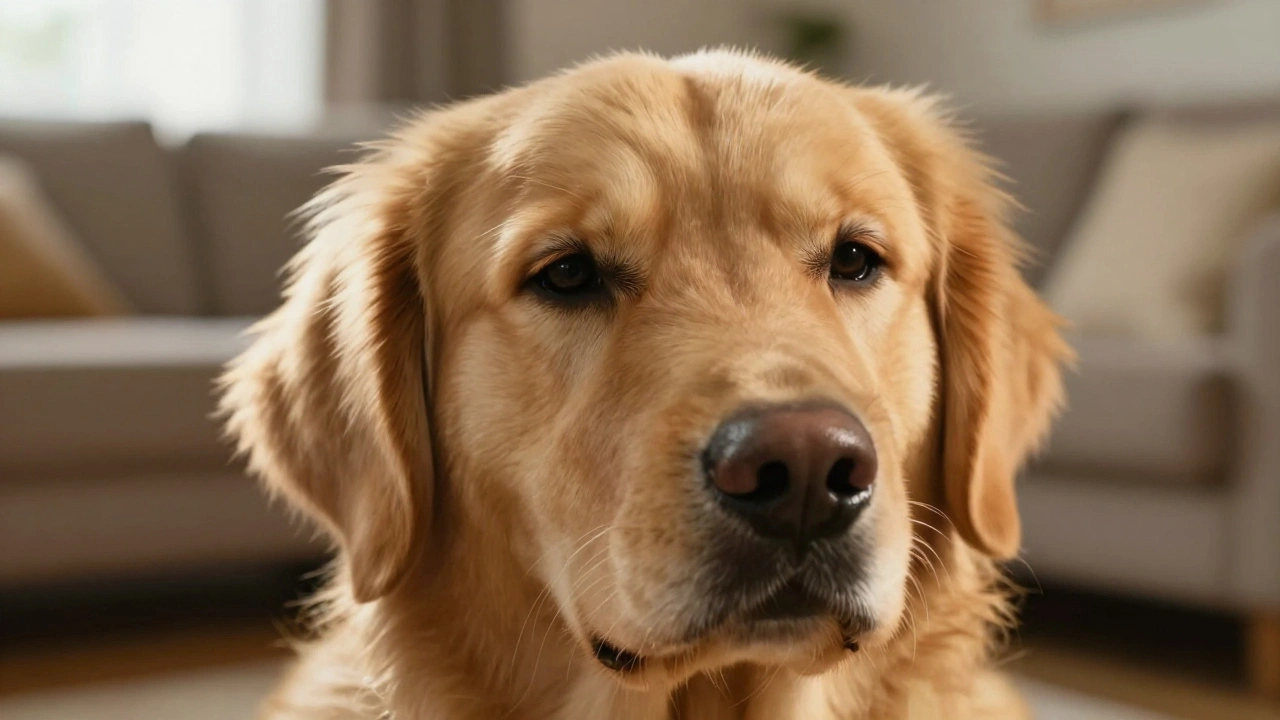
Research into canine cognition shows that dogs have developed specific muscles around their eyes-specifically the inner brow-that allow them to make "puppy dog eyes." This isn't just a coincidence; it's an evolutionary trait that triggers a nurturing response in humans. When a dog looks at you with soft, wide eyes, they aren't just being cute; they are using a biological trigger to increase the likelihood of getting a treat or a belly rub.
Connection: The Oxytocin Loop
When you and your dog lock eyes in a relaxed setting, something incredible happens in your brain. You're both releasing Oxytocin, a hormone linked to social bonding and trust. A study involving dogs and their owners found that this "gaze-loop" creates a positive feedback cycle. The more you look at each other with affection, the more oxytocin is released, which strengthens the emotional attachment.
This is very different from the eye contact humans have with other species. For example, staring at a cat often feels like a provocation. But with dogs, the connection is deeply rooted in their role as social partners. If your dog leans in and looks at you with relaxed eyelids and a slightly open mouth, they are essentially telling you that you are their safe space.
Confidence and Dominance: The "Hard Stare"
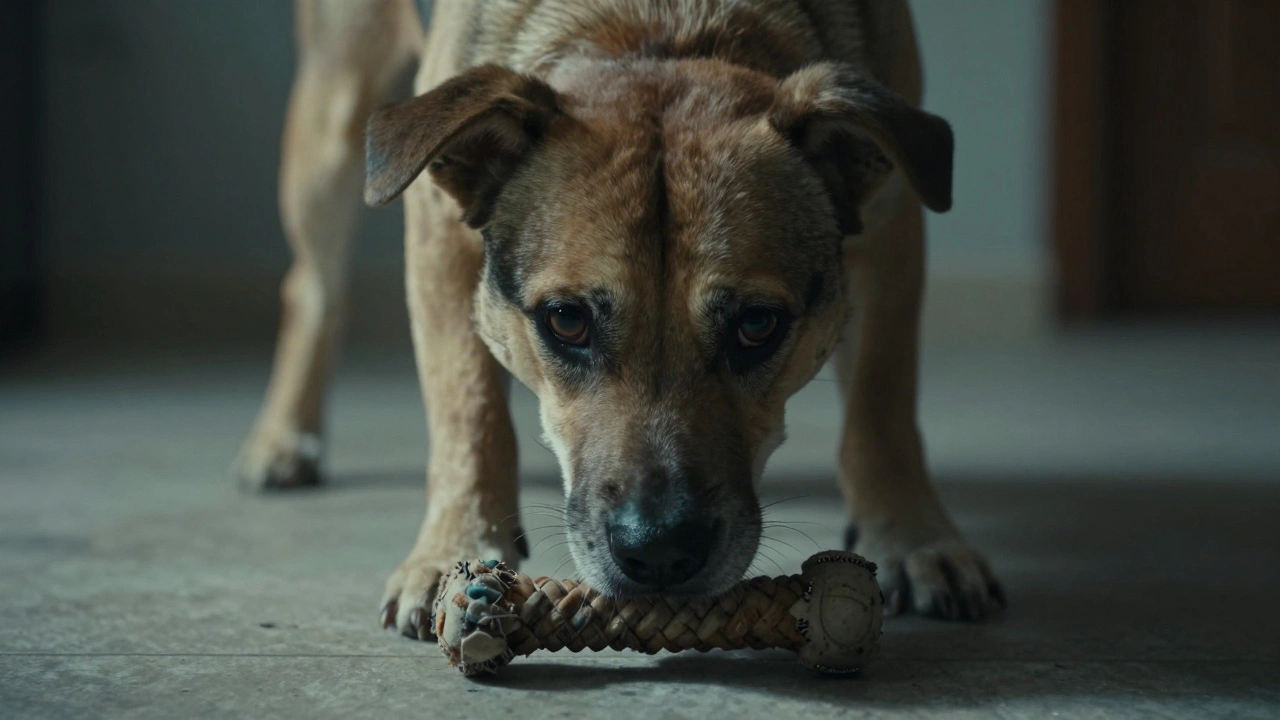
Not every look is a cuddle request. Sometimes, eye contact is about power. In the world of dog behavior, we distinguish between a "soft gaze" and a "hard stare." A hard stare is characterized by dilated pupils, a fixed head position, and a lack of blinking. This is often a sign of Resource Guarding-where a dog stares at you to warn you to stay away from their toy or food bowl.
If you see your dog staring intensely at another dog at the park, they are assessing the other animal's confidence. If the second dog doesn't blink or look away, it's a signal that they are not intimidated. This is where conflicts often start. The failure to "de-escalate" via a gaze shift can lead to a physical altercation. If you notice this rigid posture, it's time to step in and distract them before the situation boils over.
| Gaze Type | Physical Signs | Meaning | Appropriate Response |
|---|---|---|---|
| Soft Gaze | Blinking, relaxed brow, squinting | Affection, trust, curiosity | Reciprocate with soft tones and pets |
| Hard Stare | Unblinking, rigid head, wide eyes | Threat, challenge, intense focus | Give space, avoid direct eye contact |
| Averting Gaze | Looking away, turning head | Submission, anxiety, peace-making | Stop the pressure; give them a break |
| The "Side-Eye" | Whale-eye (whites showing) | Stress, discomfort, warning | Immediately remove the stressor |
Conflict Avoidance: The Art of Looking Away
In dog language, looking away is just as important as looking at something. This is called a "calming signal." If a dog feels overwhelmed or intimidated, they will deliberately break eye contact. This is their way of saying, "I'm not a threat, please don't hurt me" or "I'm not interested in fighting with you."
Many owners make the mistake of forcing their dog to "look them in the eye" during training or when scolding. For a dog, being forced to maintain eye contact with a dominant or angry human can be terrifying. It feels like a confrontation. If your dog looks away while you're talking to them, they aren't being stubborn or ignoring you-they are actually trying to keep the peace. Respecting this signal can actually make your dog more confident in the long run.
Interpreting the "Whale Eye"
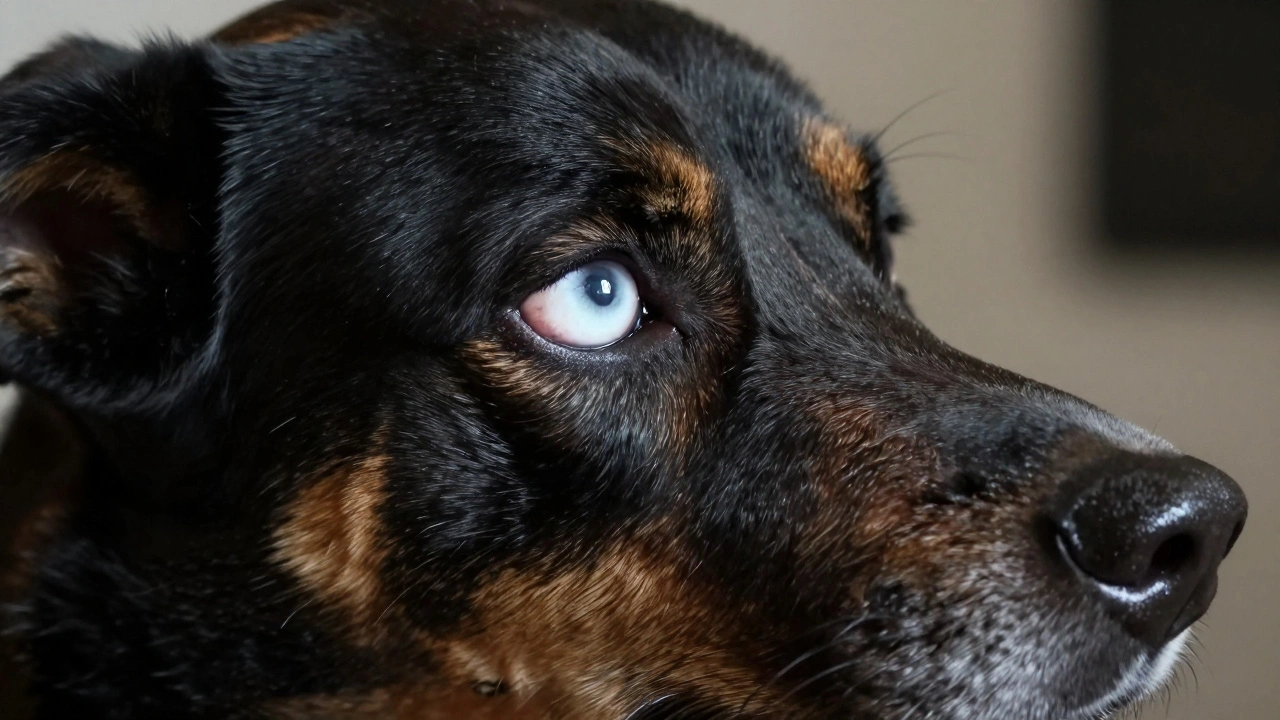
One of the most critical things to recognize is the Whale Eye. This happens when a dog keeps their head still but shifts their eyes to the side, leaving a visible crescent of the white part of the eye (the sclera). This is almost never a sign of affection.
Whale eye is a high-stress signal. It often appears when a dog is feeling trapped or protective. For example, if you try to take a treat out of their paw and they give you the whale eye, they are telling you they are reaching their limit. If you ignore this, the next step in their communication chain is often a growl or a snap. When you see the whites of their eyes, the best move is to stop what you're doing and give the dog some distance.
Training the Gaze for Better Communication
You can actually use eye contact to improve your relationship with your dog through positive reinforcement. The "Look at Me" command is a staple in Positive Reinforcement Training. By rewarding your dog for choosing to make eye contact during a distracting situation (like when another dog passes by), you're teaching them to check in with you for guidance rather than reacting to the environment.
The key is to make the eye contact a choice. Instead of demanding a stare, wait for them to look at you voluntarily and then provide a high-value treat. This transforms the gaze from a potential source of tension into a signal of partnership and cooperation. It builds a bridge of trust that makes other training tasks much easier.
Why does my dog stare at me while I'm eating?
This is usually a combination of food motivation and a learned behavior. Your dog has noticed that staring occasionally leads to a scrap of food falling or you giving in to their "puppy dog eyes." It's less about dominance and more about a calculated attempt to get a reward.
Is it ever okay to stare back at a strange dog?
Generally, no. In canine social circles, a direct stare from a human can be perceived as a challenge or a threat by an unfamiliar dog. If you're meeting a new dog, it's better to look slightly to the side and let them approach you on their own terms.
My dog looks away when I'm angry; are they guilty?
No, dogs don't experience guilt in the way humans do. When they look away, they are reacting to your body language and tone of voice. They recognize you are upset and are using "calming signals" to try and lower the tension in the room.
How can I tell the difference between a "loving look" and a "demanding look"?
Look at the rest of the body. A loving look is accompanied by a relaxed posture, a wiggly bottom, and soft eyelids. A demanding look is usually more rigid, with a fixed head and a focused, intense expression, often paired with a paw touch or a whine.
Can blind dogs still use eye contact?
While they can't see, blind dogs often orient their heads toward your face to pick up scent and sound cues. They may still "aim" their gaze toward you as a social habit, maintaining the emotional connection through other senses.
What to Do Next
If you've noticed your dog is using a lot of "hard stares" or "whale eyes," it might be a sign that they are feeling stressed in their environment. Consider working with a certified behaviorist to identify the triggers. For most of us, however, the goal is simply to enjoy the bond. Next time your dog gives you that soft, soul-searching look, just lean in and give them some love-you're both benefiting from a little oxytocin boost.