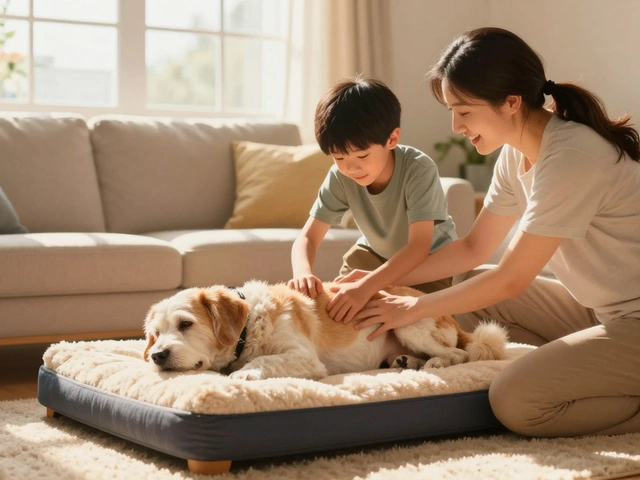
When your dog hits their golden years, every step becomes a quiet battle. Arthritis creeps in. Joints stiffen. The once-easy leap onto the couch now takes three tries and a sigh. You don’t need fancy gadgets or expensive treatments to help them move better-you need a smart, simple system. Think of it like mapping out a safer, smoother path through their world. That’s what senior dog mobility maps are all about: ramps, rugs, and routes designed for their changing body, not your convenience.
Why Mobility Matters More Than You Think
It’s not just about comfort. When a senior dog avoids stairs, stops jumping, or refuses to walk across hardwood, they’re not being stubborn. They’re in pain or scared of falling. A 2023 study from the American College of Veterinary Sports Medicine found that dogs with limited mobility were 60% more likely to develop anxiety, muscle loss, and even incontinence within six months. Their world shrinks. And if you don’t step in, they’ll slowly stop trying to live fully.
That’s why small changes make huge differences. A ramp isn’t a luxury. It’s a lifeline. A rug isn’t just decor-it’s traction. A route isn’t just a path-it’s a promise that they can still reach the things they love.
Ramps: The Bridge Between Worlds
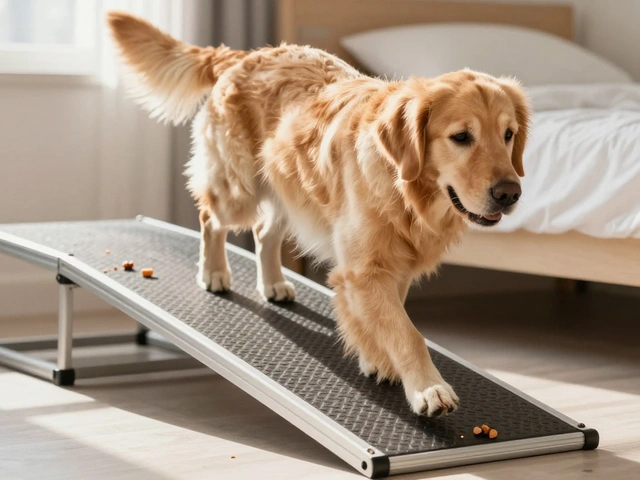
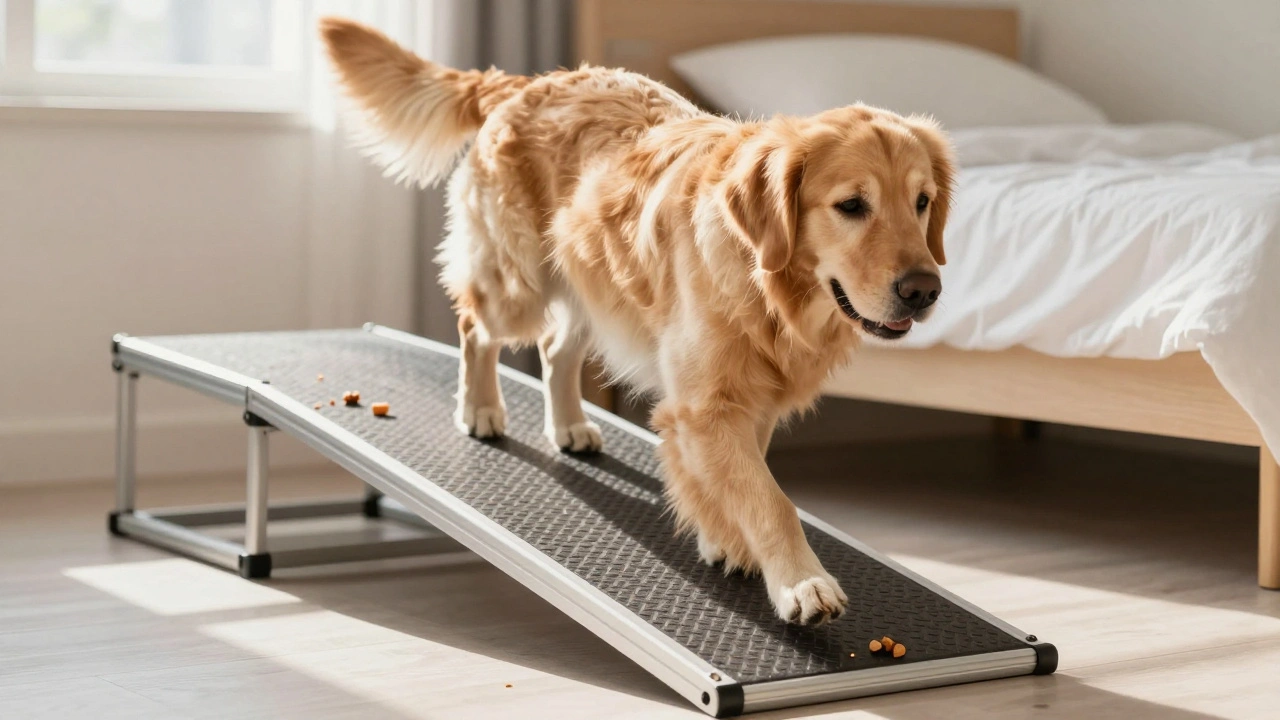
Think about the places your dog used to jump into without a thought: the car, the bed, the porch. Now, those spots feel like cliffs. A ramp changes everything.
Not all ramps are created equal. A cheap, flimsy one made of plastic? It’ll slide, wobble, or collapse under weight. That’s worse than no ramp at all-it teaches your dog that trying is dangerous.
Look for these three things:
- Non-slip surface: Rubberized texture or embedded grooves. No smooth plastic.
- Low slope: 18 to 22 degrees max. If you can’t walk up it comfortably with a 20-pound bag of dog food, it’s too steep.
- Sturdy frame: Aluminum or reinforced wood. Shouldn’t flex when your 70-pound dog walks on it.
Placement matters too. Don’t just set it near the bed. Test it. Watch your dog walk toward it. Do they hesitate? Do they sniff the edge? That’s a sign the ramp doesn’t feel safe. Adjust the angle. Add a treat trail. Let them discover it on their own terms.
One owner I spoke with moved her 14-year-old Golden Retriever’s ramp from the side of the bed to the footboard after noticing he’d turn away every time he approached the original spot. The new angle let him walk straight on, no turning needed. He started jumping up again within a week.
Rugs: The Ground Beneath Their Feet
Hardwood, tile, laminate-these surfaces are slick for us. For a senior dog with weak back legs, they’re ice rinks.
You don’t need a full-room carpet. You need strategic zones.
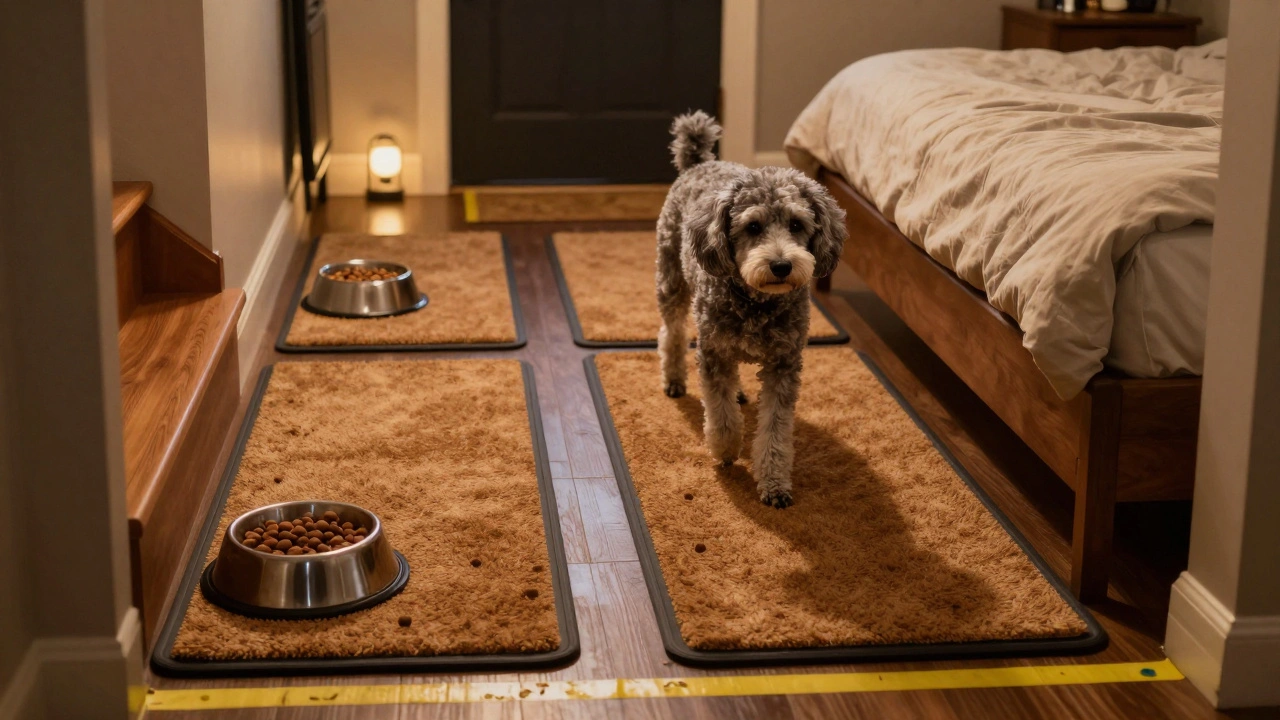
- Between the bed and the door: Where they shuffle to go outside.
- Under the food bowl: So they don’t slide backward while eating.
- At the bottom of stairs: A landing zone to catch their balance.
- By the water bowl: Wet paws + slippery floor = disaster waiting to happen.
Choose rugs with rubber backing. Not just any rug. The kind that grips the floor like glue. Avoid fluffy, high-pile rugs-they trap paws. Go for low-profile, textured, non-slip mats. Brands like Gorilla Grip or PetSafe offer tested options. You can even cut down a yoga mat and lay it down in high-risk spots.
One simple trick: sprinkle a few treats on the rug. Let your dog walk across it to find them. After a few days, they’ll start using it without thinking. It becomes part of their routine, not a chore.
Routes: Designing a Safe Path Through the House
Your home is a maze for a senior dog. Furniture, cords, narrow hallways, uneven thresholds-they’re all obstacles.
Map out their daily routes. What do they do every day?
- Walk from bed to the door
- Go to the food bowl
- Visit their favorite window
- Head to the backyard
Now walk those paths yourself-on your hands and knees. What do you see? A loose rug? A low table leg? A step with no contrast? A dark hallway with no light?
Fix what you find.
- Use painter’s tape to mark steps or changes in floor level. White tape on dark wood makes it visible.
- Move furniture so pathways are wide enough for them to turn without squeezing.
- Install nightlights along their route. Older dogs lose night vision fast.
- Keep cords tucked away. A tangled leash can mean a fall.
One dog named Baxter, a 13-year-old Poodle, stopped going outside. His owner thought he was just lazy. Turns out, the path from the back door to the yard had a 3-inch step covered in grass. Baxter couldn’t see the edge. He’d take a step, miss the landing, and fall. Once they added a small ramp and painted the edge of the step with white chalk, he started going out again-every morning, without fail.
Putting It All Together: Your Senior Dog Mobility Map
Here’s how to build your own simple map in three steps:
- Trace their path: Watch your dog for one full day. Where do they go? Where do they hesitate? Where do they avoid going?
- Mark the hazards: Write down every slippery surface, steep step, dark corner, or narrow space.
- Install solutions: Place ramps where they need to climb. Lay rugs where they need grip. Clear paths where they need space.
Don’t try to fix everything at once. Pick one area-say, the path to the back door-and improve that first. Give it two weeks. See if they move more easily. Then move to the next.
Keep a notebook. Note what worked. What didn’t. Did the ramp help? Did the rug stay in place? Did the nightlight make a difference? You’ll start seeing patterns. And those patterns become your dog’s personal mobility plan.

What Doesn’t Work (And Why)
Some things sound helpful but actually make things worse.
- Slip-on booties: Most dogs hate them. They change how their paws feel the ground. That makes balance harder, not better.
- Carrying them everywhere: It’s tempting. But it stops them from building muscle. It also strains your back.
- Waiting until they fall: If they’ve already had a slip, you’re already behind. Prevention beats recovery every time.
And never assume they’re just “getting old.” Pain is not normal. If your dog yelps when standing up, limps for more than a day, or avoids lying down, talk to your vet. Mobility aids help-but they’re not a replacement for medical care.
Real-Life Signs You’re Winning
How do you know your map is working?
- They walk faster without hesitation.
- They go to the door on their own.
- They still climb onto their favorite spot-even if it takes a little longer.
- They wag their tail more when they move.
These aren’t big moments. They’re quiet victories. But they mean everything.
One woman told me her 16-year-old Shih Tzu, Mochi, hadn’t jumped onto the sofa in three years. After adding a ramp and a rug leading to it, he did it again. He sat there, looking out the window, tail thumping. She cried. Not because he jumped. Because he chose to.
How do I know if my senior dog needs a ramp?
If your dog avoids stairs, hesitates before jumping, or takes longer than 5 seconds to get up from lying down, they likely need help. Try placing a ramp next to their favorite spot. If they use it within a few days-even just sniffing it-they’re telling you it’s needed.
Can I make my own ramp?
Yes, but only if you know what you’re doing. A DIY ramp must be wide enough (at least 18 inches), have a low slope (under 22 degrees), and have a non-slip surface. Plywood with rubber matting glued on works. Avoid using just wood-it’s too slippery. If you’re unsure, buy a pre-made one. Safety matters more than saving money.
What’s the best material for non-slip rugs for senior dogs?
Look for rugs with a rubberized backing that grips the floor. The surface should be textured, not fluffy. Brands like Gorilla Grip, PetSafe, and Non-Slip Pet Mat by Furhaven are tested for dogs. Avoid shag rugs-they trap paws. A thin, rubber-backed yoga mat cut to size also works well in tight spaces.
Should I use a harness to help my dog walk?
A supportive harness can help during walks outside, but it shouldn’t replace ramps or rugs indoors. For indoor mobility, focus on surfaces first. A harness can be useful for short outdoor walks or helping them up steep ramps, but never use it as a crutch for daily movement. Let them use their own strength where they can.
How long does it take for a senior dog to adjust to a ramp or rug?
Most dogs adapt in 3 to 7 days if you make it easy. Place treats on the ramp or rug. Let them explore at their own pace. Don’t push them. If they still avoid it after two weeks, check the angle, texture, or placement. Maybe it’s too steep, too narrow, or too close to a scary sound like the furnace.
Next Steps: Start Small, Think Long-Term
You don’t need to overhaul your whole house today. Pick one spot-maybe the step to the porch, or the path to the food bowl-and fix that. Add one ramp. Lay one rug. Watch what changes. Then move to the next.
Senior dogs don’t need miracles. They need consistency. A safe path. A solid surface. A little help when the world gets too steep. Build that map. One step at a time.