When your dog eats something toxic-chocolate, xylitol, rat poison, or even just a handful of grapes-the clock starts ticking. You panic. You rush to the vet. But what if you could act before you even leave the house? That’s where activated charcoal comes in. It’s not a cure-all, but in many poisoning cases, it’s the single most effective first step you can take to save your dog’s life.
How Activated Charcoal Works
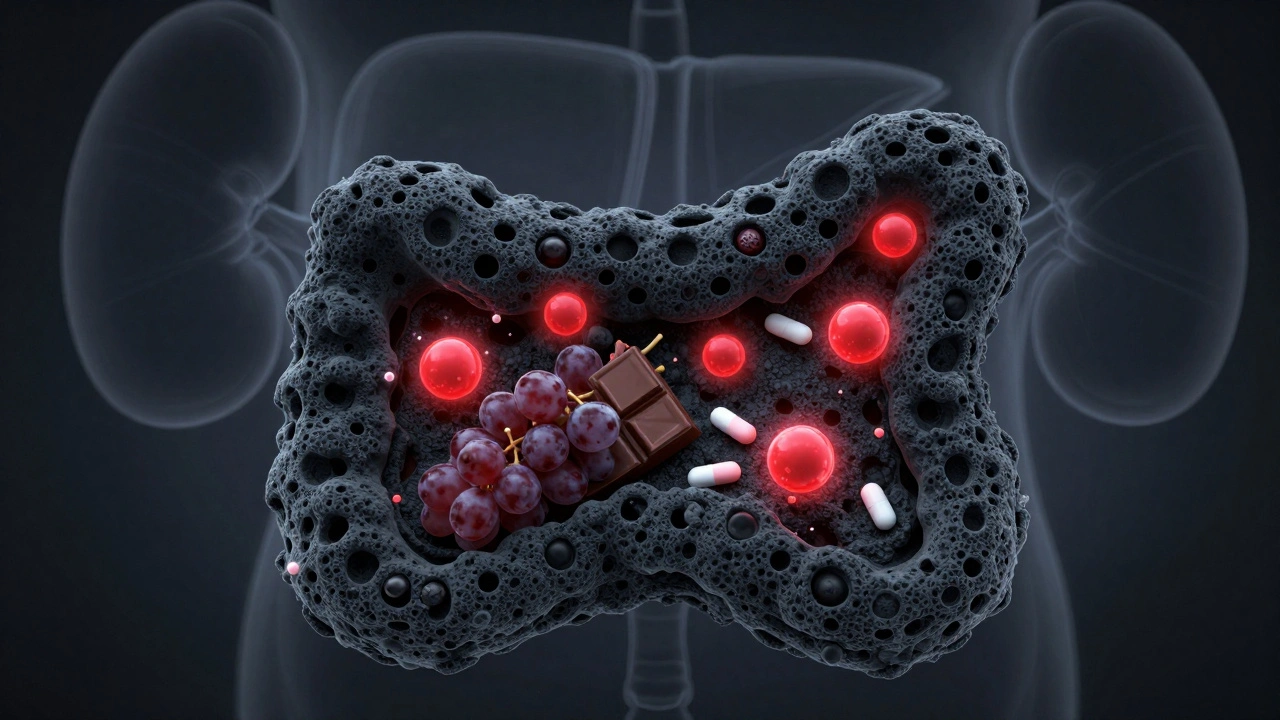
Activated charcoal isn’t regular fireplace ash. It’s made from materials like coconut shells, wood, or coal that are heated to extreme temperatures in a low-oxygen environment. This process creates a network of tiny pores-so many that a single gram has a surface area larger than a football field. These pores act like magnets, trapping toxins in the gut before they can be absorbed into the bloodstream.
When given to a dog within the first hour after ingestion, activated charcoal can bind to up to 60% of the poison. That means less toxin reaches the liver, kidneys, and brain. It’s why veterinarians keep it on hand for emergency cases. It’s not magic, but it’s science-and it works fast.
When to Use It (and When Not To)
Activated charcoal helps with a lot of common toxins: chocolate, grapes, onions, certain medications (like ibuprofen or acetaminophen), moldy food, and even some household cleaners. But it doesn’t work on everything. It won’t bind to alcohol, heavy metals like lead or arsenic, acids, alkalis, or petroleum products. And if your dog is already vomiting, having seizures, or is unconscious, giving charcoal orally could cause choking or aspiration pneumonia.
Here’s the rule: Only use activated charcoal if your dog is alert, breathing normally, and you’re certain of what was ingested. If you’re unsure, call your vet or the ASPCA Animal Poison Control Center immediately. Don’t guess. Don’t delay. Time matters more than any home remedy.
Dosage: How Much to Give
Dosage isn’t based on breed or age-it’s based on weight. The standard dose is 1 to 3 grams of activated charcoal per kilogram of body weight. That sounds complicated, but here’s a simple way to remember:
- For a 10-pound dog (about 4.5 kg): 5 to 15 grams
- For a 50-pound dog (about 23 kg): 25 to 70 grams
- For a 90-pound dog (about 41 kg): 40 to 120 grams
Most over-the-counter activated charcoal products come in 250 mg or 500 mg capsules. You’ll need to count them. For example, a 50-pound dog might need 5 to 14 capsules of 500 mg each. Some brands sell powder in measuring spoons-1 teaspoon is roughly 5 grams. Always check the label. If you’re unsure, call your vet before giving anything.
How to Administer It
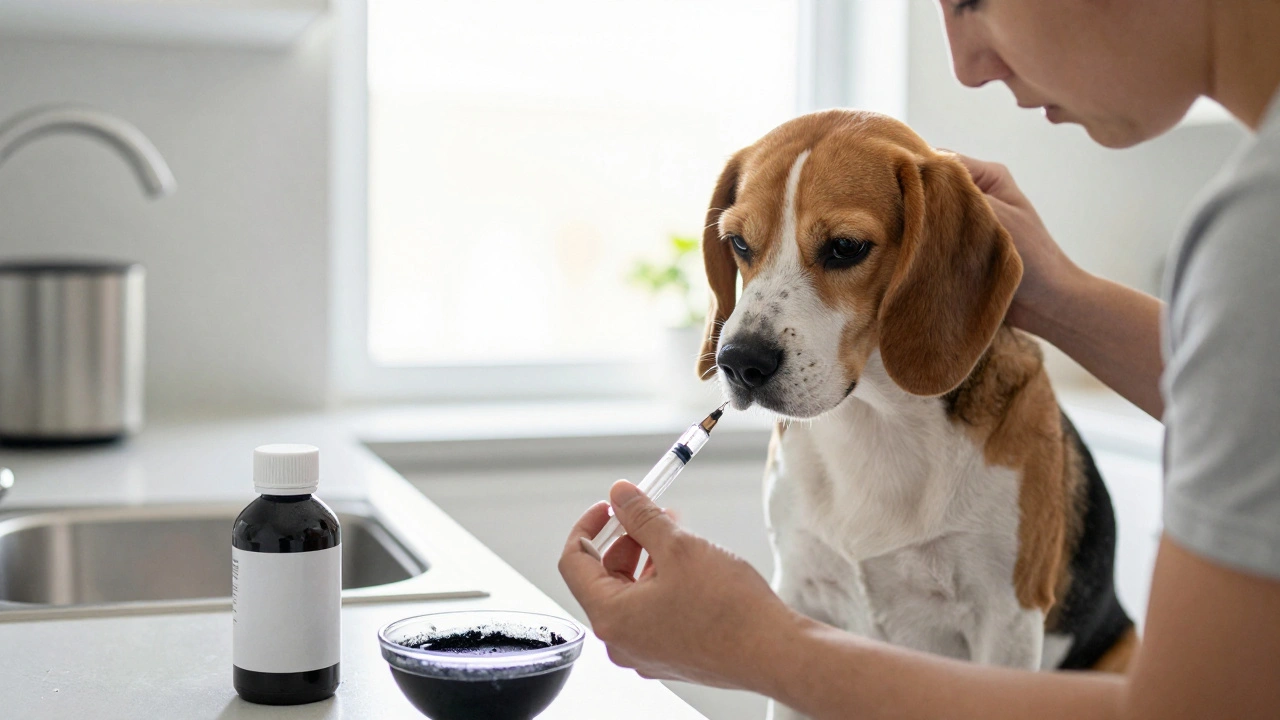
You can mix the charcoal with water or a small amount of low-sodium broth to make a slurry. Use a syringe (without a needle) to gently squirt it into the side of your dog’s mouth. Don’t pour it down the throat-this can cause choking. If your dog won’t swallow it, try mixing it with peanut butter (make sure it’s xylitol-free) or a spoonful of canned pumpkin. Some dogs will lick it up if it’s disguised.
After giving the charcoal, offer a small amount of water. This helps move the mixture through the gut. Don’t force water-just let your dog drink naturally. If your dog refuses to swallow, don’t keep trying. Get to the vet.
What Happens After You Give It?
Activated charcoal doesn’t disappear. It binds to the toxin and passes out in the stool. You might notice black, tarry poop for the next day or two. That’s normal. It doesn’t mean your dog is sick-it means the charcoal did its job.
But here’s the catch: charcoal doesn’t last forever. Its binding power fades after about 30 to 60 minutes. That’s why it’s only effective if given early. If more than two hours have passed since ingestion, it’s much less likely to help. Even then, your vet may still give it as part of a broader treatment plan-especially if the toxin has a slow absorption rate, like some pesticides.
What Vets Do Beyond Charcoal
Most vets won’t just give charcoal and send you home. They’ll likely do one or more of these:
- Induce vomiting (if it’s safe and early enough)
- Run blood tests to check organ function
- Start IV fluids to flush out toxins
- Give antidotes (like N-acetylcysteine for acetaminophen poisoning)
- Monitor heart rate, temperature, and breathing
Activated charcoal is a tool-not a full treatment. Think of it like putting a bandage on a cut before heading to the ER. It helps, but it’s not the whole solution.
What to Keep in Your First Aid Kit
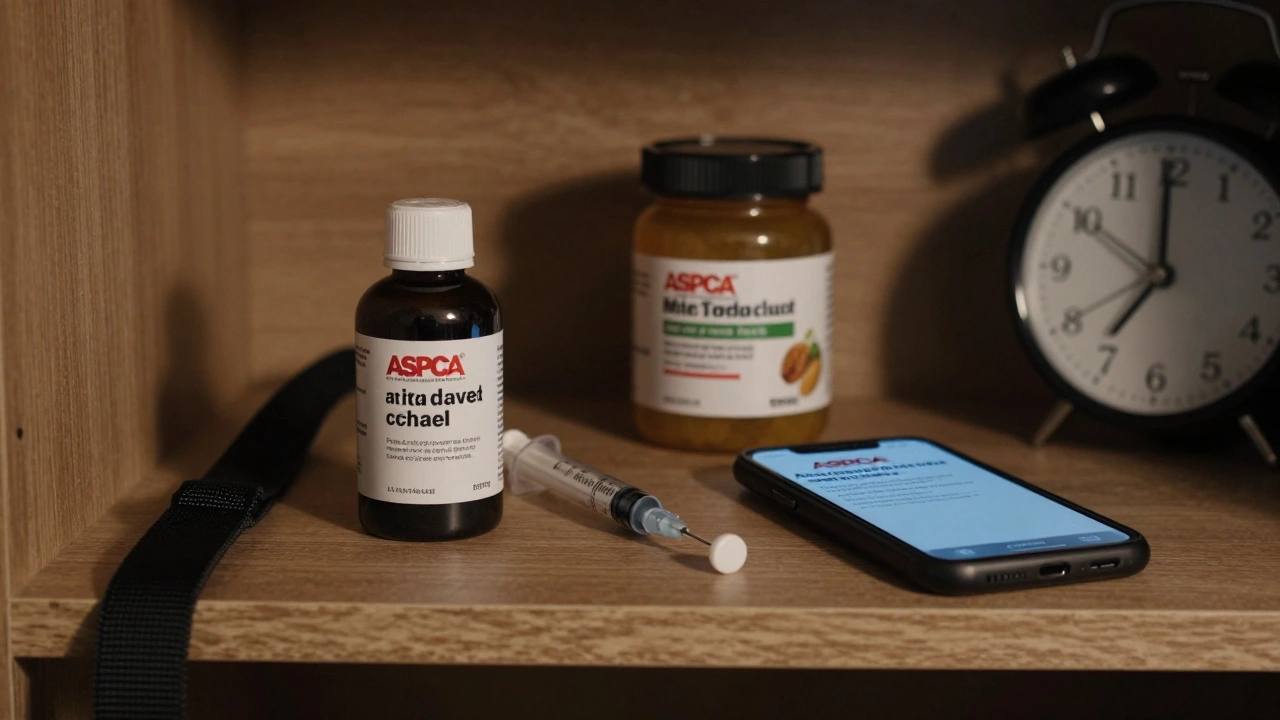
Keep a small bottle of activated charcoal powder in your dog’s emergency kit. Look for unscented, unflavored, 100% pure activated charcoal with no added ingredients. Avoid products labeled for “odor control” or “water filtration”-they may contain additives that are harmful to dogs.
Also keep:
- A syringe (10-20 ml, without needle)
- A bottle of low-sodium chicken broth (for mixing)
- The number for the ASPCA Animal Poison Control Center: (888) 426-4435
- Your vet’s emergency number
Store it in a cool, dry place. Charcoal loses effectiveness if it gets damp or exposed to air for too long. Replace it every 6 to 12 months.
Myths and Misconceptions
Some people think charcoal can be used for diarrhea or bad breath. It can’t. It’s not a digestive aid. It’s not a detox. It’s only for acute poisoning. Giving it unnecessarily can interfere with your dog’s absorption of nutrients or medications.
Another myth: “If I give charcoal, I don’t need to go to the vet.” That’s dangerous. Even if your dog seems fine after you give charcoal, toxins can still cause delayed damage. Liver failure from mushrooms or kidney failure from grapes can take days to show up. Always follow up with a vet.
Real-Life Example: The Chocolate Incident
Last winter, a client in Portland brought in her 35-pound beagle after she ate half a pound of dark chocolate. The dog was panting, pacing, and had a fast heartbeat. We gave 25 grams of activated charcoal right away-mixed with broth in a syringe. Within 15 minutes, the dog started to calm down. We still took her to the ER for fluids and monitoring. She was home by midnight. Without the charcoal, she might have needed 24 hours of intensive care.
That’s the power of quick action. Not magic. Just preparation.
Final Advice: Be Ready
The best thing you can do for your dog isn’t memorizing every toxic plant or chemical. It’s having a plan. Know where your vet’s emergency clinic is. Save the poison control number in your phone. Keep activated charcoal in your car or near the back door. Practice giving a syringe to your dog when they’re calm-so you’re not fumbling in a crisis.
Most poisoning cases happen because someone didn’t think it would happen. But it does. Every week. In every neighborhood. Being ready doesn’t make you paranoid. It makes you a good pet parent.
Can I use regular charcoal from my grill on my dog?
No. Regular charcoal from grills or fire pits contains additives like lighter fluid, sulfur, and other chemicals that are toxic to dogs. Only use pharmaceutical-grade activated charcoal made for medical use. Grill charcoal can cause poisoning, not prevent it.
How long does activated charcoal take to work in dogs?
It starts working within minutes, but its effectiveness drops sharply after 60 minutes. The sooner you give it after ingestion, the better. If more than two hours have passed, it’s unlikely to help much unless the toxin is slow-absorbing, like some pesticides or medications.
Is activated charcoal safe for puppies?
Yes, when given at the correct dose. Puppies are more sensitive to toxins, so charcoal can be even more critical. But their smaller size means dosing must be precise. Always calculate based on weight-not age. If you’re unsure, call your vet before giving anything.
Can activated charcoal cause constipation in dogs?
Yes, in some cases. Charcoal can slow down the gut and lead to temporary constipation or black stools. This is normal and usually resolves within a day or two. If your dog hasn’t had a bowel movement in over 48 hours or seems uncomfortable, contact your vet.
What if my dog won’t take the charcoal?
Try mixing it with a small amount of peanut butter (xylitol-free), canned pumpkin, or low-sodium broth. If your dog still refuses or starts gagging, stop and get to the vet. Forcing it can lead to choking or aspiration. Better to have the vet administer it safely than risk harm at home.