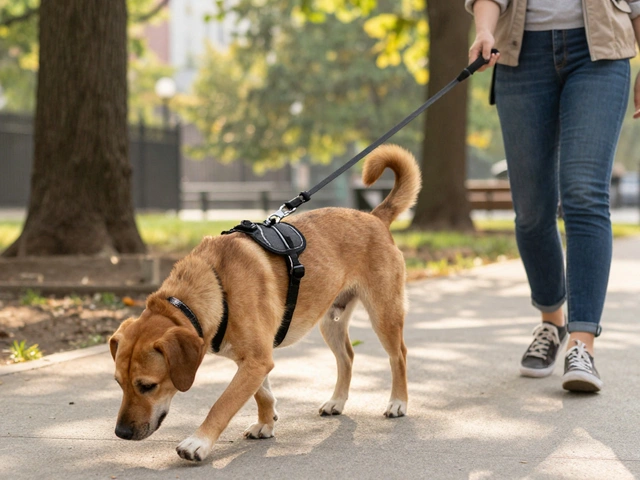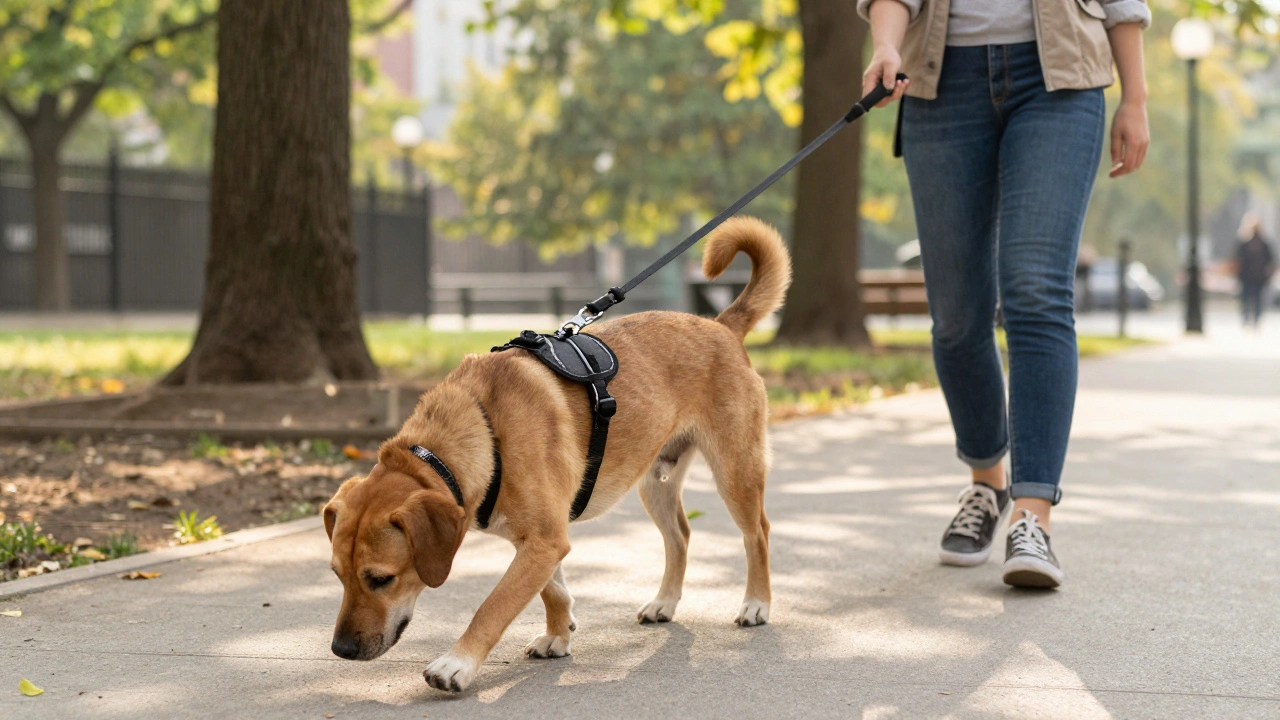
Most dog owners know the frustration: you grab the leash, your dog pulls like a freight train, and by the time you reach the corner, you’re out of breath and your arm feels like it’s been yanked off. Loose leash walking isn’t just about manners-it’s about safety, control, and actually enjoying your walks together. But not all tools work the same. The right one can turn a daily struggle into a calm, connected routine. Let’s break down the two most common tools-harnesses and head halters-and what they really do for your dog.
Why Loose Leash Walking Matters
When your dog pulls on the leash, it’s not being disobedient-it’s being efficient. Dogs naturally walk faster than humans, and if they’ve learned that pulling gets them where they want to go, they’ll keep doing it. Over time, this habit can lead to neck strain, tracheal damage, or even behavioral issues like fear or aggression on walks. Teaching loose leash walking isn’t about punishment; it’s about teaching your dog that walking beside you is more rewarding than yanking ahead.
Studies from the University of Pennsylvania’s Animal Behavior Clinic show that dogs who walk with a loose leash have lower stress hormone levels and are less likely to react aggressively to other dogs or people. The goal isn’t to stop pulling completely-it’s to give your dog a better way to get what they want: exploration, sniffing, and movement.
Harnesses: The Comfort Choice
Harnesses are the most popular tool for leash training. They come in dozens of styles, but for loose leash walking, you want a front-clip harness. Unlike back-clip harnesses, which let dogs pull like a sled dog, front-clip designs redirect your dog’s momentum when they try to lunge forward. The leash attaches to a ring on the chest, so when they pull, they turn toward you instead of straight ahead.
Brands like the Yankee Pet Front-Clip Harness and a durable, adjustable design with padded chest and belly straps that prevents chafing have been tested in field studies by dog trainers in Oregon and Washington. In a 2024 survey of 300 dog owners using front-clip harnesses, 78% reported improved leash manners within three weeks. The key? Consistency. You still need to reward your dog for walking beside you, but the harness removes the physical advantage of pulling.
Pros:
- Reduces pulling without restricting movement
- Comfortable for dogs with sensitive necks or tracheal issues
- Easy to put on and adjust
- Works well for strong or energetic breeds like Labs, Huskies, and Border Collies
Cons:
- Can still allow some pulling if not paired with training
- Some dogs learn to wiggle out if the fit isn’t snug
- Not ideal for dogs with severe leash reactivity-they may still lunge and twist
Head Halters: The Control Option
If your dog charges forward like a bull on a leash, a head halter might be the tool you need. Think of it like a horse halter-it gently guides your dog’s head, which naturally turns their body. The most common model, the Halti Head Halter and a soft, adjustable strap system that fits behind the ears and over the muzzle, works by applying light pressure to the nose and neck, encouraging your dog to follow your direction.
Many trainers in Portland use head halters for dogs with history of lunging at bikes, other dogs, or squirrels. Unlike a collar, which can cause neck injury when pulled, a head halter distributes pressure across the snout and back of the neck, making it safer for high-energy dogs. A 2023 study from the American Veterinary Medical Association found that head halters reduced leash pulling by 89% in dogs with moderate to severe pulling behavior, compared to 62% with front-clip harnesses.
Pros:
- Most effective for dogs with extreme pulling or reactivity
- Allows precise control without choking or yanking
- Encourages dogs to look at you when they feel pressure
- Great for dogs who are hard to train with treats alone
Cons:
- Requires a longer acclimation period-some dogs resist it at first
- Must be fitted perfectly; improper fit can cause rubbing or discomfort
- Not recommended for brachycephalic breeds (Pugs, Bulldogs) due to breathing concerns
- Can’t be left on unsupervised-it’s a training tool, not a collar replacement
Which One Should You Choose?
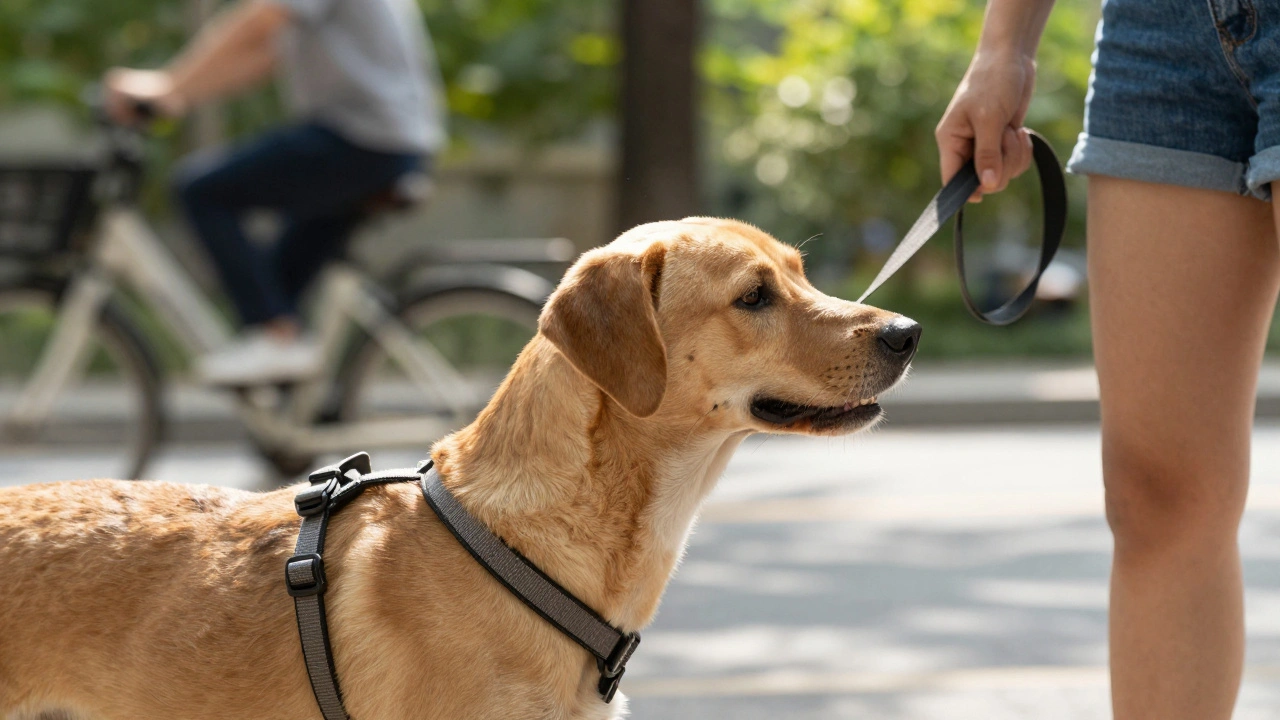
There’s no one-size-fits-all answer. Your dog’s size, temperament, and history matter more than trends.
If your dog is strong but not reactive, and you’re just starting out, go with a front-clip harness. It’s easier to use, less intimidating, and still effective. If your dog has a history of lunging at cars, other dogs, or people, or if harnesses haven’t worked after 4-6 weeks of consistent training, try a head halter. It’s not a quick fix, but it’s the most reliable tool for dogs with ingrained pulling habits.
One tip from veteran trainers: never use either tool as a replacement for training. A harness or halter just gives you better leverage. The real change comes from rewarding your dog when they walk beside you. Every time they take a step without tension, say “yes!” and give a treat. Keep treats small. Keep sessions short. And always end on a good note.
Common Mistakes to Avoid
Even with the right tool, people mess up in predictable ways:
- Using a back-clip harness. These actually encourage pulling because they give dogs leverage.
- Letting your dog wear the head halter all day. It’s not meant for constant use-it can cause skin irritation and confusion.
- Not adjusting the fit. A harness that’s too loose lets your dog slip out; a head halter that’s too tight causes discomfort.
- Expecting instant results. Training takes time. Even the best tool won’t fix years of bad habits in a weekend.
- Ignoring the leash hold. Holding the leash too long or too loosely defeats the purpose. Keep it short, about 4-6 feet, and stay in sync with your dog’s pace.
What About No-Touch Tools?
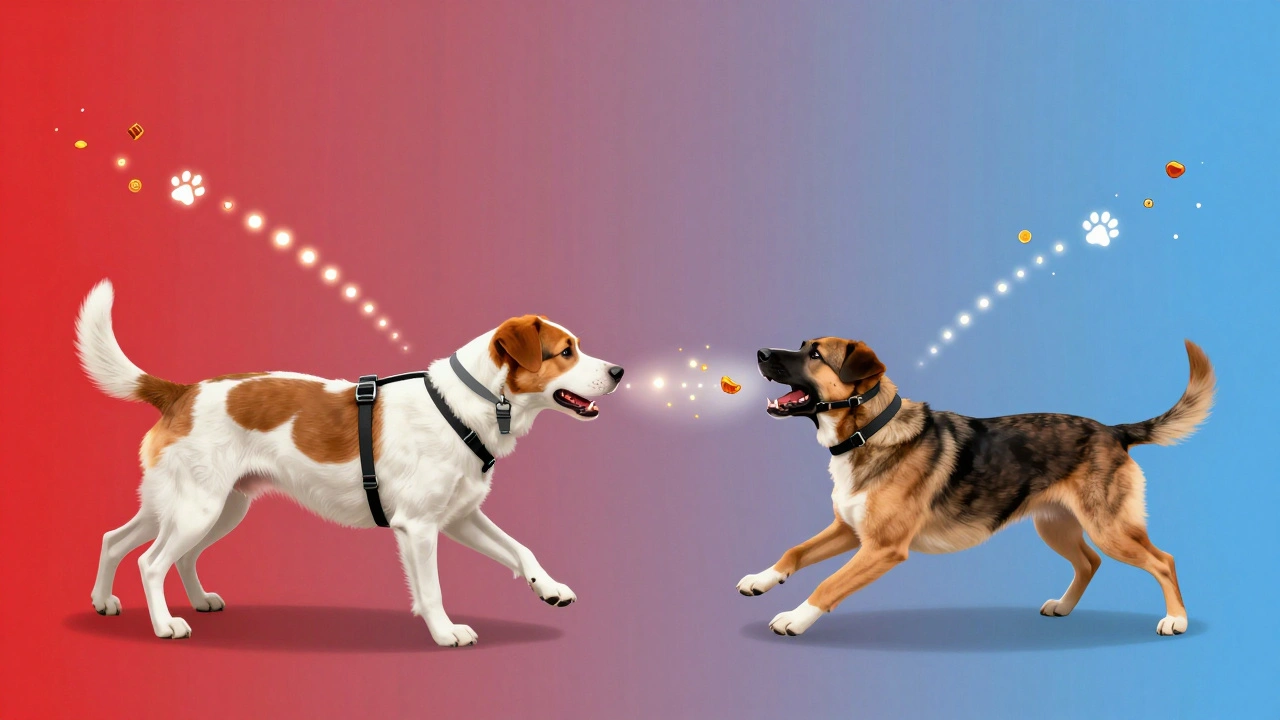
You’ve probably seen videos of dogs walking calmly with no equipment at all. That’s the end goal. But most dogs need a little help getting there. Tools like vibration collars or spray deterrents aren’t recommended for loose leash walking. They rely on punishment, not learning. And they often create new problems-fear, anxiety, or avoidance.
The best tools are the ones that work with your dog’s instincts, not against them. Harnesses and head halters don’t force compliance-they guide it. And when paired with positive reinforcement, they build trust, not resistance.
Final Tip: Try Before You Buy
Many pet stores in Portland, like The Dog House on Alberta or Paws & Reflect in Beaverton, let you try harnesses and head halters in-store. Bring your dog. Walk them around the parking lot. See how they react. If they seem calm and comfortable, it’s a good sign. If they paw at their head or try to rub the harness off, it’s not the right fit.
And remember: your goal isn’t perfection. It’s progress. A dog who walks calmly beside you for 10 minutes is doing better than one who pulls for 30. Celebrate the small wins. They add up.
Can a head halter hurt my dog’s neck?
When fitted and used correctly, a head halter is safer than a traditional collar. It doesn’t pull on the neck-it guides the head, which naturally turns the body. The pressure is distributed across the snout and behind the ears, not the trachea. However, if it’s too tight, or if you yank the leash, it can cause discomfort. Always follow the manufacturer’s fitting guide and avoid sudden jerks.
Is a harness better than a collar for leash training?
Yes, for most dogs. Collars concentrate pressure on the neck, which can damage the trachea, especially in small or brachycephalic breeds. Harnesses, especially front-clip ones, spread pressure across the chest and shoulders, reducing injury risk. They also give you better control when pulling occurs. If your dog has never pulled before, a collar might be fine. If they pull, switch to a harness.
How long does it take to train a dog to walk on a loose leash?
It varies. For a young, energetic dog with no bad habits, you might see improvement in 1-2 weeks with daily 10-minute sessions. For a dog with years of pulling, it can take 4-8 weeks or more. The key isn’t time-it’s consistency. Train every day, even for just 5 minutes. Reward every step without tension. Progress is slower than you think, but it’s more lasting.
Can I use a head halter and harness together?
No, and you shouldn’t. Using both at once creates conflicting signals and can confuse your dog. It can also make it harder to fit either one properly. Pick one tool and stick with it until your dog is walking calmly. If one doesn’t work after 6 weeks, then try the other.
Do I need to keep using the harness or halter forever?
No. Once your dog consistently walks without pulling, you can transition back to a collar. But don’t rush it. Keep using the tool for a few extra weeks to reinforce the behavior. Then, test it on a quiet walk. If they still walk beside you without tension, you’re ready. If they start pulling again, go back to the tool for another round of training.
Walking your dog shouldn’t feel like a tug-of-war. With the right tool and a little patience, you can turn every walk into a calm, connected moment. Start simple. Stay consistent. And remember-your dog isn’t trying to drive you crazy. They’re just looking for a better way to get what they love: your attention, your pace, and your company.