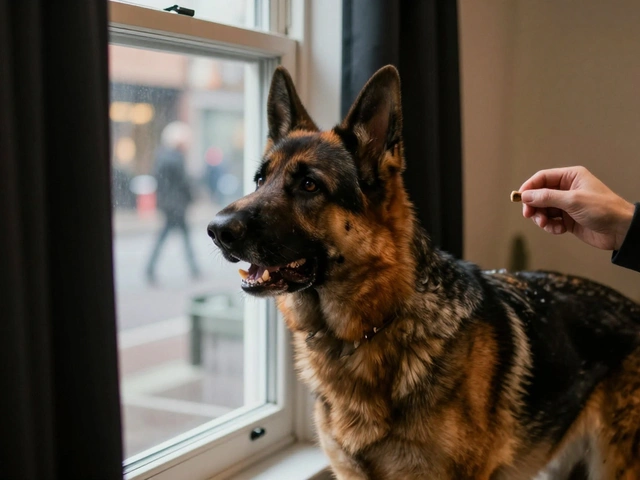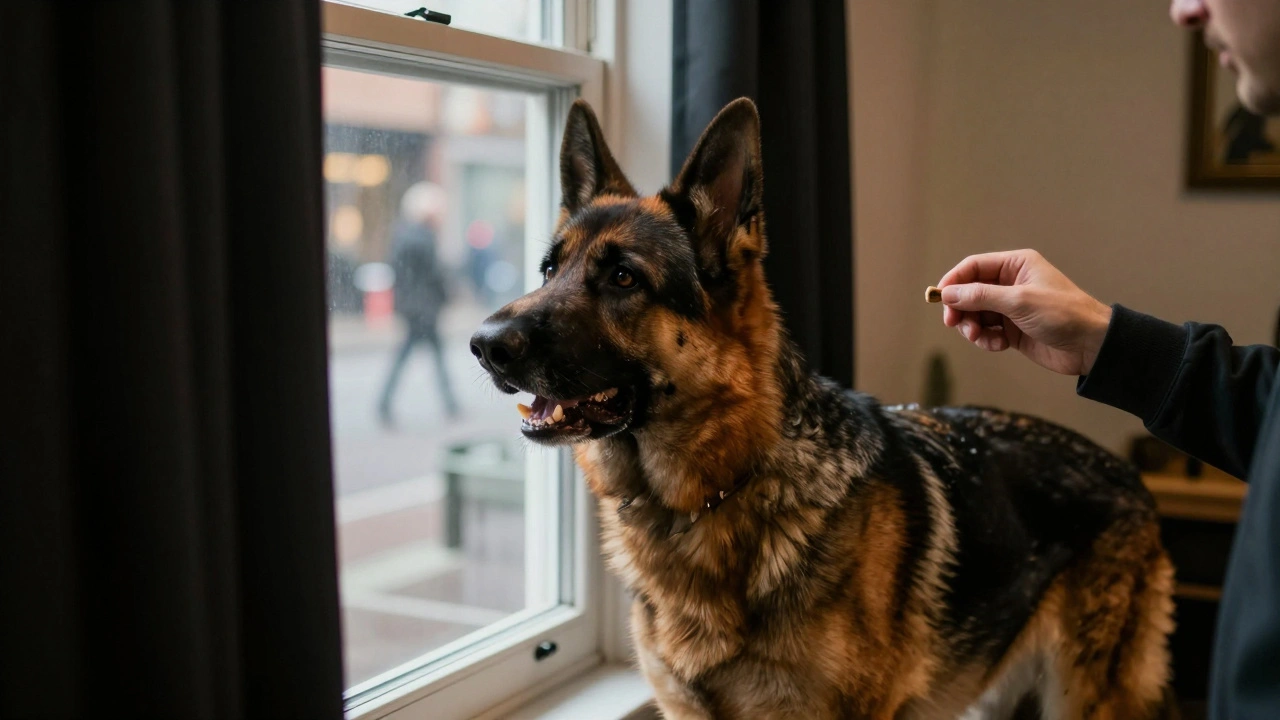
Ever had your dog growl at the mail carrier, bark nonstop at strangers near your fence, or lunge at other dogs during walks? You’re not alone. Territorial aggression in dogs is one of the most common behavior problems reported to vets and trainers-and it’s also one of the most dangerous if left unmanaged. This isn’t about being "bad" or "dominant." It’s about a dog’s hardwired instinct to protect what they see as their space: your yard, your home, even your car or your personal space on the couch. The good news? With the right approach, you can reduce this behavior and keep everyone safe-including your dog.
What Exactly Is Territorial Aggression?
Territorial aggression isn’t just barking. It’s a pattern of behavior triggered when a dog perceives a threat to their territory. This includes:
- Growling, snarling, or snapping at people or animals near the home
- Intense barking at passersby, delivery people, or neighbors
- Lunging or charging at the fence or window
- Showing aggression only in specific areas (like the front yard, but not the backyard)
- Protecting objects they associate with "their" space-your shoes, the front door, even your car keys
Studies from the American Veterinary Society of Animal Behavior show that over 60% of dogs displaying aggression toward strangers do so in a territorial context. This isn’t random. It’s predictable. And it’s manageable.
Why Dogs Develop Territorial Aggression
It starts with evolution. Wild canines defended dens and hunting grounds. Domestic dogs kept that instinct-but now their "den" is your living room, and their "hunting ground" is your front porch.
Some dogs are more prone to this than others. Breeds like German Shepherds, Rottweilers, and Dobermans were historically bred for guarding. But even small dogs like Chihuahuas or Dachshunds can become fiercely territorial. It’s not about size-it’s about confidence and experience.
Here’s what makes it worse:
- Reinforcing the behavior: When your dog barks at the window and the person walks away, your dog thinks, "I scared them off!" That’s a reward.
- Lack of early socialization: Dogs that didn’t meet different people, sounds, or environments before 16 weeks often see newcomers as threats.
- Physical discomfort: Arthritis, ear infections, or dental pain can lower a dog’s tolerance for stress, making them more reactive.
- Owner anxiety: If you tense up when someone rings the doorbell, your dog picks up on it and assumes there’s danger.
Step-by-Step Management Strategies
Managing territorial aggression isn’t about punishment. It’s about changing how your dog sees the world-and how they react to triggers.
1. Control the Environment
Start by removing the opportunity for your dog to practice the behavior. This is not a temporary fix-it’s a safety net.
- Block visual access: Use blackout curtains, baby gates, or frosted window film so your dog can’t see people walking by.
- Use a leash indoors: If your dog charges the door, keep them on a leash when visitors are expected.
- Confine to a safe space: Train your dog to go to a crate or designated room when the doorbell rings. Reward them for staying calm.
2. Desensitize and Countercondition
This is the core of behavior change. You’re teaching your dog that the thing they fear-strangers at the door-is actually a signal for something good.
Here’s how:
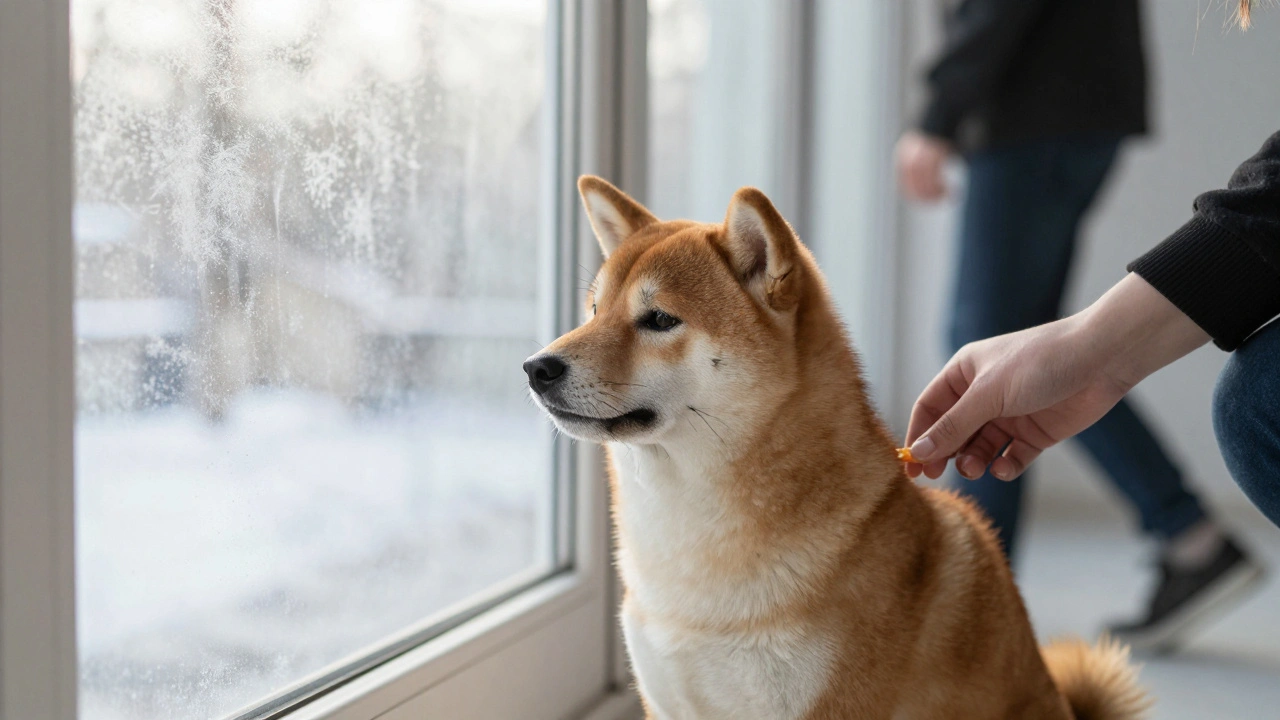
- Start from a distance: If your dog reacts to people at the window, begin when they’re far enough away that they notice but don’t react.
- Pair the trigger with a reward: The moment your dog notices someone outside, give them a high-value treat (like chicken or cheese) and stop as soon as the person leaves.
- Repeat daily: Do this 5-10 times a day. No yelling. No corrections. Just treats and calm.
- Slowly decrease distance: Once your dog looks at the window and waits for a treat without growling, move closer to the window over several weeks.
One owner in Portland did this for 12 weeks with her Shiba Inu, Luna. Before, Luna would bark for 20 minutes every time someone passed. After, she’d look at the window, wait for a treat, and walk away. No more barking. No more stress.
3. Teach a "Quiet" Command
Don’t just stop the barking-teach your dog what to do instead.
- Wait for your dog to bark once or twice.
- Say "quiet" in a calm, firm voice. Don’t shout.
- The moment they pause-even for a half-second-give them a treat and praise.
- Repeat until they associate "quiet" with stopping and getting rewarded.
Don’t use this command as a punishment. If they bark again, just wait and try again. Consistency matters more than speed.
4. Avoid Punishment
Shouting, spraying water, or using shock collars might stop the behavior for a moment-but they don’t fix the fear behind it. In fact, they often make it worse.
Think about it: if your dog barks at the mail carrier and you yell at them, they now associate the mail carrier with your anger. That doesn’t reduce fear-it adds another layer of stress.
5. Build Confidence Through Routine
Dogs with territorial aggression often lack confidence. They don’t trust that their world is safe. Build that trust with structure.
- Feed meals on a schedule
- Take daily walks at the same time
- Practice basic commands like "sit," "stay," and "come" for 5 minutes twice a day
- Play calm games like hide-and-seek with treats
A consistent routine tells your dog: "You don’t need to guard. Everything is under control."
When to Call a Professional
Not every case can be solved at home. If your dog:
- Has bitten someone (even if it was just a nip)
- Shows aggression toward family members
- Reacts with extreme fear or panic (trembling, urinating, hiding)
- Hasn’t improved after 8-10 weeks of consistent training
Then it’s time to see a certified dog behaviorist. Look for someone with credentials like CAAB (Certified Applied Animal Behaviorist) or CCAB (Certified Clinical Animal Behaviorist). Avoid trainers who use dominance-based methods like alpha rolls or choke chains.
A behaviorist will assess your dog’s history, environment, and body language. They’ll create a step-by-step plan tailored to your dog-not a one-size-fits-all fix.
Prevention Is Easier Than Correction
If you have a puppy, don’t wait. Start early:
- Expose them to different people, sounds, and environments before 16 weeks
- Let them meet visitors calmly-no letting them jump or bark first
- Teach them to be calm around doors and windows
- Never let them "win" by scaring someone away
One of the biggest mistakes owners make? Thinking their dog is "just protective" and letting it slide. That’s how aggression becomes a habit.
Real-Life Safety Tips
While you’re working on long-term change, keep everyone safe:
- Always keep your dog on a leash during walks near other people
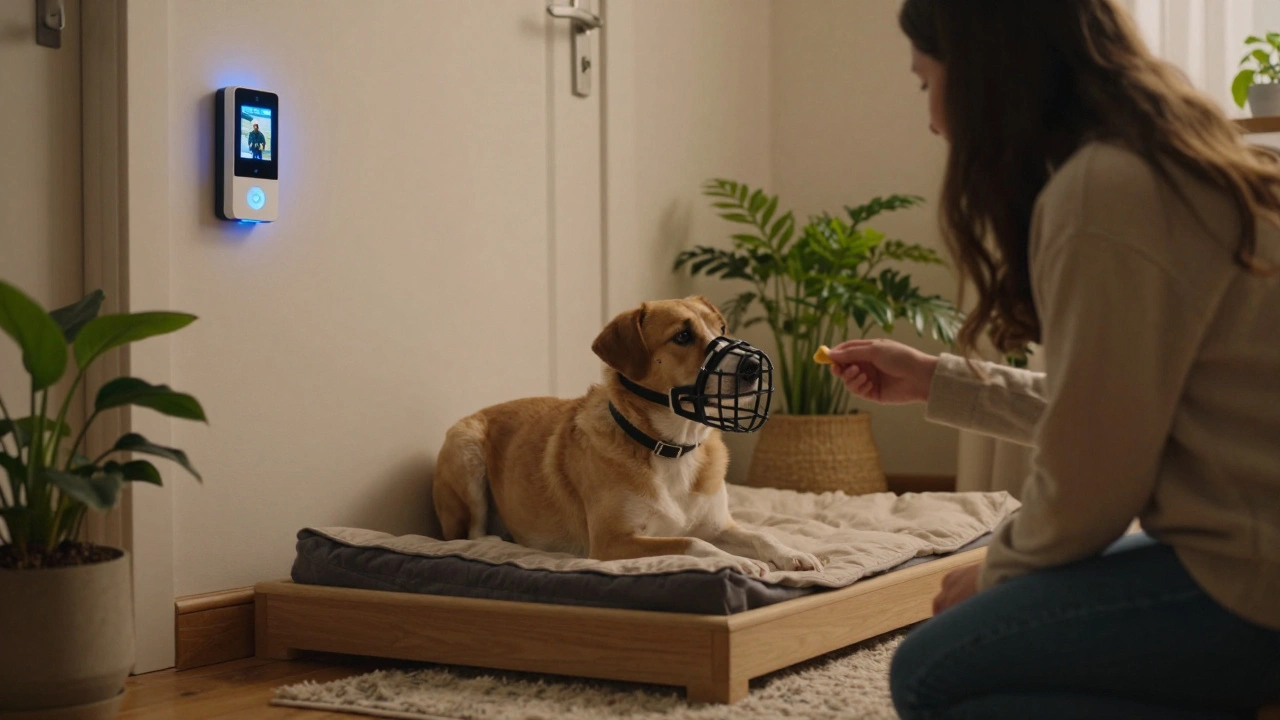
- Use a basket muzzle if your dog has a history of biting (yes, even if they’re "just barking"-it’s a safety tool, not a punishment)
- Inform visitors ahead of time that your dog is territorial. Ask them to ignore the dog until it’s calm
- Keep your dog in a separate room during deliveries or door-to-door sales
- Install a peephole or video doorbell so you can see who’s there without letting your dog react
One woman in Portland had her German Shepherd, Max, react violently to UPS drivers. After installing a video doorbell and training Max to go to his bed on cue, she went from 3 vet visits a year due to stress injuries to zero. The change wasn’t overnight-but it was worth every minute.
Final Thought: It’s Not About Control-It’s About Trust
Territorial aggression isn’t about your dog being "bad." It’s about them feeling unsafe. Your job isn’t to dominate them. It’s to show them, day after day, that their world is secure-and that you’ve got their back.
Change takes time. But with patience, consistency, and the right tools, even the most reactive dog can learn to relax. And that’s not just safer for others-it’s better for your dog too.