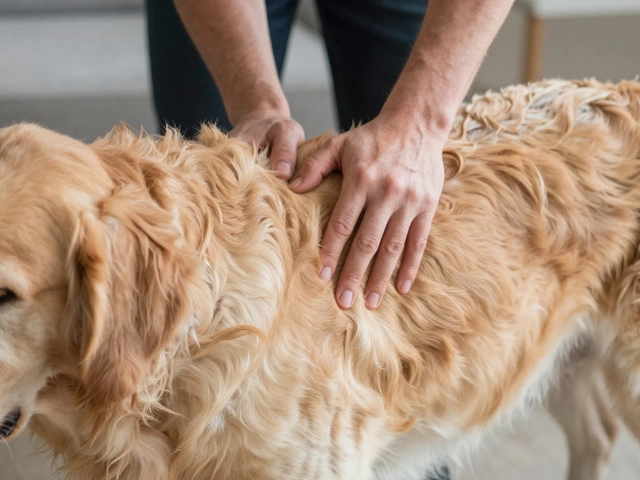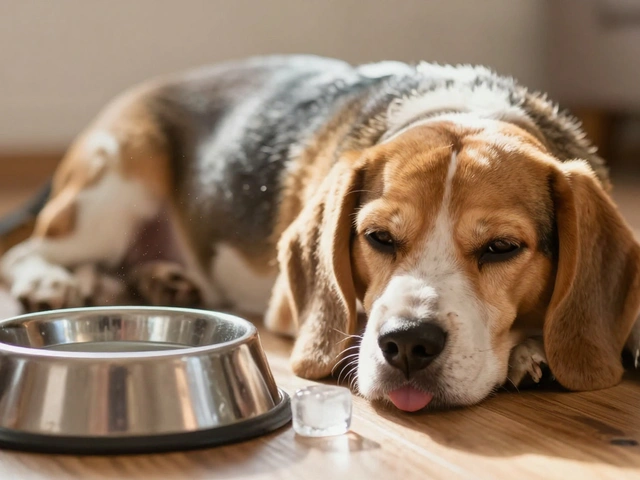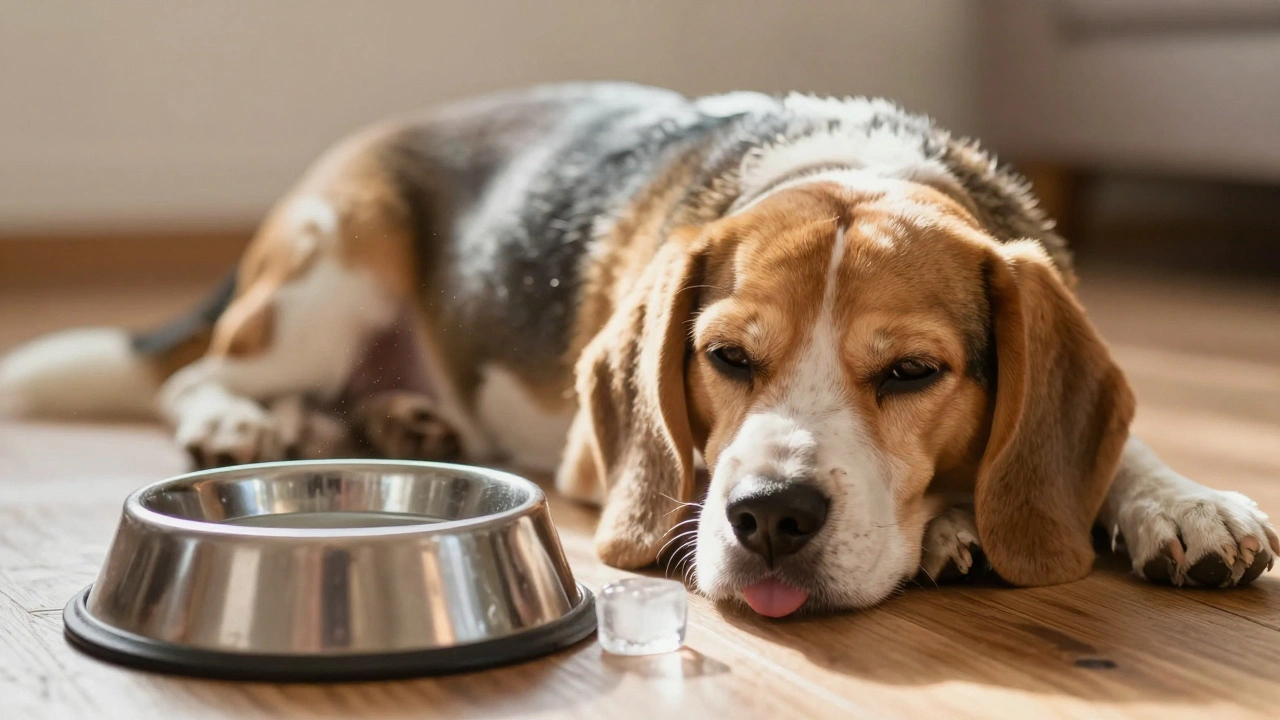
When your senior dog stops drinking water or turns away from their food, it’s easy to blame aging. But ignoring these signs can lead to serious health problems. Many owners assume their 10-year-old Labrador just doesn’t feel like eating anymore - but that’s often not the case. Underlying medical issues are usually the real cause, and catching them early can make a big difference.
Why Senior Dogs Struggle with Hydration
Older dogs don’t drink as much as they used to, and that’s not normal. A healthy adult dog needs about 1 ounce of water per pound of body weight every day. For a 50-pound senior dog, that’s over 6 cups daily. But many senior dogs drink less than half that amount.
One reason? Their sense of thirst fades. As dogs age, their kidneys don’t work as efficiently. They lose the ability to concentrate urine, which means they pee out more water than they should. That’s why they need more fluids - not less. But their brain doesn’t send the same "you’re dehydrated" signal like it used to.
Medications also play a role. Dogs on medications for arthritis, heart disease, or kidney issues often have increased urination or dry mouth as side effects. If your dog is on furosemide (a common diuretic), they’re going to need extra water - and they might not ask for it.
Another hidden issue: dental pain. A senior dog with loose teeth, gum disease, or mouth ulcers won’t want to lick water from a bowl. The act of drinking can hurt. You might notice them circling the bowl, sniffing, then walking away. That’s not pickiness - it’s discomfort.
Signs Your Senior Dog Isn’t Getting Enough Water
- Dark, concentrated urine (like strong tea)
- Dry gums that don’t snap back when gently pressed
- Loss of skin elasticity (pinch the skin on their back - if it stays tented, they’re dehydrated)
- Increased lethargy or confusion
- Constipation or hard, dry stools
One owner in Portland noticed her 12-year-old Beagle stopped drinking for three days. She thought he was just being stubborn. By day four, he couldn’t stand. At the vet, he was diagnosed with acute kidney failure. He survived - but only because they caught it before organ damage set in.
Why Senior Dogs Lose Their Appetite
Loss of appetite isn’t just about being "old." It’s often tied to the same issues that affect hydration.
Smell and taste decline with age. Dogs rely heavily on scent to know what’s edible. If their nasal passages are clogged from allergies, sinus infections, or even just age-related tissue thinning, food smells like nothing. A bowl of kibble that once smelled irresistible now feels bland.
Chronic pain is another silent killer of appetite. Arthritis in the jaw, neck, or spine can make chewing or even lowering the head to eat painful. You might see your dog tilt their head oddly while eating, or take small bites and then pause. That’s not being picky - that’s trying to avoid pain.
Also consider gastrointestinal changes. Senior dogs often have slower digestion, reduced stomach acid, and changes in gut bacteria. This can lead to nausea, bloating, or a feeling of fullness after just a few bites. If they feel sick after eating, they’ll start avoiding food altogether.
Medications can suppress appetite too. Gabapentin, used for nerve pain, often causes drowsiness and reduced hunger. Corticosteroids, while helpful for inflammation, can trigger nausea in older dogs.
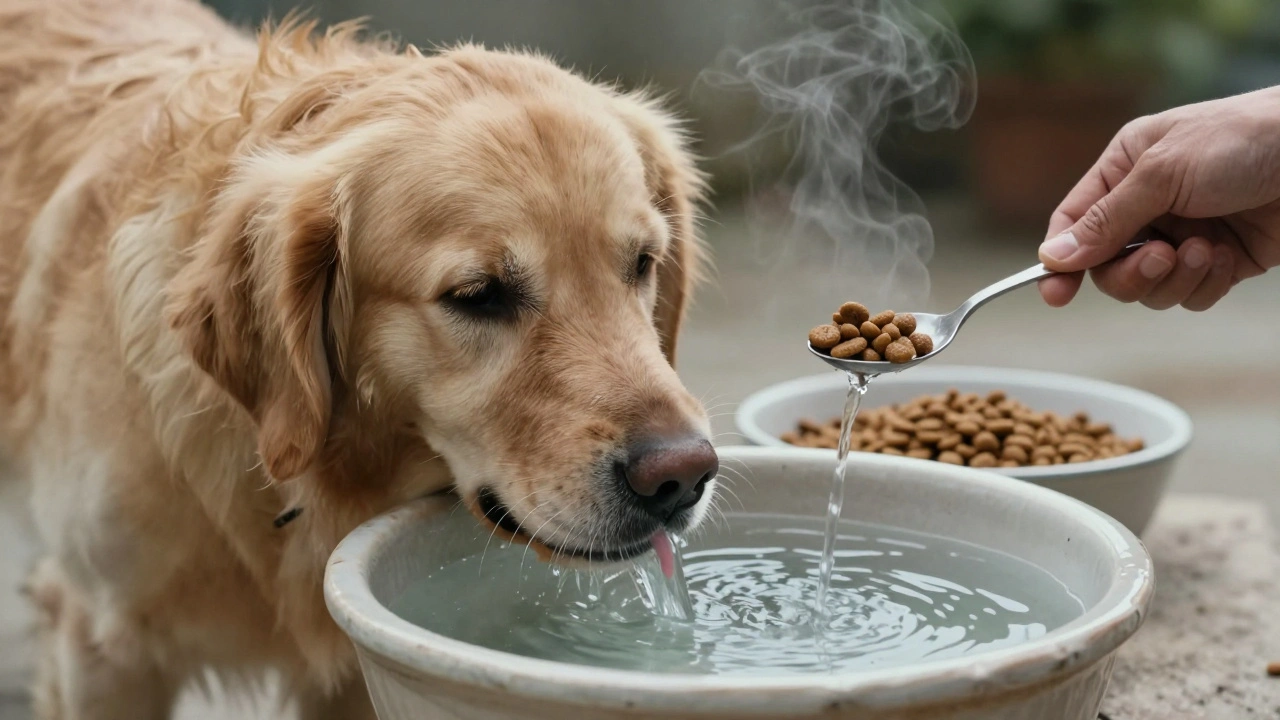
How to Encourage Hydration in Senior Dogs
Don’t just leave water out and hope for the best. Try these proven methods:
- Switch to wet food. Canned food is 70-80% water. Feeding two cans a day can replace over a cup of drinking water.
- Use a pet fountain. Many senior dogs prefer running water. The movement attracts them, and the filtered flow tastes cleaner.
- Add water to dry kibble. Soak their food in low-sodium broth or warm water for 10 minutes before serving. This makes it easier to chew and increases moisture.
- Offer ice cubes. Some dogs prefer licking ice. Freeze low-sodium chicken broth into cubes for extra flavor.
- Place multiple water bowls. Put bowls in every room they frequent - near their bed, by the door, even on the porch. Make access effortless.
One owner in Eugene started offering her 14-year-old Shih Tzu flavored water (bone broth diluted 50/50 with water). Within a week, her water intake doubled. She didn’t need supplements or medications - just better access.
How to Stimulate Appetite in Senior Dogs
Here’s what actually works, based on veterinary behavior studies:
- Warm the food. Heating food to body temperature (around 100°F) releases more aroma. Try microwaving it for 10 seconds.
- Feed smaller, more frequent meals. Three small meals a day are easier on an aging digestive system than two large ones.
- Try novel proteins. If they’ve eaten chicken for years, switch to turkey, duck, or fish. New smells can reignite interest.
- Hand-feed occasionally. Some dogs associate eating with stress (past vet visits, loud noises). Hand-feeding builds positive associations.
- Check for nausea. If they vomit or seem queasy after eating, ask your vet about anti-nausea meds like maropitant.
Don’t force-feed. It creates fear. Instead, make food irresistible. A sprinkle of nutritional yeast, a spoonful of plain pumpkin, or a dash of fish oil can make all the difference.
When to See the Vet
Not every loss of appetite or reduced water intake is an emergency - but some signs are red flags:
- No food or water for more than 24 hours
- Weight loss of more than 5% in a month
- Vomiting, diarrhea, or excessive drooling
- Lethargy, stumbling, or confusion
- Yellow gums or whites of the eyes (sign of liver trouble)
These aren’t "wait and see" situations. Bloodwork, urinalysis, and abdominal ultrasound can reveal hidden kidney disease, liver problems, cancer, or thyroid issues. Early detection gives you options - and time.
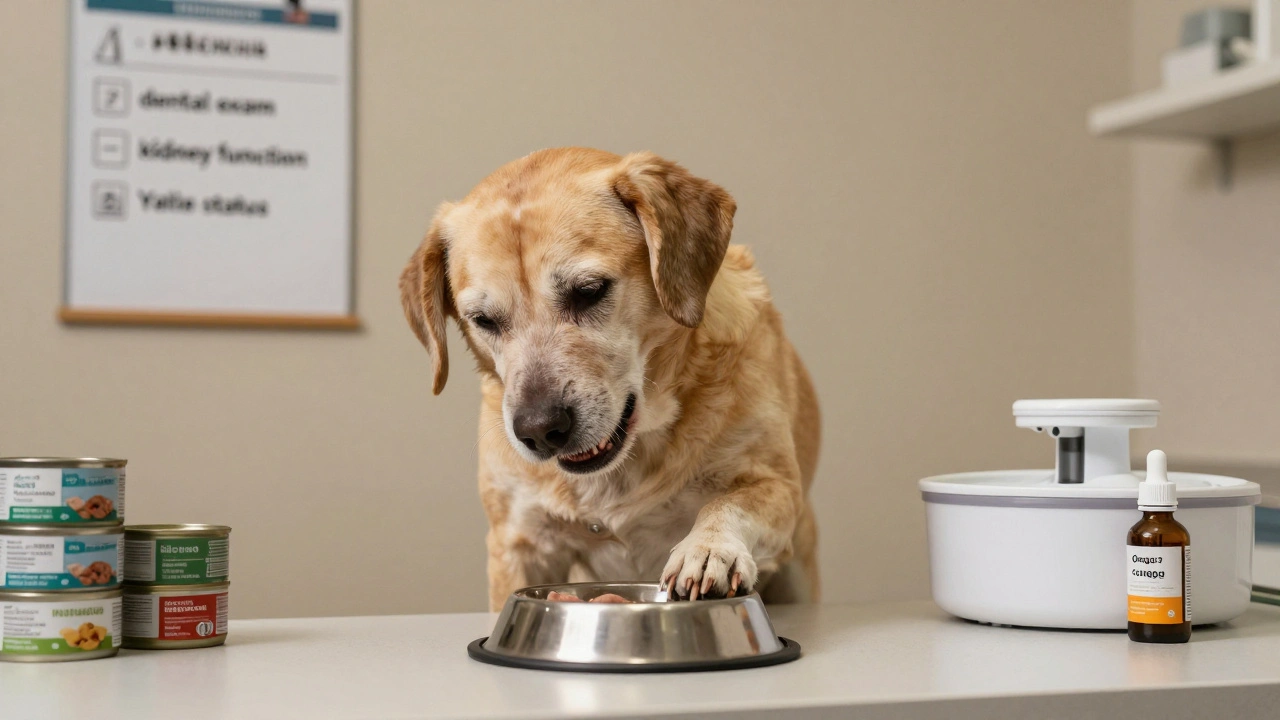
Supplements and Diets That Help
Some senior-specific diets are formulated to support kidney function and improve digestibility. Look for low-phosphorus, high-moisture formulas with omega-3s. Brands like Hill’s Prescription Diet k/d or Royal Canin Renal Support have been tested in clinical trials with senior dogs.
Supplements like probiotics (for gut health), appetite stimulants like mirtazapine (prescription only), and omega-3 fatty acids (to reduce inflammation) can help - but always talk to your vet first. What works for one dog can harm another.
Real-Life Example: Max’s Story
Max, a 13-year-old Golden Retriever, stopped eating and drinking for four days. His owner thought he was just tired of his routine. But when Max started stumbling and panting constantly, they went to the vet.
Tests showed early-stage kidney disease and severe dental decay. After a dental cleaning, a switch to wet food, and daily subcutaneous fluids at home, Max gained back 4 pounds in six weeks. He started greeting his owner at the door again - not because he was young, but because he was comfortable.
It’s not about making your dog feel young again. It’s about making them feel well.
What Not to Do
- Don’t switch foods suddenly - it can worsen nausea.
- Don’t give table scraps. Fatty or salty foods stress aging organs.
- Don’t assume they’re just "getting old." Pain and illness don’t have an age limit.
- Don’t wait for symptoms to get worse before acting.
Senior dogs don’t need fancy treats or expensive diets. They need consistency, comfort, and attention. A quiet feeding spot. A clean water bowl. A vet who listens. That’s what keeps them thriving.
Why does my senior dog drink less water than before?
As dogs age, their kidneys become less efficient at concentrating urine, which means they lose more water through urination. Their brain’s thirst signal also weakens, so they don’t feel the need to drink even when they’re dehydrated. Medications, dental pain, or illness can also reduce water intake. It’s not normal - and it needs attention.
Is wet food better for senior dogs with appetite issues?
Yes. Wet food contains 70-80% water, which helps with hydration and is often easier to smell and chew. The stronger aroma and softer texture can stimulate appetite in dogs with dental problems or reduced sense of smell. Many senior dogs eat more readily from a wet food diet than from dry kibble.
Can dental problems cause a senior dog to stop eating?
Absolutely. Loose teeth, gum infections, mouth ulcers, or jaw pain make chewing painful. A dog may approach their bowl, sniff, and then walk away - not because they’re picky, but because it hurts. A veterinary dental exam is essential if appetite loss coincides with drooling, bad breath, or reluctance to chew.
How can I tell if my senior dog is dehydrated?
Check for dry gums, sunken eyes, or skin that stays tented when gently pinched on the back. Dark, concentrated urine and lethargy are also signs. If you suspect dehydration, offer water and contact your vet immediately - dehydration can quickly lead to kidney stress or failure in older dogs.
Should I give my senior dog supplements to improve appetite?
Some supplements like probiotics or omega-3s can help, but never start them without veterinary guidance. Prescription appetite stimulants like mirtazapine are often more effective for dogs with medical causes of appetite loss. Over-the-counter options can interfere with medications or worsen underlying conditions.