When the temperature swings from freezing to sweltering, your dog doesn’t get a weather app to tell them when to slow down. They’ll still beg for a walk, chase a ball, or sprint through the yard-no matter how extreme it is outside. That’s on you to adjust. Too much heat or cold can turn a fun outing into a medical emergency. Here’s how to keep your dog safe and active year-round.
How Heat Affects Dogs
Dogs don’t sweat like humans. They pant. That’s their main way to cool off. But panting isn’t enough when the air is thick and humid. Temperatures above 80°F (27°C) start to become risky, especially for short-nosed breeds like Bulldogs, Pugs, or Boston Terriers. Their airways are already restricted, so they struggle to get enough air. A 90°F day with 70% humidity? That’s a recipe for heatstroke.
On a hot day, pavement can hit 140°F-even if the air feels like 85°F. That’s hot enough to burn paw pads in under a minute. Dark-colored dogs absorb more heat. Overweight dogs and older dogs have less tolerance. If your dog is panting heavily, drooling excessively, or seems confused or wobbly, get them indoors immediately. Heatstroke kills. It doesn’t wait.
Exercise Tips for Hot Weather
- Walk early or late: Before 7 a.m. or after 8 p.m. is safest. Check the ground with your hand-if it’s too hot for your skin, it’s too hot for paws.
- Stick to grass or dirt: Avoid asphalt, concrete, and synthetic turf. Grass stays cooler and is gentler on pads.
- Shorten walks: A 15-minute stroll is better than a 45-minute marathon in the heat. Break it into two sessions if needed.
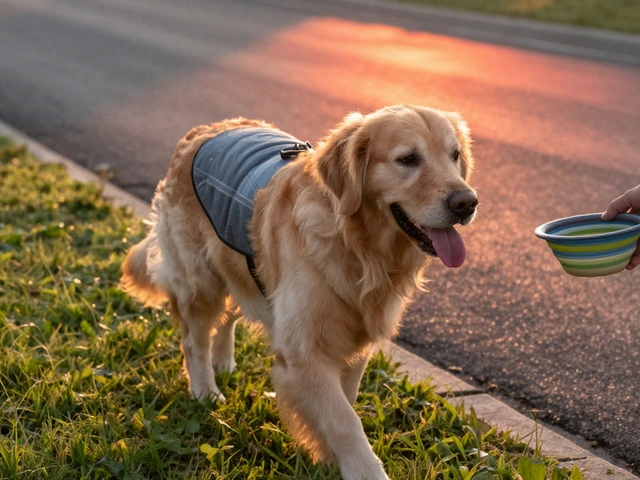
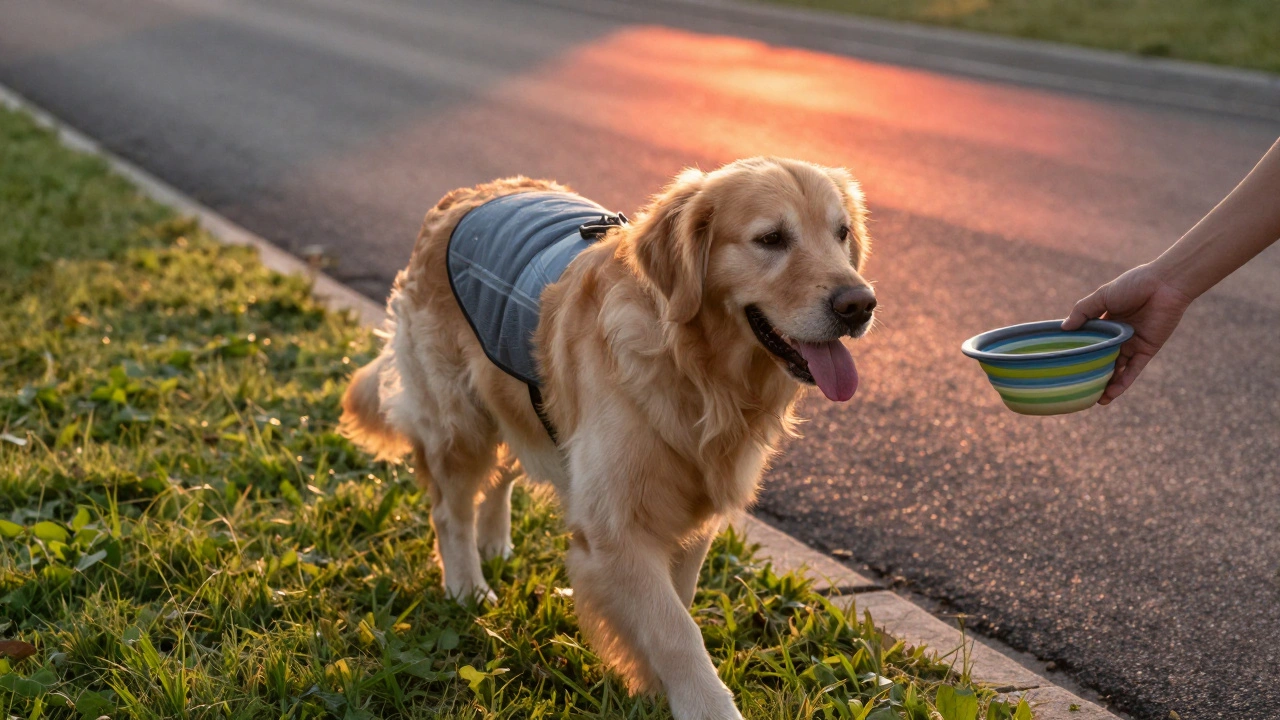
- Carry water: Always bring a collapsible bowl and fresh water. Even a few sips can help.
- Use cooling gear: Cooling vests, wet bandanas, or even a damp towel draped over their back can help regulate temperature.
- Skip intense play: Fetch, tug-of-war, and running after squirrels spike body temperature fast. Save those for cooler days.
Some dogs, especially high-energy breeds like Border Collies or Australian Shepherds, need mental stimulation when physical exercise is limited. Try puzzle toys, scent games, or indoor training sessions. A 10-minute obedience drill with treats can tire them out just as much as a long walk.
How Cold Affects Dogs
Not all dogs handle cold the same. A thick-coated Husky or Newfoundland might romp in snow like it’s spring. A Chihuahua in a sweater? They’re shivering before they even step outside. Body size matters. Small dogs lose heat faster. Thin coats offer little insulation. Senior dogs and those with arthritis feel the chill more deeply.
Ice and salt are silent dangers. Rock salt and chemical deicers can irritate paws, cause chemical burns, or make dogs sick if licked off their fur. Snow can pack between toes, leading to frostbite. And don’t forget wind chill-it drops the real temperature faster than the thermometer shows.
Exercise Tips for Cold Weather
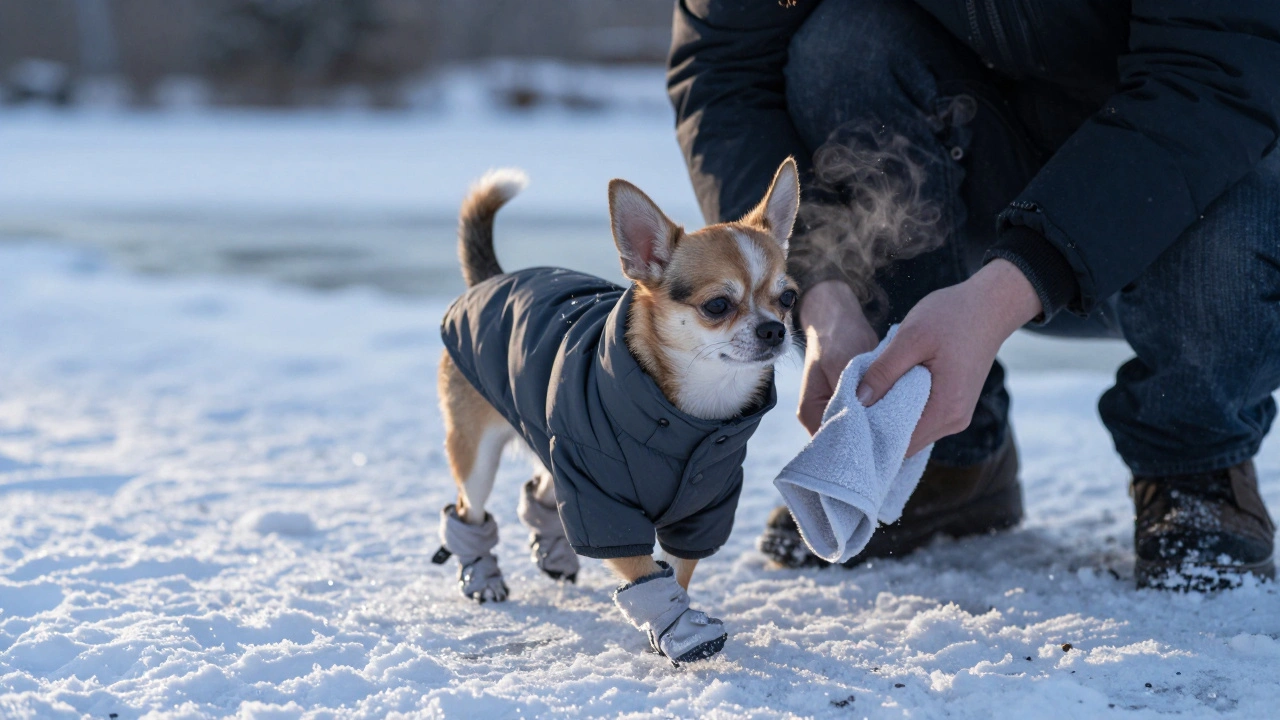
- Use booties: Lightweight, non-slip dog boots protect paws from salt, ice, and sharp snow crystals. Most dogs adapt within a few tries.
- Dress them up: For short-haired, small, or elderly dogs, a well-fitted coat with a high neck and belly coverage helps retain body heat.
- Keep walks shorter: A 20-minute walk in 20°F weather is enough for most dogs. Focus on quality over quantity.
- Wipe paws after every outing: Use a warm, damp towel to remove salt, ice, and debris. Check for cracks, redness, or swelling.
- Avoid frozen lakes and ponds: Ice thickness varies. One wrong step and your dog could fall through. Even if it looks solid, don’t risk it.
- Watch for shivering or lifting paws: These are signs your dog is too cold. Head inside immediately.
Indoor exercise is just as important in winter. Set up a mini obstacle course with pillows, tunnels, and toys. Play hide-and-seek with treats. Teach new tricks. A 10-minute session of focus work can burn mental energy-and that counts as exercise too.
Signs Your Dog Is Struggling
Both heat and cold can lead to serious issues if ignored. Know the red flags:
- Heat: Excessive panting, bright red gums, vomiting, weakness, collapse, glazed eyes.
- Cold: Shivering, lethargy, whining, lifting paws off the ground, reluctance to move, stiff gait.
If you see any of these, act fast. For heat: move to shade, apply cool (not icy) water to their belly and paws, offer small sips of water, call the vet. For cold: bring them inside, dry them off, wrap them in a warm blanket, and monitor their temperature. Don’t wait to see if they "get better on their own."

What to Avoid
There are myths about dog exercise in extreme weather that can hurt your pet.
- Don’t leave them in the car: Even with windows cracked, a car heats up 20°F faster than the outside air. In winter, it can drop below freezing inside. Never leave your dog alone in a vehicle.
- Don’t assume breed = tolerance: Just because a dog is "bred for cold" doesn’t mean they can handle 10 hours in the snow. Every dog is an individual.
- Don’t skip vet checks: Dogs with heart disease, thyroid issues, or respiratory problems are more vulnerable. Talk to your vet before changing routines.
Seasonal Routine Adjustments
Think of your dog’s exercise like a calendar. In spring and fall, you can go full throttle. In summer and winter, you dial it back.
Here’s a simple weekly plan:
- Summer: Two 15-minute walks, one in morning, one at night. One 10-minute indoor play session.
- Winter: Two 20-minute walks, with booties and coat. One 15-minute indoor game or training session.
- Transition seasons: One 30-45 minute walk, plus one play session.
Track your dog’s behavior. If they’re less eager to go out, more tired after, or seem stiff, adjust accordingly. Their body is telling you what they need.
Final Thought: It’s Not About How Much-It’s About How Safe
Exercise isn’t just about burning energy. It’s about keeping your dog mentally sharp, physically healthy, and emotionally balanced. But none of that matters if they’re overheated, frostbitten, or in pain. The goal isn’t to match your neighbor’s dog’s daily mileage. It’s to make sure your dog comes home happy, healthy, and ready for tomorrow.
Can dogs get frostbite on their paws?
Yes. Frostbite most commonly affects the tips of ears, tail, and paws. Signs include pale or grayish skin, swelling, blisters, or numbness. If you suspect frostbite, warm the area slowly with lukewarm water-never use direct heat. Get to a vet immediately.
How do I know if my dog is too hot or too cold?
If your dog is panting heavily, drooling, or seems disoriented, they’re too hot. If they’re shivering, lifting paws, or refusing to go outside, they’re too cold. Trust their behavior. Your dog won’t complain-but they’ll show you clearly if something’s wrong.
Is it safe to exercise my dog in the snow?
Yes, but with precautions. Use dog boots to protect paws from ice and salt. Keep walks short in extreme cold. Avoid deep snow where your dog could get stuck or fall through thin ice. Always wipe their paws and belly when you come inside.
Do dogs need more food in winter?
Some active dogs in very cold climates may burn extra calories to stay warm. But for most indoor dogs, extra food leads to weight gain. Talk to your vet before changing portions. Activity level matters more than temperature alone.
Can I still take my dog to the dog park in summer?
Dog parks are risky in summer. The ground is hot, dogs run hard, and shade is often limited. If you go, visit early in the morning, bring water, and watch for signs of overheating. Consider skipping it on days over 85°F.