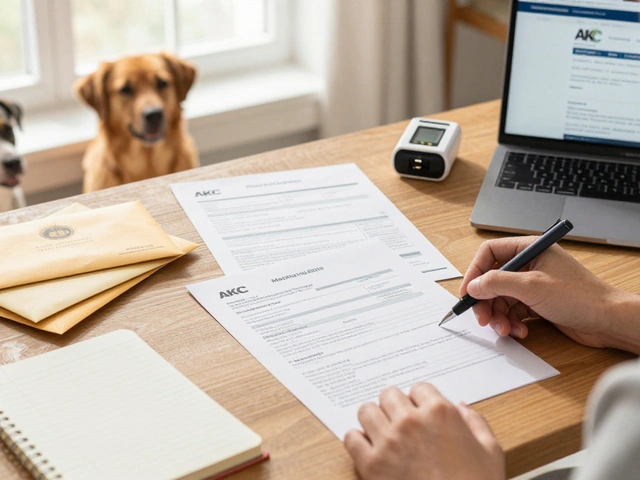
When you breed dogs, you're not just raising puppies-you're building a legacy. And that legacy starts with paperwork. The American Kennel Club (AKC) and other official registries don't just keep records for fun. They exist to protect breed integrity, ensure transparency, and give buyers confidence. If you skip the basics, you risk losing credibility, facing fines, or worse-having your litters disqualified from showing or breeding programs.
Why Documentation Matters More Than You Think
Think of registration papers like a birth certificate for your dog. Without them, a puppy can't compete in AKC events, can't be legally sold as a registered purebred, and can't be traced back to its lineage. That’s not just a formality-it affects value, trust, and long-term reputation. A breeder who doesn’t file paperwork correctly isn’t just lazy; they’re undermining the entire system that supports responsible breeding.
According to AKC data from 2025, over 85% of rejected registrations were due to incomplete or incorrect documentation-not because the dogs weren’t purebred, but because the paperwork was messy. Missing signatures, wrong dates, mismatched microchip numbers, or failing to report a litter within the required 30 days are all common mistakes that cost breeders time, money, and trust.
What You Need Before You Breed
You can’t register a litter unless you’ve already taken care of three things:
- Your own registration as a breeder - You must be an AKC-registered owner of both the sire and dam. If either parent isn’t registered with AKC, the litter won’t qualify.
- Proof of parentage - Both the male and female must have valid AKC registration numbers. If they were imported, you need the original foreign registry papers translated and submitted.
- A breeding record - The AKC requires you to log the date of mating, the names of the dogs involved, and the location. This isn’t optional. Keep a notebook or digital log. You’ll need it.
Many breeders make the mistake of assuming that because their dogs have pedigrees, the paperwork will take care of itself. It doesn’t. The AKC doesn’t auto-populate records. You have to submit everything manually, on time.
The Litter Registration Process: Step by Step
Once the puppies are born, you have 30 days to register the litter. Missing that deadline means you’ll pay a late fee-$35 extra per puppy. Here’s what you need to do:
- Count your puppies - Number them from 1 to however many were born. Keep a photo log with each pup’s markings and sex. This helps avoid mix-ups later.
- Fill out Form AKC 200 - This is the official litter registration form. You can download it from the AKC website or get it from your vet if they’re AKC-approved.
- Provide parent details - Full names, registration numbers, dates of birth, and breed of both parents. Double-check these. One typo can invalidate the whole litter.
- Sign and date - You must sign as the owner of the dam. If you’re not the owner, the actual owner must sign. No exceptions.
- Submit with payment - As of 2026, the fee is $25 per puppy. Pay online through the AKC portal. Keep a screenshot of your confirmation.
Don’t wait until the last day. Submit early. If there’s a problem-like a missing microchip number or mismatched name-you’ll have time to fix it before the deadline.

Microchips and DNA: New Requirements
In 2024, the AKC updated its rules to require all breeding dogs to be microchipped and DNA-verified if they’re used for breeding more than twice. This is to prevent fraud, like dogs being passed off as purebred when they’re mixed or stolen.
Here’s what that means for you:
- If you breed a female more than twice, you must have her DNA on file with AKC. You can order a DNA kit from the AKC website. The kit includes a cheek swab, instructions, and a prepaid return envelope.
- Microchips must be ISO 11784/11785 compliant. Not all chips are equal. If your vet used a non-standard chip, you’ll need to have a second one implanted before registering future litters.
- Each puppy must be microchipped before leaving your home. The chip number must match the one on the registration form.
Some breeders think DNA testing is only for show dogs. It’s not. It’s now mandatory for any dog used in breeding, regardless of whether it ever steps into a ring.
What Happens If You Skip the Rules?
Ignoring registration rules doesn’t just mean you lose paperwork. It can cost you your reputation-and your business.
- No AKC papers = no buyers - Serious buyers look for registration numbers. If you can’t provide them, you’ll be stuck selling to pet stores or online buyers who don’t care about lineage.
- Disqualification - If you’re caught falsifying records, the AKC can suspend your breeder privileges. That means no more litters can be registered under your name.
- Legal trouble - In Oregon, selling unregistered purebred dogs as pedigreed can be considered fraud under consumer protection laws. There have been at least three cases in the last two years where breeders were fined $5,000+ for misrepresentation.
Even if you don’t plan to show your dogs, you still need to follow the rules. The AKC doesn’t care if you’re a hobby breeder or a commercial operation. If you’re breeding purebreds, you’re part of the system.

What to Do If You Already Made a Mistake
It happens. Maybe you forgot to register a litter. Maybe you mixed up the microchip numbers. Don’t panic. The AKC has a correction process.
- For late registration: Pay the $35 late fee per puppy. Submit the form with a letter explaining why it was late. Honesty helps.
- For incorrect data: Submit Form AKC 201 (Correction Request). Attach proof-vet records, photos, DNA results. There’s a $15 fee per correction.
- For lost papers: Order replacement certificates for $15 each. Keep digital backups.
The key is to act fast. The longer you wait, the harder it gets. The AKC doesn’t erase records. They just make you jump through more hoops to fix them.
Tools and Resources You Need
Here’s what every responsible breeder should have on hand:
- AKC Breeder Portal - Your dashboard for submitting litters, checking status, and downloading forms.
- Printable Litter Checklist - Download the AKC’s official checklist. Tape it to your wall. Use it every time.
- Digital Backup - Scan every form, every receipt, every DNA result. Store them in a folder labeled “AKC Records-[Your Kennel Name].”
- AKC Handbook for Breeders - Free PDF. Read it once a year. Rules change.
Set a calendar reminder: Every January 15th, review your records. Check expiration dates on DNA kits. Verify that all your dogs’ microchips are registered with AKC. One hour a year saves you hundreds in fees and headaches.
Final Thought: This Isn’t Red Tape-It’s Trust
Registration isn’t about control. It’s about accountability. When you do the paperwork right, you’re telling buyers: I care enough to prove what I’m selling. That’s what separates a good breeder from a great one.
You’re not just filling out forms. You’re helping preserve the history of your breed. Whether you breed Golden Retrievers, German Shepherds, or Bulldogs, your records become part of a larger story. Get it right, and you’re not just a breeder-you’re a steward.
Do I need AKC registration if I’m not showing my dogs?
Yes. Even if you never enter a show, AKC registration is required to legally sell puppies as purebred. Buyers expect paperwork, and without it, you lose credibility and market value. The AKC doesn’t exempt hobby breeders.
Can I register a litter if one parent isn’t AKC registered?
No. Both the sire and dam must have valid AKC registration numbers. If a parent was registered with a foreign registry, you must submit translated papers and proof of import approval. Without both parents registered, the litter cannot be registered with AKC.
What happens if I miss the 30-day litter registration deadline?
You’ll pay a $35 late fee per puppy, and the registration will be marked as late in the system. The puppies can still be registered, but their paperwork will show the delay. Repeated late submissions can trigger an audit of your breeding practices.
Is DNA testing really mandatory for all breeding dogs?
Yes, as of 2024, any dog used for breeding more than twice must have its DNA on file with AKC. This applies regardless of whether the dog shows, is sold, or is kept as a pet. The rule exists to prevent fraud and ensure accurate lineage records.
Can I use a microchip from any vet?
Only if it’s ISO 11784/11785 compliant. Many vet clinics use non-standard chips that won’t work with AKC systems. Always ask your vet which chip they’re using. If unsure, purchase an AKC-approved microchip directly and have it implanted yourself.