How often should you bathe your dog? It’s not a one-size-fits-all answer. Some owners wash their dogs every week. Others wait months. And both might be right-or terribly wrong-depending on the dog. The truth is, bathing frequency isn’t about convenience or smell. It’s about your dog’s skin health, breed, and daily life.
Why Too Many Baths Can Hurt Your Dog
Most people think dogs need frequent baths to stay clean. But dog skin is different from human skin. A dog’s skin has a pH level around 7.5, while human skin is around 5.5. Human shampoos strip away natural oils meant to protect a dog’s coat and skin. Overwashing dries out the skin, triggers itching, and can lead to hot spots, flaking, or even bacterial infections.
Studies from the American College of Veterinary Dermatology show that dogs bathed more than once every two weeks without a medical reason are 3 times more likely to develop skin irritation. That doesn’t mean you should never bathe them. It means you need to match the frequency to their needs-not your schedule.
Breed Matters More Than You Think
Not all dogs are built the same. Coat type directly affects how often they need a bath.
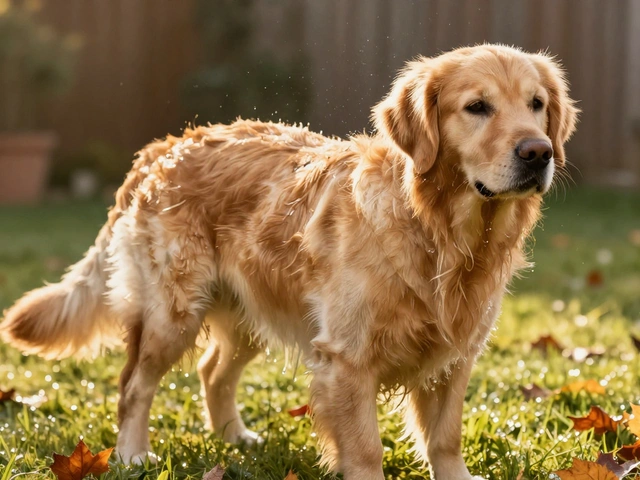
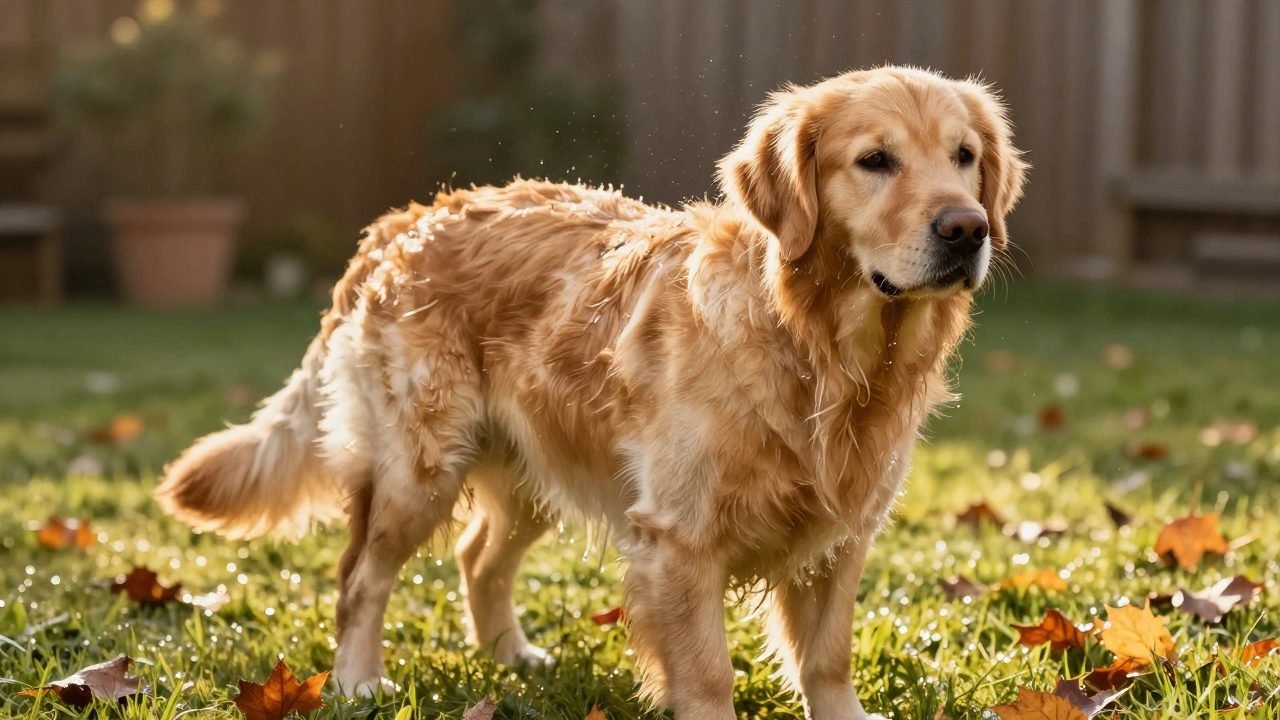
- Double-coated breeds like Huskies, German Shepherds, and Golden Retrievers have an undercoat that traps dirt and sheds seasonally. These dogs rarely need full baths-once every 3 to 4 months is usually enough. Bathing too often removes the natural oils that keep their coat waterproof and insulated.
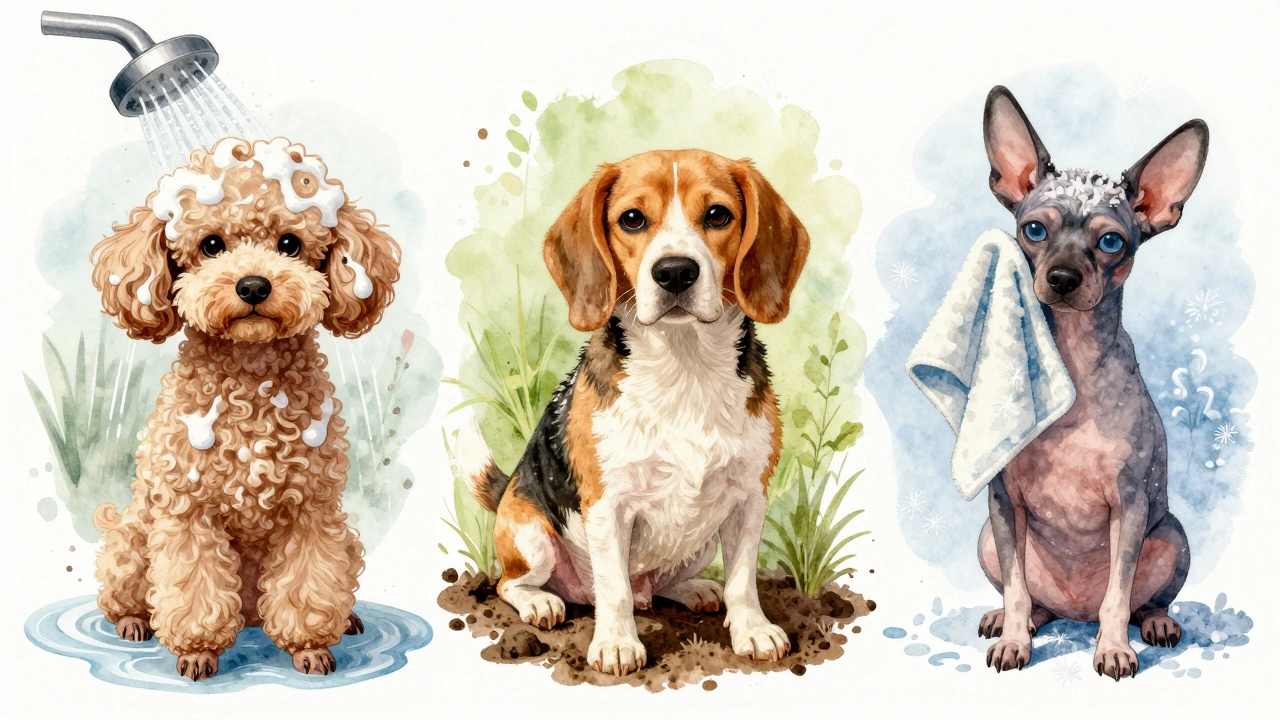
- Curly or corded coats like Poodles, Bichon Frises, and Lagotto Romagnolos trap debris and oils. These breeds need baths every 4 to 6 weeks to prevent matting and odor buildup. Skipping baths can lead to skin infections hidden under the curls.
- Short-haired breeds like Beagles, Boxers, and Dachshunds naturally shed oils and dirt. A bath every 2 to 3 months works for most. If they roll in mud or smell like a dumpster, then a wash is fine-but don’t make it routine.
- Hairless breeds like Chinese Cresteds and Xoloitzcuintlis need weekly baths. Their skin produces oils that can build up and clog pores. Without regular cleaning, they’re prone to acne and sunburn.
Even within breeds, individual differences matter. A Border Collie that spends all day herding sheep will need more frequent baths than one that lounges on the couch.
Lifestyle Determines the Real Schedule
Your dog’s daily routine is the biggest factor in how often they need a bath.
- Outdoor dogs that hike, swim, or dig in the yard pick up dirt, pollen, algae, and even ticks. These dogs may need a bath every 4 to 6 weeks, especially after rainy seasons or swimming in lakes.
- Indoor dogs with limited outdoor time can go 3 to 6 months between baths. Unless they have allergies or skin issues, their environment doesn’t expose them to much grime.
- Dogs that swim regularly (in pools, lakes, or oceans) need a rinse after every dip. Chlorine and salt dry out skin. A full bath isn’t always needed, but a thorough rinse with clean water helps prevent irritation.
- Dogs with allergies (to pollen, dust, or food) benefit from weekly or biweekly baths using veterinarian-recommended oatmeal or medicated shampoos. This washes away allergens stuck in their fur before they trigger reactions.
One client in Portland I’ve worked with bathes her Labrador every two weeks during spring because of ragweed pollen. In winter, she skips baths entirely. She noticed fewer paw-licking episodes and less redness around her dog’s eyes. That’s not luck-it’s targeted grooming.
Signs Your Dog Needs a Bath (Or Doesn’t)
You don’t need a calendar. You need to read your dog.
- Bath needed: oily or greasy coat, strong odor (not just after rolling in something), visible dirt in fur, excessive scratching, flaky skin, or a dull, matted coat.
- No bath needed: shiny, clean coat, no smell, no itching, and skin that looks smooth and healthy. If your dog’s coat repels water after a light rain, that’s a good sign their natural oils are balanced.
Always check the skin under the fur. Red patches, scabs, or bumps mean something’s wrong. A bath won’t fix it. See a vet.
What to Use (And What to Avoid)
Not all shampoos are created equal. Human shampoos, dish soap, or even baby shampoo can be too harsh. Look for:
- Ph-balanced dog shampoos (pH 6.5-7.5)
- Ingredients like oatmeal, aloe vera, or chamomile for sensitive skin
- Medicated formulas with chlorhexidine or ketoconazole if your vet recommends them for infections or allergies
Avoid:
- Artificial fragrances (they irritate skin)
- Tea tree oil (toxic to dogs in concentrated form)
- Shampoos with sulfates or parabens
Conditioners are fine for long-haired dogs, but skip them for short-haired breeds. They can weigh down the coat and trap moisture against the skin.
When to Skip the Bath Altogether
There are times when a bath does more harm than good:
- Right after vaccination-skin can be sensitive
- If your dog has open wounds or recent surgery
- During extreme cold or wet weather (wet fur + cold air = risk of hypothermia)
- When your dog is stressed or anxious-bathing can make fear worse
In those cases, use a dry shampoo or just wipe down with a damp cloth. Focus on the paws, belly, and armpits-the areas that collect the most dirt.
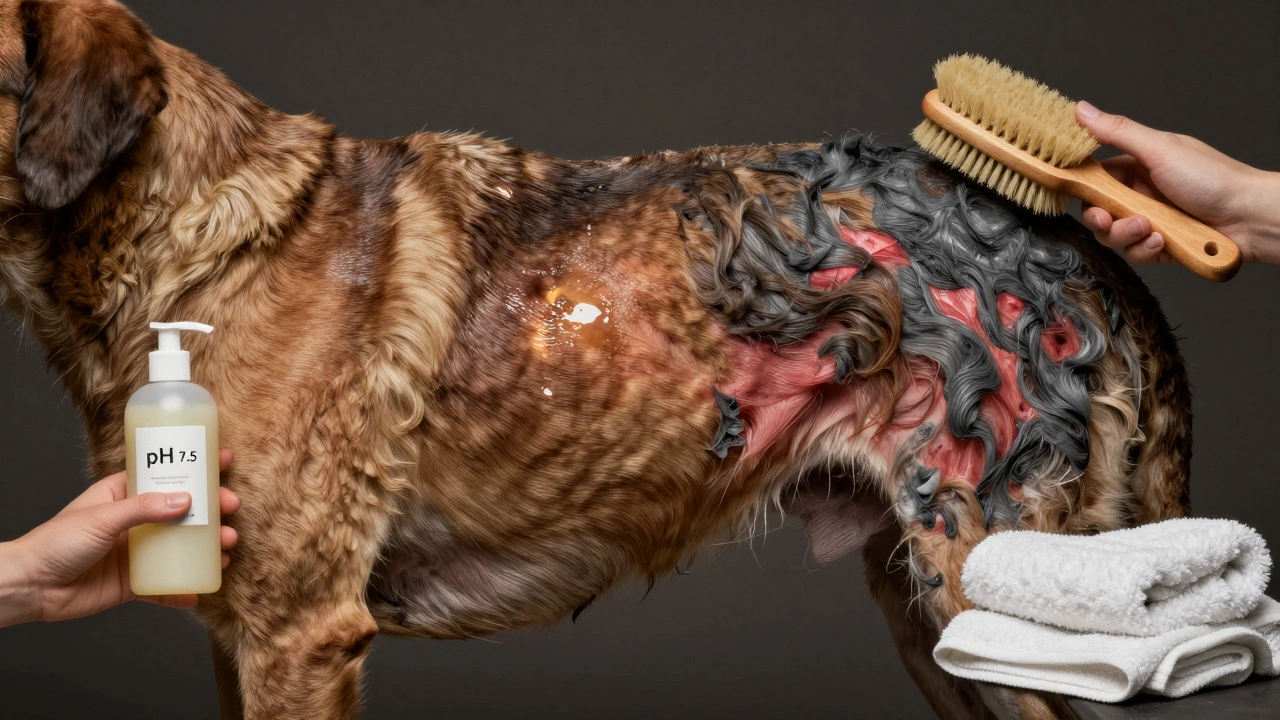
Brushing Is Part of the Routine Too
Bathing isn’t the only way to keep your dog clean. Regular brushing does half the job.
- Double-coated dogs: Brush 2-3 times a week to remove loose undercoat
- Short-haired dogs: Brush once a week to distribute oils
- Long-haired dogs: Daily brushing prevents mats
A good brush removes dirt, dead skin, and allergens without stripping natural oils. It also lets you check for ticks, lumps, or skin issues early.
Final Rule of Thumb
There’s no magic number. But here’s a simple guideline:
- If your dog smells bad, looks dirty, or is scratching a lot → bathe.
- If their coat is shiny, clean, and they’re not itching → wait.
- Never bathe more than once every 2 weeks unless your vet says so.
And always, always dry them completely. Wet fur trapped against skin is a breeding ground for yeast and bacteria. Use a towel, then a blow dryer on low heat if your dog tolerates it.
What About Dry Shampoos?
Dry shampoos and wipes are great for quick refreshes between baths. They work well for:
- Spot cleaning paws after walks
- Refreshing the coat after a muddy day
- Keeping dogs clean between baths during travel
But they’re not a replacement for water baths. They don’t remove deep dirt or oils. Use them as a supplement-not a solution.
How often should I bathe my puppy?
Puppies under 12 weeks old have delicate skin and low body temperature regulation. Wait until they’re at least 8 weeks old for their first bath, and only bathe them if they’re visibly dirty. After that, bathe once every 6 to 8 weeks unless they get into something messy. Use a gentle puppy shampoo and make sure they’re completely dry before going outside.
Can I bathe my dog if they have allergies?
Yes-but only with vet-approved medicated shampoos. Dogs with environmental allergies (like pollen or dust) benefit from weekly baths to rinse allergens off their coat. Look for shampoos with oatmeal, aloe, or antifungal ingredients like ketoconazole. Never use human antihistamine creams or sprays on your dog’s skin.
Do I need to bathe my dog if they swim in the ocean or pool?
Yes, rinse them off after every swim. Saltwater and chlorine dry out skin and can cause irritation. A thorough rinse with fresh water is enough. A full bath isn’t needed every time unless they’ve been swimming in dirty or algae-filled water. Always check their ears after swimming-moisture there can lead to infections.
Why does my dog smell bad even after a bath?
If your dog still smells bad after a bath, the issue might not be dirt. Yeast infections, ear infections, dental disease, or anal gland problems can all cause persistent odors. A bath only masks surface smells. If the odor returns within a few days, schedule a vet visit. These are treatable conditions-but not with more shampoo.
Is it okay to bathe my dog in winter?
Yes, but be careful. Bathe your dog indoors where it’s warm. Dry them completely with towels and a low-heat dryer. Never bathe them right before a walk in freezing weather. Wet fur + cold air = risk of hypothermia. In winter, consider using dry shampoo between baths and focus on cleaning paws and underbelly after walks.