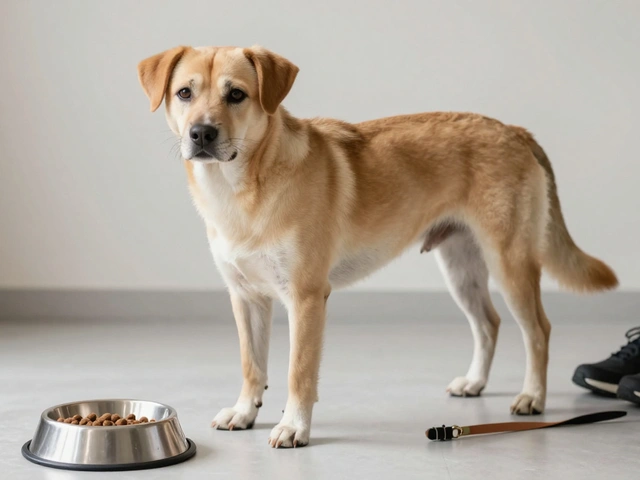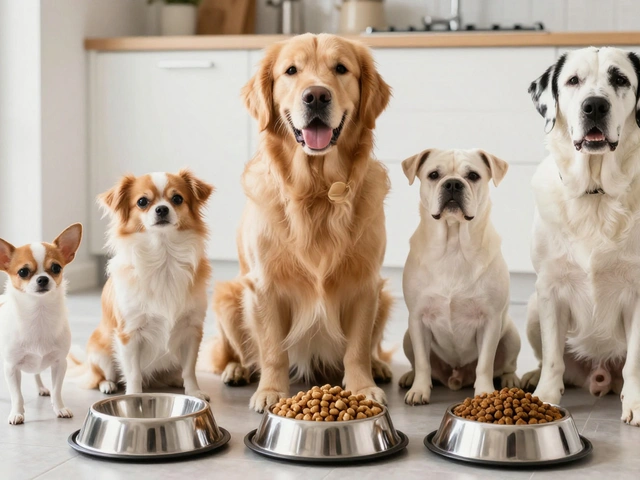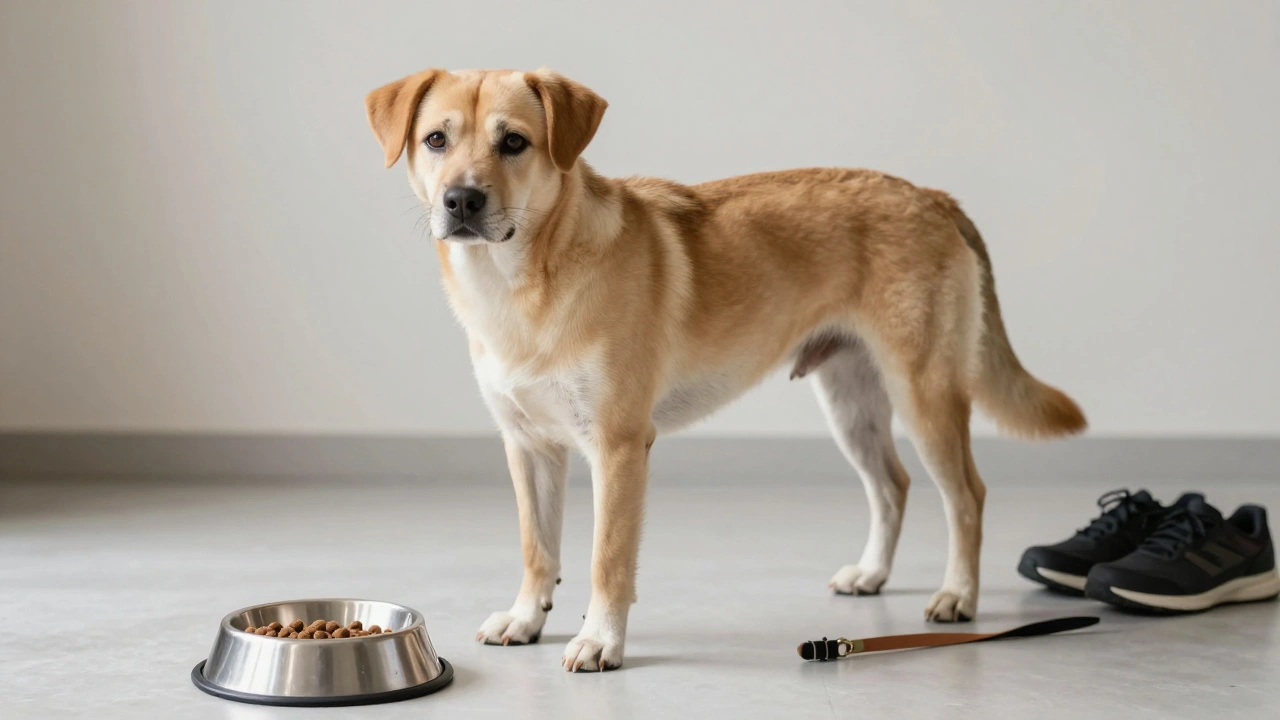
Getting your dog’s feeding schedule right isn’t just about sticking to a clock-it’s about reading their body, understanding their needs, and avoiding the silent slide into overweight or undernourished health. Too many dog owners feed based on convenience, not cues. And that’s why so many dogs end up carrying extra weight, feeling sluggish, or even developing digestive issues. The truth? Dogs don’t need three meals a day just because humans do. Their hunger signals are different, and their metabolism works on a rhythm you can learn.
How Many Meals Should a Dog Eat?
Adult dogs do fine with two meals a day. That’s the sweet spot for most breeds. One in the morning, one in the evening. It keeps their blood sugar steady, reduces begging, and gives their digestive system time to process food properly. Puppies under six months? They need three meals. Their tiny stomachs can’t hold enough food to last long, and they burn energy fast. Senior dogs over seven years might do better with two lighter meals, especially if they have joint pain or slower metabolism.
Feeding once a day? It’s not ideal. Sure, some dogs seem fine with it, but studies from the Journal of Veterinary Internal Medicine show that dogs fed once daily are more likely to develop gastric dilation (bloat) and show higher stress markers. They also tend to gorge, then go hours without eating-this rollercoaster isn’t healthy.
Reading Your Dog’s Hunger Cues
Not all whining at the kitchen counter means hunger. Dogs are smart. They learn that barking near the food bowl gets them attention, snacks, or even table scraps. True hunger cues are quieter and more physical.
- Low energy after meals - If your dog naps right after eating and wakes up alert, that’s normal. If they’re lethargic for hours, they might be overfed.
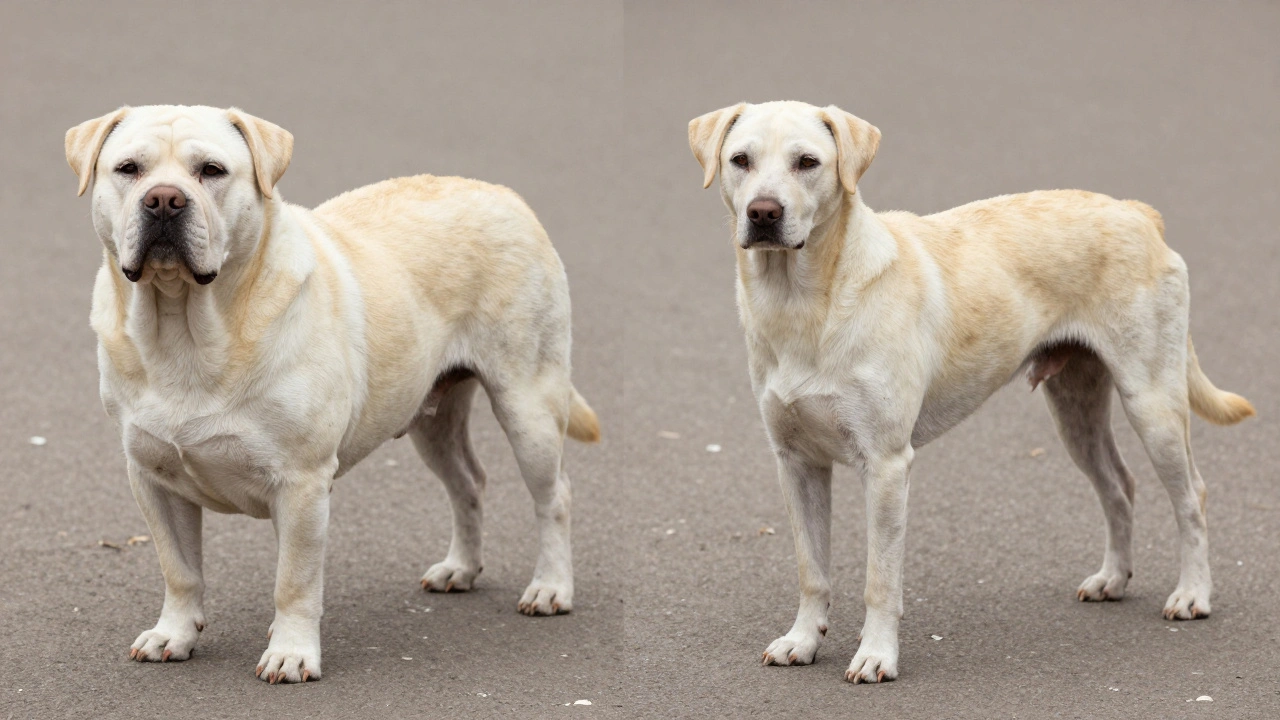
- Rib check - Run your hands along their sides. You should feel ribs with light pressure, not see them, but also not feel them buried under fat. If you can’t feel them at all, they’re carrying extra weight.
- Waistline - Look down at them from above. A healthy dog has a visible tuck behind the ribs. No waist? That’s a red flag.
- Not begging - A dog that doesn’t beg between meals? That’s a sign they’re properly fed. Constant sniffing, pacing, or staring at you while you eat? That’s learned behavior, not hunger.
Many owners mistake attention-seeking for hunger. If your dog is overweight and still asking for food, the problem isn’t lack of food-it’s too much food, too often.
Meal Timing That Works
Consistency matters more than exact time. Dogs thrive on routine. If you feed at 7 a.m. and 6 p.m. every day, their body learns to expect food then. Their stomach starts preparing, their insulin levels stabilize, and their hunger naturally peaks around those times.
Here’s a simple schedule that fits most lifestyles:
- Morning meal - 30 minutes after a walk. Movement helps digestion and prevents bloating.
- Evening meal - At least two hours before bedtime. This gives them time to digest and go potty before sleeping.
Don’t feed right before or after intense exercise. That increases the risk of gastric torsion, especially in deep-chested breeds like German Shepherds or Great Danes. A 2023 study from the University of Pennsylvania Veterinary School found that dogs fed within an hour of vigorous activity had 3.5 times higher risk of bloat.
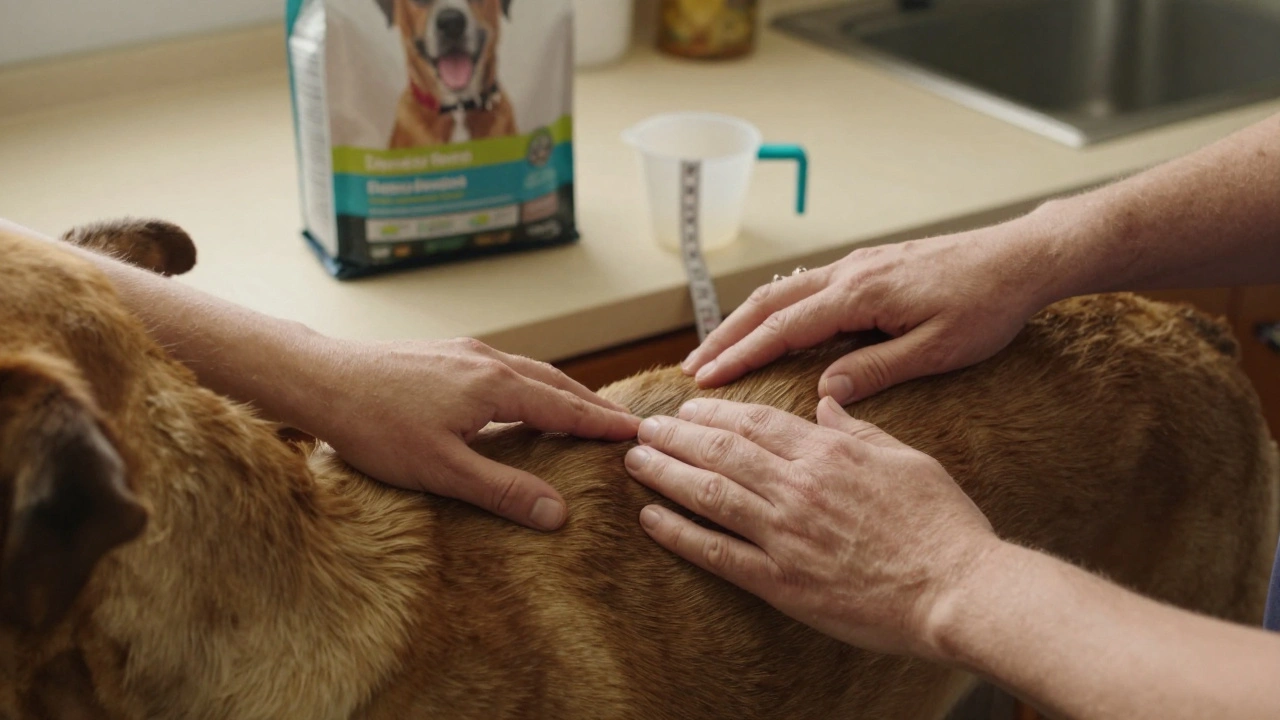
Weight Matters-Here’s How to Track It
Most owners don’t realize their dog is overweight until a vet points it out. By then, the damage might already be done. Arthritis, diabetes, heart strain-all these conditions climb with every extra pound.
Use this simple method every two weeks:
- Step on a scale with your dog, then without. The difference is their weight.
- Compare it to the breed standard. A 40-pound Border Collie? Healthy. A 40-pound Beagle? Way over.
- Take a photo from above and side. Compare month to month. Changes are subtle, but they add up.
Most dogs should gain or lose no more than 1-2% of their body weight per month. That’s about 4-8 ounces for a 40-pound dog. Faster than that? You’re either overfeeding or underfeeding.
Special Cases: Puppies, Seniors, and Active Dogs
Not all dogs follow the same rules.
Puppies (under 6 months): Feed three times a day. Use puppy-specific food. Their growth rate is explosive-missing a meal can stunt development. Avoid free-feeding. Even if they seem hungry, stick to scheduled meals. Overfeeding puppies leads to joint problems later.
Seniors (7+ years): Switch to senior-formula food. Their metabolism slows. They need fewer calories but more joint support. Feed smaller portions twice a day. If they’re less active, reduce portion size by 10-15%. Watch for dental issues-soft food might be needed.
Working or highly active dogs: Athletes like search-and-rescue dogs or agility competitors need more energy. Feed them three meals: two main ones and a small post-exercise snack. Their meals should be higher in protein and fat. A 60-pound agility dog might need 1,200-1,500 calories a day-compared to 800 for a couch-loving Lab.
Common Mistakes That Lead to Weight Gain
Here are the top three reasons dogs get overweight-even when owners think they’re doing everything right:
- Free-feeding - Leaving food out all day. Dogs don’t stop eating when full. They eat because it’s there. One study found free-fed dogs gained 18% more weight over six months than scheduled-feeders.
- Table scraps - That bite of chicken? It’s 120 calories. A single hot dog is 150. That’s nearly a full meal for a small dog. Even small treats add up fast.
- Ignoring portion labels - The bag says “feed 2 cups a day.” But you’re giving 3 because they look hungry. Those extra cups? That’s 300 extra calories. That’s 2 pounds a month.
Use a measuring cup. Every time. No guessing.
What to Do If Your Dog Is Already Overweight
If your dog is overweight, don’t just cut food. Change the system.
- Switch to a vet-approved weight-loss formula. These are higher in fiber, lower in fat, and keep them full longer.
- Replace treats with carrots, green beans, or apple slices. No more biscuits.
- Double their daily walk. Even 20 extra minutes burns 50-80 calories.
- Weigh them every two weeks. If they’re not losing 1-2% per month, adjust again.
It takes time. A 10-pound weight loss for a medium dog? That’s 6-8 months of steady effort. But every pound lost reduces joint pain, improves breathing, and adds years to their life.
Final Rule: Trust the Body, Not the Bowl
Your dog isn’t begging because they’re starving. They’re begging because they’ve learned it works. Their hunger cues are biological. Your feeding schedule should be behavioral.
Stick to two meals. Measure the food. Watch their ribs. Adjust slowly. And if you’re unsure? Get their body condition score from your vet. It’s a simple 1-9 scale. A score of 5 is ideal. Anything above 7? Time to change.
How often should I feed my adult dog?
Most adult dogs do best with two meals a day-one in the morning and one in the evening. This keeps their energy steady, prevents overeating, and supports healthy digestion. Feeding once a day increases the risk of bloat and digestive stress.
How do I know if my dog is overweight?
Check their body condition. Run your hands along their ribs-you should feel them with light pressure, not see them sticking out, but also not feel them buried under fat. Look from above: a healthy dog has a visible waist behind the ribs. If their belly hangs down or you can’t feel ribs at all, they’re carrying excess weight.
Can I feed my dog once a day?
It’s possible, but not recommended. Dogs fed once daily are more likely to develop bloat, especially large or deep-chested breeds. They also tend to gorge, leading to poor digestion and blood sugar spikes. Two meals are safer and more natural for their biology.
Why does my dog beg for food even after eating?
Begging is usually learned behavior, not hunger. Dogs quickly learn that whining, staring, or following you to the kitchen gets them attention or scraps. A well-fed dog won’t beg between meals. If your dog begs constantly, they’re likely being overfed or given too many treats.
How do I transition my dog to a new feeding schedule?
Do it gradually. If switching from one meal to two, split the daily portion in half and add the second meal after a week. If reducing portions, cut back by 10% every 5-7 days. Sudden changes can cause digestive upset. Always monitor stool and energy levels during the transition.