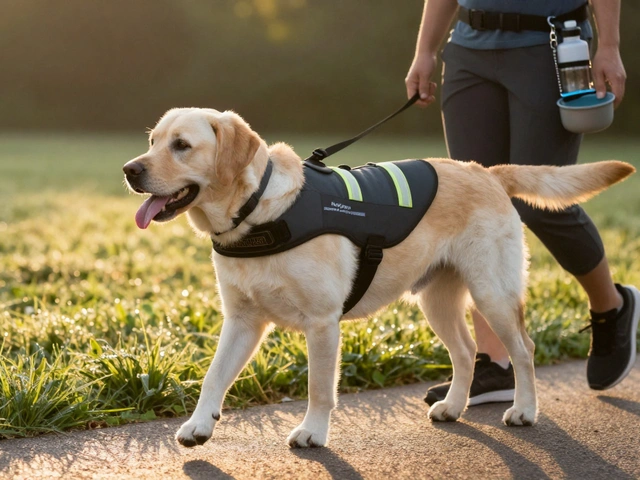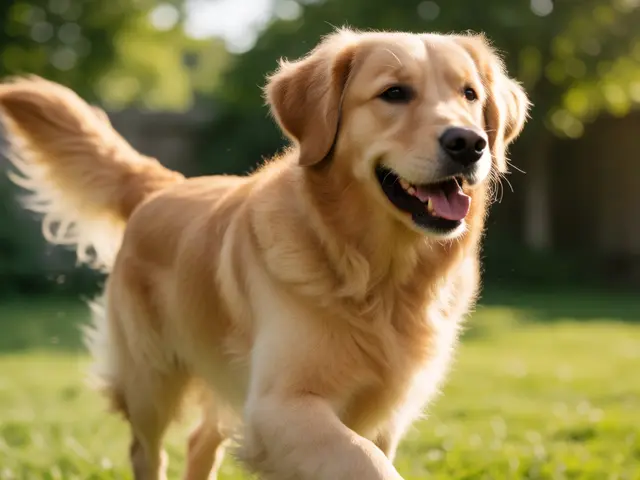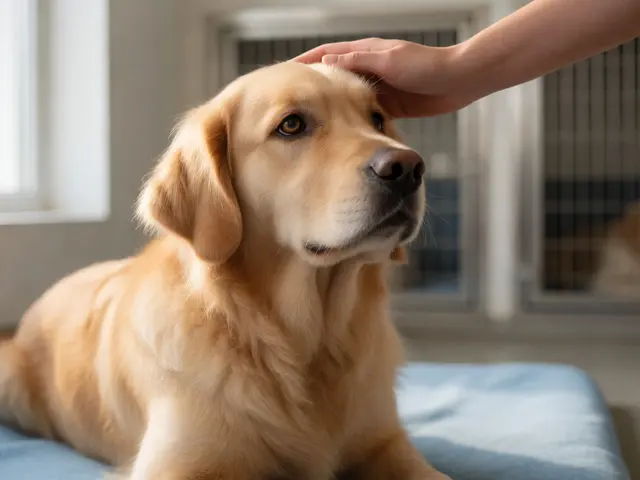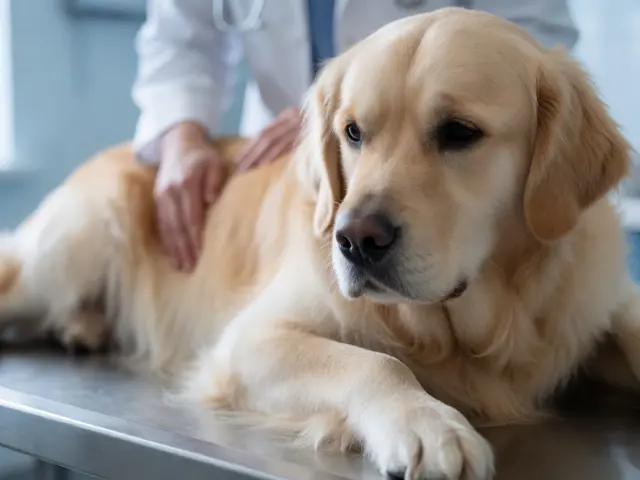
When the temperature hits 90°F or higher, your dog’s body doesn’t just feel hot-it’s at risk. Even if your pup is fit, energetic, and loves to run, their ability to cool down is limited. Unlike humans, dogs can’t sweat through their skin. They rely on panting and the blood vessels in their paws and nose to release heat. That’s why a 15-minute walk in the sun can turn dangerous fast. That’s where cooling vests and gear come in-not as a luxury, but as a necessity for safe summer exercise.
Why Dogs Overheat Faster Than You Think
Dogs have a normal body temperature between 101°F and 102.5°F. When it climbs above 104°F, they’re in danger. At 106°F, heatstroke sets in. And it can happen in as little as 15 minutes on a 90°F day, especially on pavement that’s 125°F under the sun. Breeds with short snouts-like Bulldogs, Pugs, and Shih Tzus-are at higher risk. But even Border Collies, Labs, and German Shepherds can overheat if pushed too hard.
A study from the University of Pennsylvania Veterinary School found that 73% of dogs brought in for heat-related emergencies during summer months had been exercised in temperatures above 85°F without cooling support. Many owners didn’t realize their dog was struggling until it was too late. Panting hard, bright red gums, stumbling-these are late signs. By then, organ damage may already be happening.
How Cooling Vests Work
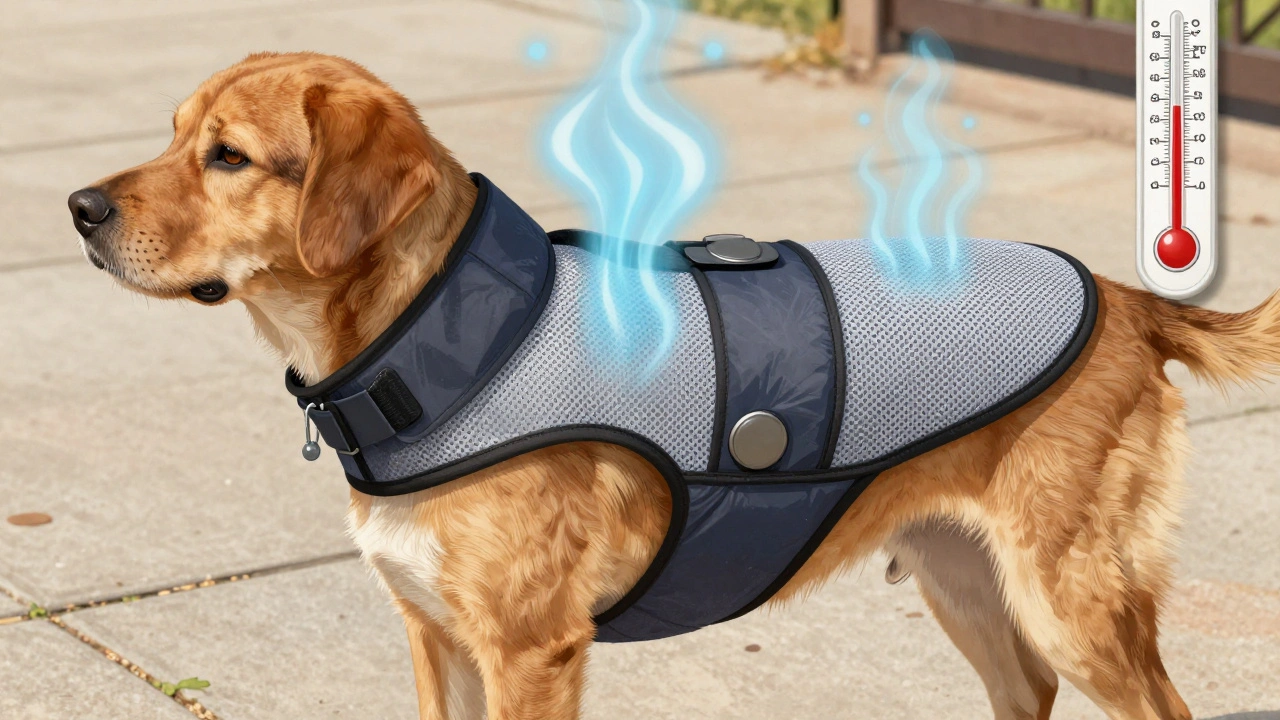
Cooling vests for dogs aren’t air conditioners. They don’t pump cold air. Instead, they use evaporative cooling. Most are made of a special fabric that absorbs water and slowly releases it as the dog moves. As the water evaporates, it draws heat away from the dog’s body. Think of it like sweat, but built into the gear.
There are two main types:
- Evaporative vests: These are soaked in water before use. They stay cool for 1-3 hours, depending on humidity. The best ones use a double-layer design: an inner mesh that wicks moisture from the dog’s skin, and an outer layer that slows evaporation for longer cooling.
- Phase-change vests: These contain gel packs or materials that freeze and slowly release cold over 4-6 hours. They’re heavier and less flexible but work well in dry heat. Not ideal for humid climates like Portland, where evaporation is slower.
Most effective vests cover the chest, belly, and back-the areas where blood vessels run close to the skin. That’s where heat escapes fastest. A vest that only covers the back? It’s not doing enough.
What to Look for in a Cooling Vest
Not all cooling gear is created equal. Here’s what actually works:
- Fit matters. The vest should be snug but not tight. You should be able to slide two fingers under the straps. Too loose? It slips and rubs. Too tight? It restricts breathing or movement.
- Adjustable straps. Look for chest and belly adjustments. A one-size-fits-all vest won’t work for a Greyhound or a Basset Hound.
- Breathable fabric. Avoid thick neoprene or plastic-backed materials. They trap heat instead of releasing it. Look for mesh panels or open-weave designs.
- Machine washable. You’ll use this often. If it can’t handle a quick rinse and spin, you won’t use it.
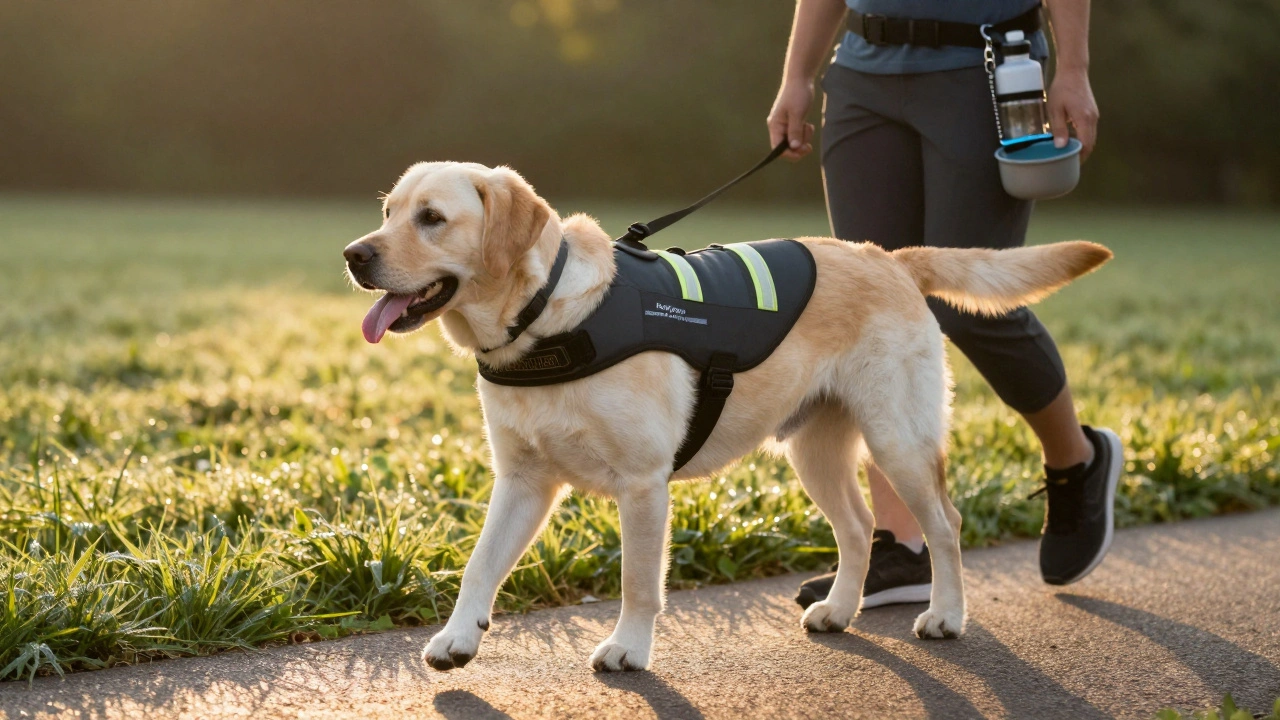
- Reflective strips. Early morning or evening walks? Visibility saves lives.
Brands like Ruffwear, Kurgo, and Hurtta have been tested in real conditions. Ruffwear’s Swamp Cooler, for example, has been used by search-and-rescue teams in Arizona summers. It stays cool for over 2 hours on a 100°F day. That’s not marketing-it’s field data.
Other Cooling Gear That Actually Helps
A vest alone isn’t always enough. Pair it with these tools:
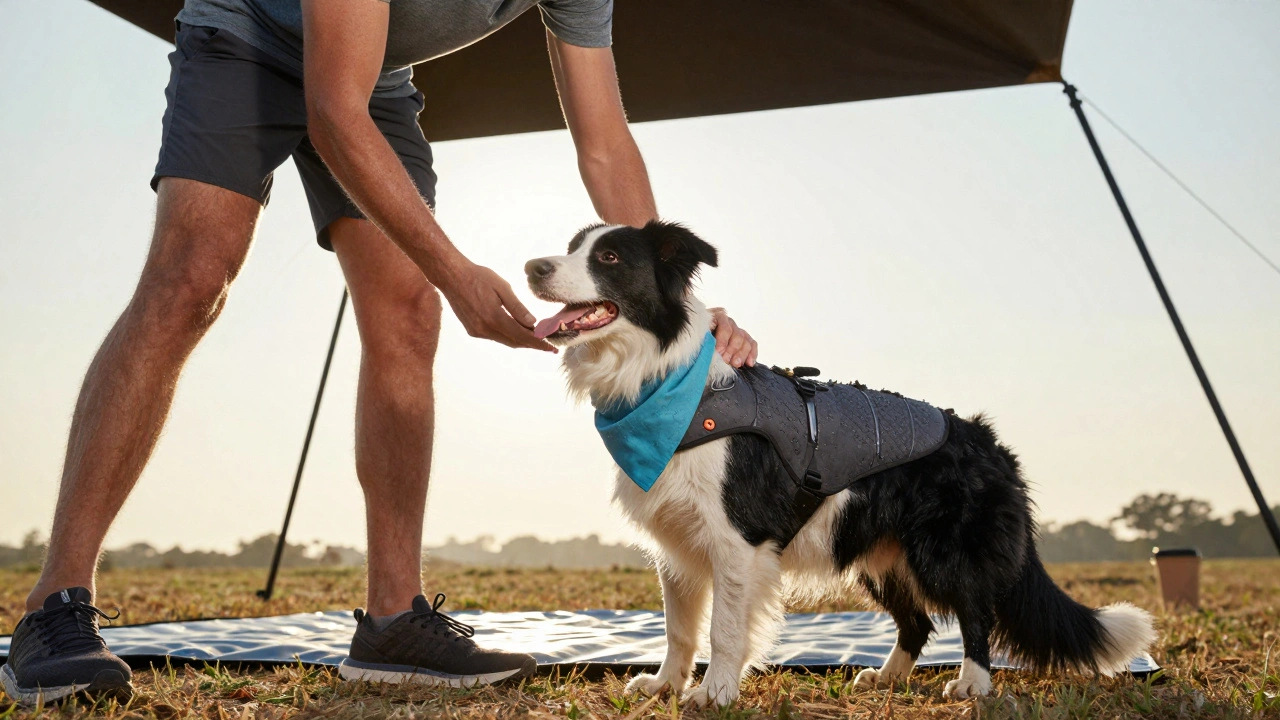
- Cooling bandanas. Soak one in cold water, wring it out, and drape it over the neck. It’s lightweight, easy to carry, and gives quick relief during rest breaks.
- Portable water bottles with built-in bowls. Hydration is just as important as cooling. A dog that’s dehydrated can’t regulate temperature effectively. Look for ones with a flip-top spout-no spills, no mess.
- Shade tents or pop-up canopies. If you’re hiking or at the park, bring a small, lightweight shade. Dogs need breaks in the shade, not just in the sun. Chill pads. These are gel mats that cool when pressure is applied. Great for car rides or post-exercise recovery. Not for active use, but perfect for cooling down after.
One owner in Seattle told us her Labrador, Max, started panting heavily after 10 minutes of fetch on a 92°F day. She switched from a cheap vest to a Ruffwear and added a cooling bandana. Now, Max plays for 30 minutes without stopping. She says the difference was like night and day.
When NOT to Use Cooling Gear
Don’t use a cooling vest if:
- Your dog is already showing signs of heat stress-drooling, vomiting, glazed eyes. Get to shade and cool them with wet towels and water. Call a vet.
- The temperature is below 70°F. Cooling gear is unnecessary and can make your dog too cold.
- Your dog has sensitive skin or allergies. Some fabrics cause rashes. Test it for 15 minutes first.
- You’re using it as a replacement for rest. Cooling gear helps, but it doesn’t replace water breaks, shade, and reduced activity.
One common mistake? Owners think the vest means they can go longer. It doesn’t. It just gives your dog a better chance to stay cool while you’re still out there. You still need to monitor them.
How to Use a Cooling Vest Right
Here’s the simple routine:
- Soak the vest in cool (not icy) water for 5 minutes.
- Wring it out until it’s damp, not dripping. Too wet? It’ll make your dog soggy and cold.
- Put it on your dog before you start walking or running.
- Check every 20-30 minutes. If it’s dry, re-soak it.
- Remove it after exercise. Let your dog dry off naturally. Don’t towel-dry aggressively-it can trap heat.
Pro tip: Keep a spare vest in your car or backpack. If the first one dries out on a long hike, you can swap it out.
Hydration Is Non-Negotiable
No cooling vest works if your dog is dehydrated. Water helps the body sweat (through panting) and circulates blood efficiently. Always carry water. Offer it every 10-15 minutes, even if your dog doesn’t seem thirsty. Dogs don’t always drink when they need to.
Try adding a splash of low-sodium chicken broth to their water. It encourages them to drink more. Just don’t overdo it-once a day is enough. Too much salt can backfire.
Best Times to Exercise Your Dog in Summer
Plan around the sun, not your schedule.
- 5-7 a.m.: Coolest part of the day. Pavement is still cool. Air is fresh.
- 7-9 p.m.: After the sun drops. Still warm, but not dangerous.
- Avoid 11 a.m.-4 p.m.: That’s when pavement heats up and humidity rises.
Test the pavement with your hand. If you can’t hold it there for 7 seconds, it’s too hot for paws. Use grass, dirt trails, or shaded paths whenever possible.
What to Do If Your Dog Overheats
Signs of heatstroke:
- Excessive panting or no panting at all
- Drooling, vomiting, diarrhea
- Weakness, collapse, seizures
- Bright red or pale gums
Act fast:
- Move to shade or air conditioning.
- Wet your dog with cool (not ice-cold) water. Focus on the belly, armpits, and paws.
- Offer small sips of water. Don’t force it.
- Call your vet immediately-even if they seem better. Internal damage can happen without obvious symptoms.
Never put ice on your dog’s head or pour ice water over them. It causes shock. Cool, not cold. Slow, not fast.
Final Thought: It’s Not About Comfort-It’s About Survival
A cooling vest isn’t a gimmick. It’s a tool that gives your dog the same advantage humans have when we wear light clothing or use fans. Dogs don’t choose when to overheat. They can’t tell you they’re tired. They just keep going because they love you-and they want to keep up.
If you’re serious about exercising your dog in summer, you owe them more than just water and a walk. You owe them protection. A good cooling vest, paired with smart timing and constant monitoring, can mean the difference between a happy, healthy day and a trip to the emergency vet.
Don’t wait for a crisis. Get the gear. Know the signs. And remember: if it’s too hot for you to sit on the pavement, it’s too hot for your dog to walk on it.
Can I use a human cooling vest on my dog?
No. Human cooling vests are designed for our body shape and heat distribution. They’re too large, don’t cover the belly, and often restrict movement. A dog’s chest and abdomen are critical for heat release, and human vests don’t target those areas. Always use gear made specifically for dogs.
How long do cooling vests last?
Evaporative vests last 1-3 hours, depending on humidity and activity. In dry heat, they last longer. In humid climates like Portland, they may only last 60-90 minutes. Phase-change vests last 4-6 hours but are heavier and less breathable. Always check the manufacturer’s guidelines and re-soak when the vest feels warm.
Do all dogs need cooling gear?
Not every dog needs it, but every dog can benefit. Short-nosed breeds, older dogs, overweight dogs, and those with thick coats are at higher risk. But even fit, lean dogs like Labs or Huskies can overheat during intense exercise in summer heat. If you’re exercising your dog in temperatures above 80°F, cooling gear is a smart safety step.
Can I leave a cooling vest on my dog all day?
No. Cooling vests are for active use during exercise. Leaving one on for hours can cause skin irritation, chafing, or even overheating if the fabric traps moisture. Remove it after walks or runs. Let your dog dry off naturally. Use a chill pad or cool tile for resting instead.
Is it safe to use a cooling vest with a harness?
Yes, but choose a vest designed to work with a harness. Some vests have openings or cutouts for leash attachment. Others go over the harness. Make sure the harness straps don’t rub against the vest or pinch the dog’s skin. Test the fit before heading out.