When your dog is pregnant, you want to be ready-really ready-when it’s time for her to give birth. Unlike humans, dogs don’t call ahead or text you when labor starts. They just go into it, often when you’re asleep, in the shower, or out running errands. That’s why knowing the signs of impending labor isn’t just helpful-it’s critical. Missing these cues can mean delays, stress, or even emergencies. The good news? Most pregnant dogs show clear, predictable warning signs in the 24 to 48 hours before whelping begins. You just need to know what to look for.
Drop in Body Temperature
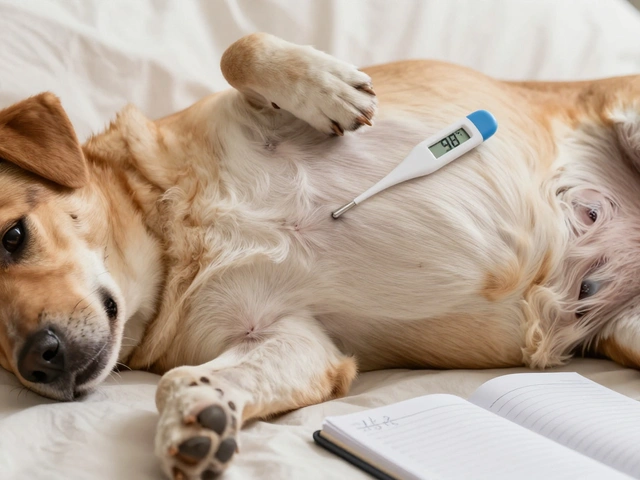
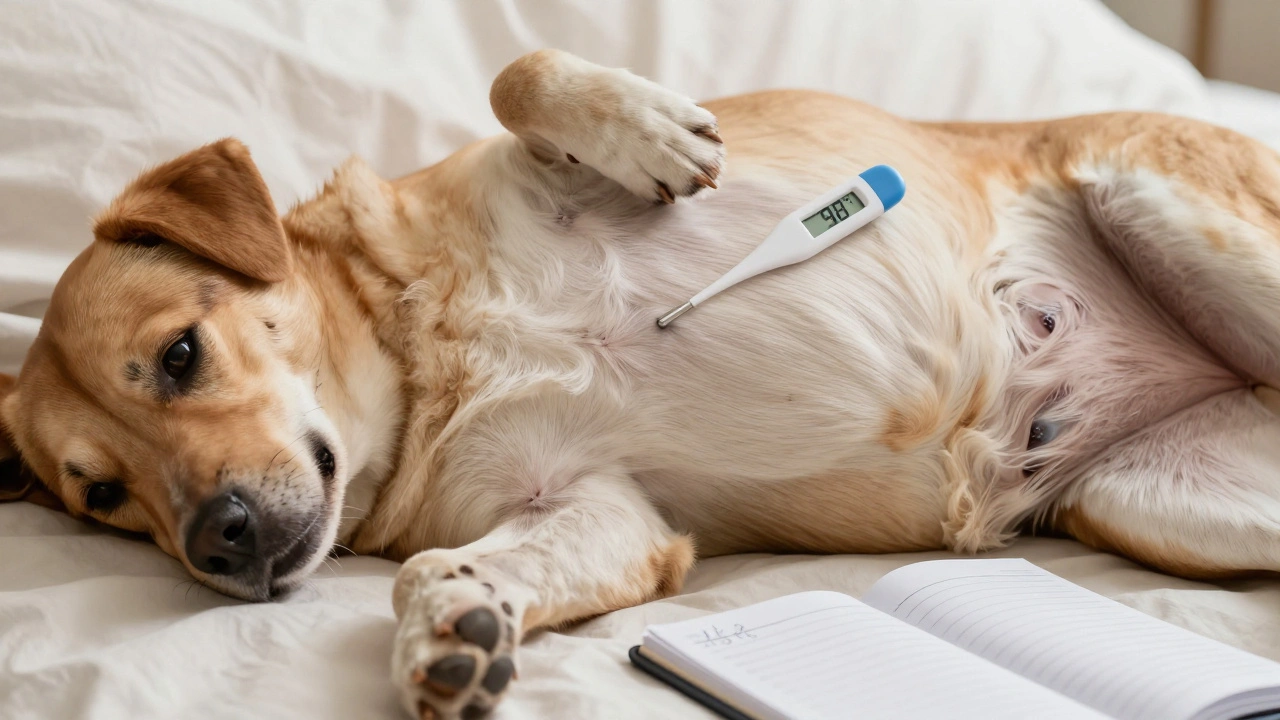
One of the most reliable indicators that labor is hours away is a drop in your dog’s body temperature. A normal dog’s temperature ranges from 101°F to 102.5°F. But 12 to 24 hours before labor starts, it will fall below 100°F-often down to 98°F or even 97°F. This drop happens because progesterone, the hormone that maintains pregnancy, crashes right before labor kicks in.
Take her temperature twice a day during the last week of pregnancy, ideally at the same time each day. Use a digital rectal thermometer-it’s quick, accurate, and safe. Record the numbers. If you see a steady decline over a couple of days, especially if it hits 99°F or lower, get ready. She could start having puppies within the next 12 to 24 hours.
Behavioral Changes
Dogs don’t talk, but they sure do act differently when labor is near. Many become unusually clingy, following you around the house like a shadow. Others do the opposite-withdraw, hide under beds, or try to dig in corners. Both are normal. This is instinct. In the wild, a mother dog would seek a quiet, safe den before giving birth.
You might notice her pacing, panting lightly, or shivering even when it’s not cold. She may lose interest in food, or even refuse meals entirely. Some dogs vomit once or twice. These aren’t signs of illness-they’re signs of preparation. Her body is shifting into birthing mode.
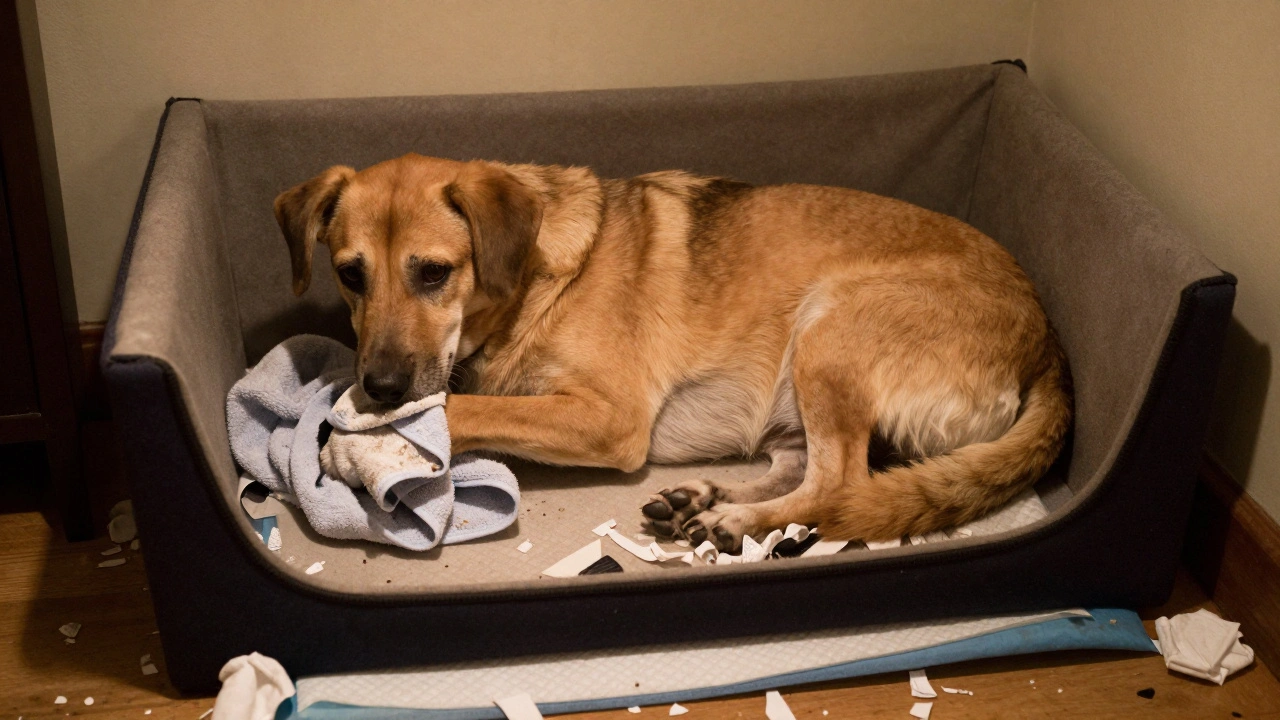
If she starts nesting, pay attention. That means rearranging blankets, tearing up paper, or digging at her bed. It’s not a phase-it’s a signal. She’s creating her whelping space. Make sure her whelping box is clean, warm, and in a quiet corner. If she’s already settled in there, don’t move her. Let her feel in control.
Nipple Changes and Milk Production
By day 55 of pregnancy (about 10 days before due date), her mammary glands will start swelling noticeably. Around day 58 to 60, you may see a clear or milky fluid leaking from her nipples. That’s colostrum-the first nutrient-rich milk that gives newborn puppies their immune boost.
If you notice milk production starting more than 48 hours before labor, it’s not a problem. But if it starts very early-say, at day 55 or 56-keep an eye out for other signs. Sometimes, too-early milk can signal early labor or complications, especially if she’s also showing other distress symptoms like lethargy or fever.
Don’t squeeze or massage her teats. Let the milk come naturally. Wipe away any leakage with a clean, damp cloth to keep her comfortable and reduce the risk of infection.
Restlessness and Contractions
When labor is truly starting, you’ll see physical signs beyond behavior. She’ll start to get restless. You might notice her lying down and getting up repeatedly, changing positions, or curling into tight balls. Her breathing may become shallow and rapid. She might lick her genital area more than usual.
Early contractions are often subtle. You won’t see her abdomen tightening like in humans. But you might notice her tail tucking tightly between her legs, or her back arching slightly. Her vulva may swell and relax. A clear, greenish, or bloody discharge can appear. That’s normal-it’s the mucus plug releasing.
True labor begins when contractions become regular and strong. That’s when you’ll see her straining with effort, pushing, and possibly whining or crying. The first puppy usually arrives within 1 to 2 hours of strong contractions starting. If she’s pushing hard for more than 30 minutes without a puppy, call your vet.
Timing Matters: The 58-65 Day Window
Dog pregnancies last about 63 days on average, but can range from 58 to 68 days. Smaller breeds often have shorter pregnancies-sometimes as early as 58 days. Larger breeds may go closer to 65 or even 67. Don’t assume all dogs are the same. If you know the exact breeding date, count from that. If you don’t, track her physical changes closely.
Don’t rely on due date calculators alone. They’re helpful, but they don’t replace real-time signs. A dog that’s 60 days along might still be days away from labor. Another at 62 days might be ready to go tomorrow. That’s why temperature drops and nesting behavior are more reliable than calendars.
What to Do When Labor Starts
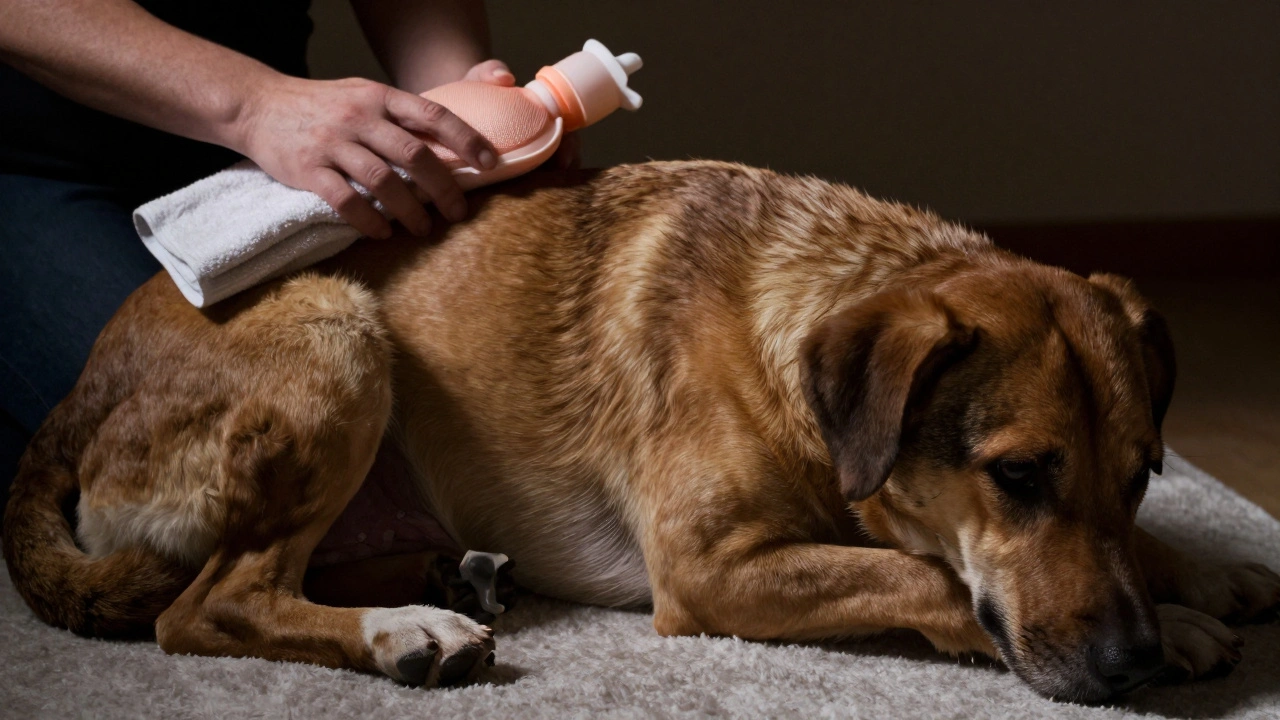
Once you’re sure labor is underway, stay calm. Most dogs don’t need help. They know what to do. Keep the room quiet, warm (around 75°F), and dimly lit. Have clean towels, scissors (in case you need to cut the umbilical cord), and a heating pad or warm water bottle ready for the puppies.
Don’t interfere unless something’s wrong. If a puppy is stuck, if more than two hours pass between puppies, or if she’s been in active labor for over an hour with no progress-call your vet immediately. Also, if you see dark green or black fluid before any puppies, that’s a red flag. It could mean placental separation.
Keep a list of emergency contacts handy: your vet, the nearest 24-hour animal hospital, and a trusted breeder. Have a carrier ready with a blanket inside. You never know when you’ll need to rush out.
What Not to Do
Don’t panic. Don’t grab the puppies the moment they’re born unless they’re not breathing. Don’t pull on them. Don’t try to clean them with soap or alcohol. Don’t move her away from her nest unless she’s in danger.
Don’t assume everything is fine just because she’s not screaming. Some dogs deliver quietly. Others are loud. Both are normal. Trust her instincts. Your job isn’t to direct-it’s to observe, support, and step in only if needed.
After the First Puppy
After the first puppy is born, labor often pauses for 30 minutes to an hour before the next one. That’s normal. Puppies can come every 30 to 60 minutes. The whole process can take 6 to 12 hours-even longer for big litters.
Watch how she handles each puppy. She should lick them clean, chew the umbilical cord, and stimulate them to breathe. If she ignores one, gently wipe its face with a warm cloth and rub its chest. If she doesn’t cut the cord, tie it with clean thread about an inch from the belly and snip it with sterilized scissors.
Count placentas. There should be one for each puppy. If you see fewer, call your vet. Retained placentas can cause infection.
Keep her hydrated. Offer water, but don’t force food. She’ll likely eat later, once she’s rested. Keep the puppies warm and close to her. Newborns can’t regulate their own body temperature for the first week.
How long after a temperature drop will my dog give birth?
Once your dog’s temperature drops below 100°F, labor usually begins within 12 to 24 hours. Some dogs may start within 6 hours, especially if the drop is sudden. Others may wait up to 36 hours. Always watch for other signs like nesting, restlessness, or milk production to confirm labor is imminent.
Can a dog go past 65 days of pregnancy?
Yes, but it’s rare. Most dogs deliver between 58 and 65 days. If she’s at 66 or 67 days with no signs of labor, contact your vet. A prolonged pregnancy can mean complications like fetal distress or placental failure. Your vet may recommend an ultrasound or X-ray to check puppy health and position.
Should I be there when my dog gives birth?
You don’t need to be in the room the whole time, but you should be nearby. Most dogs prefer to give birth alone, but they’ll look to you for reassurance. Stay quiet, keep the environment calm, and be ready to help if something goes wrong. If she seems stressed by your presence, give her space-just keep checking in every 15 to 20 minutes.
What if my dog isn’t producing milk?
If she’s delivered puppies but isn’t producing milk within 24 hours, it could be due to stress, exhaustion, or a hormonal issue. Gently offer warm water and high-calorie food. If no milk appears after 36 hours, contact your vet. You may need to supplement with puppy milk replacer and possibly medication to stimulate milk production.
Is it normal for a dog to have a green discharge before labor?
Yes, a greenish or dark discharge before labor is normal-it’s the mucus plug that sealed the cervix during pregnancy. It can appear hours or even a day before contractions start. But if you see it before any puppies are born and it’s thick, foul-smelling, or accompanied by fever or lethargy, call your vet. It could signal infection or placental separation.
Final Tips
Keep a journal. Note her temperature, behavior, appetite, and any discharges. It helps you spot patterns and gives your vet useful info if something goes wrong.
Prepare your whelping box early. Use a plastic tub with low sides, lined with absorbent, washable towels. Place it in a quiet, draft-free spot. Test the heating pad before she goes into labor.
Know your vet’s emergency protocol. Have their after-hours number saved in your phone. Keep puppy milk replacer, syringes, and a thermometer on hand.
Trust your instincts. If something feels off, it probably is. You know your dog better than any book. When in doubt, call your vet. Better safe than sorry-especially when lives are on the line.