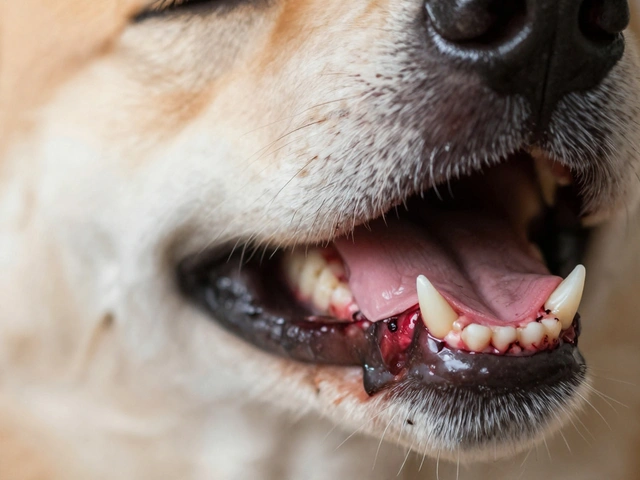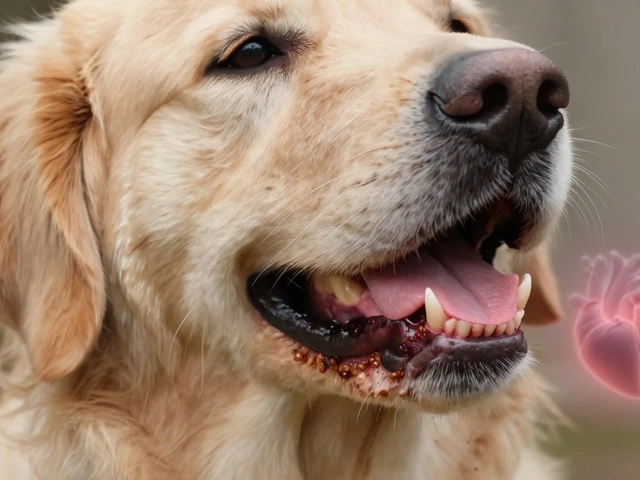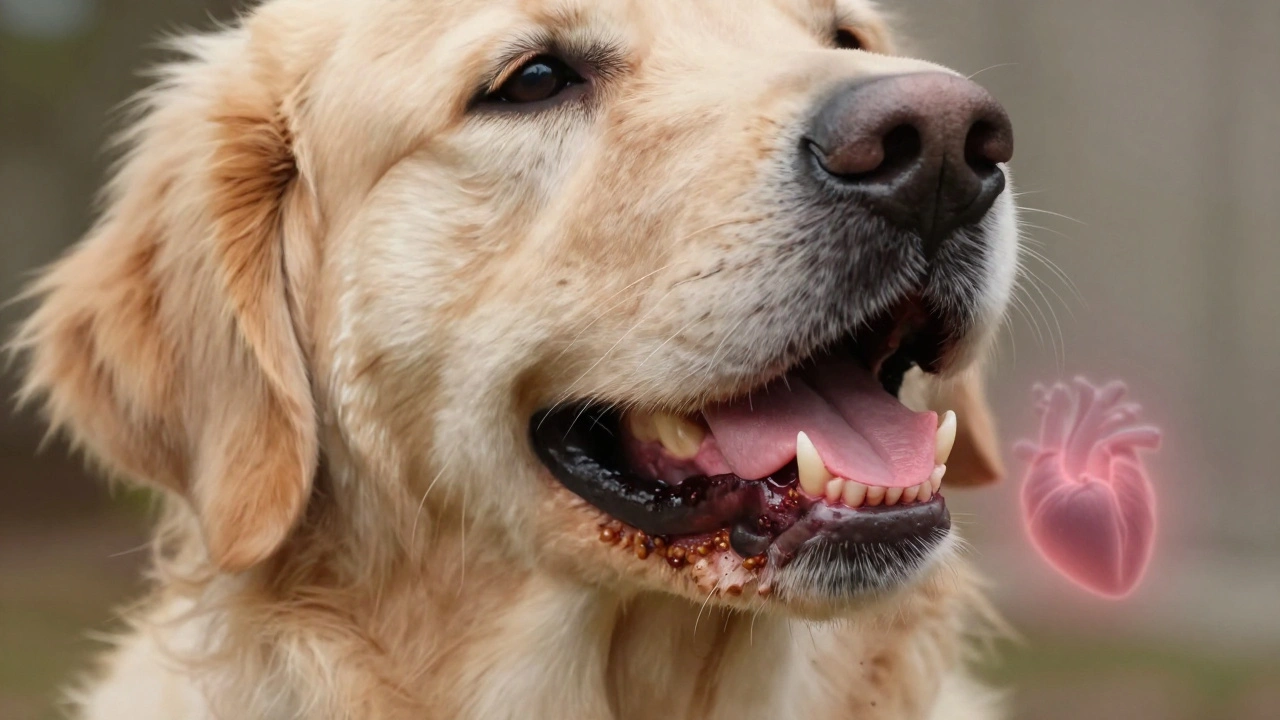
Most dog owners know that bad breath is annoying. But few realize it could be a silent warning sign of something far more dangerous - heart disease. The connection between your dog’s teeth and their heart isn’t just a theory. It’s a well-documented medical reality backed by veterinary research. When plaque builds up on your dog’s teeth, bacteria don’t just sit there. They enter the bloodstream, travel to the heart, and start causing damage. This isn’t a slow, distant risk. It’s happening right now in millions of dogs who never get their teeth cleaned.
What Happens When Bacteria From the Mouth Reach the Heart
Every time your dog eats, food particles stick to their teeth. Within hours, bacteria start forming a sticky film called plaque. Left unchecked, plaque hardens into tartar - a rough, brown buildup that traps even more bacteria. These bacteria don’t stay in the mouth. They find their way into the bloodstream through inflamed gums, especially when your dog has periodontal disease. Studies from the American Veterinary Medical Association show that over 80% of dogs over age three have some form of gum disease.
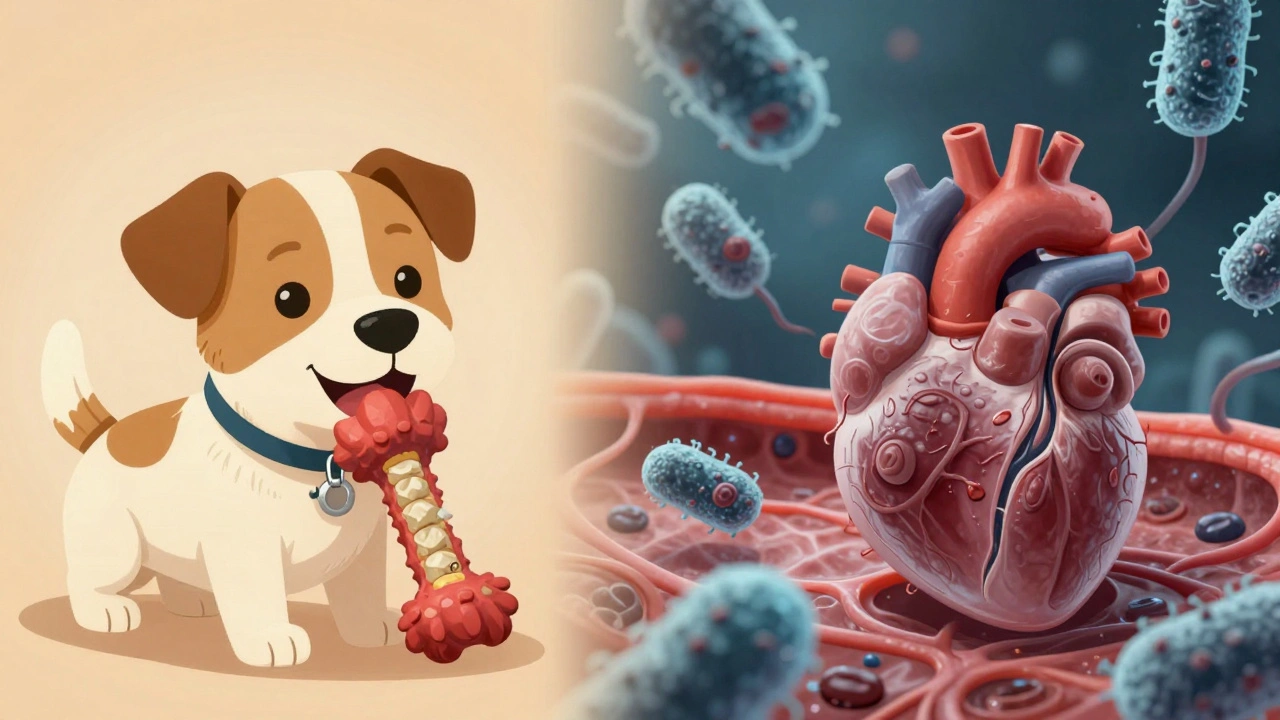
Once in the blood, these bacteria target the heart. They cling to heart valves, especially the mitral valve, and cause a condition called infective endocarditis. This isn’t just inflammation. It’s infection. The heart has to work harder to pump blood, valves thicken, and scar tissue forms. Over time, this leads to heart failure. A 2023 study from the University of Pennsylvania found that dogs with severe periodontal disease were 2.7 times more likely to develop heart valve disease than those with clean teeth.
The Silent Progression: No Symptoms Until It’s Too Late
Unlike humans, dogs rarely show obvious signs of heart trouble until the damage is advanced. You won’t see them wheezing or clutching their chest. Instead, they slow down. They nap more. They lose interest in walks. You might think they’re just getting older. But what if it’s not age? What if it’s their teeth?
Early signs of dental disease are easy to miss:
- Yellow or brown buildup along the gumline
- Bleeding gums when they chew or yawn
- Reluctance to eat hard food or toys
- Excessive drooling or pawing at the mouth
- Bad breath that doesn’t go away with treats
By the time your dog starts coughing at night or has trouble breathing, the heart is already struggling. A 2022 study from Tufts Veterinary School tracked 1,200 dogs over five years. Dogs with untreated gum disease developed heart complications an average of 3.5 years earlier than those with regular dental care.
How Dental Cleanings Protect the Heart
Professional dental cleanings under anesthesia aren’t just about fresh breath. They’re life-saving. During a cleaning, the vet removes tartar, checks for root infections, and polishes the teeth to prevent future buildup. But the real benefit? They stop bacteria before it leaves the mouth.
One 2024 study published in the Journal of Veterinary Internal Medicine followed 300 dogs that received annual dental cleanings. After three years, 87% showed no signs of heart valve thickening. In the group that didn’t get cleanings, 74% showed early signs of heart disease. The difference wasn’t just statistical - it was life-changing.
It’s not about removing a few stains. It’s about removing the source of infection. A single cleaning can reduce the bacterial load in the bloodstream by over 90% for months. That means less strain on the heart, better circulation, and more energy for your dog.
At-Home Care: What Actually Works
Professional cleanings are essential, but they’re not enough. Daily care makes the difference between prevention and crisis. Here’s what actually helps:
- Tooth brushing - Use a dog-specific toothpaste and brush at least three times a week. Even brushing twice a week cuts gum inflammation by half.
- Chew toys with dental texture - Look for toys labeled "dental" by the Veterinary Oral Health Council (VOHC). These aren’t just for fun - they mechanically scrape plaque off teeth.
- Dental diets - Some kibble is designed to reduce plaque. Brands like Hill’s T/D and Royal Canin Dental are clinically proven to slow tartar buildup.
- Water additives - Products like Oxyfresh or CET water additives reduce bacteria in saliva. They won’t replace brushing, but they help between cleanings.
Don’t waste money on sprays, wipes, or rawhide. Most don’t reach below the gumline where the damage starts. Only brushing and VOHC-approved chews have proven results.
Which Dogs Are at Highest Risk?
Small breeds like Yorkies, Poodles, and Shih Tzus are most vulnerable. Their teeth are packed tightly, making plaque harder to remove. But it’s not just breed. Age matters. Dogs over five years old are at higher risk. So are dogs with diabetes or weakened immune systems - their bodies can’t fight off oral bacteria as well.
Even dogs that seem healthy can have hidden disease. A 2025 survey of 500 dogs with no visible dental problems found that 68% had deep gum pockets or bone loss under the gums - invisible without X-rays. That’s why vets recommend annual dental X-rays starting at age four.

What Happens If You Ignore It?
Ignoring dental health doesn’t just mean bad breath. It means:
- Chronic pain - dogs hide pain well, but they’re still suffering
- Organ damage - bacteria can also attack the kidneys and liver
- Early death - dogs with severe periodontal disease live 2-3 years less on average
- Costly emergency care - heart failure treatment can cost $3,000-$8,000
One owner in Portland told me her 9-year-old Cavalier King Charles Spaniel suddenly collapsed. The vet found severe tooth root abscesses and advanced heart valve disease. The dog had been eating fine, wagging his tail, and sleeping on the couch. No one knew. He passed away two weeks after diagnosis.
How to Start Protecting Your Dog’s Heart Today
You don’t need to be a vet to make a difference. Here’s your simple action plan:
- Check your dog’s teeth this week. Look for brown buildup, red gums, or loose teeth.
- Call your vet and ask for a dental exam. Many clinics offer free initial checks.
- Start brushing - even once a week. Use a soft toothbrush and dog-safe paste.
- Switch to a VOHC-approved chew or dental diet.
- Schedule a professional cleaning if your vet recommends it - don’t wait for symptoms.
Your dog’s heart doesn’t care how cute they look with a toy in their mouth. It only cares if bacteria are flowing through its valves. Clean teeth don’t just mean fresh breath. They mean more walks, more play, and more years with you.
Can bad dog teeth really cause heart disease?
Yes. Bacteria from infected gums enter the bloodstream and can infect heart valves, leading to a condition called infective endocarditis. Studies show dogs with severe gum disease are nearly three times more likely to develop heart valve problems.
How often should my dog get a dental cleaning?
Most dogs need a professional dental cleaning once a year, starting at age four. Small breeds and dogs with existing gum disease may need it every six months. Always follow your vet’s recommendation based on X-rays and exam findings.
Is anesthesia safe for older dogs during dental cleanings?
Modern veterinary anesthesia is very safe, especially with pre-anesthetic blood work and monitoring. The risk of not treating dental disease - including heart failure, organ damage, and early death - is far greater than the risk of anesthesia. Most vets now use IV fluids, temperature control, and pulse oximeters to keep older dogs safe.
What’s the best way to brush my dog’s teeth?
Use a soft-bristled toothbrush designed for dogs and veterinary-approved toothpaste (never human toothpaste). Gently lift the lip and brush the outer surfaces of teeth in small circles. Start with just a few teeth and work up to a full brush over a week. Aim for three times a week - daily is ideal.
Do dental chews really help, or are they just for fun?
Some do, some don’t. Only chews with the VOHC (Veterinary Oral Health Council) seal have been clinically proven to reduce plaque and tartar. Look for that logo on the package. Rawhide, bones, and rubber toys may feel good to chew but won’t clean teeth effectively.
Every dog deserves to live without pain, without heart strain, and without the silent decay of their teeth. It starts with one simple step - looking inside their mouth.