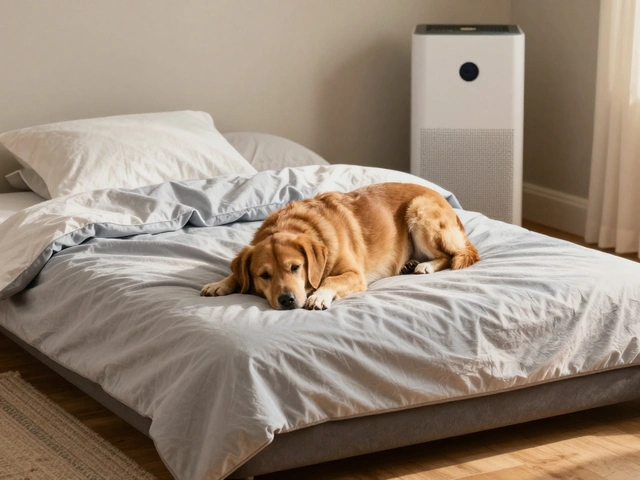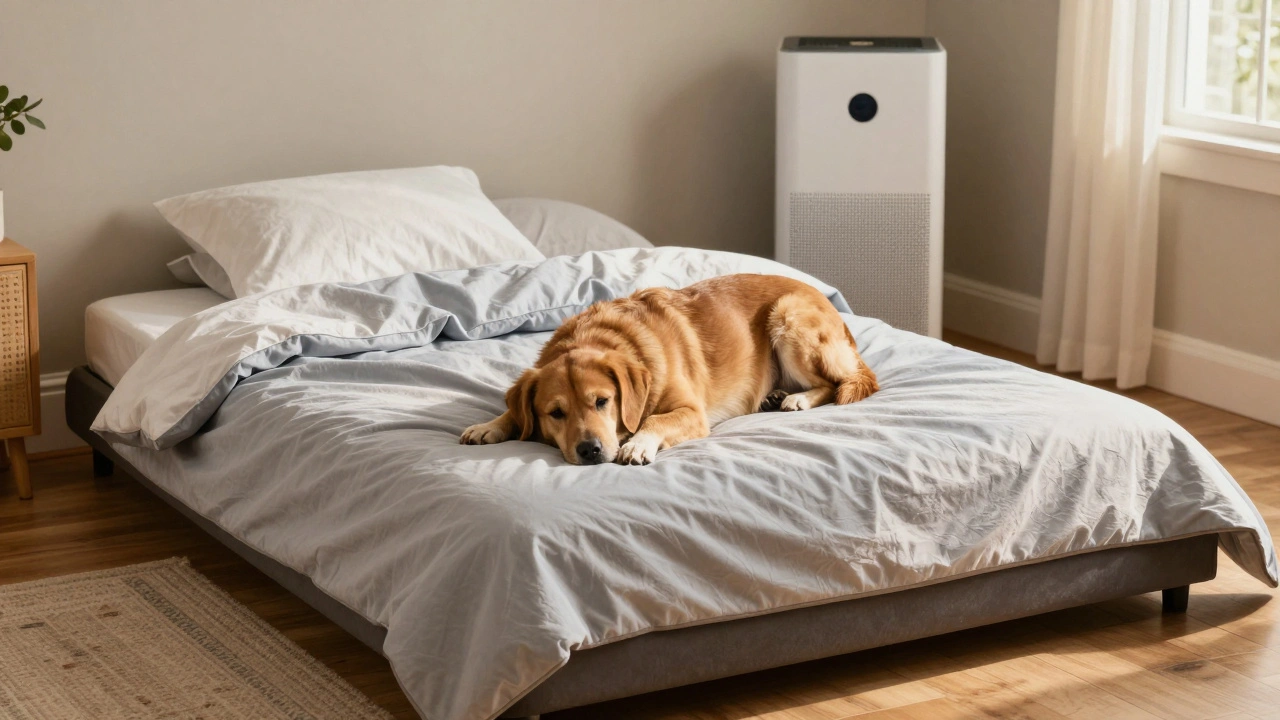
If your dog is constantly scratching, licking their paws, or has red, flaky skin, it might not be just a bad coat-it could be dust mites. These tiny bugs live in your carpet, bedding, and couches, and they’re one of the biggest triggers for allergic reactions in dogs. Unlike humans who sneeze, dogs show allergies through skin irritation. And if you’ve tried changing their food, switching shampoos, or adding omega-3s without real results, you’re probably missing the real culprit: dust mites in your home.
What Are Dust Mites and Why Do They Affect Dogs?
Dust mites are microscopic arachnids, not insects. They feed on dead skin cells-yours and your dog’s. A single gram of dust can hold up to 2,000 dust mites and their droppings. That’s the real problem. Dog allergies aren’t usually caused by dander alone; it’s the proteins in dust mite feces that trigger immune reactions. When your dog breathes in or licks these particles, their skin becomes inflamed. Breeds like Labradors, German Shepherds, and West Highland White Terriers are especially prone, but any dog can develop sensitivity.
In Portland, where damp winters and frequent rain create perfect humidity for dust mites, homes become breeding grounds. Even if your dog never goes outside, they’re still exposed. Studies from the American College of Veterinary Dermatology show that over 60% of dogs with chronic skin issues have allergic reactions linked to environmental allergens, with dust mites topping the list.
Where Dust Mites Hide in Your Home
You can’t see them, but they’re everywhere. Here’s where they thrive:
- Bedding-your dog’s bed, your bed, even pillows
- Carpets and area rugs-especially thick, plush ones
- Furniture-upholstered couches and chairs absorb skin flakes
- Stuffed toys-both your kid’s and your dog’s
- Blankets and curtains-especially if they’re not washed often
Heat and humidity are the biggest factors. Dust mites need at least 50% humidity to survive. In Portland, indoor humidity often stays between 60-75% in winter. That’s ideal for them. They don’t live in dry places, so if your home feels stuffy or smells musty, that’s a red flag.
Step-by-Step Dust Mite Reduction Plan
Reducing dust mites isn’t about one magic fix. It’s a system. Here’s what actually works, based on veterinary dermatology protocols and real-world results from pet owners in the Pacific Northwest.
- Wash all pet bedding weekly in hot water (at least 130°F). Cold water doesn’t kill mites. Use fragrance-free detergent. Dry on high heat for at least 30 minutes.
- Replace fabric dog beds with washable, low-pile options. Avoid memory foam or plush materials. Look for beds with removable, machine-washable covers.
- Use allergen-proof covers on mattresses and pillows where your dog sleeps. These are woven tightly enough to block mite particles. You can find pet-sized versions online.
- Remove carpets from rooms your dog uses most. Hardwood, tile, or vinyl floors are ideal. If you must keep rugs, choose low-pile, washable ones and vacuum them twice a week.
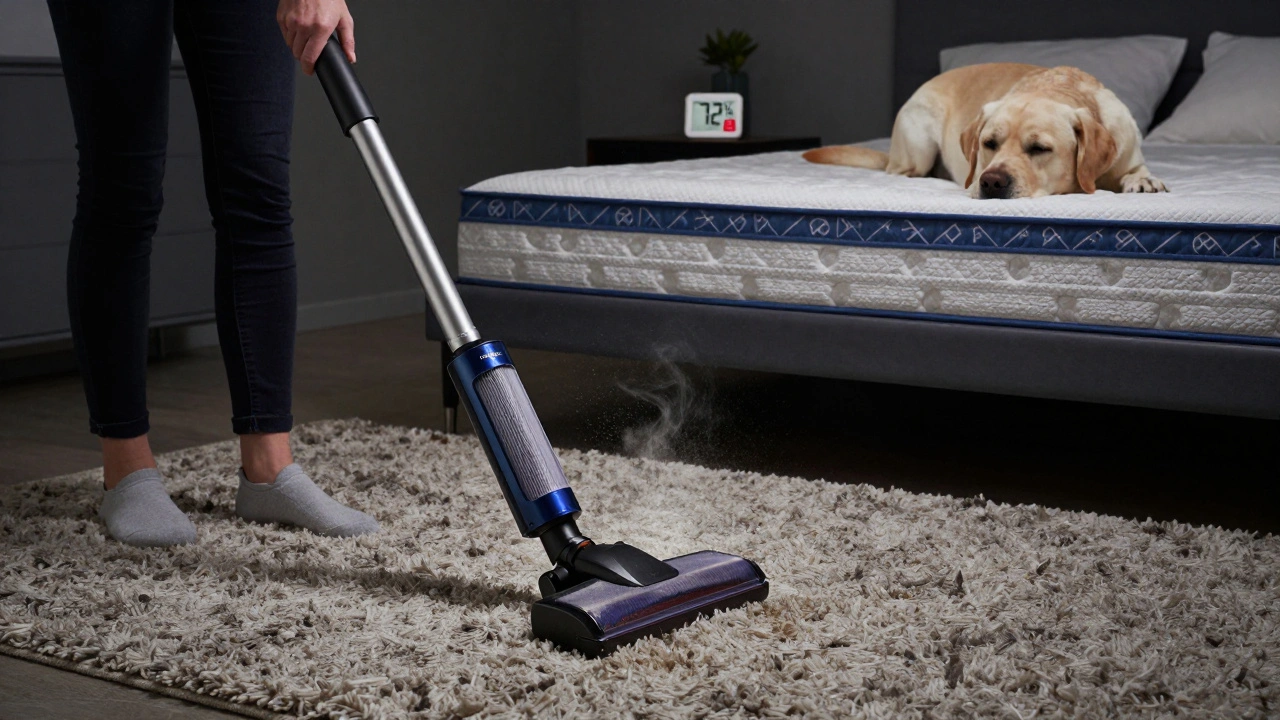
- Upgrade your vacuum to one with a HEPA filter. Regular vacuums blow mite particles back into the air. A HEPA filter traps 99.97% of particles down to 0.3 microns. Vacuum weekly, including under furniture.
- Keep humidity below 50% using a dehumidifier. In Portland, run one in the basement or main living area. Look for models with built-in hygrometers. Aim for 45-48%.
- Wash curtains and blankets monthly. Replace heavy drapes with lightweight, washable blinds or shades.
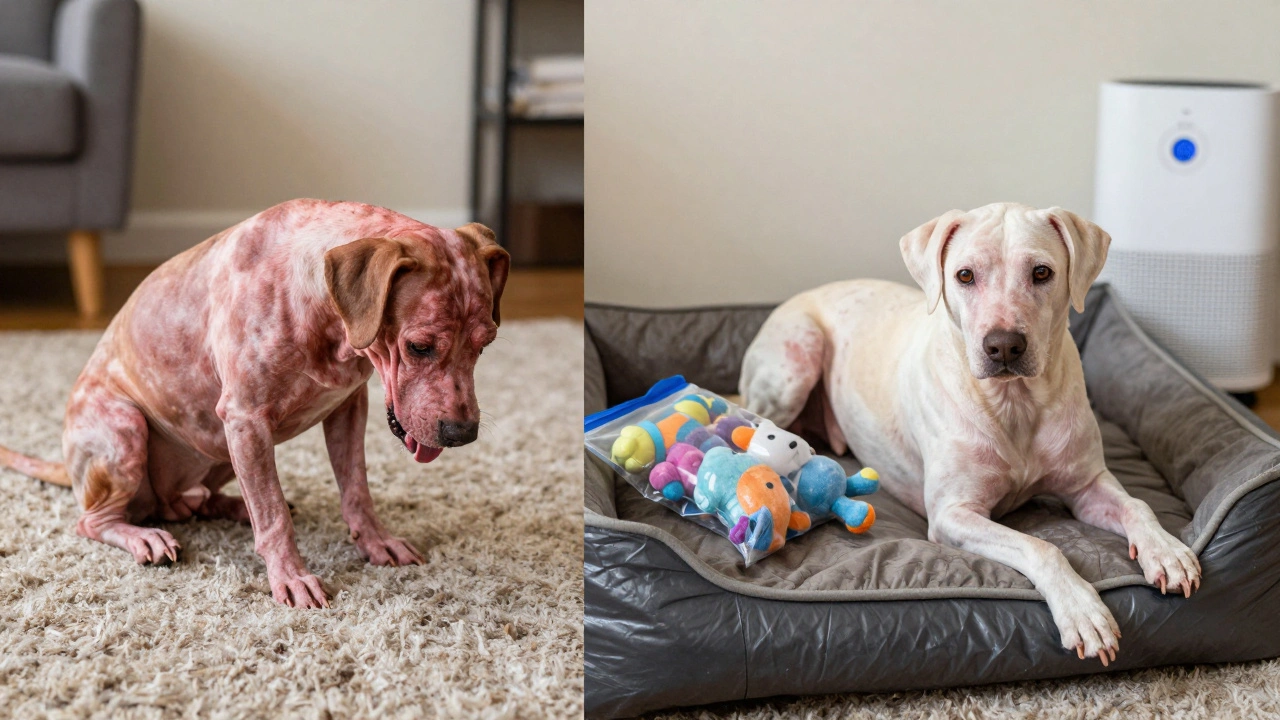
- Freeze stuffed toys for 24 hours. Place your dog’s toys in a sealed plastic bag and leave them in the freezer. Cold kills mites. Do this every two weeks.
What Doesn’t Work (And Why)
There are a lot of myths out there. Spraying air fresheners? No. They mask smells but don’t kill mites. Using essential oils? Some can irritate your dog’s skin even more. Relying on air purifiers alone? They help with airborne particles but won’t touch mites living deep in your carpet.
One common mistake: cleaning too much with harsh chemicals. Bleach or strong cleaners can damage flooring and irritate your dog’s paws. Stick to water, mild detergent, and heat. The goal isn’t to sterilize-it’s to disrupt the mite lifecycle.
How Long Until You See Results?
Most pet owners notice less scratching in 2-4 weeks. Skin redness starts to fade after 6 weeks. But full improvement can take 3-4 months. Why? Dust mite populations rebuild slowly. Even if you kill 90% today, the remaining 10% can repopulate if you slip up. Consistency matters more than intensity.
Track progress: Take a photo of your dog’s skin once a week. Look for less redness, fewer scabs, and less licking. If you’re still seeing hot spots after 12 weeks, talk to your vet about allergy testing. They can check for other triggers like pollen or mold.
Other Allergens That Work With Dust Mites
Dust mites rarely act alone. In damp climates like Portland, they often team up with:
- Mold spores-growing in bathrooms, basements, and near leaky windows
- Pollen-carried in on your dog’s paws after walks
- Cockroach particles-even in clean homes, crumbs attract them
That’s why a full allergen control plan includes:
- Wiping your dog’s paws with a damp cloth after walks
- Fixing leaks and using exhaust fans in bathrooms
- Storing pet food in sealed containers
When to Call the Vet
If your dog is still scratching after 3 months of home control, it’s time for a vet visit. They can:
- Perform intradermal or blood allergy testing
- Prescribe antihistamines or immunotherapy shots
- Rule out secondary infections from bacteria or yeast
Don’t wait until your dog’s skin is raw. Chronic scratching leads to infections that need antibiotics. Early intervention saves money and stress.
Real-World Example: A Portland Dog Owner’s Success
Sarah from Southeast Portland had a 5-year-old Golden Retriever named Max who scratched constantly. She tried hypoallergenic food, medicated shampoos, and supplements. Nothing worked. She started tracking humidity levels and found her living room hit 72% in winter. She bought a dehumidifier, switched Max’s bed to a washable vinyl model, started freezing his toys, and vacuumed with a HEPA filter twice a week. Within 6 weeks, Max stopped licking his paws. By 10 weeks, his skin was clear. No medication needed.
It wasn’t expensive. Total cost: under $300. And most of it was one-time.
Final Checklist: Dust Mite Control for Dogs
- Wash dog bedding weekly in hot water
- Use HEPA vacuum twice a week
- Keep indoor humidity at 45-48%
- Replace plush dog beds with washable, low-pile options
- Freeze stuffed toys every two weeks
- Wipe paws after outdoor time
- Remove carpets from high-traffic areas
- Use allergen-proof covers on beds
These steps don’t require a huge time commitment. Just consistency. And for dogs with skin allergies, that’s everything.
Can dust mites cause ear infections in dogs?
Yes. Dust mite allergens can trigger inflammation in the ear canal, especially in dogs with existing allergies. When the skin inside the ear becomes irritated, it creates a warm, moist environment where yeast and bacteria thrive. This often leads to recurrent ear infections. If your dog shakes their head often or has dark, waxy buildup in their ears, dust mites could be part of the problem. Controlling mites in the home can reduce ear flare-ups.
Do air purifiers help with dog allergies from dust mites?
They help a little, but not enough on their own. Air purifiers capture airborne mite particles, but most mites live deep in carpets and bedding-not floating in the air. A HEPA air purifier can reduce airborne allergens by 40-60%, but if you still have carpets and fabric furniture, mites keep reproducing. Combine it with washing bedding, lowering humidity, and vacuuming with HEPA for real results.
Is it safe to use essential oils to repel dust mites around dogs?
No. Many essential oils-like tea tree, eucalyptus, and peppermint-are toxic to dogs even in small amounts. They can cause skin irritation, vomiting, or neurological issues. There’s no scientific proof that oils kill dust mites effectively, and the risks far outweigh any unproven benefit. Stick to heat, humidity control, and cleaning.
How often should I replace my dog’s bed?
Replace it every 1-2 years, even if it looks fine. Over time, fabric breaks down and traps more dander and mite waste. If your dog’s bed is over 18 months old, smells musty, or the filling is clumpy, it’s time for a new one. Choose a bed with a removable, machine-washable cover to make cleaning easier.
Can I use a steam cleaner on carpets to kill dust mites?
Yes-but only if you dry the carpet completely afterward. Steam cleaning kills mites with heat, but if the carpet stays damp for more than 24 hours, it can grow mold and attract even more mites. Use a professional-grade extractor and run fans or a dehumidifier until the carpet is fully dry. Don’t steam clean more than once a month to avoid over-saturating fibers.