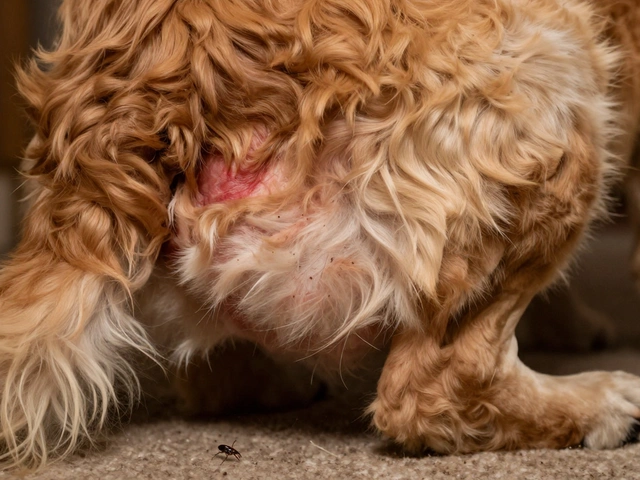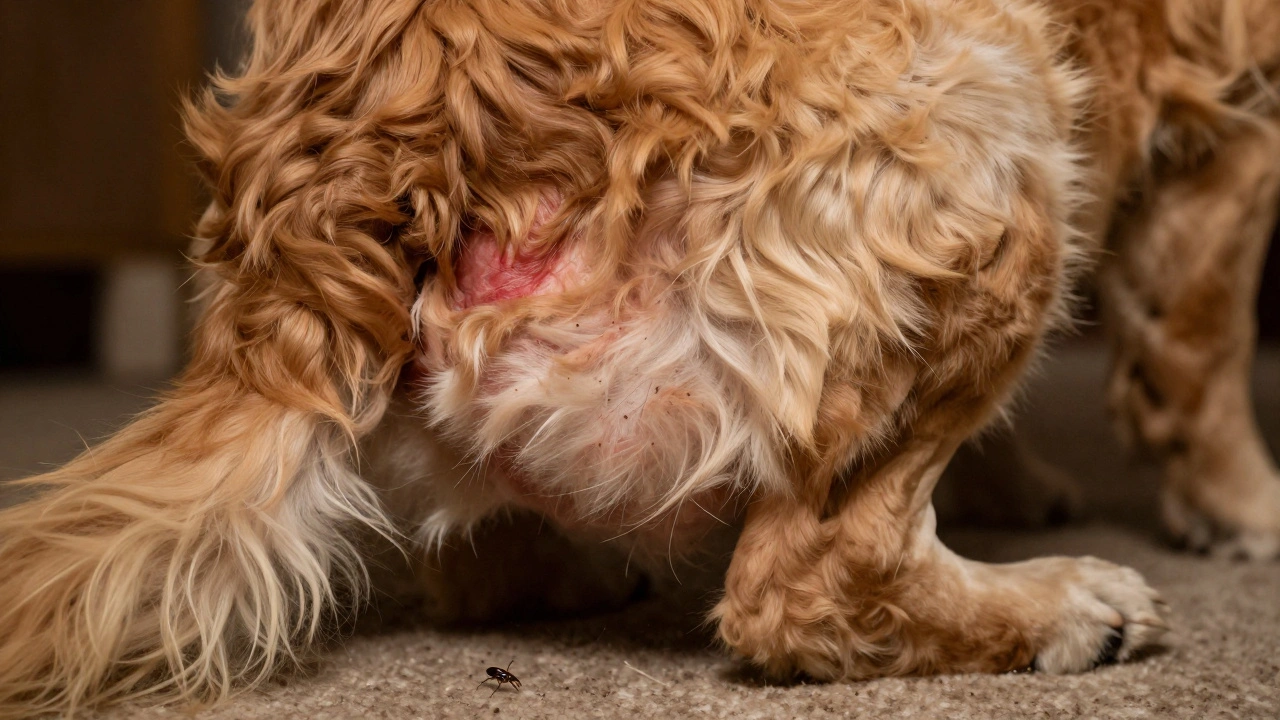
It’s not the number of fleas that matters-it’s the reaction. One single flea bite can turn your dog’s life upside down. If your dog is constantly scratching, chewing their paws, or losing fur around the tail and back legs, it might not be a general case of dirt or dry skin. It could be flea allergy dermatitis, the most common skin allergy in dogs.
What Is Flea Allergy Dermatitis?
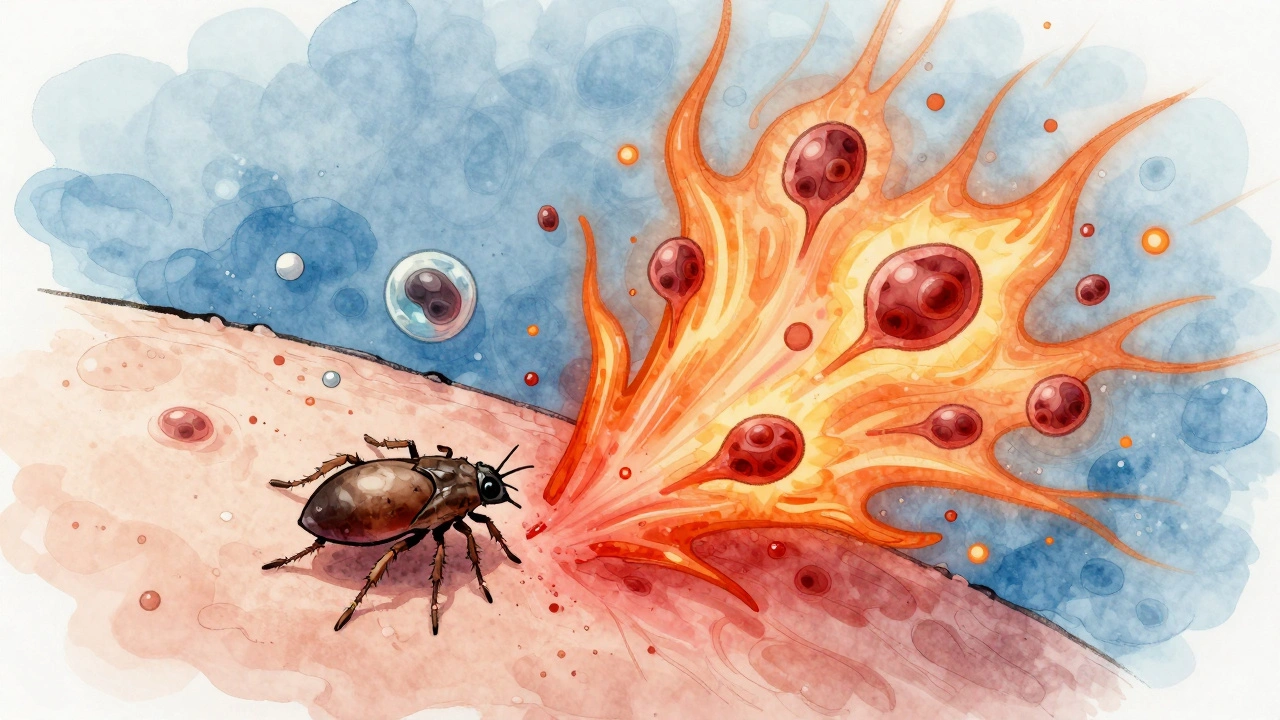
Flea allergy dermatitis (FAD) isn’t caused by the fleas themselves, but by your dog’s immune system overreacting to flea saliva. When a flea bites, it injects saliva into the skin to prevent blood from clotting. For most dogs, that’s just a minor annoyance. But for dogs with FAD, even one bite triggers a massive allergic response. The itching starts within minutes and can last for days. It’s not about how many fleas are on them-it’s about how sensitive their body is to the saliva.
This condition affects up to 40% of dogs in areas with warm climates or year-round flea seasons. In Portland, where damp springs and mild winters let fleas thrive, it’s a year-round problem. You might not even see fleas on your dog, but that doesn’t mean they aren’t there. Fleas are tiny, fast, and good at hiding. A single female flea can lay 50 eggs a day, and those eggs fall off your dog into your carpet, yard, or furniture.
Why One Flea Is Enough
Think of it like a peanut allergy in humans. You don’t need to eat a whole jar of peanut butter to have a reaction. A single trace can set off a storm. Same with fleas. Dogs with FAD have immune systems that go into overdrive when exposed to just a few micrograms of flea saliva. The histamine release causes intense itching, redness, and inflammation. Your dog doesn’t just scratch-they chew, lick, and bite until their skin breaks open.
That’s why you might see a dog with raw patches near the base of the tail, hind legs, or belly-even if you don’t spot a single flea. The fleas may have been there briefly, bit once, and left. But the damage? It lingers. And without treatment, it gets worse.
How to Spot Flea Allergy Dermatitis
Here are the top signs your dog has FAD:
- Constant scratching, especially around the tail, lower back, and inner thighs
- Hair loss in patches, not just random shedding
- Red, inflamed skin with small scabs or crusts
- Thickened, darkened skin from repeated licking and chewing
- Restlessness or trouble sleeping due to itching
Check for flea dirt-those tiny black specks that look like pepper. Wet a white towel and rub it along your dog’s back. If the specks turn reddish-brown, that’s digested blood. It’s a dead giveaway that fleas have been around.
Also, watch the timing. FAD symptoms usually get worse in spring and fall when flea populations peak. But if your dog is itching year-round, that’s a red flag. Fleas don’t hibernate. They just slow down. One surviving flea can restart the cycle.
What Happens If You Ignore It
Left untreated, flea allergy dermatitis doesn’t just cause discomfort-it leads to infection. Broken skin turns into open wounds. Bacteria like Staphylococcus and Malassezia yeast move in. Your dog might develop hot spots-large, oozing sores that smell bad and hurt to touch. Some dogs get secondary skin infections so severe they need antibiotics for weeks.
Chronic itching also changes behavior. Dogs with untreated FAD become anxious, irritable, or even aggressive. They avoid being petted. They pace. They lose sleep. It’s not just a skin problem-it’s a quality-of-life problem.
How to Treat It
There are two parts to treatment: stopping the fleas and calming the reaction.
Step 1: Kill all fleas on your dog and in your home. Topical treatments like fipronil or imidacloprid work fast. Oral medications like afoxolaner (NexGard) or fluralaner (Bravecto) last up to 12 weeks. These kill adult fleas within hours. But they don’t stop eggs from hatching. That’s why you need environmental control.
Wash all bedding in hot water. Vacuum carpets, furniture, and baseboards daily for two weeks. Use a flea spray with insect growth regulator (IGR) to stop eggs from turning into adults. Don’t forget your yard-fleas live in shaded, moist areas. Trim grass, remove leaf piles, and treat outdoor spaces if your dog spends time outside.
Step 2: Break the itch cycle. Your vet might prescribe antihistamines like diphenhydramine, but they don’t always work. Steroids like prednisone give fast relief but aren’t safe long-term. Newer options like oclacitinib (Apoquel) and lokivetmab (Cytopoint) target the specific itch signals without suppressing the whole immune system. Many dogs show improvement in 24 hours.
Topical sprays with colloidal oatmeal or aloe vera can soothe irritated skin. Avoid human shampoos-they strip natural oils and make itching worse.

Prevention Is the Only Real Cure
Once your dog has had FAD, they’ll likely always be sensitive. That means year-round flea prevention isn’t optional-it’s medical. Even in winter. Even if your dog never goes outside. Fleas hitch rides on other animals, in packages, or even on your shoes.
Use a vet-recommended monthly treatment. Don’t switch brands unless your vet says so. Generic products often fail. Also, treat all pets in the household-even cats. Fleas don’t care what species they’re on.
Keep your home clean. Vacuum weekly. Wash pet bedding every two weeks. Use a flea comb once a week. It’s not glamorous, but it’s the cheapest insurance against a flare-up.
When to See a Vet
If your dog’s itching lasts more than a few days, or if you see open sores, scabs, or hair loss, don’t wait. A vet can confirm FAD with a skin scrape, flea comb test, or even an elimination trial. They can rule out other allergies-like food or environmental triggers-that might be making things worse.
Also, if your dog has had multiple flare-ups, they may need allergy testing. Some dogs with FAD also react to pollen, dust mites, or mold. Managing all triggers together gives the best long-term relief.
Final Thought: One Flea Is One Too Many
It’s easy to think, “They only have one flea, it’s not a big deal.” But for a dog with flea allergy dermatitis, one flea is enough to ruin their week. The key isn’t eliminating every single flea-it’s preventing any from ever biting. That’s why prevention isn’t just smart. It’s necessary.
Don’t wait for symptoms to get worse. Start monthly flea control today. Your dog’s skin, sleep, and sanity will thank you.