
Everyone knows spaying and neutering dogs helps control pet overpopulation. But that’s only the tip of the iceberg. The real game-changer? What it does for your dog’s health-inside and out. If you’re wondering whether to go through with the procedure, here’s the truth: spaying and neutering don’t just prevent litters. They can add years to your dog’s life and stop whole categories of suffering before they start.
Longer Life, Fewer Surgeries
Studies from the University of Georgia and the American Veterinary Medical Association show that spayed female dogs live 26% longer on average than intact females. Neutered males live 18% longer than their unneutered counterparts. Why? Because removing reproductive organs eliminates entire classes of deadly diseases.
For females, the biggest threat is pyometra-a life-threatening uterine infection that strikes 25% of unspayed females by age 10. It causes fever, vomiting, and sepsis. Emergency surgery to remove the infected uterus costs $2,000 to $5,000. Spaying prevents it entirely. Then there’s mammary cancer. If you spay your dog before her first heat, her risk drops to 0.5%. After one heat, it jumps to 8%. After two or more, it’s 26%. That’s not a small difference. That’s a survival line.
For males, testicular cancer is nearly 100% preventable with neutering. And while it’s rare, prostate problems like infections, cysts, and hyperplasia affect over 80% of intact males by age 10. Neutering cuts those risks by 90%. No more painful vet visits, no more antibiotics, no more emergency bills.
Better Behavior, Fewer Risks
People think neutering makes dogs lazy or changes their personality. That’s not true. What it changes is the drive to roam, fight, and mark territory-behaviors rooted in hormones, not character.
Unneutered male dogs are three times more likely to run away. That means more accidents, more getting lost, more ending up in shelters. A 2023 study in the Journal of the American Animal Hospital Association found that 67% of lost dogs brought to shelters were intact males. After neutering, that number dropped by 70%.
Aggression toward other dogs? It drops significantly. Not because the dog becomes submissive, but because the urge to establish dominance through fighting fades. You’ll still see territorial marking, but it becomes less frequent and less intense. Female dogs in heat? They attract males from blocks away. That means unwanted attention, stress, and sometimes violent altercations. Spaying stops all that.
And let’s not forget the emotional toll. Dogs in heat or driven by mating urges are restless, anxious, and sometimes destructive. Owners report calmer, more focused dogs after the procedure. Not because they’re drugged. Because their bodies aren’t screaming for something they can’t have.
Preventing Hidden Health Crises
Many dog owners don’t realize how much stress reproduction puts on the body. A female dog that goes through multiple pregnancies risks uterine rupture, eclampsia (low calcium), and postpartum hemorrhage. Even if she never breeds, her body cycles through hormonal shifts every six months. That constant fluctuation wears down organs, weakens the immune system, and increases inflammation.
Spaying removes that cycle. The result? Lower rates of diabetes, fewer urinary tract infections, and less risk of hormone-driven skin conditions. One study of 12,000 dogs found spayed females had 40% fewer recurrent UTIs than intact ones. That’s not coincidence. It’s biology.
For males, the constant surge of testosterone doesn’t just drive behavior-it affects joints and metabolism. Neutered dogs are less likely to develop certain types of arthritis, not because they gain weight (a myth we’ll get to), but because their hormone balance shifts toward lower inflammation.
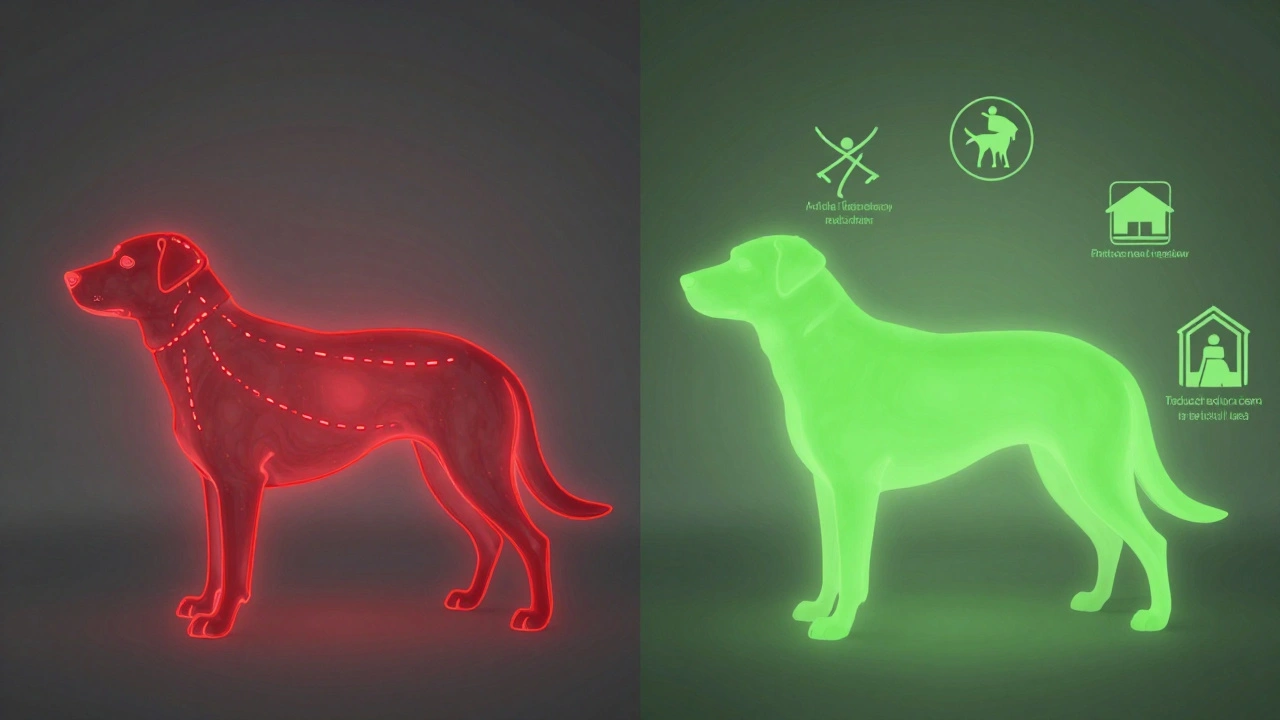
Weight Gain? It’s Not the Procedure
The number one excuse people give for avoiding spay/neuter? “My dog will get fat.”
Here’s the reality: dogs gain weight when they eat too much and move too little. Not because they’re neutered. A 2021 study from Cornell University tracked 3,500 dogs after sterilization. They found no significant difference in weight gain between neutered and intact dogs when diet and exercise were controlled.
What changes is metabolism. After spaying or neutering, a dog’s energy needs drop by about 20%. That means if you keep feeding the same amount, they’ll pack on pounds. The fix? Adjust portions. Switch to a lower-calorie food. Add more walks. It’s not rocket science. It’s simple math.
And here’s the kicker: the health risks of obesity are far less dangerous than the risks of leaving your dog intact. Diabetes, joint disease, cancer-those are lifelong threats. A few extra pounds? That’s manageable.
When Is the Right Time?
There’s no one-size-fits-all answer. Small breeds (under 20 pounds) do best when spayed or neutered around six months. Large breeds (over 50 pounds) benefit from waiting until 12 to 18 months. Why? Their growth plates close later. Early sterilization in big dogs can increase the risk of joint disorders like hip dysplasia and cranial cruciate ligament tears.
But don’t wait too long. If you wait past 2 years, you lose most of the cancer prevention benefits. The sweet spot? Talk to your vet. For most dogs, between 6 and 18 months is ideal. If your dog is already past that, it’s not too late. The health benefits still apply-even at age 7.

What About the Surgery Itself?
It’s routine. It’s safe. Modern anesthesia is incredibly precise. Most dogs are home the same day. Recovery takes 7 to 10 days. You’ll need to keep the incision dry, limit activity, and use an e-collar. That’s it.
Complications? Less than 1% of cases. Far less than the risk of pyometra or testicular cancer. And most clinics offer payment plans or partner with low-cost programs. In Portland, organizations like the Humane Society of Oregon and the Oregon Veterinary Society run subsidized spay/neuter clinics for as little as $50.
Think of it this way: you wouldn’t skip a dental cleaning because you’re worried about the cost. You’d do it because you know it prevents worse problems. Spaying and neutering are the same. It’s preventative care. Not a luxury. A necessity.
Final Thought: It’s Not About Control. It’s About Care.
Population control matters. But your dog’s health matters more. Every year, thousands of dogs die from preventable diseases that spaying and neutering could have stopped. Every year, more dogs are euthanized because they got lost, got into fights, or became unmanageable due to hormonal behavior.
Choosing to spay or neuter isn’t about controlling nature. It’s about giving your dog a longer, healthier, quieter life. No more heat cycles. No more roaming. No more cancer. No more emergency surgeries. Just a calmer, safer, happier dog-and fewer vet bills in the long run.
It’s not a tough choice. It’s a no-brainer.