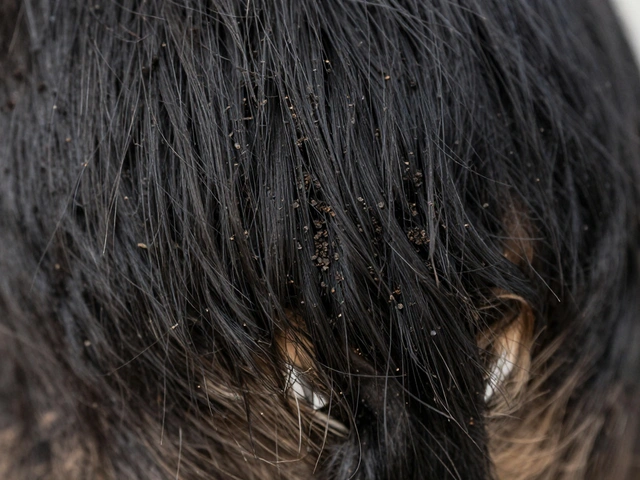
When your dog starts scratching nonstop, it’s not just annoying-it’s a sign that fleas have moved in. And they’re not just on your dog. They’re in the yard, the carpet, the bedding, even the cracks between floorboards. Fleas don’t wait for permission. They multiply fast. One female can lay 50 eggs a day. In a matter of weeks, your home can turn into a flea factory. The key to stopping them isn’t just giving your dog a pill. It’s controlling the environment they live in.
How Fleas Spread Beyond Your Dog
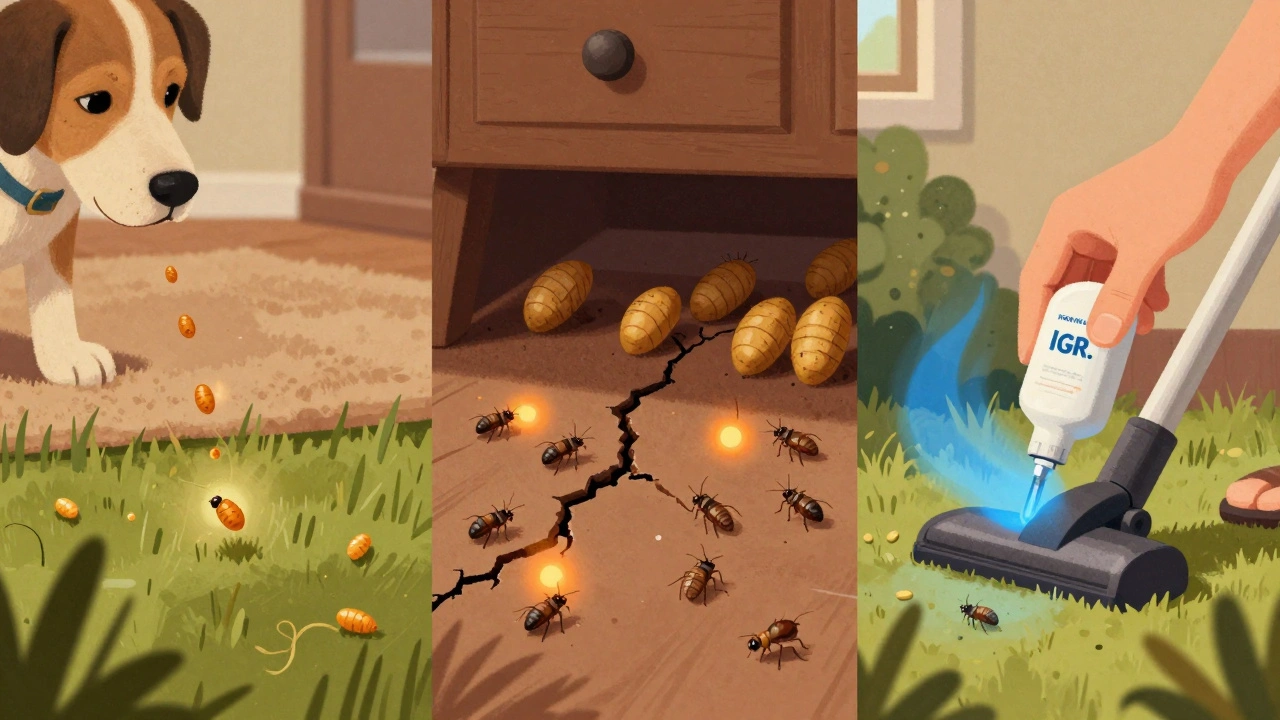
Fleas don’t live on your dog all the time. They jump on to feed, then jump off to lay eggs. Those eggs fall into the grass, under furniture, in pet beds, even in your car. Within 24 hours, the eggs hatch into larvae. These tiny worms crawl into dark, cozy spots-under rugs, in baseboards, behind couch cushions. In about a week, they spin cocoons and turn into pupae. That’s when they wait. They can stay dormant for months, until they sense heat, movement, or carbon dioxide-like your dog walking by. Then they burst out, ready to bite.
This cycle means treating your dog alone won’t fix the problem. You’re just killing adult fleas while new ones rise from the shadows. That’s why environmental control is the missing piece. You need to break the life cycle at every stage, not just the one you can see.
Yard Treatment: The First Line of Defense
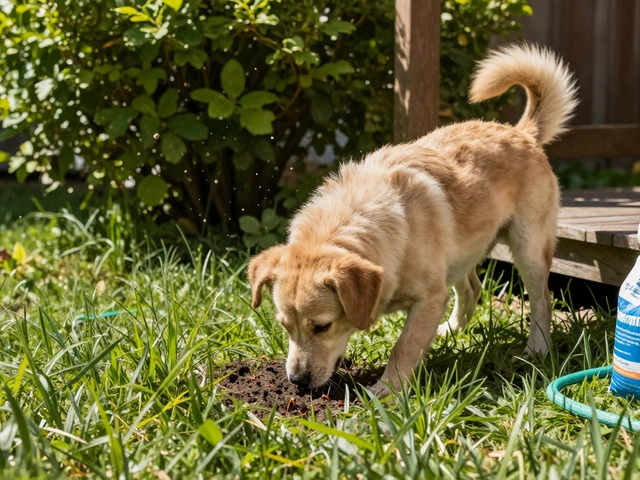
Your yard is where most fleas live. Even if your dog never leaves the backyard, that space can hold millions of flea eggs and larvae. Fleas love warm, shady, humid spots-dense bushes, tall grass, woodpiles, and under decks. If you’ve noticed your dog scratching after being outside, the problem isn’t just your dog. It’s the yard.
Start by trimming grass short. Fleas avoid direct sunlight. Keeping grass under 3 inches reduces their hiding places. Remove leaf piles, old mulch, and clutter where fleas can hide. Clear out pet bedding from outdoor areas. If your dog sleeps outside, move it to a sunny spot and wash the bedding weekly in hot water.
For chemical treatment, use products with insect growth regulators (IGRs) like methoprene or pyriproxyfen. These don’t kill adult fleas. Instead, they stop eggs from hatching and larvae from turning into adults. Apply them to high-risk zones: dog run areas, shaded corners, and along fences. Avoid broad-spectrum pesticides-they kill beneficial insects and can harm pets if overused.
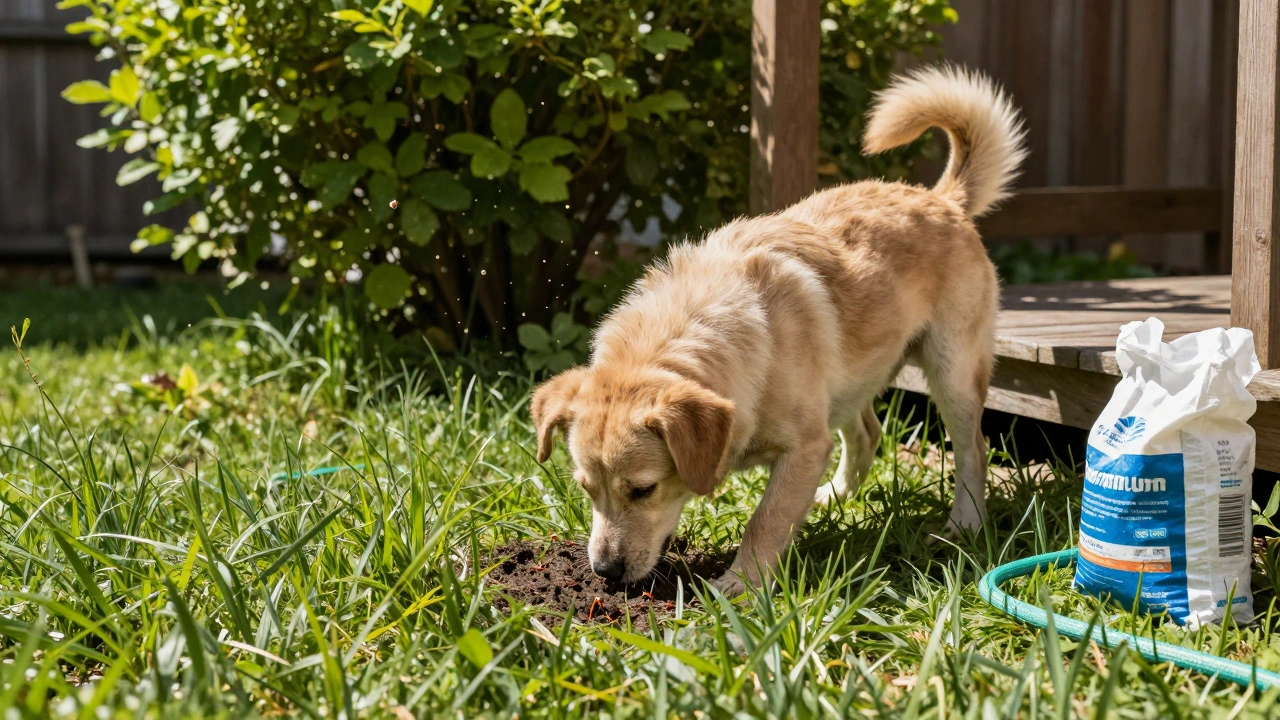
Natural options work too. Diatomaceous earth (food-grade) can be sprinkled in dry areas. It’s made from fossilized algae and works by cutting through the flea’s exoskeleton, drying them out. Reapply after rain. Nematodes-microscopic worms-are another option. They eat flea larvae in the soil. Apply them in the evening when the soil is moist. Both are safe for pets and kids once dry.
Indoor Flea Control: Don’t Ignore the Inside
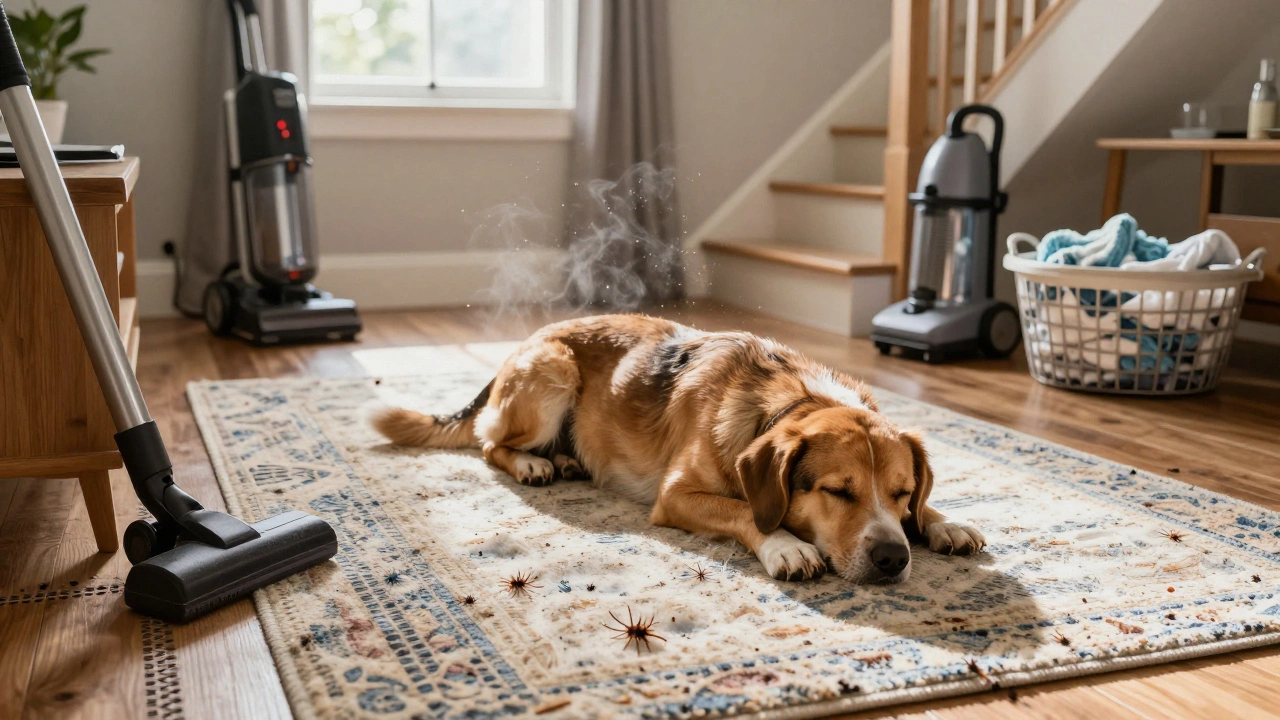
Inside, fleas thrive where your dog sleeps, rests, or lingers. Vacuuming isn’t optional-it’s essential. Do it daily for the first two weeks, then weekly. Use a vacuum with a rotating brush. Flea eggs and larvae stick to fibers, and vacuuming pulls them out. Empty the bag or canister immediately after each use. Seal it in a plastic bag and toss it outside. Don’t just vacuum the floor. Get under furniture, along baseboards, and up the stairs.
Wash all pet bedding, blankets, and towels in hot water (at least 130°F) every week. Dry on high heat. That kills eggs, larvae, and adults. If your dog sleeps on your bed, wash your sheets too. Fleas will ride your dog onto your sheets and hide in the seams.
Steam cleaning carpets and upholstery is one of the most effective ways to kill fleas at all stages. The heat kills eggs and larvae, and the moisture breaks down cocoons. Do it in sections, and let each area dry completely. Avoid chemical sprays indoors unless absolutely necessary. Many contain pyrethroids, which can be toxic to cats and even dogs if misused.
For a natural indoor option, use borax. Sprinkle it lightly on carpets, let it sit for 12 hours, then vacuum. Borax dehydrates flea eggs and larvae. It’s safe for pets once vacuumed up, but keep dogs away while it’s down. Don’t use it on hardwood floors-it can scratch them.
What Doesn’t Work
There are a lot of myths out there. Citronella candles? They might smell nice, but they don’t kill fleas. Essential oil sprays? Some-like lavender or eucalyptus-can repel fleas temporarily, but they don’t break the life cycle. And they can be toxic if ingested by dogs or cats. Never apply them directly to your pet without vet approval.
DIY flea traps with soapy water and a lamp? They catch a few adults, but they won’t touch eggs or larvae. They’re like using a net to catch one fish in an ocean. You’ll see results, but the problem stays.
And don’t rely on “natural” flea collars or topical treatments sold online. Many don’t contain active ingredients proven to kill fleas. Some even contain harmful substances banned in the U.S. Stick to products approved by the EPA and your vet.
Integrated Approach: The Only Way to Win
The most successful flea control plans combine three things: treating your dog, cleaning your home, and managing your yard. Do one without the others, and you’ll keep fighting the same battle.
Start with a vet-approved flea treatment for your dog. Oral medications like spinosad or afoxolaner kill fleas within hours and last 30 days. Topical treatments like fipronil work too. But remember: these kill adult fleas only. They don’t stop eggs from hatching.
Then, treat your environment. Vacuum daily. Wash bedding weekly. Use IGRs in the yard. Steam clean carpets. Keep grass short. Remove clutter. Repeat this for at least 8 weeks. That’s how long it takes to break the full flea life cycle.
After 8 weeks, switch to maintenance: monthly flea treatment for your dog, monthly vacuuming, and seasonal yard checks. If you live in a warm climate like Portland, Oregon, fleas are active year-round. Don’t wait for summer to act.
When to Call a Pro
If you’ve done all this and fleas are still biting your dog-or you-then it’s time for professional help. Pest control companies offer targeted treatments with IGRs and residual insecticides designed for indoor and outdoor use. They’ll identify hotspots you missed and apply treatments safely. Look for companies that specialize in pet-friendly pest control. Ask if they use IGRs and avoid pyrethrin-based sprays.
Don’t try to handle a full infestation alone. Fleas can multiply faster than you think. One untreated pet can restart the cycle in days.
Prevention Is Cheaper Than Treatment
Once you clear the fleas, don’t let them come back. Make environmental control part of your routine. Keep your yard tidy. Vacuum weekly. Wash pet bedding every two weeks. Use monthly flea preventatives-even in winter. Fleas can survive indoors at temperatures as low as 46°F. If your home is warm, they’re still active.
Also, check other pets. If you have cats, rabbits, or even ferrets, they can carry fleas too. Treat them all. Fleas don’t care what species they feed on.
And remember: a flea-free home isn’t about perfection. It’s about consistency. One missed vacuum, one ignored patch of grass, one skipped treatment-and the cycle starts again. Stay ahead. Your dog-and your sanity-will thank you.
Can I use essential oils to get rid of fleas on my dog?
No, essential oils like tea tree, peppermint, or eucalyptus are not safe for dogs. Many are toxic if ingested or absorbed through the skin. Even diluted, they can cause vomiting, seizures, or liver damage. Some pet owners use them in sprays for repelling fleas, but they don’t kill eggs or larvae. Stick to vet-approved preventatives instead.
How long does it take to get rid of fleas in the house?
It takes at least 8 weeks to fully eliminate a flea infestation. That’s because flea pupae can survive for months in cocoons. Even if you kill all adult fleas, new ones will keep emerging. Daily vacuuming, washing bedding, and using insect growth regulators (IGRs) are the only ways to break the cycle. Don’t stop treatment until you’ve gone 30 days without seeing a single flea.
Do fleas live in hardwood floors?
Yes, but not on the surface. Fleas lay eggs in cracks, gaps between boards, and under baseboards. The larvae crawl into these hidden spots to feed on organic debris. Vacuuming with a crevice tool and steam cleaning can help. Avoid using borax on hardwood-it can damage the finish. Focus on sealing gaps and keeping the area dry.
Is it safe to use diatomaceous earth around my dog?
Yes, but only food-grade diatomaceous earth, and only in dry areas. It’s safe once applied and dried. Keep your dog away while you’re sprinkling it, and avoid using it in places they might inhale the dust. Never use pool-grade DE-it’s chemically treated and toxic. Use it in the yard, under furniture, or along baseboards, not directly on your pet.
Why do fleas keep coming back after treatment?
Fleas come back because you’re only killing adults. Eggs, larvae, and pupae survive in carpets, bedding, and yard soil. If you skip vacuuming, don’t treat the yard, or stop monthly preventatives, the cycle restarts. It’s not that the treatment failed-it’s that the environment wasn’t fully addressed. Consistency across all areas is the only way to keep fleas gone.